


%203.svg)
Key Takeaways
- The best media buyers combine analytical skills with business acumen, not just technical platform knowledge. Look for candidates who can explain their optimization process and connect campaign metrics to business outcomes.
- The average salaries for US media buyers ranges from $96K to $120K annually, but international hiring can reduce costs by up to 75%. Latin American media buyers offer the same expertise at $24K to $36K.
- Choose your sourcing approach based on timeline and hiring goals. Job boards work well when you have time for extensive screening, while specialized recruitment partners excel at fast, international hiring with pre-vetted candidates.
You’ve been running the same ad campaigns for months, watching your cost-per-acquisition creep higher while your conversion rates flatline. You know you need someone who can optimize your media spend, but every “expert” you interview either charges more than your entire marketing budget or talks in circles about “revolutionary strategies” without showing real results.
Meanwhile, your competitors seem to be everywhere online, and you’re losing market share to brands that somehow figured out how to make digital advertising actually work.
The pressure is mounting—your CEO wants to see ROI, your marketing budget is being questioned, and you’re stuck between needing expertise you can’t afford and making do with campaigns that aren’t delivering.
This guide will show you exactly how to find and hire a media buyer who can turn your advertising spend into predictable growth. Whether you’re looking locally, nationally, or internationally, we’ll cover the skills that matter, the questions that reveal real expertise, and the common mistakes that lead to expensive hiring failures.
What Is a Media Buyer?
A media buyer plans, negotiates, and purchases advertising space across platforms like Google, Facebook, LinkedIn, and other digital channels to maximize campaign performance and ROI.
With digital advertising spend exceeding $790 billion globally in 2024 and growing 10.3% year-over-year, skilled media buyers who can navigate this complex landscape have become essential for business growth.
Media buyers are the strategic minds behind your advertising campaigns. They don’t just set up ads—they analyze audience data, negotiate better rates with advertising platforms, optimize campaign performance, and translate complex metrics into business insights your team can act on.
In a typical marketing team, media buyers work closely with creative teams to ensure ads resonate with target audiences, collaborate with marketing managers to align campaigns with business goals, and coordinate with analytics specialists to track and improve performance over time.
What media buyers do:
- Research and identify target audiences across different platforms
- Develop media buying strategies based on budget and business objectives
- Negotiate advertising rates and secure optimal ad placements
- Monitor campaign performance and optimize for better ROI
- Analyze data to identify trends and improvement opportunities
- Report on campaign effectiveness and recommend strategic adjustments
What they typically don’t handle: Creating ad creative (though they provide input), managing organic social media presence, handling email marketing campaigns, or building websites. They’re specialists in paid media strategy and optimization.
When Should You Hire a Media Buyer?
If your paid ads aren’t hitting the mark—or you’re simply too busy to manage them well—it might be time to bring in a media buyer.
Media buyers aren’t just for big-budget brands. They’re a smart investment any time you’re:
- Spending at least $10K/month across platforms like Meta, Google, or LinkedIn
- Planning to scale ad spend and need strategic allocation
- Running campaigns but unsure what’s actually working
- Burning time managing ads yourself instead of focusing on growth
A good media buyer will do far more than push buttons. They’ll help you decide which platforms make the most sense for your goals, test and optimize your ad placements, and make sure you’re not wasting money on underperforming campaigns.
They’re also especially valuable if your team is launching new products, expanding into new markets, or trying to cut customer acquisition costs. Instead of guessing which channel will deliver ROI, a media buyer will test, analyze, and double down on what works.
If your current setup looks more like guesswork than strategy—or if you’re tired of overspending to get mediocre results—it’s time to bring in someone who knows how to make your ad budget perform.
How Much Does It Cost to Hire a Media Buyer?
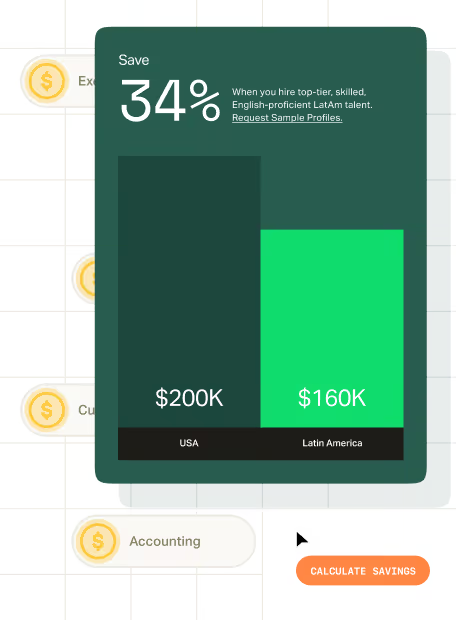
Hiring a media buyer in the US typically costs $96,000-$120,000 annually, but expanding your search internationally can reduce total hiring costs by 30-75% without sacrificing quality.
Media buyer salaries vary significantly based on experience level, specialization, and location. In the US market, where demand for skilled advertising professionals continues to grow, compensation expectations reflect this competitive landscape.
In major markets like New York, San Francisco, or Los Angeles, senior positions can command $150,000+ annually.
If US salary ranges feel out of reach or you’re struggling to find available talent within those ranges, expanding your search internationally can provide significant advantages.
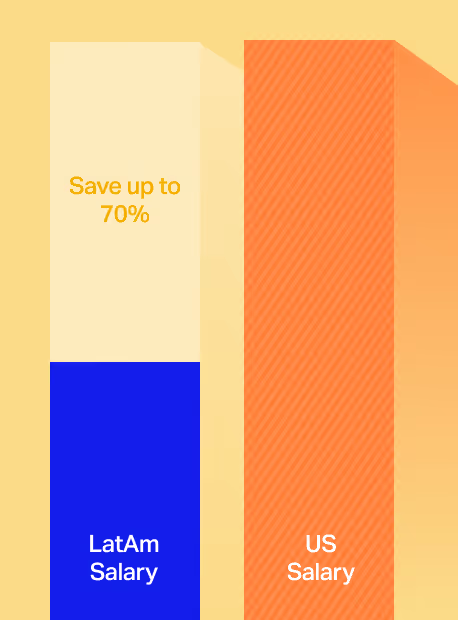
Latin America has become particularly attractive for US companies seeking media buying expertise. The salary expectations for a media buyer in Latin America are between $24,000 and $36,000.
This translates to cost savings of up to 75% compared to US market rates, while maintaining quality and time zone alignment. These differences reflect local economic conditions, not differences in skill, professionalism, or work ethic.
Plus, according to Near's State of LatAm Hiring Report, which analyzed 2,000 placements across 500 companies, LatAm hires see their salaries increase by up to 87% when working with US companies compared to local market rates, creating a win-win scenario where companies access affordable talent while professionals earn competitive compensation for their region.
{{state-latam-hiring}}
What Skills Should You Look For When Hiring a Media Buyer?
The best media buyers combine analytical thinking with strategic planning—they understand both the technical aspects of campaign management and how advertising fits into broader business objectives.
Finding great marketing talent means looking beyond surface-level qualifications to assess strategic thinking, problem-solving abilities, and collaboration skills.
Here’s what separates exceptional candidates from the rest:
Hard skills (the must-haves)
Platform proficiency across your marketing channels
Look for hands-on experience with the platforms where you’ll be advertising. This typically includes Google Ads, Facebook/Meta Business Manager, and at least one analytics platform like Google Analytics.
Depending on your business, they might also need LinkedIn Ads, TikTok Ads Manager, or programmatic advertising experience.
Data analysis and optimization skills
Strong candidates can interpret campaign metrics, identify trends, and make data-driven optimization decisions.
They should understand key performance indicators like cost-per-acquisition, return on ad spend, and lifetime value—and more importantly, know how to improve them.
Budget management and allocation
Media buyers must distribute advertising budgets strategically across platforms, campaigns, and time periods. Look for candidates who can explain their approach to budget testing, scaling successful campaigns, and cutting underperforming spend.
Campaign strategy and planning
Beyond tactical execution, great media buyers think strategically about how to structure, target, and optimize each effort. They understand how awareness campaigns, retargeting, and conversion campaigns work together.
Negotiation and vendor management
While much advertising is automated, media buyers still negotiate with platform representatives, manage relationships with advertising partners, and secure better rates for high-volume accounts.
Soft skills (equally important)
Analytical problem-solving
Media buying involves constant troubleshooting—diagnosing why campaigns underperform, testing hypotheses, and iterating based on results. Look for candidates who can walk you through their optimization process systematically.
Clear communication skills
Media buyers must translate complex performance data into actionable insights for stakeholders who may not understand advertising terminology. They also collaborate with creative teams, provide campaign feedback, and manage client or internal expectations.
Self-direction and time management
Successful media buyers juggle multiple campaigns, platforms, and optimization tasks simultaneously. In remote or distributed teams, this self-management becomes even more critical.
Adaptability and continuous learning
Advertising platforms change frequently—new features launch, policies update, and best practices evolve. The strongest candidates demonstrate curiosity and ability to adapt their strategies based on platform changes and market conditions.
Where Can You Find and Hire Great Media Buyers?
The best sourcing approach depends on your timeline, budget, and whether you’re comfortable hiring internationally. Each option offers different advantages for accessing media buying talent.
Your search strategy should align with how quickly you need to hire, your budget constraints, and your team’s experience with remote collaboration.
Before you start posting job ads or browsing freelance platforms, the first question to ask is: where should your media buyer be located?
This is a role that can easily be done remotely. Most of the work—campaign management, optimization, reporting—happens online, and communication tools make remote collaboration seamless.
So instead of defaulting to your local talent pool, take a step back and decide what matters most for your team: time zone overlap, budget, platform experience, or direct in-person collaboration.
Once you’ve clarified location, your sourcing options will fall into place more easily.
International hiring considerations
Expanding your search geographically can significantly improve your access to talent while reducing costs, but requires thoughtful planning around communication and collaboration.
Latin America offers particular advantages for US companies:
- Overlapping work hours: Most LatAm countries are within 1–3 hours of US time zones
- Strong English proficiency: Many professionals have extensive experience with US companies
- Cultural alignment: Similar business practices and communication styles to US markets
- Cost advantages: 30–70% salary savings compared to US rates
Other regions like Eastern Europe (Poland, Romania) and Southeast Asia (Philippines, Vietnam) also offer skilled media buyers, but may require more asynchronous collaboration due to large time zone differences.

To explore your options, read our article on the top countries for hiring marketing talent.
How to source media buyers
Once you’ve decided where you’re open to hiring, it’s time to choose how you’ll find the right person. Your sourcing method should match your hiring goals, internal bandwidth, and how quickly you need to move.
Here’s how the main options stack up:
Job boards and professional networks
LinkedIn, Indeed, and marketing-specific job boards like MarketingJobs.com or MediaBistro give you direct access to active candidates. These platforms work well when you have clear requirements and bandwidth for screening multiple applications.
Pros: Large candidate pool
Cons: Time-intensive screening process, competition from other employers, variable response rates
If you go this route, be specific in your job description. Include budget ranges, platforms they’ll manage, and the business outcomes they’ll be responsible for. The more focused your post, the better your candidate matches will be.
Freelance and contract platforms
Upwork, Fiverr, and specialized marketing platforms connect you with freelancers for project-based work or trial periods before full-time hiring.
Pros: Lower commitment for testing candidates, access to global talent, built-in payment protection
Cons: Variable quality, project-focused mindset rather than long-term growth thinking, platform fees
These platforms work particularly well for specific campaign launches, auditing existing campaigns, or testing candidates before making full-time offers.
Professional referrals and networks
Employee referrals and industry connections often yield high-quality candidates who come pre-vetted by people who understand your standards. In fact, according to SHRM, 45% of referred candidates stay with companies for over four years compared to just 25% hired through job boards, and they're five times more likely to be hired.
Pros: Higher trust factor, reduced screening time, better cultural fit likelihood
Cons: Limited candidate pool, may not have specialized experience you need
Leverage your existing marketing team’s networks, attend industry events, and consider offering referral bonuses for successful hires.
Specialized recruitment partners
Working with recruitment firms that specialize in marketing talent can accelerate your hiring process, especially for senior roles or international hiring.
Pros: Pre-vetted candidates, market knowledge, handling of international compliance and logistics
Cons: Service fees (though often offset by time savings and better matches)
This approach works particularly well when you’re exploring international markets for the first time, need to hire quickly, or want expert guidance on market rates and candidate evaluation.
Why working with a recruiting partner makes a difference
A specialized recruitment partner can help you access pre-vetted candidates faster, navigate international hiring complexities, and avoid costly hiring mistakes.
You can absolutely find a great media buyer on your own—many companies do. If you have clear requirements, time for thorough screening, and experience evaluating marketing talent, a DIY approach can work well.
But if you’re short on time, need to scale quickly, or exploring international hiring for the first time, working with a recruitment partner who specializes in marketing roles can save you significant effort and reduce hiring risks.
This is especially valuable when considering international candidates. Navigating global sourcing, assessing candidates across time zones, structuring competitive offers in different markets, and handling compliance requirements can be overwhelming without local expertise.
Here’s where specialized partners add the most value:
- Market intelligence and benchmarking: Recruitment partners who focus on offshore or nearshore hiring understand current market rates, in-demand skills, and competitive landscape across different regions. This intelligence helps you structure offers that attract top talent without overpaying or missing the mark.
- Pre-vetted candidate pools: Rather than starting from scratch with job postings and screening, specialized partners can surface candidates who’ve already been assessed for technical skills, English proficiency, and cultural fit with US companies.
- Process efficiency and speed: Experienced recruiters know how to identify serious candidates quickly, conduct effective initial screenings, and present you with a shortlist of qualified prospects rather than hundreds of applications to review.
- International hiring expertise: For companies exploring Latin American or other international markets, recruitment partners handle logistics like legal compliance, payroll setup, and offer negotiation in local markets—removing barriers that often derail international hiring attempts.
The investment in recruitment services often pays for itself through faster time-to-hire, better candidate quality, and reduced risk of expensive hiring mistakes.
When you factor in the opportunity cost of extended searches and the potential cost of a bad hire, working with specialists often delivers better ROI than handling everything internally.
{{prevetted-banner}}
How to Hire the Best Media Buyer: Best Practices
Hiring a great media buyer requires looking beyond technical platform knowledge to evaluate strategic thinking, problem-solving abilities, and cultural fit with your team.
The companies that make the best media buyer hires focus on finding strategic partners, not just campaign executors.
Here’s how to structure your process for success:
Stage 1: Define your requirements clearly
- Prioritize depth over breadth in your requirements: Rather than listing every possible platform and skill, focus on the 3-4 most critical capabilities for your specific situation. Do you need someone who can build audiences from scratch, or optimize existing high-performing campaigns?
- Be specific about campaign types and scale: Include details about budget ranges they’ll manage, types of campaigns they’ll run (lead generation, e-commerce, brand awareness), and the complexity of your sales funnel. This helps candidates self-select based on relevant experience.
- Include growth potential in role descriptions: Strong media buyers want to understand how the role might evolve. Will they eventually manage larger budgets? Lead a team? Influence product marketing strategy? Clear growth paths attract ambitious candidates.
Stage 2: Screen for strategic thinking, not just platform experience
- Focus on optimization methodology over current tool knowledge: Ask candidates to walk through their approach to diagnosing underperforming campaigns. Their process for systematic testing and optimization reveals more about their capabilities than familiarity with specific platform features.
- Evaluate business acumen alongside technical skills: Great media buyers understand how advertising fits into broader business objectives. Look for candidates who ask about your customer lifetime value, sales cycle length, and business model before suggesting strategies.
- Test communication and collaboration abilities: Media buyers must work with creative teams, report to executives, and sometimes manage client relationships. During interviews, assess how clearly they explain complex concepts and how they handle questions about campaign performance.
Stage 3: Structure practical assessments
- Use scenario-based questions rather than theoretical knowledge tests: Present real situations they might encounter: “A client’s cost-per-acquisition doubled overnight across all campaigns. Walk me through your diagnostic process.” Listen for systematic thinking and practical experience.
- Request case study presentations with specific metrics: Ask candidates to present a campaign they optimized, including original performance, changes made, results achieved, and lessons learned. This reveals both their strategic thinking and communication skills.
- Consider short paid test projects for finalists: For senior roles or when choosing between strong candidates, consider offering a brief paid consulting project to see how they approach your specific challenges.
Interview Questions for Hiring a Great Media Buyer
The right interview questions go beyond technical knowledge to reveal how candidates think strategically, solve problems under pressure, and collaborate with marketing teams.
Finding the right media buyer means asking questions that uncover not just what they know, but how they approach challenges, think strategically, and work with teams.
Here are proven questions that reveal the qualities that separate great media buyers from average ones:
“Walk me through how you would approach launching a new campaign for a product you’ve never advertised before.”
What this reveals: Strategic thinking, research approach, and systematic planning
Strong answers include: Audience research methodology, competitive analysis steps, platform selection rationale, testing framework, and success metrics
Red flags: Generic responses, jumping straight to tactics without strategy, inability to explain their process
“Describe a campaign that underperformed. What went wrong and how did you turn it around?”
What this reveals: Problem-solving skills, accountability, and learning from failures
Strong answers include: Specific metrics showing the problem, hypothesis-driven troubleshooting, systematic testing approach, and quantifiable improvements
Red flags: Blaming external factors, vague explanations, inability to articulate specific actions taken
“How do you determine budget allocation across different platforms for a new client?”
What this reveals: Understanding of platform strengths, budget management skills, and data-driven decision-making
Strong answers include: Audience overlap analysis, platform performance benchmarks, testing methodologies, and optimization frameworks
Red flags: Platform bias without justification, inability to explain allocation rationale, one-size-fits-all approaches
“A client’s CPM suddenly increases by 40% across all campaigns. Walk me through your diagnostic process.”
What this reveals: Technical troubleshooting skills, understanding of platform dynamics, and systematic problem-solving
Strong answers include: Checking account health, analyzing auction dynamics, reviewing competitor activity, examining ad fatigue, and testing solutions
Red flags: Panic responses, single-variable thinking, inability to structure a diagnostic approach
“How do you communicate campaign performance to stakeholders who aren’t familiar with advertising metrics?”
What this reveals: Communication skills, ability to translate technical data, and client management approach
Strong answers include: Relating metrics to business outcomes, using visual aids, providing context and benchmarks, and offering actionable insights
Red flags: Jargon-heavy explanations, inability to simplify concepts, focusing only on vanity metrics
For more interview questions, see our list of effective interview questions for remote marketing professionals.
Common Mistakes When Hiring Media Buyers
The biggest hiring mistakes happen when companies focus too heavily on technical skills while overlooking strategic thinking, communication abilities, and cultural fit.
Learning from common pitfalls can save you from expensive hiring mistakes and help you find media buyers who truly drive results.
Here are the most frequent errors we see companies make:
1. Hiring for tools, not thinking
It’s easy to get impressed by platform certifications or familiarity with Meta, Google, and TikTok Ads. But technical know-how only gets you so far. What separates a strong media buyer is how they think: how they approach testing, how they manage budgets under pressure, and how they turn data into decisions. Someone who knows the tools but lacks strategic depth will hit a ceiling fast.
2. Getting swept up in surface-level metrics
ROAS, CPA, CTR—they sound impressive on a resume. But without context, they don’t tell you much.
Ask how those numbers were achieved, under what budget, for what kind of offer, and in what market.
You’re not just hiring someone who’s seen good results. You’re hiring someone who knows how to create them again.
3. Overlooking communication and collaboration
Media buyers don’t work in a vacuum. They collaborate with creatives, align with business goals, and report results to leadership.
If they can’t explain what’s working (or not), or if they struggle to give useful feedback to designers, your campaigns will stall. Strong communicators get better results because they help the whole team move in the right direction.
4. Expecting overnight results
No media buyer can walk in and fix performance in a week. Even the best need time to test, learn, and iterate.
If you’re expecting dramatic results in the first 30 days, you’ll either set them up to fail or push for short-term wins that don’t last.
Great media buyers build systems—give them space to do it right.
5. Ignoring remote fit and work style
Especially if you’re hiring internationally, it’s important to assess how someone works—not just what they’ve done.
Can they manage their own time? Do they communicate proactively? Are they comfortable taking initiative when things aren’t clear? The best hires aren’t just technically capable—they’re strong operators in remote environments too.
Final Thoughts
The right media buyer becomes more than just someone who manages your ad campaigns—they become a strategic partner who understands your business goals and systematically optimizes your path to reaching them.
But finding that person requires looking beyond impressive portfolio metrics to assess strategic thinking, problem-solving approaches, and ability to collaborate with your team.
The candidates who deliver long-term value are those who can adapt their expertise to your specific challenges and grow alongside your business.
Whether you’re hiring locally, nationally, or internationally, focus on finding someone who can explain not just what they achieved, but how they think through optimization challenges and what they’d do differently in your specific situation.
The investment in finding the right media buyer pays dividends across your entire growth strategy.
If you’re considering expanding your search internationally to access broader talent pools while managing costs effectively, working with a specialized recruitment partner can help you navigate that process confidently and efficiently.
At Near, we connect US companies with pre-vetted Latin American media buyers who have the technical expertise and strategic thinking you need, work during US business hours, and deliver exceptional results at 30–70% lower cost than US market rates.
Book a free consultation call with our team today, and we’ll help you find the perfect media buyer within 21 days. It’s free to interview. Only pay once you make a hire.
Frequently Asked Questions About Hiring Media Buyers
What’s the difference between a media buyer and a media planner?
Media planners focus on strategy—determining target audiences, media mix, and campaign timing. Media buyers execute those plans by negotiating rates, purchasing ad space, and optimizing campaign performance.
Many smaller companies need someone who can handle both functions, while larger organizations often separate these roles.
How long does it take to hire a media buyer?
The hiring timeline varies based on your requirements and approach. Using job boards and handling screening internally typically takes 6–12 weeks. Working with specialized recruitment partners can reduce this to 2–4.
What tools should a media buyer know?
Essential platform knowledge includes Google Ads, Facebook/Meta Business Manager, and at least one analytics tool like Google Analytics. Depending on your business, they might also need experience with LinkedIn Ads, TikTok Ads Manager, or programmatic platforms. However, specific tool experience is less important than strategic thinking and ability to learn new platforms quickly.
Should I hire a freelance media buyer or a full-time employee?
It depends on the size of your business and how much media buying work you actually have. If you’re only running occasional campaigns or your monthly ad spend is modest (under $10K), a freelance media buyer might be the right fit. Freelancers can be a cost-effective way to get help with setup, audits, or short-term scaling without the commitment of a full-time hire.
But if you’re managing multiple campaigns across platforms, spending consistently each month, or looking for someone to take ownership of paid media as a growth channel, a full-time hire usually makes more sense.
In-house media buyers can dig deeper into your strategy, move faster on optimization, and align more closely with your business goals. You get continuity, better internal collaboration, and someone who’s focused solely on your results—not juggling five clients.
If cost is a concern, consider hiring internationally. Many companies bring on full-time media buyers from Latin America at rates comparable to what they’d pay a freelancer in the US—without sacrificing expertise or overlap with your team’s work hours.






.webp)
.webp)


%203.svg)
.avif)





%20(1).avif)

%20(1).png)