%203.svg)
Whether you're building a marketing team for a fully distributed company or you have an office but local salaries don't fit your budget, you need remote marketing talent that can drive results.
This guide walks you through how to find and hire strong remote marketing professionals—from writing job descriptions that attract qualified candidates to evaluating skills and building a team that performs.
Based on our experience placing hundreds of remote marketing professionals with US companies, we'll cover what to look for, how to assess candidates, and how to set your remote marketing hires up for success.
Why US Companies Are Hiring Remote Marketing Talent?
Most companies looking for remote marketing talent are solving one of three problems: they can't find qualified marketers locally, they need to reduce hiring costs without sacrificing quality, or they're building fully distributed teams from the start.
Here's what's happening:
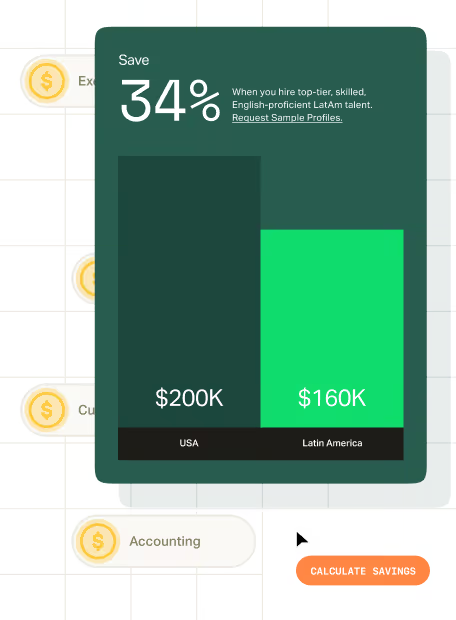
If you're in a high cost-of-living area—whether that's San Francisco, New York, or Austin—the salary expectations for even mid-level marketing roles often don't align with your budget. A digital marketing specialist in these markets might command $80,000–$113,000 annually, while a digital marketing specialist in Latin America will cost you $26,000–$54,000.
But cost isn't the only driver. Many growing companies have already embraced remote work and want to hire the best talent regardless of location. By expanding your search beyond US borders—particularly to Latin America—you gain access to marketing professionals who've worked with US companies, understand American markets, and operate in time zones that align with your business hours.
Companies aren't just looking to hire offshore marketing talent to save money—they're going there because that's where they can actually find available, qualified professionals.
What Marketing Roles Can You Fill Remotely?
Almost every marketing function can be filled with remote talent—from technical specialists to strategic roles that require deep market understanding.
Here are some of the most common marketing positions US companies successfully hire in Latin America:
- SEO Specialists: These professionals optimize your content for search engines, driving organic traffic without the ongoing cost of paid advertising. According to our data, SEO roles see some of the highest salary growth in Latin America—up to 87.5% when professionals move to US companies—which signals both the demand and quality of talent available.
- Content Writers and Content Creators: From blog posts and whitepapers to video scripts and email campaigns, remote content professionals create the stories that attract and retain your audience. The best content writers have specific industry experience and a writing style that aligns with your brand voice. Further reading: How to Hire a Content Writer
- Social Media Managers: These specialists manage your company's presence across social platforms, understand what's trending, and engage your community. One key insight from our recruiters: look for candidates who "own the entire process and metrics"—not just those who schedule posts but who think strategically about content calendars, engagement rates, and campaign performance. Further reading: How to Hire a Top Social Media Manager
- Email Marketing Strategists: They design and execute email campaigns that nurture leads, drive conversions, and keep your audience engaged over time.
- PPC and Paid Ads Specialists: Whether you need expertise in Google Ads, Meta Ads, or other paid channels, these analysts optimize your ad spend to ensure every dollar reaches the right audience. Meta Ads and Google Ads specialists are among the most sought-after roles in our experience. Further reading: How to Hire a Google Ads Expert
- Digital Marketing Managers: These professionals oversee your entire online marketing strategy, coordinating multiple channels and ensuring all your marketing efforts work together cohesively. Further reading: How to Hire a Top Digital Marketing Manager
- Marketing Analysts: Marketing data analysts examine campaign performance, identify trends, and provide insights that inform your strategy and improve ROI.
- Brand Strategists: They shape how customers perceive your company, ensuring your messaging resonates with your target audience and differentiates you from competitors.
- UX/UI Designers: These designers make sure your website and digital products are intuitive, visually appealing, and optimized for conversions.
{{offshore-talent}}
What Skills Should You Look Out for When Hiring Remote Marketing Talent?
The best remote marketing hires combine strong technical marketing skills with the soft skills that make remote collaboration work—self-direction, clear communication, and adaptability.
Here's what separates great remote marketers from average ones:
- Self-motivation and discipline: Remote marketing professionals need to manage their own time and maintain productivity without direct supervision. Look for candidates who can point to specific examples of how they've prioritized competing projects or met deadlines independently.
- Clear, proactive communication: Remote work requires overcommunication. The best candidates write clear Slack messages, ask questions when they're unclear on direction, and provide regular updates without being prompted. During interviews, pay attention to how they explain their past work—if they can articulate their process clearly, that's a strong signal they'll communicate well on your team.
- Collaboration across distance: Remote marketers need to work seamlessly with distributed teams. Ask about their experience with asynchronous work, how they've collaborated with designers or developers remotely, and what tools they've used to stay aligned with teammates.
- Technical proficiency with marketing tools: The specific platforms matter less than adaptability. One of our recruiters notes that clients sometimes "ask for experience with a specific tool, but candidates might have worked with a similar one, making it easy to learn." Focus on core competencies—if someone is strong in HubSpot, they can learn Marketo. What matters is that they're comfortable navigating new marketing technology.
- Continuous learning mindset: Marketing evolves fast. The strongest candidates actively seek out new knowledge—whether through courses, industry blogs, or experimenting with emerging platforms. During interviews, ask what they've learned recently or how they stay current with marketing trends.
How To Hire Remote Marketing Talent: A Step-by-Step Process
Finding and hiring great remote marketing talent requires a clear, repeatable process—from writing job descriptions that attract the right candidates to implementing structured evaluations that help you identify top performers.
Step 1: Write a Job Description That Attracts the Right Candidates
Your job description is your first impression—and for remote roles, it needs to do more than list requirements. It should clearly outline the role, set expectations, and give candidates a sense of your company culture.
Include:
- Must-have qualifications and skills: Be specific about what's truly required versus what's nice to have
- Day-to-day responsibilities: Don't just list duties—explain what success looks like in this role
- Your company's remote work approach: Do you expect overlapping hours? Are there required meetings? How much autonomy will this person have?
- Benefits and perks: Remote candidates care about flexibility, growth opportunities, and how you support distributed team
To quickly build a job description that includes all the essential elements, use our free job description generator. Or read our guide on how to How to write a marketing job description that attracts top candidates. It also has a template you can use.
Step 2: Source Qualified Marketing Candidates
Once you have a strong job description, it's time to get it in front of qualified candidates. Here are the most effective approaches:
- Post on your careers page: Feature the role prominently on your website to attract candidates who are already interested in your company and mission.
- List on job boards: Job boards and platforms like Indeed, Monster, and Glassdoor have broad reach and can help you find diverse candidates.
- Leverage social media and your network: Share the opening on LinkedIn, Twitter, and other channels where marketing professionals spend time. Your existing network can be a powerful source of referrals.
- Use industry-specific forums: Marketing communities like GrowthHackers or relevant subreddits can connect you with active, engaged professionals.
- Attend networking events: Whether virtual or in-person, industry events let you meet candidates and spread the word about your opening.
- Implement employee referral programs: Around 30–50% of all hires are the result of employee referrals. Incentivize your current team to recommend qualified candidates.
- Work with a specialized recruiting and staffing firm: If you need to hire quickly and want pre-vetted candidates, partnering with a firm that specializes in Latin American marketing talent can streamline the entire process. For example, at Near, we've sourced hundreds of marketing professionals for US companies and can typically provide a curated shortlist within 3 business days, saving you 50–70% of your sourcing and screening time.
Further reading: Top 12 Marketing Recruitment and Staffing Agencies in 2025
Step 3. Evaluate marketing candidates thoroughly
There are several methods you can use to evaluate your marketing candidates during the hiring process:
- Have candidates take skills assessments: Give applicants skills-based tests that are relevant to the marketing position. These can range from content writing skills assessments for content creators and copywriters to analytics tests for data analysts.
- Review portfolios and past work: Examine candidates’ portfolios to gauge their creativity, technical skills, and experience. Their past work can offer insights into their style and the quality of their output.
- Conduct virtual interviews: Utilize virtual interview techniques and ask the right remote marketing interview questions to assess a candidate’s skills and learn whether they are a good fit for your company’s environment and collaborative culture.
- Give a trial project: Offer a small, paid project related to the role. This will provide you with a direct look at the candidate’s work and how they manage real marketing tasks.
- Check references: Speak with previous employers or colleagues to get a sense of the candidate’s work ethic, teamwork capability, and reliability.
By employing a combination of these methods, you can gain a comprehensive understanding of each candidate’s capabilities and potential fit within your remote marketing team.
Step 4: Extend a competitive offer
Once you've identified the right candidate, move quickly. The best marketing talent doesn't stay on the market long. Your offer letter should include:
- A clear summary of the role and expectations
- Compensation details (salary, benefits, bonuses)
- Start date and next steps
- Any conditions or contingencies
Be prepared to negotiate. Top candidates often have multiple offers, so know your limits and be ready to discuss trade-offs.
Step 5: Onboard your new marketing hire
Even the most experienced remote professionals need time to understand your company's culture, processes, and expectations. A structured onboarding process makes all the difference:
- Provide access to all necessary tools, platforms, and communication channels
- Introduce them to key team members and stakeholders
- Set clear expectations for the first 30, 60, and 90 days
- Schedule regular check-ins during their first few months
- Share documentation on your marketing strategy, brand guidelines, and past campaigns
{{prevetted-banner}}
How To Ensure a Successful Long-Term Relationship With Your Remote Marketing Talent
Hiring great marketing talent is just the beginning—keeping them engaged, productive, and committed to your company's success requires ongoing investment in communication, workload balance, and team culture.
- Hold regular check-ins: Maintain consistent 1-on-1s to discuss progress, provide feedback, and address any concerns before they become bigger issues.
- Distribute work fairly: Unbalanced workloads lead to burnout. Ensure tasks are allocated evenly across your marketing team, leveraging everyone's strengths without overloading any one person.
- Build trust and give autonomy: The best remote teams thrive when you set clear goals and give people the freedom to achieve them. Micromanagement kills motivation—trust your marketing professionals to own their work.
- Be mindful of time zones: Schedule meetings during overlapping hours whenever possible. If your team spans multiple time zones, record important meetings and share notes so everyone stays informed. One major advantage of hiring from Latin America is that most countries operate within 1–3 hours of US time zones, making real-time collaboration much easier than with offshore teams in Asia.
- Foster real inclusion: Remote doesn't mean isolated. Make intentional efforts to help remote hires feel like part of the team—include them in casual conversations, celebrate their wins, and give them visibility into company updates and decisions.
What Makes Latin American Marketing Talent a Strong Fit
Latin American marketing professionals bring the same strategic capabilities and technical skills you'd find in US markets, with the added advantages of cultural alignment, overlapping time zones, and significant cost savings.
Here's what we've seen across hundreds of placements:
- Cultural alignment matters more than most people realize. According to one of our recruiters who specializes in marketing roles, "We consume the same products, watch the same content, and engage with the same brands. When clients interview Latin American candidates, they're often surprised at just how familiar and aligned we are—it makes collaboration feel very natural."
This isn't superficial—it means your marketing team inherently understands US consumer behavior, social media trends, and brand positioning. - Real-time collaboration is the default. Most of Latin America operates within 1–3 hours of US time zones. Your marketing team can join morning standups, participate in real-time campaign reviews, and respond to urgent requests during your actual business hours. There's no waiting overnight for feedback or coordinating across a 12-hour time difference, like with hiring from countries in Asia.
- The talent pool runs deep. From hiring CMOs down to SEO specialists and Google Analytics experts, we’ve found US companies experienced professionals for every marketing position.
- They're experienced with US companies. In our experience, many of the strongest candidates have already worked for US-based companies or clients.
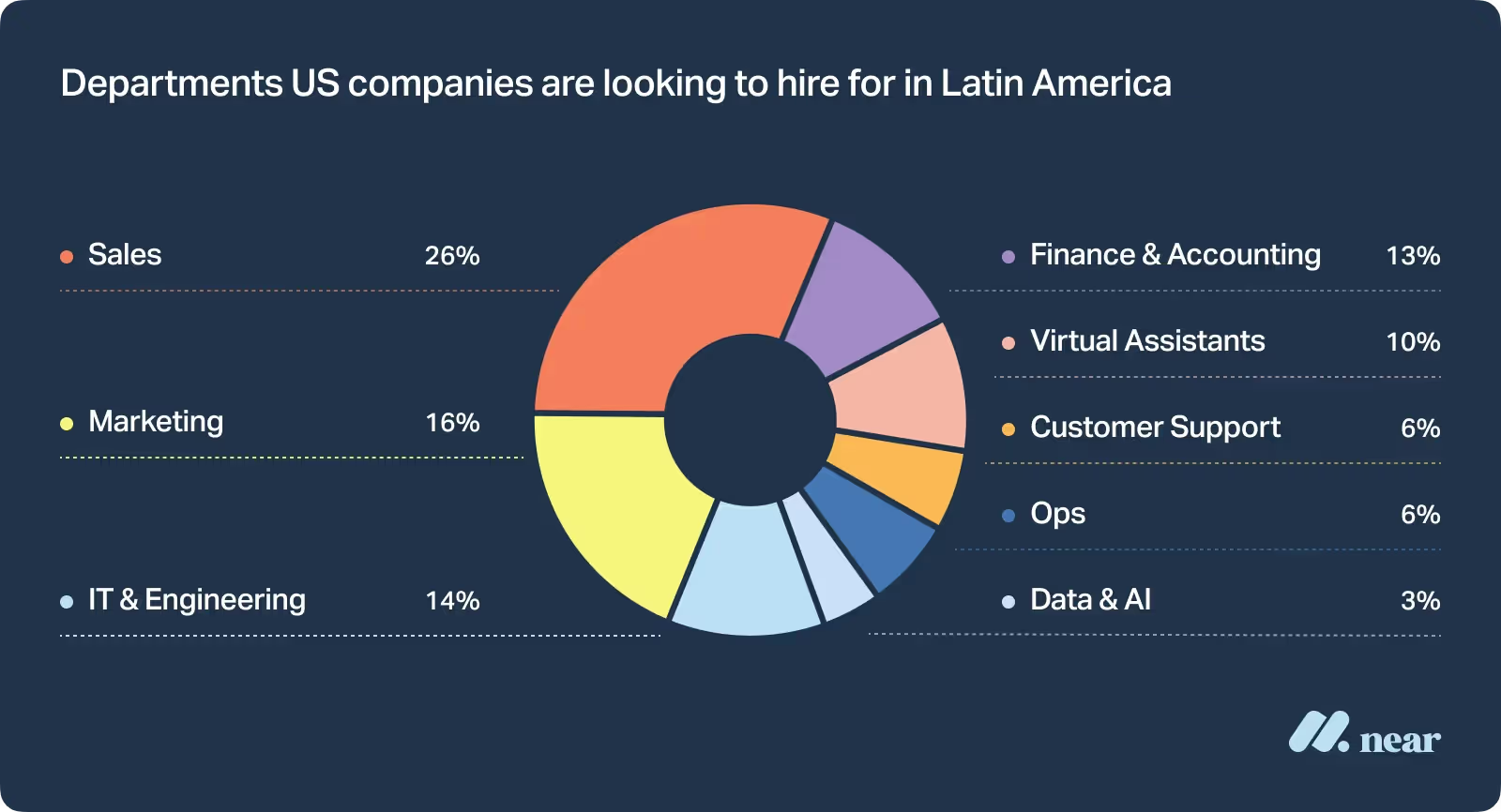
According to our data from over 2,000 companies exploring Latin American hiring, marketing is the second most in-demand department, making up 16% of all nearshore hiring, right after sales at 26% and ahead of IT and engineering at 14%. Companies aren't just looking offshore to save money—they're going there because that's where they can actually find available, qualified professionals.
Final Thoughts
Building a strong remote marketing team isn't about finding the cheapest option—it's about accessing skilled professionals who can drive real business results, regardless of where they're located.
When you hire marketing talent from Latin America, you're not making a trade-off. You're gaining access to experienced professionals who understand US markets, work in compatible time zones, and bring the same strategic thinking and technical skills you'd find in major US cities—at a fraction of the cost.
The companies seeing the best results aren't the ones that view remote hiring as a cost-cutting measure. They're the ones who recognize that great marketing talent exists everywhere, and that geography shouldn't limit your ability to build the team your business needs.
If you want to move quickly and avoid the trial-and-error of building a hiring process from scratch, Near can help. We've placed hundreds of marketing professionals with US companies and know exactly how to find candidates who'll fit your culture, meet your technical requirements, and contribute from day one.
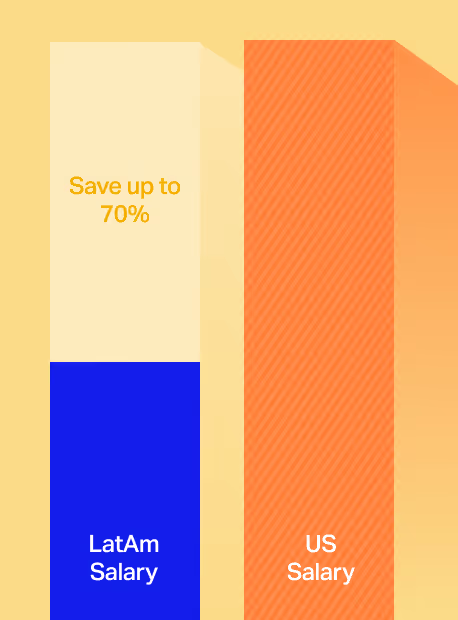
Schedule a free, no-commitment call with one of our hiring experts to see how we can help you build your marketing team with top remote talent—while saving up to 70% on hiring costs.
Frequently Asked Questions
How do I structure a remote marketing team?
The right structure depends on your specific goals and stage of growth. Start by defining the core roles that align with your marketing objectives—whether that's content creation, demand generation, or brand management. Then group these roles into functional units based on how your team actually works together.
For example, you might organize around channels (content, paid, social), customer journey stages (awareness, consideration, conversion), or products/markets. What matters most is creating clear ownership and avoiding too much overlap or confusion about who's responsible for what.
What are the challenges of managing a remote marketing team?
The most common challenges include coordinating across different time zones, ensuring clear communication without face-to-face interaction, and maintaining team cohesion when everyone's working from different locations.
You can overcome these obstacles by using collaborative tools like Slack and Asana, scheduling regular team meetings (even if they're just quick check-ins), and being intentional about building company culture remotely. The more you invest in communication and connection early on, the smoother your remote team will run.
Can remote marketing talent match the quality of US-based in-office teams?
Yes—and our clients have seen in many cases, they exceed it. Remote marketing professionals often bring diverse experiences from working with multiple companies or clients, giving them a broader perspective on what works across different industries and situations.
With the right hiring process, strong onboarding, and ongoing management, remote marketers contribute just as much as (and sometimes more than) in-office teams. What matters isn't where someone works—it's whether they have the skills, communication ability, and cultural fit to succeed in your environment.
Why should I hire full-time remote marketing talent instead of outsourcing to an agency?
When you build your own high-performing marketing team, you get people who are fully committed to your business—not splitting time across multiple clients. They learn your brand voice, understand your customers, and build institutional knowledge that compounds over time.
Outsourcing agencies can work for short-term projects, but they come with significant downsides: higher costs (agencies mark up rates significantly), less control over who's actually doing the work, and constant context-switching as your account gets handed between different team members. Many companies come to Hire With Near after getting frustrated with inconsistent quality and lack of ownership from outsourced marketers or freelance marketers.
Building your own remote marketing team gives you dedicated professionals who show up to your standups, collaborate directly with your product and sales teams, and care about your metrics because they're measured on them. Learn more about the differences in our guide to marketing outsourcing.
What industries hire remote marketing talent?
Remote marketing talent is hired across virtually every industry. Any business that needs to attract customers online, build a brand, or drive growth through digital channels has a use for it, and remote hiring opens up the talent pool considerably.
AI and machine learning companies hire remote marketers to build awareness in competitive categories where communicating complex products clearly makes a real difference. CPG brands use remote marketing talent for content creation, social media, performance campaigns, and trade marketing support across multiple markets.
Administrative services firms, from staffing companies to outsourced operations providers, hire remote marketers to generate leads and maintain a consistent brand presence without the overhead of a large in-house team.
What other marketing roles can I hire remotely from Latin America?
Beyond the core roles covered above, US companies also hire digital marketing managers to oversee their full online marketing strategy, content marketing managers to lead content strategy, growth marketing managers to drive experimentation and scale, product marketing managers to align messaging with launches, marketing automation specialists to streamline workflows, programmatic marketing specialists for automated ad buying, marketing assistants to support the broader team, and even a full Head of Marketing to own the function end to end.






.webp)
.webp)


%203.svg)
.avif)





%20(1).avif)

%20(1).png)