Key Takeaways
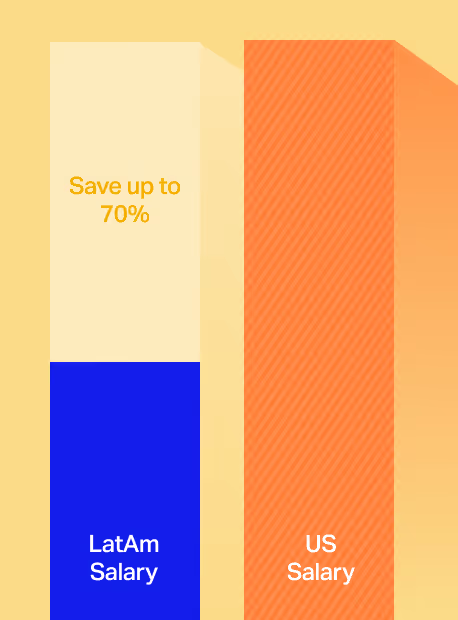
- A software developer recruitment agency finds, screens, and technically vets engineers you then hire directly, and Hire With Near is the option below that recruits full-time developers exclusively in Latin America who work your US business hours, at 30 to 70% below comparable US salaries.
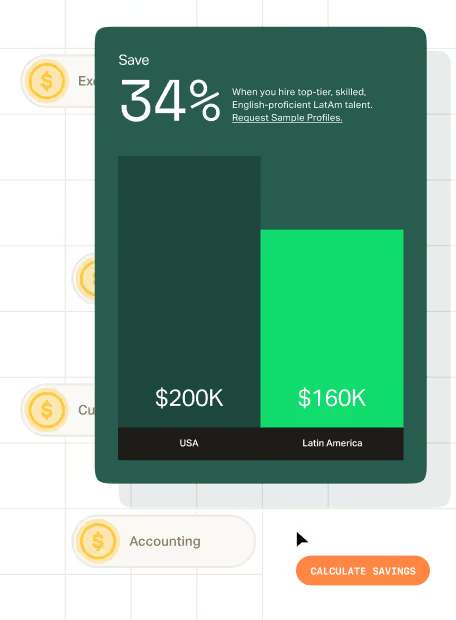
- Your all-in cost is the agency's fee plus the salary underneath it, and hiring a software engineer in Latin America runs $36K to $108K a year against $100K to $238K for the US equivalent, according to Hire With Near's salary data.
- The right agency depends on your budget, fee structure, timeline, talent region, level of support, and technical depth.
The right software developer recruitment agency is the one that can show you how it vets engineers, where those engineers sit, and what its fee actually covers. Size and brand recognition matter far less than any of the three.
An agency earns its fee in three situations: you don't have the in-house capacity to screen a technical role properly, your own pipeline is too slow for the timeline you're on, or the talent you need isn't available locally at a price that works.
This guide covers 11 agencies worth a look, what each one is built for, and who it fits, along with what hiring a Latin American engineer costs against a US hire and the criteria worth using to judge any recruitment agency, whether it's on this list or not.
If you'd rather skip the comparison and bring a developer onto your team directly, that route is worth knowing about too.
What Does a Software Developer Recruitment Agency Do?
A software developer recruitment agency is a specialized firm that connects companies with qualified software engineers, programmers, and technical talent.
It works as the intermediary between employers and candidates, identifying, screening, and evaluating talent for your open roles.
Most specialize by region, by profile type, or both. That focus is what gives them working knowledge of a local tech market and of what each role genuinely requires.
They also maintain their own candidate pool, usually pre-vetted, so a search doesn't start from zero every time, covering roles across the whole engineering org: remote software engineers, full-stack developers, web developers, front-end developers, full-time back-end developers, QA engineers, and DevOps engineers.
What separates the best agencies from the others is if they understand your tech stack, your development methodology, and your team dynamics well enough to judge whether someone will do well in your environment specifically. That means evaluating coding ability, problem-solving, and how a person works with other people.
Recruitment agency vs. employer of record
There’s one limit worth knowing up front: a recruitment agency finds you candidates and manages the hiring process end to end, but it doesn’t act as your employer of record or run payroll.
That means once you hire someone, you're the legal employer, handling contracts, payroll, taxes, and compliance yourself, or through a separate EOR if the hire is cross-border. An agency's job ends where employment begins.
If what you want is to hand off most of the search work, from sifting through applications to running first-round interviews, while still getting to the strongest candidates, a recruitment agency is the right tool.
If you also want someone else to carry the employment side, especially for a hire in another country, you're looking for a staffing partner or an EOR provider instead.
What Are the Benefits of Working With a Software Developer Recruitment Agency?
Software development recruiting helps you with three things: reach into engineers who aren't applying anywhere, a faster shortlist, and a technical screen you don't have to run yourself.
Access to specialized talent pools
Software developer recruitment agencies maintain networks of pre-vetted developers across different experience levels and specializations.
Instead of competing with every other company for the same local talent, these agencies give you access to developers who might not even be actively job searching but are open to the right opportunity.
Many agencies also have relationships with developers in international markets, where salaries sit well below domestic rates. The cost section below puts real numbers on the difference.
Faster time-to-hire
Technical recruiting requires understanding complex skills that general recruiters often can't properly evaluate.
Software developer specialists can quickly identify whether a candidate has the right experience with your frameworks, databases, and development practices.
According to Hire With Near's 2026 State of LatAm Hiring Report, a software engineer placement takes a minimum of 21 days, with most roles filling in 7 to 28 days, compared with three to six months for many of the same searches run in the US.
{{state-latam-hiring}}
Technical vetting and assessment
A strong agency filters for competence before a candidate ever reaches you. Instead of a resume-and-keyword match, the best agencies run coding challenges, technical interviews, and practical assessments built around real problems, not trivia with one right answer.
That screening is only as good as the person running it. The strongest agencies staff their technical vetting with people who can truly evaluate the work, often former engineers or recruiters with real technical training, not just someone working off a checklist. That's what separates an agency that can tell you why a candidate is strong from one that can only tell you they matched the job description.
The payoff shows up in your own hiring process. Every candidate who reaches you has already cleared the competence bar, so your interviews go straight to fit and depth instead of discovering in thirty minutes that someone can't do the job.
When Is a Software Developer Recruitment Agency the Wrong Choice?
A recruitment agency is the wrong tool when you need a piece of work delivered rather than a person on your team. Three other cases disqualify it:
- Your budget genuinely can't absorb a fee on top of salary and you have recruiting capacity in-house.
- The role is junior or generic enough that inbound applications will fill it.
- What you need is a managed delivery team with its own leadership.
Here's how the realistic options compare:
Two of these deserve a closer look.
If your need is a defined three-month build with a fixed scope, a dev shop fits better than an agency, because you're buying a delivered outcome rather than adding someone to your team. But if you have a recruiter with capacity and the role is one your team already knows how to screen for, running the search yourself is cheaper and often faster.
The dev-shop-versus-direct-hire question comes up often enough that it's worth hearing directly. In the video below, our CEO and Co-founder Hayden Cohen answers it:
One more thing worth naming separately: the local-versus-offshore decision changes your cost base more than the choice of agency will, and it applies no matter which option in the table you land on.
The crossover point is usually capacity, not principle. A roughly 35-person digital product agency with most of its engineering team already in Latin America, sourcing through two developer marketplaces, described it this way:
We have been doing it ourselves and it's getting to be a lot of work. I feel like it would be faster, more efficient, and a better use of our time if these candidates were pre-vetted, pre-screened a little better. I don't honestly know where [these platforms] find their candidates, but I feel like other services are going to have access to potential candidates that they don't.
When the sourcing work starts eating the time you'd rather spend evaluating people, a partner that does both jobs, finding the talent and handling the employment side, stops being an expense and starts being the cheaper path.
How Do You Choose the Right Recruitment Agency for Your Situation?
The same agency can be right for one company and wrong for another, so choose on six variables: budget and fee structure, timeline, technical depth, level of support, talent region, and whether the search is exclusive.
The same six questions apply when you're choosing a nearshore company more broadly, not just a developer recruiter.
Budget and fee structure
Pick the fee model by how long you expect the role to last, not by which quote looks smaller.
A monthly staffing fee suits a reader who wants to try before committing: nothing large is paid up front, the cost spreads across the engagement, and you can stop.
A one-time placement fee suits a reader who is confident the role is permanent, because over two or three years it's the cheaper structure by a wide margin.
If you're leaning on monthly but think you'll convert later, the conversion path is the term that decides the whole comparison. Ask what a buyout costs and when it stops applying, and put that number next to the one-time fee before you choose.
Timeline and speed to hire
A real search runs for weeks, and an agency promising candidates in 48 hours is showing you a bench rather than running a search.
A bench is a set of people already available, which is useful for IT staff augmentation, but misleading when you're told it's a search. Ask for three numbers separately: time to shortlist, time to signed offer, and time to start.
Time to shortlist and time to sign the offer are inside the agency's control. On the other hand, the time to start will depend on notice periods, and they're the most common reason a start date slips past a launch.
Speed and rigor aren't a trade-off, whatever a slow process tells you. A healthtech company we worked with kept all eight of its interview steps and still averaged 14 days per hire, because the compression happened in sourcing and coordination rather than in evaluation.
Technical depth
Technical depth shows up in one place: whether the agency can tell a real senior from a title and prove it.
Your recruiter needs to speak your stack. They should know why React and Vue.js aren't interchangeable, why microservices experience matters for your role, and whether a candidate's cloud background actually fits your infrastructure. Many nearshore software development companies specialize by stack for exactly this reason.
Ask any agency to walk you through its technical screen. If the answer is “we review resumes and run a call,” the filter is decorative, and with AI-generated resumes everywhere, that's not enough to protect your interview time.
Hire With Near's recruiters test for depth with the required tools, versatility across adjacent ones, and evidence someone built and maintained something rather than just touched it, the kind of thing a question like "what broke, and how did you fix it" actually reveals.
Federico Bilello, Software Engineering Recruiter at Hire With Near, watches for the opposite signal too:
A big red flag is when a candidate claims proficiency with an enormous variety of tools, to the point where it just doesn't make sense. There's no way someone has six years of experience with six different languages. I look for equilibrium: someone proficient with specific tools but with a background using different frameworks, so I know they're resourceful, not just a jack of all trades.
— Federico Bilello, Software Engineering Recruiter, Hire With Near
“Senior” is the most inflated word in engineering hiring, and a keyword-matching recruiter will pass that inflation straight through to you. One talent acquisition leader described exactly this:
Right now, [our current vendor] is sending us candidates, and their resumes do look good, but when they do make it to our technical assessment and our interview rounds, our hiring team is finding that they're maybe not as senior as we're hoping for.
A good agency also sources above the bar, not at it, targeting candidates with more experience than the job description strictly asks for. And you can test any firm in one question: ask them to walk through the last three candidates they rejected for a role like yours, and why. A real screen answers immediately, in detail.
Our own numbers back this up: 98% of the engineering roles Hire With Near filled in 2025 went to mid-level or senior professionals, 51% senior. Sector knowledge compounds this too, IT and tech recruiters who work in your kind of company daily carry context a generalist desk has to rebuild every search.
Ask for proof, not a pitch: placements in your stack, at your size, in the last 12 months, with a reference you can call. We'd point to ParkMobile, 9 senior engineers placed in Colombia, a market we'd never recruited in, at a 24-day average and $1,066,085 in annual savings; to the healthtech startup that kept its eight-step interview process intact and still averaged 14 days per hire; and to the digital product consultancy that hired a senior PHP developer for $6,500 a month.
Across 3,500+ placements, the lessons that hold up are consistent enough that any agency should be able to state theirs.
Level of support
Technical skills are the starting point, not the finish line, and the bigger question is which parts of the process the agency owns.
Sourcing means someone hands you a list of profiles and everything after that, screening, scheduling, feedback, negotiation, onboarding, is still yours. Full-funnel recruiting means the partner owns all of it. Ask which steps they run and who on their side does each one, and look for agencies that also evaluate communication and collaboration style, not just code, since remote work depends on both.
Support levels diverge most after the shortlist. Some firms stop at introductions; others run scheduling, collect structured feedback, negotiate the offer, and coordinate the first week, worth more than a few points of fee if your team is small. An IT recruitment process outsourcing arrangement sits at the heaviest end, with a dedicated recruiter embedded in your process.
Compare replacement guarantees on four points: length, replacement vs. refund, whether it covers performance-based termination as well as resignation, and what voids it. Most run 30 to 90 days; Hire With Near's runs 180, double the industry standard.
For regulated work, ask whether NDAs and IP-assignment terms are standard, whether background checks are included or billed separately, and whether they've placed into your vertical before, a contract clause isn't the same as experience. If your next hire is a VP of Engineering or CTO, confirm the agency runs executive search in Latin America too, since plenty stop at individual contributors.
The questions tech leaders ask about hiring developers in Latin America is a solid checklist to bring to a first call.
Latin America-specific vs. global reach
If your engineers need to be online while your team is, talent region is the deciding variable, not a nice-to-have.
There's now a measured way to describe what the gap costs. According to research from Harvard Business School, Rice University, and Georgetown, the larger the time-zone gap between two colleagues, the more of their work gets pushed outside normal business hours for one side of the pair.
The researchers' conclusion was that firms doing collaboration-heavy work benefit from distributing teams north to south rather than east to west. Engineering is the collaboration-heavy case.
A developer in Latin America is at their desk during your business hours, wherever your team sits in the US, so a question asked in your morning gets answered in your morning and standups happen live.
Depending on the country and the time of year, your hire may be in your time zone or an hour or two off, as you can see in the table below:
Note: Most Latin American countries don't observe Daylight Saving Time, so these times shift by one hour outside of March–November, when the US reverts to standard time.
A regional specialist can commit to that overlap. A global agency sourcing from anywhere can't, because it doesn't control where the candidate is. So ask a specific question: which countries do you place in, how many engineers have you placed there in the last year, and why does one of them fit my stack or my overlap requirement better than another?
Our country guides for Colombia, Mexico, Argentina, and Brazil cover salaries and talent depth market by market, and our guide to hiring remotely in Latin America covers the mechanics across the region.
If Latin America is where you land, you can hire remote software engineering talent as full-time members of your team rather than contractors rotating between clients.
Exclusivity and how many agencies to run at once
Running three agencies in the same role rarely triples your pipeline.
More often, it produces overlapping candidates from three sources and a slower response from each, because none of them is confident enough in the placement to put their best recruiter on it.
An exclusive search buys you attention; a non-exclusive one buys you optionality. Decide which one you need, ask the agency what changes if you grant exclusivity, and put a time limit on it either way.
How Much Does a Software Developer Recruitment Agency Cost?
Your all-in cost has two parts: the agency's fee and the salary underneath it.
Fees come in two shapes:
- A one-time placement fee tied to first-year salary
- A recurring monthly fee tied to the salary, or a retainer paid in stages
The salary is the bigger number of the two: hiring a software engineer in Latin America runs $36K to $108K a year against $100K to $238K for the US equivalent, according to Hire With Near's salary data.
Most agencies won't publish a percentage, which is why the fee conversation has to happen on the first call.
Contingency, or one-time placement fee
You pay once, after the person starts, and the fee is calculated as a percentage of their first-year salary. This is the standard model for permanent hires. Nothing is owed if you don't hire anyone.
Two things make it more expensive than it looks: the percentage is applied to the total first-year package rather than base salary at some firms, and a senior hire costs proportionally more to place than a mid-level one even when the work is the same.
Over a multi-year horizon, a one-time fee is usually the cheaper structure. It's the right pick when you're confident the role is permanent.
Monthly staffing fee
You pay a recurring fee, usually a percentage of the salary, for as long as the person is on your team. Nothing is due up front, the cost spreads out, and you keep flexibility: if the role changes or the fit isn't right, you're not carrying a lump-sum fee you already paid.
Don't compare these two as prices. Compare them as risk positions. Three questions decide it: how long do you expect this role to last, do you want to try before committing, and is there a conversion path from monthly to direct, and what does it cost?
Retained search
You pay in installments across the search, typically split between kickoff, shortlist, and placement.
Retained search gives you dedicated recruiter capacity and exclusivity, which is why it's normal for VP of Engineering or CTO roles and unusual for individual contributors.
If an agency proposes a retainer for a mid-level developer search, ask what the retainer buys that a contingency search doesn't.
Transparent pricing and process
Be wary of agencies that won't explain their fee structure or give you vague timelines.
The owner of a small e-commerce holding company described what happens when it stays hidden:
Our issue with the other company was they wouldn't tell us how much we were paying them [the developers]. And one of the people that I interviewed said that the job was listed at like 50% less than what they told us we'd be paying. That means their fee was super high and that's something that didn't sit right with me.
Before you sign anything, get answers to these in writing:
- When do I pay, and what triggers it? Start date, offer acceptance, or invoice on shortlist.
- Is there an upfront fee, deposit, or engagement minimum? Some providers charge before any work starts, or require a minimum number of months or hires regardless of outcome, and that cost structure changes your math even if the headline rate looks competitive.
- What else appears on the invoice? Background checks, assessments, and reference checks are sometimes billed per candidate rather than included.
- What's the replacement guarantee? How long it runs, whether it's a replacement or a refund, and what voids it.
- If I start on a monthly model, what does converting to a direct hire cost? Some providers charge a conversion or buyout fee if you move someone from a staffing arrangement to a permanent hire, and that fee is worth knowing before you sign, not after you've decided you want to keep them.
- Who sets the salary, me or you? If the agency controls the number the candidate sees, you can't compute your own cost per hire.
If a provider can't answer those six on a first call, consider removing them from your shortlist.
What you should budget per engineer
The fee only makes sense next to the salary it sits on top of. To give you a sense of what to expect, here’s what the most commonly hired software development roles earn in Latin America against their US equivalents, according to Hire With Near's 2026 salary benchmarks:
For the most up-to-date figures, see Hire With Near's US vs Latin America Salary Guide.
Paying at the top of the Latin American range still lands you well under the US floor for the same role, so the savings from going lower are marginal, and they don't last. The companies that pay under market are the ones re-running the same search a year later, because the hire left for a better salary.
Compensation in the region is lower because the cost of living is lower, not because the work is worth less.
Engineering salaries vary according to where the talent sits. If you're curious about compensation in Asia or Eastern Europe, our Offshore Developer Rates article can help.
Which Are the Best Recruitment Agencies for Software Developers?
The best recruitment agencies for software developers fall into four categories: enterprise IT staffing at scale (TEKsystems, Everforth Apex Systems, Insight Global, Experis), specialist technical staffing and consulting (The Judge Group, Eliassen Group, Procom, Oxford), startup and leadership search (Candidate Labs, Hunt Club), and Latin America-based full-time placement (Hire With Near).
These eleven work in different ways: some focus on US-based contract talent, others recruit internationally, and several offer both direct placement and ongoing nearshore staffing services.
On this list, I only included companies that meet one of two criteria: they either have at least 50 client reviews on an established review platform (G2, Clutch, Trustpilot, GoodFirms, or ClearlyRated, client ratings only) with an overall rating of 4.5 or above, or they are long-established, industry-recognized recruitment firms with decades of global presence.
From the firms that qualified, I compared technical recruiting track record, engagement models, talent regions, and the pricing signals each one publishes on its own site.
The companies below are in no particular order, and no ranking is implied. There’s no single best option for everyone; the right fit depends on your roles, your budget, your timeline, and how you like to work. My goal is to help you build a shortlist of three or four worth a call, not to declare a winner.
Here’s how the eleven compare:
Note: Ratings and figures reflect publicly available information at the time of publication and may change.
Here's what sets each apart:
Everforth Apex Systems

Website: apexsystems.com
Headquarters: Glen Allen, Virginia (United States).
Rating: 4.8/5 on ClearlyRated (775+ client ratings) as of August 2026.
Services: IT staffing (contract, contract-to-hire, direct placement), technology consulting, cybersecurity, managed services.
Focus Regions: United States, Canada, Mexico, Europe, India.
Everforth Apex Systems earned a spot on this list because of the sheer depth of its contract bench: more than 18,000 consultants are on assignment at any given time, supported by over 4,000 internal employees across 73 locations in North America.
That scale is the point. If you need six developers in three cities by next quarter, few firms can move that fast on volume.
Key features:
- Staffing and consulting under one roof: Beyond individual placements, Apex delivers full project teams for cloud, data, application development, and cybersecurity work.
- Local branch model: Recruiting runs out of 70-plus offices, so account teams tend to know the specific market you are hiring in.
- Award consistency: A 2026 ClearlyRated Best of Staffing Client 15 Year Diamond award, which requires sustained client satisfaction rather than a single strong year.
Best for: US enterprises hiring contract or contract-to-hire developers at volume across multiple locations.
Limitations: The model is built around contract and contract-to-hire work, so a company hiring one permanent developer is a small engagement here. No dedicated Latin America recruiting practice. Pricing isn’t publicly listed.
The Judge Group
Website: judge.com
Headquarters: Wayne, Pennsylvania (United States).
Rating: 4.9/5 on ClearlyRated (220+ client ratings) as of August 2026.
Services: IT staffing and consulting, direct hire and executive search, healthcare staffing, learning solutions, managed services.
Focus Regions: United States, Canada, India.
What stood out about The Judge Group is the combination of a 4.9 client rating and 55 years of operating history, which is a rare pairing in staffing.
The family-owned firm works with more than 60 of the Fortune 100 and runs delivery from over 30 offices across the US, Canada, and India.
Its strongest verticals are financial services, insurance, life sciences, and government, the environments where a developer needs to clear background and compliance requirements before writing a line of code.
Key features:
- Contract, contract-to-hire, and direct hire in one relationship: You can convert a contractor or start with a permanent search without changing vendors.
- Executive search capability: The 2022 acquisition of Slayton Search Partners added senior leadership search alongside individual contributor staffing.
- Offshore delivery option: India-based teams are available when a role does not need to overlap your US working hours.
Best for: Regulated industries hiring developers who must pass compliance, clearance, or audit requirements.
Limitations: Software engineering is one practice inside a much broader firm that also staffs healthcare and delivers corporate training. Delivery is in the US, Canada, and India, so there’s no Latin America bench if time-zone overlap is your deciding factor. Fees aren’t published.
Hire With Near

Website: hirewithnear.com
Headquarters: San Antonio, Texas (United States).
Rating: 4.9/5 on G2 (150+ reviews) as of August 2026.
Services: Full-service nearshore staffing and recruiting, RPO, staff augmentation, executive search.
Focus Regions: Latin America only.
Hire With Near is a full-service staffing and recruiting agency that helps US companies hire top-performing remote talent in Latin America across all departments and industries, including software engineering.
We run the search end to end: sourcing, technical screening, video introductions, interview coordination, offer support, and, if you want it, payroll and compliance. The developers you hire through us, they join your team as full-time team members, not contractors rotating between clients.
We are the only firm here that recruits exclusively in Latin America for US companies. More than 950 companies have hired through us, including Expensify and Deel, and we hold a 4.9/5 rating across 150+ verified G2 reviews.
Our pre-vetted network holds 160,000+ Latin American professionals, and we were ranked No. 118 on the 2026 Inc. 5000 list of the fastest-growing private companies in America.
Key features:
- Elite talent for software engineering positions: We place senior backend, frontend, mobile, QA, and data and ML engineers every week, with specialist tech recruiters screening beyond keywords for real-world impact. Whether you need deep experience in Python, JavaScript, Go, or a specific framework, our recruiters know the difference and why it matters for your roadmap.
- Quality-first approach: We fill 97% of the roles we take on and hold a client satisfaction score of 9.1 because we obsess over fit rather than skills alone: the drive, readiness, and cultural match to contribute from day one. We screen for real-world impact, not just keywords, and look for engineers who raise the bar for everyone around them.
- One partner, one process: Scale across functions, not just engineering, with one dedicated team and a repeatable hiring cadence. First candidates in 3 to 5 days with video introductions, most hires in under 3 weeks. We remember what worked last time and adapt based on your feedback, so hiring gets easier each round.
- 180-day replacement guarantee: Double the industry standard. If a hire doesn't work out in the first six months, we find a replacement at no additional cost to you.
Best for: US companies hiring full-time software engineers who want same-day collaboration hours and 30 to 70% lower cost than comparable US salaries.
Client perspective: “We can confidently rely on Hire With Near to present us with qualified candidates, reducing risk and uncertainty.” Daymion M., CyberFortress — (Verified G2 review)
Limitations: We recruit in Latin America only, so if you need onsite developers in a US office or talent in Europe or Asia, we're not your firm. We place full-time team members rather than short-term project contractors, and we're not the cheapest option on this list.
Pricing: transparent and quoted up front. Direct hire is a one-time recruiting fee; the staffing model is a monthly fee that includes payroll and compliance. You set the salary, there are no hidden markups, and you pay nothing until you make a hire.
Procom

Website: procomservices.com
Headquarters: Toronto, Ontario (Canada).
Rating: 4.7/5 on ClearlyRated (740+ client ratings) as of August 2026.
Services: Contract staffing, direct hire, IT consulting, employer of record, agent of record, direct sourcing.
Focus Regions: Canada and the United States.
Procom is here because of its contingent workforce infrastructure, which goes well beyond finding you a developer.
Founded in 1978 and now operating from ten offices across Canada and the US, the firm supports Fortune 500 clients including Air Canada, RBC, TD Bank, Scotiabank, Deloitte, and Accenture.
Its employer of record and agent of record services matter when you’re engaging independent contractors and need someone else to carry classification and payroll risk.
Key features:
- Compliance-heavy engagement models: Employer of record, agent of record, and payroll services for contractors you have already identified yourself.
- Cross-border coverage: One vendor for both US and Canadian hiring, which is unusual among mid-sized IT staffing firms.
- Ten-year Best of Staffing Diamond recognition: Sustained client and talent satisfaction rather than a one-off award.
Best for: US and Canadian companies running contractor programs who need payrolling and classification handled alongside sourcing.
Limitations: coverage is North America only, and the Canadian market is where the firm is deepest. The model favors contract engagements over permanent placement, and rates aren't published.
Eliassen Group

Website: eliassen.com
Headquarters: Reading, Massachusetts (United States).
Rating: 4.8/5 on ClearlyRated (220+ client ratings) as of August 2026.
Services: IT staffing and consulting, enterprise agility, cloud and infrastructure, cybersecurity, AI and data, life sciences, business advisory.
Focus Regions: United States
The reason Eliassen Group made this list is that it sells consulting and staffing as one motion, which suits teams that are not entirely sure whether they need a developer or a delivery approach.
Close to 40 years old and operating from 18 locations, the firm places individual technologists but also runs agile transformation, cloud migration, and data engagement work.
Clients cluster in digital and investment banking, renewable energy, and life sciences.
Key features:
- Enterprise agility practice: Coaching and delivery support for teams changing how they ship, not just adding hands.
- Regulated-industry depth: Life sciences and financial services engagements with the documentation and validation those environments require.
- Consultant-to-permanent pathways: Contract engagements that can convert as scope becomes clearer.
Best for: Engineering organizations that want advisory depth in agile, cloud, or data alongside the hire itself.
Limitations: Delivery is US-based, so this is not the route to time-zone-aligned cost savings. The consulting orientation makes single-role searches a smaller engagement, and pricing is quote-only.
Candidate Labs
Website: candidatelabs.com
Headquarters: United States (distributed team with people in major tech hubs).
Rating: 5.0/5 on G2 (295+ reviews) as of August 2026.
Services: Executive and professional search for engineering, product, and go-to-market roles.
Focus Regions: United States
Candidate Labs caught my attention for its review record: a perfect 5.0 across 296 G2 reviews, and G2 lists it as the top-rated search firm on the platform.
The firm works with venture-backed startups from seed to IPO, and its portfolio includes Notion, Retool, Deel, Vercel, and Lattice.
Its stated approach is to send fewer candidates with more context, using structured calibration up front rather than volume on the back end.
Key features:
- Engineering IC and leadership coverage: Full-stack, back-end, infrastructure, and research engineers, plus Head or VP of Engineering, CTO, and Head of Product searches.
- Tight feedback loops: The process requires qualitative reasoning on each candidate rather than a yes or no, which sharpens calibration between rounds.
- Lightweight operations: Work runs through your existing ATS and a shared Slack channel instead of a separate vendor portal.
Best for: Venture-backed startups hiring a small number of engineers or technical leaders where each hire carries outsized weight.
Limitations: The search model is deliberately low-volume, so it doesn’t suit teams filling many contract seats at once. Startup and venture-backed clients are the focus, and the process expects a responsive hiring team on your side. Fees aren’t published.
Insight Global

Website: insightglobal.com
Headquarters: Atlanta, Georgia (United States).
Rating: 4.6/5 on ClearlyRated (525+ client ratings) as of August 2026.
Services: Contract staffing, direct placement, recruitment process outsourcing, executive recruiting, technology services, culture and transformation consulting.
Focus Regions: United States, Canada, United Kingdom, India, and 10+ Latin American countries.
I included Insight Global because it’s the one large US staffing firm on this list with a real nearshore practice attached. Alongside 68 North American offices, the firm now supports active consultants in more than ten Latin American countries, including Brazil, Colombia, Costa Rica, Mexico, Chile, Peru, and Panama, with over 100 clients and 1,000-plus placements in the region.
For a company weighing a domestic staffing relationship against a Latin America move, that combination is worth a conversation.
Key features:
- Nearshore delivery inside a US staffing relationship: The same account team can source domestically or in Latin America.
- Technology services arm: AI, data, cloud, and enterprise IT project delivery in addition to staffing.
- Consultant care model: Structured post-placement engagement aimed at retention rather than a handoff at start date.
Best for: Companies running a sizable staffing program that want to test nearshore hiring without adding a second vendor.
Limitations: The Latin America practice is a growing division inside a much larger US contract staffing business, so depth by country varies. The core model is contract placement rather than permanent hiring, and pricing isn’t published.
Oxford

Website: oxfordcorp.com
Headquarters: Beverly, Massachusetts (United States).
Rating: 4.6/5 on ClearlyRated (585+ client ratings) as of August 2026.
Services: Specialized contract consultants, direct placement, co-managed and fully managed project services.
Focus Regions: North America and Europe.
Oxford qualified on the strength of its niche-skill sourcing record: more than 40 years in business, 3,400-plus consultants currently on projects, and 75,000 completed engagements for over 50,000 companies.
The firm organizes around hard specializations rather than general IT, covering AI, cloud, cybersecurity, and enterprise applications alongside life sciences and healthcare.
When the skill you need is rare enough that generalist recruiters keep sending near misses, this is the type of firm that finds it.
Key features:
- Specialist-first sourcing: Recruiters work within narrow technical domains instead of covering the whole IT market.
- Three delivery models: Staffing, co-managed projects, or fully managed delivery, depending on how much you want to run yourself.
- Transatlantic footprint: Offices across North America and Europe for teams that need coverage on both sides.
Best for: Companies hiring for scarce or highly regulated technical skills on a defined project timeline.
Limitations: The consultant and project orientation means fewer permanent placements, and the practice skews toward life sciences and regulated industries. No Latin America sourcing, and rates are quote-only.
Hunt Club

Website: huntclub.com
Headquarters: Chicago, Illinois (United States).
Rating: 4.6/5 on G2 (70+ reviews) as of August 2026.
Services: Executive search, leadership hiring, strategic team build-outs.
Focus Regions: United States.
Hunt Club made the list on the strength of its referral model. Founded in 2014, the firm sources through a network of trusted business leaders who make warm introductions, rather than cold outreach, and reports 5,000-plus leaders placed at a 95% placement rate. For an engineering leadership hire where the best candidate isn’t looking, that network is the differentiator.
Around 90% of its clients are investor-backed, including portfolio companies of Bain Capital, Thoma Bravo, and L Catterton.
Key features:
- Warm-introduction sourcing: Candidates arrive through people who know them, which changes response rates on passive prospects.
- Technology-assisted network mapping: A search platform maps connections across the expert network to surface reachable candidates.
- Team build-out engagements: Whole leadership layers rather than single roles, common in post-investment scaling.
Best for: VC- or PE-backed companies hiring a CTO, VP of Engineering, or a leadership layer, rather than individual developers.
Limitations: The focus is leadership and executive search, so it is not built for filling several mid-level developer seats. The client base skews heavily to investor-backed companies, and fees aren’t published.
TEKsystems

Website: teksystems.com
Headquarters: Baltimore, Maryland (United States).
Rating: No client star rating published on approved review platforms; holds ClearlyRated Best of Staffing recognition.
Services: IT staffing and contract employment, full-stack technology services, managed services, business transformation consulting.
Focus Regions: North America, Europe, Asia.
TEKsystems is on this list for its track record rather than its review count. Founded in 1983 and part of Allegis Group, it is the largest IT staffing firm in North America, with more than $7 billion in annual revenue, 100-plus locations, roughly 6,000 customers, and delivery for 80% of the Fortune 500. The firm reports 98% customer retention.
When your program spans several countries and needs governance as much as recruiting, this is the incumbent most enterprises compare everyone else against.
Key features:
- Managed service programs: Contingent workforce governance, supplier management, and reporting layered over the staffing itself.
- TEKsystems Global Services: Full project delivery in cloud, data, and digital when the need is a team with its own leadership rather than a hire.
- Industry practices: Dedicated coverage in financial services, healthcare, public sector, telecommunications, and manufacturing.
Best for: Enterprises running large, multi-site technology programs that need staffing and managed delivery under one agreement.
Limitations: No published client star rating or review count on G2, Clutch, Trustpilot, GoodFirms, or ClearlyRated, which limits independent validation of client satisfaction. The enterprise orientation means a single developer search is a small engagement, and there is no published Latin America sourcing practice. Pricing isn’t disclosed.
Experis

Website: experis.com
Headquarters: Milwaukee, Wisconsin (United States), as part of ManpowerGroup.
Rating: No client star rating published on approved review platforms.
Services: IT staffing, project solutions, managed services, technology consulting, upskilling programs.
Focus Regions: 75 countries.
Experis belongs here because of geographic reach that almost no specialist can match. As ManpowerGroup's technology talent brand, it deploys around 912,000 technology consultants each year across 75 countries and works with 80% of the Fortune 500.
Its practice areas map to how engineering organizations are structured: software and cloud engineering, data and AI, quality assurance, DevOps and DevSecOps, and service management. It also runs AI labs and offers roughly 7,000 upskilling courses to its consultant base.
Key features:
- Single-contract multi-country hiring: One agreement covering developers in several countries, useful for distributed engineering orgs.
- Named technology practices: Specialist teams by discipline rather than a generalist IT desk.
- Consultant upskilling: Ongoing training programs intended to keep placed consultants current on newer stacks.
Best for: Companies hiring technology talent across several countries who want one global provider instead of regional vendors.
Limitations: No published client star rating or review count on any approved platform, so independent validation is limited. Global breadth can mean less depth in any single market, delivery models vary by country, and pricing isn't published.
Final Thoughts
The right agency is the one whose model matches your situation, and after helping 950+ companies hire in Latin America, four things decide that more often than anything else:
- The best technical talent isn't always sitting in Silicon Valley or New York: Some of the most skilled developers we place are working from Buenos Aires, São Paulo, and Bogotá. They bring the same expertise you'd expect from senior US developers, with better availability and salaries that sit well below the US equivalent.
- Time zones matter more than you think: We've seen too many companies struggle with offshore teams that are never online when critical decisions need to be made. Latin American developers are at their desks during your business hours, join your daily standups, and can jump on calls when bugs need fixing or features need clarifying.
- Quality doesn't have to break your budget: You can hire exceptional developers at 30–70% below comparable US salaries while still offering competitive compensation in their local markets. The point is paying a competitive local wage that still lands 30 to 70% under the US equivalent, and what companies save by hiring in Latin America tends to surprise people.
- The best hires become team members, not contractors: The developers we place don't just complete tickets and disappear. They contribute to architectural decisions, mentor junior developers, and grow with your company. That's the difference between hiring people who work for you versus people who work with you.
No comparison article can tell you which of these firms is right for your business. Put three or four on a call list, ask each one how they screen for the stack you run, and the answer sorts itself out quickly.
If you're tired of competing with big tech companies for the same local talent pool, it's time to look south and hire Latin American developers instead. Latin America has become the practical way for growing companies to build senior development teams without the Silicon Valley price tag.
Ready to see what's possible? Get started with Hire With Near and we'll walk you through salary benchmarks for the roles you're hiring, how the search runs, and what a shortlist looks like in 3 to 5 days.
{{consultation}}
Frequently Asked Questions
What types of mobile and app developers can Latin American recruitment agencies help me hire?
If your project requires mobile or app expertise, Latin America has a strong bench.
Whether you need an iOS developer for an Apple-native build, a cross-platform app developer who can ship on both iOS and Android, or a specialist Flutter or React Native developer, you'll find experienced candidates across the region typically at 40–60% below US rates.
The combination of technical depth and real-time collaboration (LatAm developers work in your time zone) makes this a strong option whether you're launching a new app or maintaining an existing one.
A good software developer recruitment agency with LatAm specialization will be able to tell you quickly which country and seniority tier makes the most sense for your specific mobile stack.
Can I hire specialized developers like blockchain, ecommerce, cloud, or MERN stack from Latin America?
Yes, and specialization is where Latin American hiring often surprises people. Beyond full-stack generalists, you'll find experienced cloud developers who know AWS, GCP, and Azure; MERN stack developers fluent in MongoDB, Express, React, and Node; ecommerce developers who've built and scaled Shopify, Magento, and custom commerce platforms; and blockchain developers with hands-on experience in smart contracts and Web3 infrastructure.
For teams that also need database and data layer work, SQL developers with strong querying, schema design, and performance optimization experience are widely available in the region.
And if you're exploring process automation, you can find RPA developers with UiPath and Automation Anywhere certifications who've deployed production bots for US companies.
A recruitment agency with deep LatAm reach will be able to source across all of these specializations, not just the most common roles.
Is the shortage of experienced software developers in the US that bad?
For entry-level roles, no; for mid and senior engineers, yes. The Federal Reserve Bank of New York puts recent computer science graduates at a 7.0% unemployment rate, above the roughly 5.6% rate for recent college graduates overall, so new grads are not scarce.
The picture flips for experienced engineers. SignalFire's 2025 State of Talent Report, built on a platform tracking more than 650 million professional profiles, found that hiring rebounded for mid- and senior-level roles while entry-level hiring kept contracting: new grads now account for just 7% of Big Tech hires and under 6% of startup hires. You're not competing for junior talent. You're competing for experienced engineers who have multiple offers on the table.
That's the environment where working with companies that hire developers in Latin America can help. The region gives you access to battle-tested senior developers who aren't caught up in the same bidding wars happening in San Francisco or Seattle.
Is it worth using a recruitment agency to hire software developers?
Yes, when the role is ongoing, the skill set is specific, and your team doesn't have the recruiting capacity to run a real search. An agency earns its fee by absorbing sourcing, outreach, screening, and coordination, which is where most in-house developer searches stall.
It's not worth it when the work is a defined short project, when the role is junior enough to fill from inbound applications, or when you need a managed delivery team rather than a person on your team.
How much does a software development recruitment agency charge?
Agencies charge in one of three ways: a one-time placement fee calculated as a percentage of the hire's first-year salary, a recurring monthly fee calculated as a percentage of the salary while the person is on your team, or a retainer paid in installments across the search.
Percentages vary widely by firm, seniority, and market, so get the exact number, the payment trigger, and the replacement terms in writing before you sign.
How long does it take a recruitment agency to fill a software developer role?
A specialist agency should get you from kickoff to signed offer in weeks rather than months. With Hire With Near, a shortlist of candidates typically arrives in 3 to 5 days and most companies make a hire in under three weeks.
Ask any agency for time-to-shortlist, time-to-offer, and time-to-start as three separate numbers. Only the first two are inside their control. The third depends heavily on the candidate's notice period, which is the most common reason a start date slips.