


%203.svg)
One of the most time-consuming and important steps of interviewing potential new hires is the screening process. It involves reviewing resumes, conducting tests, and scheduling interviews. However, with the help of virtual screening interviews, you can add an extra layer of assessment to your process.
What's a Virtual Screening Interview you may ask? Virtual screening interviews are made up of pre-recorded and pre-written interview questions that candidates can answer via text, voice, or video. By answering these questions as a screening mechanism, companies can add another element to the screening process in addition to resume reviews and tests. Virtual screening interviews help companies and candidates save significant time during the interview process by letting candidates asynchronously answer questions that help recruiters and companies get a better sense of who the candidate is, what they bring to the table, and whether they may be a good fit for the job.
Benefits of Virtual Video Interviews
The ideal virtual screening tools should:
- Test communication skills like eye contact and facial expressions just like you would in an in-person interview
- Help Hiring Managers make informed decisions before moving a candidate to the next stage of the job interview process
- Screen candidates with common interview questions and see how much interview preparation they did
At the end of the day, it's the job of Hiring Managers to create a more successful interview process. There are tons of different types of interviews, and virtual job interviews are an excellent resource and screening tool for top candidate selection.
Tools
There are a number of different virtual screening interview tools available on the market, and choosing the right one for your needs can be daunting. To help you out when conducting remote interviews to screen candidates, we've compiled a list of 4 excellent virtual screening interview tools to use for asynchronous interviewing:
- MyInterview
- VideoAsk
- SparkHire
- Loom
MyInterview
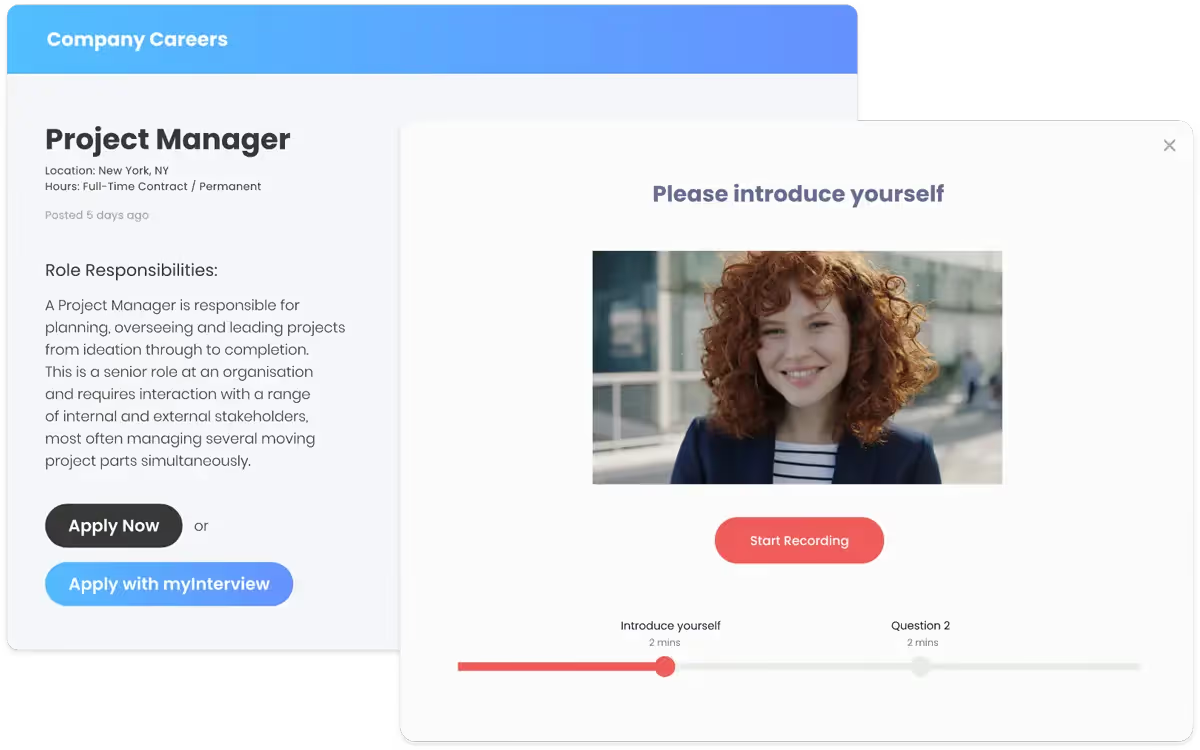
MyInterview is a virtual screening interview tool that helps companies and candidates save significant time during the interview process. MyInterview provides a robust set of tools that allow candidates to answer questions asynchronously, which gives recruiters and companies a better sense of who the candidate is and whether they may be a good fit for the job.
Pros
- Freemium version available
- Very robust set of tools for categorizing interviews, collaborating with colleagues, and screening candidates
- Does not require candidates to make accounts
Cons
- Gets expensive quickly if you need to interview a lot of candidates. It's better for companies rather than recruiting agencies.
VideoAsk
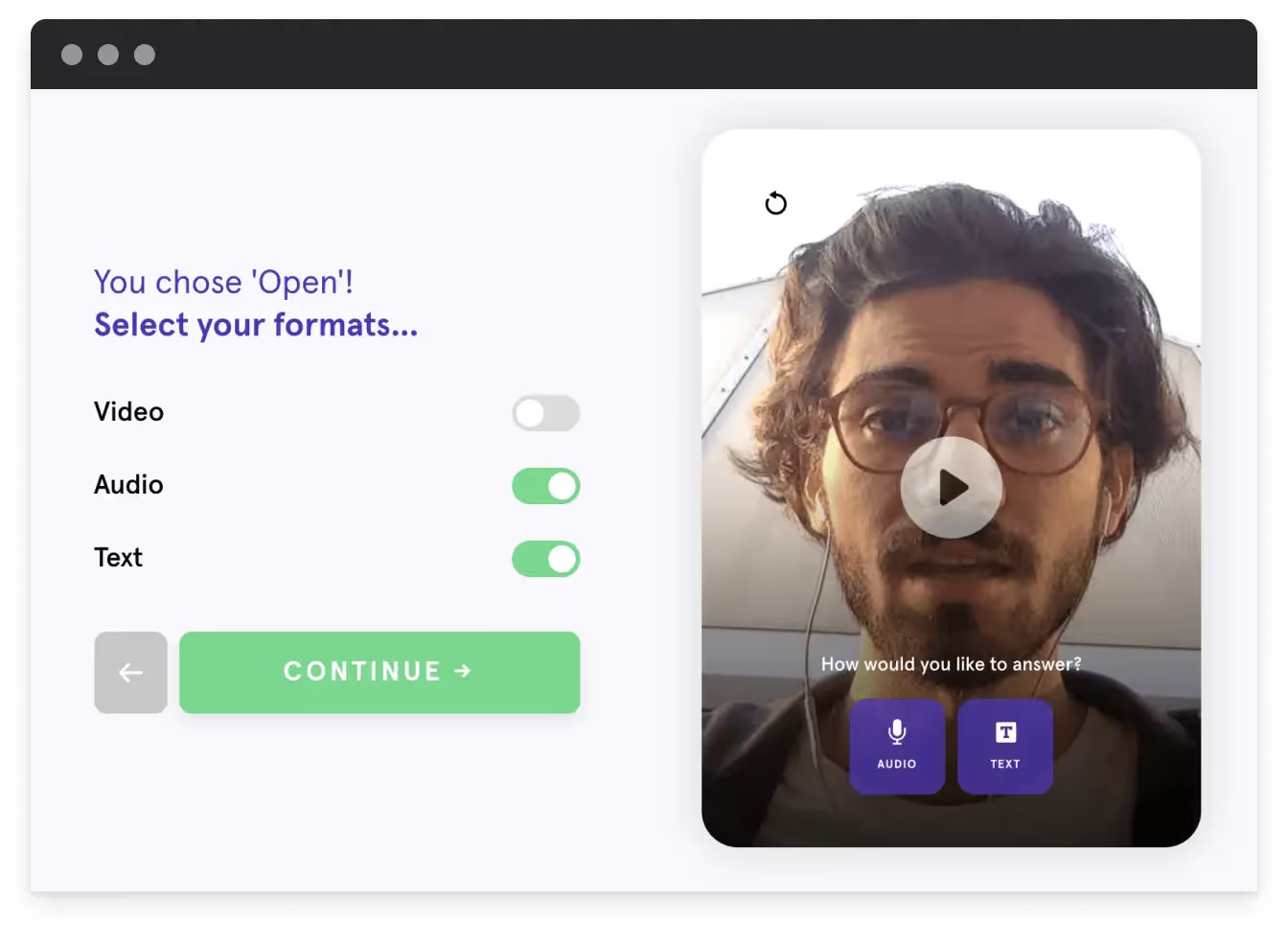
VideoAsk is a powerful video question tool that isn't traditionally used for interviews. However, it can definitely be used to help companies screen candidates more efficiently! VideoAsk is traditionally used to interact with current customers, develop relationships with prospects in the sales process, and get feedback from an audience asynchronously. With VideoAsk, you can send pre-recorded questions to candidates and then review their answers at your convenience.
Pros
- Easy-to-use UI to create video question sequences and collect contact information
- Significantly cheaper than other options on this list without sacrificing a ton of functionality
- Does not require candidates to make accounts
Cons
- Not intended for virtual interviews
- Has no good way to categorize interviews, send automated followups, or other related screening interview tasks
SparkHire
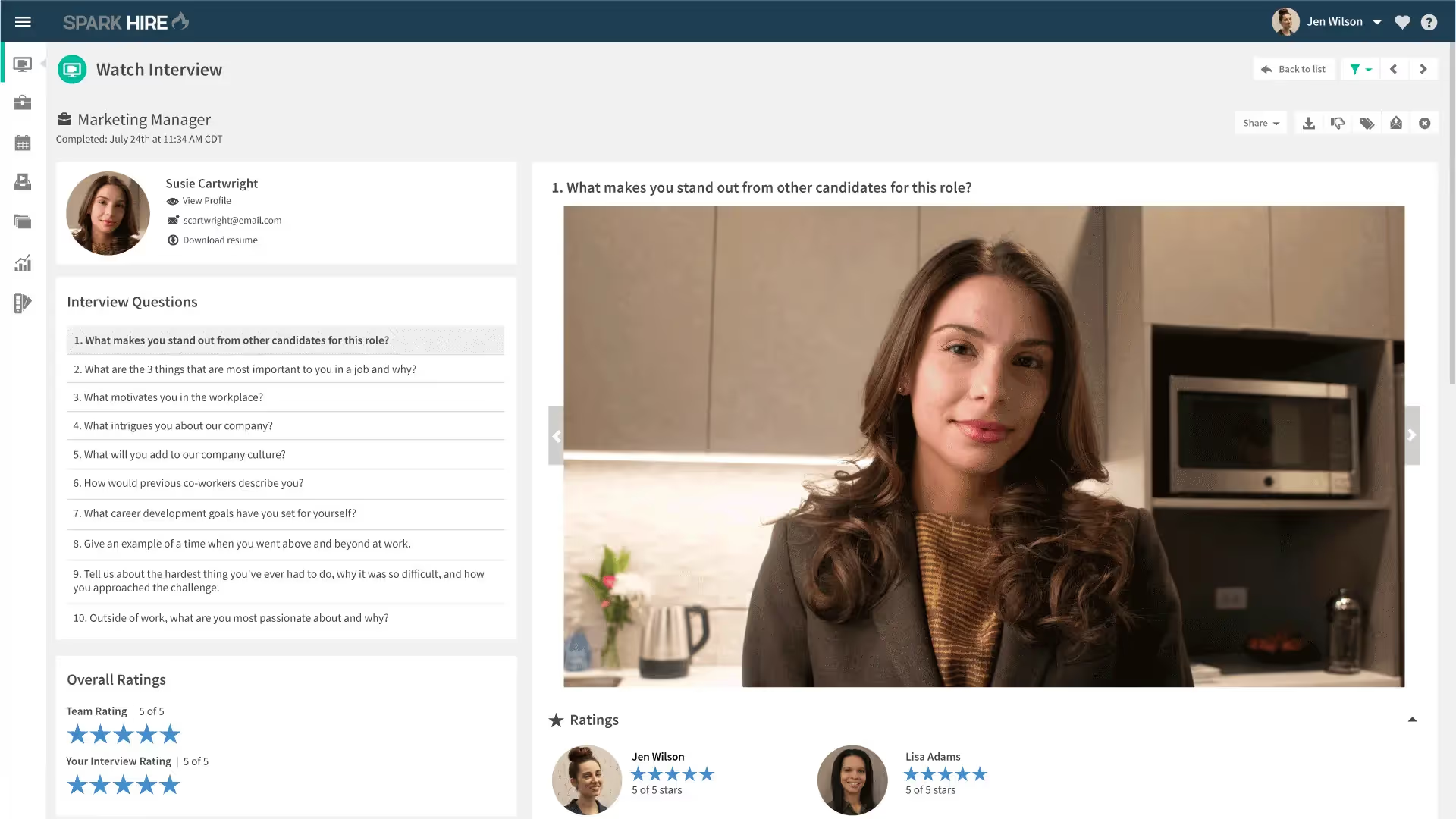
SparkHire is an all-in-one solution for video interviewing that helps companies save time and money while making their hiring process more efficient. SparkHire offers a number of features that are perfect for screening candidates virtually, such as the ability to send automated interview requests, review and compare candidate responses side-by-side, and share candidate responses with your team.
Pros
- Plan that offers unlimited interviews which is useful for companies that adopt virtual screening interviews across their entire organization
Cons
- Requires candidates to make an account which adds friction to the interview process and may result in some candidates not completing their screening interviews
- Significantly more expensive than other options on this list
Loom
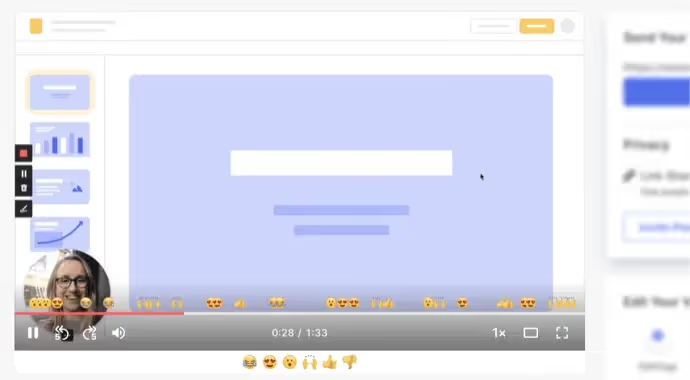
Loom is a chrome-plugin video recording tool that stores recorded videos in the cloud. It is an incredible tool for creating quick videos to share with others, but it can also be used for conducting virtual screening interviews. Loom's video recorder is easy-to-use and the quality of the videos is stellar. You can easily record your questions for candidates and then review their responses at your convenience. Best of all, candidates can respond with a free version of Loom that allows them to store up to 25 videos at a time for free.
Pros
- Loom is an amazing tool for asynchronous work and can be easily used to conduct virtual interviews
- It's super easy to record over job descriptions, a Google Doc, or anything else you'd want to reference for candidates with your questions
Cons
- Since Loom is not specifically for pre-recorded video questions and answers, there's no flow set up. You must provide easy-to-understand instructions to candidates.
- Cannot send automated interview requests like some of the other options on this list
Conclusion and Resources
So there you have it — 4 excellent options for conducting virtual interviews that cover requirements for virtually any company looking to do 1 or 1000 virtual screening interviews.
Are you interested in hiring remotely and implementing the virtual screening interview strategy? Get in touch here and we'll help you craft your hiring strategy and hire great remote talent from Latin America.
Frequently Asked Questions
What roles are best suited for virtual screening interviews?
Virtual screening interviews work exceptionally well for customer support representatives, sales representatives, and virtual assistants, roles where communication skills, personality, and cultural fit are critical. These positions benefit from video responses that showcase a candidate's presentation abilities and professionalism. Administrative assistants and executive assistants are also ideal candidates for virtual screening, as you can assess their organizational thinking and communication style. The asynchronous format lets candidates demonstrate these soft skills on their own time while giving hiring managers the flexibility to review responses when convenient.
Can technical roles like developers and analysts use virtual screening interviews?
Absolutely. While software engineers, data analysts, and other technical roles often require coding assessments or technical tests, virtual screening interviews serve as an excellent first filter before those deeper evaluations. Use tools like Loom to have candidates walk through their portfolio, explain their problem-solving approach, or discuss past projects. This saves valuable engineering time by ensuring technical assessments only go to candidates who can clearly communicate their thinking—a critical skill for any development role. For technical positions, the screening interview reveals whether a candidate can articulate complex concepts, a must-have for collaborative development environments.
Where should I look for candidates to conduct these virtual interviews with?
If you're hiring remotely, location strategy matters as much as interview process. The best countries to hire overseas VAs and remote professionals balance time zone compatibility, English proficiency, and cost savings. Latin American countries like Mexico, Colombia, and Argentina offer near-perfect time zone alignment with US businesses, making real-time follow-up and collaboration seamless after the screening stage. For roles requiring 24/7 coverage, countries like the Philippines provide skilled professionals with excellent English and strong customer service backgrounds. Your virtual screening interview strategy works best when combined with smart location choices that set up long-term success.
What types of virtual assistant specializations should I screen for with virtual interviews?
Virtual screening interviews work particularly well when hiring specialized virtual assistants because you can assess both communication skills and domain knowledge. Beyond general administrative support, consider screening for specialized VA services like customer support coordination, sales assistance, social media management, e-commerce operations, HR administration, content production support, or event planning. Each specialization requires different skill sets, and video responses let you evaluate whether candidates can articulate their experience and problem-solving approach in their specific domain. For example, a social media VA should demonstrate strategic thinking about platform management, while an e-commerce VA needs to show operational efficiency and attention to detail. Virtual screening helps you filter for these nuances before investing time in deeper technical assessments.










%203.svg)
.avif)




%20(1).avif)

%20(1).png)