


%203.svg)
Key Takeaways
- The best SDRs are confident on calls, bounce back from rejection, and know how to hold a real conversation. Sales experience matters—but attitude, communication skills, and coachability matter more.
- SDR compensation in the US typically ranges from $43K to $90K base, but hiring internationally can cut costs by 30–70%.
- You can find SDRs through job boards, freelance platforms, or recruiters—choose based on how much time, budget, and support you have.
Your sales pipeline depends on consistent, quality leads. But when your current SDR team can’t keep up with demand, or when you’re cycling through underperforming hires, your entire revenue engine stalls.
Here’s what makes SDR hiring uniquely challenging: you need someone with the right mix of hustle, grit, and personality that simply can’t be taught.
Attrition is notoriously high in this role because many people think they want to be in sales until they realize what it actually takes. The reality is harsh—daily rejection, constant prospecting, and the pressure to consistently deliver results.
This guide covers everything you need to know to hire an effective SDR: the skills that matter most, where to find qualified candidates, how to evaluate them properly, and the common mistakes that lead to costly mis-hires.
What Do Sales Development Representatives Do?
Sales development representatives (SDRs) drive the top of your sales funnel by identifying, qualifying, and nurturing prospects before passing them to account executives for closing.
SDRs are often responsible for generating a significant portion of your sales pipeline. In many companies, they’re the engine that keeps your account executives busy with qualified opportunities. When you have a great SDR, your entire sales machine runs smoother. When you don’t, even your best closers struggle to hit their numbers.
SDRs focus on outbound prospecting through cold calling, email outreach, and social selling to generate qualified leads. They research target companies, personalize outreach messages, handle initial objections, and schedule discovery calls with prospects who show genuine interest. To make this process more efficient, businesses can use AI B2B lead generation to identify potential customers, prioritize promising prospects, and support more targeted outreach campaigns.
Unlike account executives who focus on closing deals, SDRs specialize in the early stages of the sales process where persistence and relationship-building matter most.
With each SDR potentially driving millions in pipeline value, the ROI of investing in better hiring practices becomes immediately clear.
How Much Does It Cost to Hire an SDR?
SDR compensation packages can quickly add up, especially when you factor in the variable commission structures that top performers expect.
Understanding the full picture helps you budget effectively and structure offers that attract the talent you need.
Understanding SDR compensation structure
Most SDR compensation combines base salary with commission, creating a total package that rewards performance.
The typical structure includes:
- Base salary: The fixed annual amount that provides financial stability and covers basic living expenses. This is the guaranteed portion of compensation.
- Commission: Variable compensation based on performance metrics like meetings booked, qualified opportunities generated, or pipeline created.
Commission structures vary depending on your industry, deal size, and company goals.
To attract top talent, it’s important to be transparent about how commissions are structured and what it takes to earn them.
In the United States, SDR base salaries typically range from $43,000 to $90,000, depending on experience level and location.
However, many companies are finding it difficult to attract candidates who will accept something in this average range. We’ve heard from clients that they’re seeing salary expectations upwards of $180,000 a year for SDR roles—well beyond what most companies can justify for these positions.
This salary expectation inflation means companies are either paying far above market rates or struggling with extended hiring cycles that leave territories uncovered.
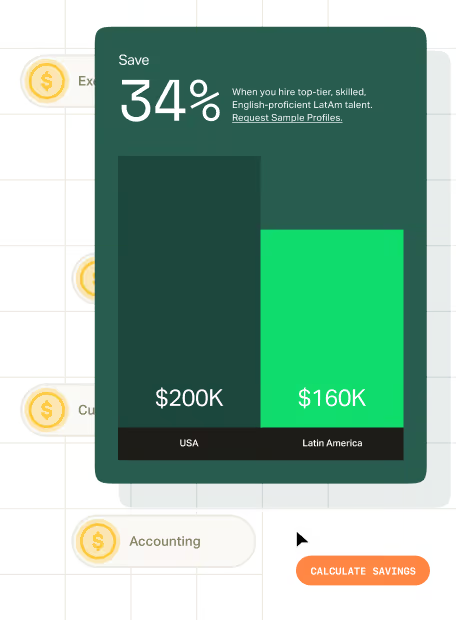
This is why more businesses are looking outside the US to find the sales talent they need at salaries that make financial sense.
For example, here’s how Latin American SDR salaries compare to US ranges:
%204.36.45%E2%80%AFp.%C2%A0m..webp)
These savings reflect differences in cost of living, not talent quality or dedication. Many Latin American SDR professionals have extensive experience working with US companies and understand American business culture and expectations.
For example, one company we worked with achieved a 65% cost savings by hiring Latin American SDRs rather than US-based SDRs, while adding $20 million in ARR.
They used a compensation structure that balanced competitive base salaries with performance-based commissions, creating a win-win situation that attracted top talent while still delivering substantial savings.
You can download their compensation plan to use to design your own SDR comp package.
Other regions like Southeast Asia and Eastern Europe also offer competitive talent pools, but you will have to factor in that the time zones don’t align with the US like they do with Latin America.
{{banner}}
What Skills Should You Look For When Hiring an SDR?
Successful SDRs need a specific combination of technical abilities, interpersonal skills, and traits that drive consistent performance in a results-oriented environment.
Hard skills (the must-haves)
- CRM proficiency: SDRs live in your CRM system, updating lead information, tracking interactions, and managing pipeline data. Look for experience with Salesforce, HubSpot, or similar platforms.
- Sales prospecting tools: Modern SDRs use tools like LinkedIn Sales Navigator, ZoomInfo, Outreach, or SalesLoft to identify prospects and automate outreach sequences. Familiarity with these tools indicates they can hit the ground running.
- Cold calling and email outreach: These remain core SDR activities. Candidates should demonstrate experience with phone prospecting, email copywriting, and follow-up sequences that generate responses. But here’s the thing: you can train someone on your product, but if they don’t know how to talk to people on the phone, you can’t train that.
- Lead qualification methodologies: Understanding frameworks like BANT (Budget, Authority, Need, Timeline) or MEDDIC helps SDRs identify genuine prospects versus tire-kickers.
- Data analysis and reporting: SDRs need to track metrics like call volume, email response rates, and conversion rates to optimize their approach and report on performance.
Soft skills (equally important)
- Resilience and persistence: SDRs face rejection daily. The best candidates show they can bounce back from “no” and maintain consistent activity levels despite setbacks. If you need someone who isn’t afraid to pick up the phone and make 500 calls a day. That kind of hustle is tough to teach.
- Communication and listening skills: Beyond just talking, great SDRs ask thoughtful questions, listen actively to prospect responses, and adapt their messaging based on what they learn. People who are passionate about sales love talking to people, and you’ll notice they get excited while discussing what they do.
- Organizational skills: Managing multiple prospects simultaneously, following up consistently, and maintaining accurate records requires strong organizational abilities.
- Adaptability: Every prospect is different. SDRs need to adjust their approach based on industry, company size, role, and individual personality.
- Goal orientation: The best SDRs are naturally competitive and driven by hitting targets. They should be comfortable with quota-based compensation and accountability. Look for hunters, people who are motivated by commission, not just a steady paycheck.
Nice-to-have skills (the differentiators)
- Social selling expertise: Experience using LinkedIn, Twitter, or other platforms to build relationships and generate leads adds another channel to their toolkit.
- Industry knowledge: While not always required, understanding your target market’s pain points, typical buying processes, and key decision-makers accelerates ramp-up time.
- Content creation abilities: SDRs who can write compelling email templates, create personalized video messages, or develop simple sales collateral become more valuable over time.
- Technical aptitude: Understanding your product’s technical aspects helps SDRs have more meaningful conversations with prospects and identify better-qualified leads.
- Multi-language capabilities: For companies targeting diverse markets, bilingual SDRs can expand your addressable market significantly.
- Industry certifications: Credentials from organizations like Sales Hacker, Salesforce, or HubSpot demonstrate commitment to professional development.
Where Can You Find and Hire Great SDRs?
Most SDR roles don’t need to be in-office. In fact, many don’t even need to be in-country.
SDRs spend the majority of their day on phone calls, Zoom, email, LinkedIn, and CRM tools. They don’t need to be physically close to your HQ—they need to be close to your prospects. And more importantly, they need to be motivated, coachable, and fluent in the kind of communication that gets results.
That flexibility opens up a lot of possibilities when it comes to sourcing.
Here’s how to think about where to look and what to consider for each option.
Deciding between local, national, or global talent
Local hiring (in-office or hybrid)
Some companies still prefer their SDRs in-house, especially if the sales process is tightly tied to product demos, team-based workflows, or a lot of cross-functional collaboration. Face time can help with onboarding, mentorship, and culture-building, especially for junior reps.
But local hiring comes with tradeoffs. The talent pool is limited by geography, and in many US markets, expectations for comp are increasingly disconnected from experience. It’s not uncommon to see junior reps asking for $100K+ OTE before they’ve closed a deal.
Remote within the US
Going remote opens up the candidate pool and can make it easier to find reps with the specific experience or background you’re looking for. You’re still hiring within US time zones, and most candidates are already familiar with US sales culture and expectations.
The downside is that you’re still competing in a tight labor market, and comp expectations will generally be on par with local hires, sometimes even higher depending on the region or industry.
Nearshore and offshore options
If you’re open to remote and results matter more than location, looking internationally can be a smart move, especially for roles where time zone overlap, communication skills, and performance matter more than a shared office space.
Nearshoring to Latin America offers some key benefits: real-time collaboration, strong English proficiency, and significant cost savings compared to US hires. Many companies have built full SDR teams this way, with strong retention and performance.
Offshoring to countries in South or Southeast Asia (like the Philippines or India) can work well too, particularly for roles that are more asynchronous or where written communication is the primary channel.
Just keep in mind that significant time zone differences can make real-time collaboration more difficult, especially if your team works in a high-velocity sales environment.
For companies exploring hiring offshore SDRs, understanding these differences between the top locations for hiring sales talent is crucial for making informed decisions about where to focus your search.
{{state-latam-hiring}}
Choosing the right sourcing channel
Here are your main options for sourcing SDRs today:
Job boards
Best for: Companies with time to screen and a clear idea of their ideal candidate
Posting on job boards like LinkedIn or Indeed is one of the most common starting points. It puts your role in front of active job seekers and gives you a wide pool to choose from.
But be ready to invest time in filtering. Many SDR job postings attract a large volume of applicants—many of whom don’t have direct sales experience or won’t be the right culture fit. You’ll need a strong screening process to separate signal from noise.
That said, if you’re hiring for an in-house or US-remote role and have the bandwidth to manage outreach, interviews, and follow-ups internally, job boards can work well.
Freelance platforms
Best for: Short-term campaigns or low-risk trial runs
Sites like Upwork and Fiverr offer access to freelance SDRs and lead gen specialists. This can be useful if you’re testing a new outreach strategy, running a short campaign, or want to trial someone on a project basis before committing to a full hire.
Just know the tradeoffs. Freelance platforms often prioritize flexibility and speed over long-term fit. Some SDRs on these platforms are excellent, but others may lack the sales acumen or consistency you’d expect from a committed team member.
Freelance can be a good option if you’re experimenting, but it’s rarely the foundation for building a scalable team.
Recruiting partners
Best for: Companies that want speed, quality, or help hiring beyond their own networks
Working with a recruiter—especially one that specializes in sales roles—can help you find qualified, vetted SDRs faster. Recruiters do the heavy lifting on sourcing, screening, and often even comp negotiation.
This is especially helpful if:
- You’ve struggled to fill roles on your own
- You’re hiring for a niche industry or require specific skills (like experience with a particular CRM or outbound tool)
- You’re open to global talent but need help navigating location, compensation, or language fit
Some recruiters specialize in US-based talent, while others focus on international hiring. If you’re considering nearshore or offshore SDRs, partnering with a recruiter who knows the local talent markets and time zone nuances can make the process a lot smoother.
Just be sure to vet your sales recruiting partner as carefully as you’d vet a hire. Experience with sales roles, clarity on the process, and cultural understanding can all make or break the results.
How to Hire the Best SDR: Best Practices
Following a systematic approach increases your chances of finding SDRs who will succeed in your specific environment and contribute to long-term growth. Here are some best practices to include during each stage.
Stage 1: Before and during sourcing
Define your ideal SDR profile beyond generic requirements
Rather than listing “2+ years sales experience,” specify the type of sales environment, deal sizes, and sales cycle length that matches your business
An SDR who excels at high-volume, low-touch sales may struggle in a complex B2B environment requiring consultative approaches.
Your general priority should be on competency over experience. You might consider less experienced candidates or those switching careers, as long as they demonstrate the grit, hustle, raw skills, and English proficiency you need.
Set realistic activity and outcome expectations
Be clear about daily call volumes, email sends, and monthly qualified lead targets.
This transparency helps candidates self-select and sets clear performance benchmarks.
Craft job descriptions that attract the right candidates
Include specific details about your sales process, typical prospect profiles, and team structure. Mention the tools they’ll use, the support they’ll receive, and the growth opportunities within your organization.
When crafting your SDR job description, transparency pays dividends. SHRM’s 2023 research reveals that 70% of organizations that included salary ranges in job postings saw an increased application volume, with 66% reporting higher quality candidates.
For more tips, we have a dedicated guide to writing a job description to attract top sales talent, which includes a template.
Stage 2: Screening and evaluation
Use role-playing exercises to assess real-world abilities
Our recruiters recommend that companies “ask them to do a cold calling simulation or roleplay with a mock client.” This reveals how candidates think on their feet, handle objections, and maintain professionalism under pressure. You can have candidates do a role play where they call or pitch your product to you, showing exactly how they’d sell your company.
Evaluate communication skills through multiple formats
SDRs need to excel at phone, email, and video communication. Test each format during your interview process. Ask candidates to write and send a follow-up email or record a brief video message as part of your evaluation.
Look for strategic thinking, not just activity metrics
The best SDRs understand the “why” behind their activities.
Ask how they prioritize prospects, what makes a lead qualified, and how they adapt their approach based on prospect behavior. One of our top recruiters notes that hiring candidates who describe sales as just “pushing” or “insisting” rather than thinking strategically usually doesn’t lead to long-term success.
Numbers matter, but so does the ability to build authentic relationships rather than just dialing for dollars.
Stage 3: Making the offer and closing the deal
Move quickly with top candidates
The best SDRs often have multiple opportunities. Our recruiters frequently see companies lose great candidates because they take too long to make decisions.
Streamline your process to make offers within 3–5 business days of final interviews.
Set clear expectations for the first 90 days
Provide a detailed onboarding plan that includes training schedules, ramp-up targets, and success metrics.
This demonstrates your commitment to their success and helps them hit the ground running.
New SDRs typically take 3 months to reach full productivity, but with proper support, you can accelerate this timeline.
Create a structured 30-60-90 day plan tailored to your business. For example:
- First 30 days: Product knowledge, tool training, shadowing experienced reps. Focus on learning your ideal customer profile, understanding pain points, and mastering your sales stack. New hires should observe at least 20 live calls before making their own.
- Days 31-60: Supervised prospecting, feedback sessions, quota at 50% of target. Begin independent outreach with daily coaching sessions. Track activity metrics closely and provide real-time feedback on call quality and email effectiveness.
- Days 61-90: Full quota expectations, ongoing coaching, performance review. Transition to weekly check-ins while maintaining support systems.
The key is setting realistic benchmarks at each stage while providing the support needed to meet them. SDRs who feel set up for success are more likely to stay long-term.
Top Interview Questions for Hiring SDRs
Here’s a top interview tip from one of our recruiters:
“Since sales professionals know how to sell themselves, you should really go deep and take them out of their comfort zone during interviews.”
These questions help you understand how candidates think about sales, handle challenges, and fit within your specific environment.
“Tell me about your quotas, achievements, and daily activity levels in your current role.”
Our recruiters always ask about quotas, achievements, and the number of calls or activities per day to understand their workload and consistency.
It reveals work ethic and whether they take a methodical approach to sales or just go through the motions.
Look for candidates who can articulate clear, measurable achievements: they’ve exceeded targets, brought in big accounts, or led growth initiatives.
“How do you handle rejection, and can you give me an example of a time you bounced back from a particularly challenging day?”
Rejection is the daily reality for SDRs, so understanding their resilience and recovery mechanisms is crucial.
Strong candidates will have specific strategies for dealing with “no,” whether that’s taking a brief break, reviewing what went wrong, or immediately jumping into the next call.
Look for candidates who view rejection as part of the process rather than a personal failure.
“Walk me through how you research and prioritize prospects before reaching out.”
This question assesses strategic thinking and preparation habits.
Strong candidates will describe a systematic approach to identifying ideal prospects, understanding their business challenges, and crafting personalized outreach.
Weak answers focus only on volume without considering quality or relevance.
“Describe a time when you had to adapt your sales approach for a difficult prospect.”
Adaptability is crucial for SDR success.
Look for candidates who can read prospect behavior, adjust their communication style, and find creative ways to build relationships. The best answers show learning from each interaction and applying those lessons to future prospects.
“How do you stay organized and maintain consistent activity when managing multiple prospects?”
This reveals time management skills and organizational systems.
Strong candidates will describe specific tools, processes, and habits they use to track interactions, follow up consistently, and maintain pipeline hygiene.
Poor organization leads to missed opportunities and inconsistent performance.
“What questions do you ask to qualify a lead, and how do you know when to pass them to an account executive?”
This question tests their understanding of your sales process and ability to identify genuinely qualified prospects.
Good answers demonstrate knowledge of qualification frameworks and show they understand the difference between interested prospects and qualified leads.
Common Mistakes to Avoid When Hiring SDRs
Even experienced hiring managers make these costly errors when recruiting for SDR roles.
1. Overemphasizing industry experience at the expense of core sales skills
While industry knowledge helps, our recruiters note that “clients sometimes overemphasize industry-specific experience when what really matters is adaptability and sales skill.”
A strong SDR with excellent communication skills and proven results can learn your industry faster than a weak salesperson with relevant experience can develop core competencies.
The confidence and presence that great salespeople bring can’t be taught. They either have it or they don’t.
2. Focusing solely on activity metrics instead of quality indicators
High call volumes don’t guarantee success if those calls don’t convert.
Look for candidates who can articulate their approach to research, personalization, and relationship building.The best SDRs understand that quality conversations drive better results than pure volume.
A red flag to watch for is someone who doesn’t highlight their achievements—no numbers, no quotas, no awards or recognition. Having measurable results in sales profiles is essential.
3. Neglecting cultural fit and team dynamics
SDRs work closely with account executives, marketing teams, and customers. A candidate who performs well individually but can’t collaborate effectively will create friction and limit overall team performance.
Assess how they communicate with different stakeholders and handle feedback.
4. Making compensation too complex or heavily weighted toward base salary
SDRs are motivated by earning potential and clear performance metrics.
Overly complex commission structures create confusion, while low variable pay attracts candidates who aren’t results-driven. Structure compensation to reward both activity and outcomes.
As mentioned previously, our AvantStay case study has an example of an SDR compensation plan you can download.
Why Working With a Recruiting Partner Makes a Difference When Hiring an SDR
While DIY hiring can work for some companies, specialized recruitment help often makes sense for SDR roles, especially when time constraints, international hiring, or market competition are factors.
A recruitment partner with experience helping companies hire for sales roles can accelerate your hiring process significantly.
They understand the nuances of SDR evaluation, have established networks of pre-qualified candidates, and can handle the complexities of international hiring if you decide to expand your search globally.
For companies looking to build remote sales teams, for offshore hiring specifically, recruitment partners manage compliance requirements, cultural fit assessment, English proficiency screening, and onboarding logistics (including running background and reference checks) that most companies aren’t equipped to handle internally.
They also provide market insights about compensation expectations and candidate availability in different regions. For example, these 10 companies can help you hire sales reps in Latin America.
The right partner becomes an extension of your team, understanding your specific needs and company culture to identify candidates who will succeed in your environment long-term.
Final Thoughts
The right SDR becomes a revenue-generating asset who understands your market, builds genuine relationships with prospects, and consistently delivers qualified leads to your sales team.
Finding that person requires looking beyond resumes to assess how they think, communicate, and execute under pressure.
If working with a recruitment partner seems like the right approach, at Near, we understand exactly what makes a great SDR and have helped hundreds of companies build high-performing sales teams.
We match you with pre-vetted Latin American SDRs who have proven track records, excellent English skills, and experience working with US companies. The kind of professionals who understand that one call might be the only opportunity you have to speak with a customer.
Our candidates work during your business hours, integrate seamlessly with your team, deliver exceptional results, and have salary expectations up to 64% lower than US-based SDRs.
Ready to build a sales team that drives consistent pipeline growth?
Book a free consultation call with our team today, and we’ll help you find the perfect SDR within 21 days.
Frequently Asked Questions
How do I know if a candidate will succeed in the SDR role?
Look for love of what they do. People who are passionate about sales, love talking to people, and get excited while discussing their work are more likely to succeed and stick around.
What’s the biggest mistake companies make when hiring SDRs?
According to our recruiters, companies often focus only on numbers and KPIs while ignoring soft skills, which are “one of the key aspects for sales positions.” While quotas matter, successful SDRs need strong communication skills, resilience, and cultural fit to succeed long-term.
What’s the difference between a BDR and an SDR?
The terms are often used interchangeably, but there can be subtle differences depending on the company.
Generally, sales development representatives (SDRs) focus on inbound leads. They qualify prospects who have already shown interest through website visits, content downloads, or demo requests.
Business development representatives (BDRs) typically handle outbound prospecting—cold calling, cold emailing, and reaching out to prospects who haven’t expressed interest yet.
However, many companies use these titles differently, and some use just one role that handles both inbound and outbound activities. When hiring, focus less on the title and more on defining exactly what activities you need this person to perform—inbound qualification, outbound prospecting, or both.
Should I outsource SDR work to a sales company or hire someone in-house?
Both approaches have merit depending on your situation. Outsourcing SDR work to a sales outsourcing company can provide immediate expertise and scalability without the overhead of recruiting, training, and managing individual hires.
It’s often faster to implement and can work well for companies that need quick pipeline generation or want to test SDR effectiveness before committing to full-time hires.
However, in-house SDRs typically develop deeper product knowledge, stronger alignment with your company culture, and better long-term relationships with prospects over outsourcing SDR or BDR roles. They become true extensions of your team rather than external vendors.
The choice often comes down to your timeline, budget, internal training capacity, and how important cultural integration is to your sales process.
What other sales positions should I be considering hiring for?
Depending on your sales process and growth stage, you might need different types of sales professionals working together. If your SDRs are generating more qualified meetings than your current team can handle, consider hiring additional account executives to focus on closing deals while SDRs continue prospecting.
For companies that need more top-of-funnel activity, appointment setters can complement your SDR team by handling initial outreach and qualifying prospects before passing them to SDRs for deeper qualification.
The key is understanding where your bottlenecks are. If you’re struggling to generate enough meetings, focus on SDRs and appointment setters. If you have plenty of opportunities but can’t close them fast enough, prioritize account executives or closers.






.webp)
.webp)


%203.svg)
.avif)






%20(1).avif)

%20(1).png)