Why More US Businesses Are Hiring in Latin America: What We Learned from Talking to 2,000 Hiring Managers
More companies are hiring in Latin America. See the top reasons your peers are making the move and the roles they trust most to fill there.



We’ve taken a deep dive into thousands of calls with US companies to get a picture of the push and pull factors leading them to consider hiring in Latin America. And one thing became clear: companies aren’t hiring in Latin America as purely a cost-cutting measure.
They’re doing it because they’re stuck in one way or another:
- They can’t fill the roles they need to grow at US rates.
- They’re tired of overnight delays with offshore teams.
- They’re frustrated with outsourcing agencies.
- They simply can’t find the skills they need in the US market.
And here’s the critical point: for many of these roles—especially support functions like executive assistants, SDRs, and operations roles—the alternative isn’t “hire someone in the US.” It’s “don’t hire anyone at all.” These positions simply wouldn’t exist without nearshore hiring as an option. Companies would continue limping along understaffed, with founders doing admin work instead of strategic work, with sales pipelines stalling from lack of outreach, with projects delayed because no one has bandwidth.
Latin American hiring isn’t about replacing US jobs or finding “cheap labor.” It’s about creating positions that enable growth—positions that wouldn’t be financially viable otherwise.
{{h-cta-component}}
Top Reasons US Companies Are Turning to LatAm Talent
Here are the primary drivers behind US companies exploring Latin American talent:
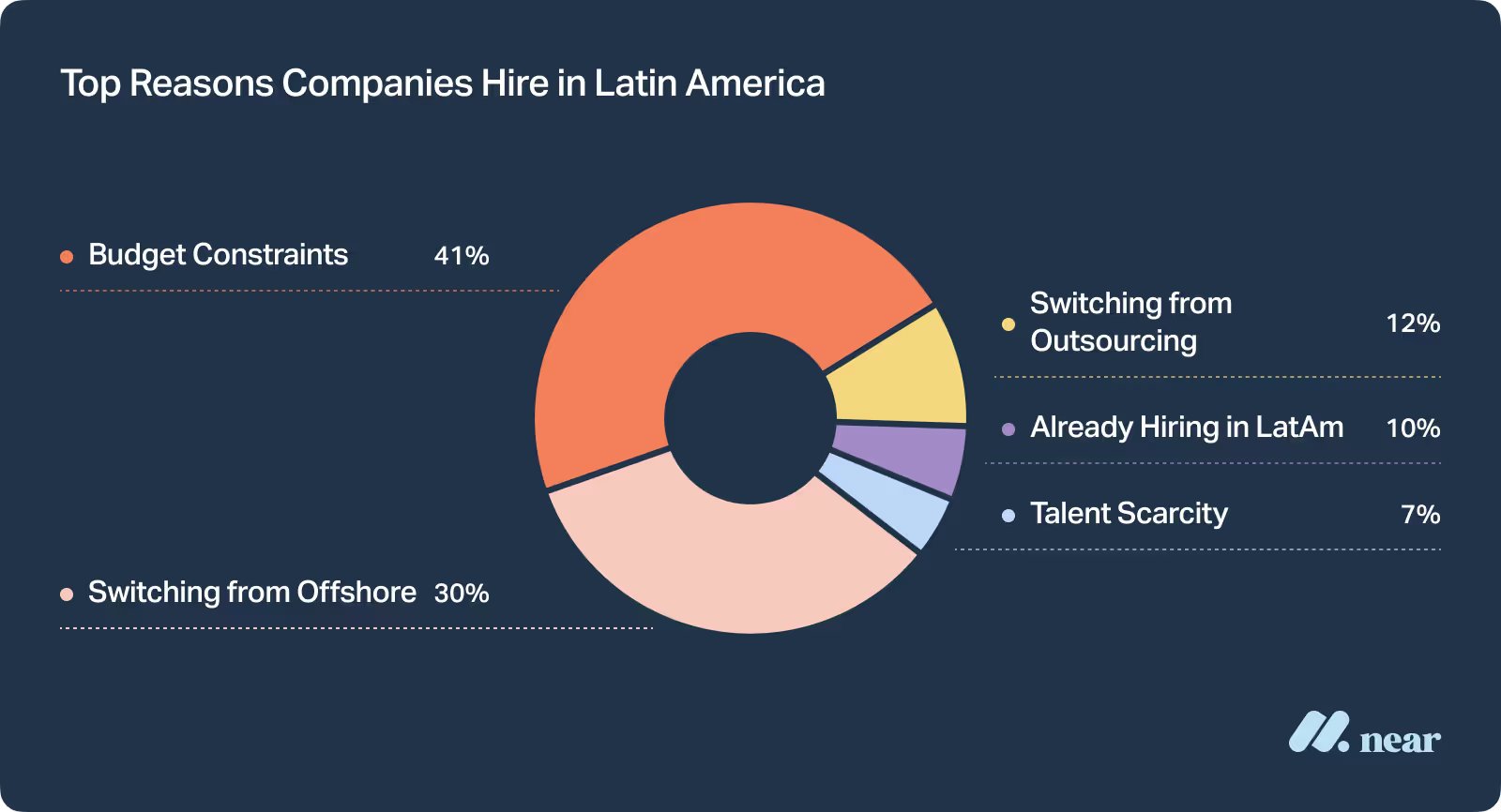
{{table-1}}
The roles companies are hiring for in Latin America
You might assume most companies are looking to hire developers, as that’s a long-standing practice. The reality is more diverse. Here are the top departments companies are looking to fill with Latin American talent:
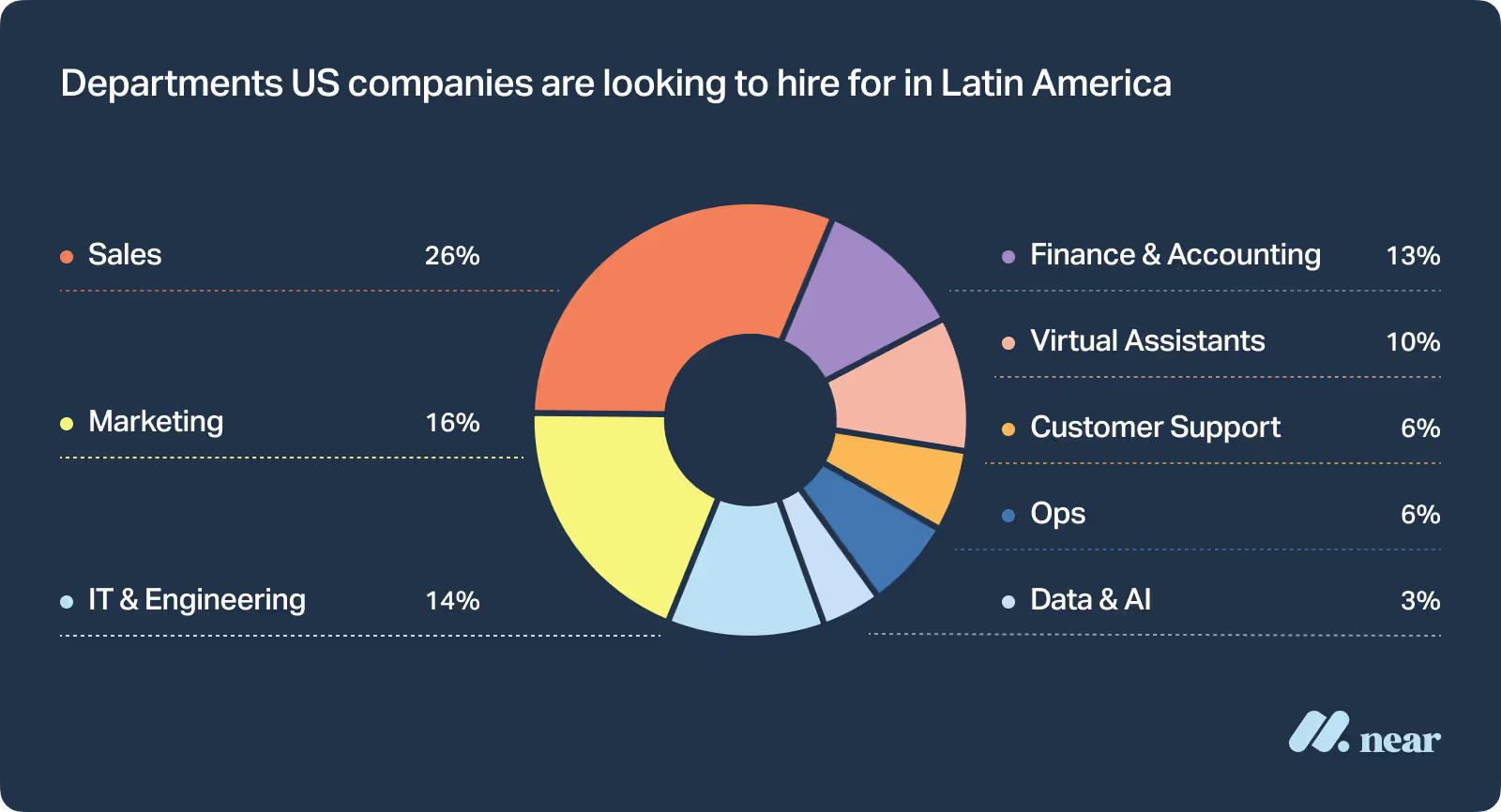
{{table-2}}
Sales roles consistently appear across nearly every hiring reason—from cost savings to switching from offshore. Companies are discovering that Latin American sales professionals bring strong English fluency, cultural alignment with US markets, and the hunger to prove themselves.
And yes, engineering roles are in the mix, but they’re sharing the spotlight with business-critical functions like sales, marketing, and finance that directly impact revenue and growth.
Reason #1: Budget Constraints Prevent Companies from Hiring in the US
{{reason-1}}
The budget challenges growing companies face
Budget constraints are real and nearly everyone is facing them. Companies need specific roles filled, but US salary expectations make it financially impossible or at least impractical. This isn’t about being cheap. It’s about doing more with the resources you have.
What we’re hearing from companies about budget challenges
{{what-1}}
{{what-2}}
{{what-3}}
{{what-4}}
Why companies need cost-effective hiring solutions
Companies are being asked to do more with less. They need to hire more people to grow, but they’re not being given the budget to fill those roles at US rates. In other cases, certain roles are necessary for the business to function and scale, but the ROI simply doesn’t justify US salary expectations. Without an alternative, these companies are stuck—they can’t expand, they can’t take on new opportunities, and their teams burn out trying to cover gaps that should be filled.
Here’s what particularly stood out: people aren’t looking for bottom-dollar rates. They want good people, and they want to pay fairly. As one client put it: “Like we’re happy to pay them well, very well.”
The issue is that they can’t justify $120K for a role that delivers $70K worth of value to the business, or they need senior-level talent but only have a junior-level US budget.
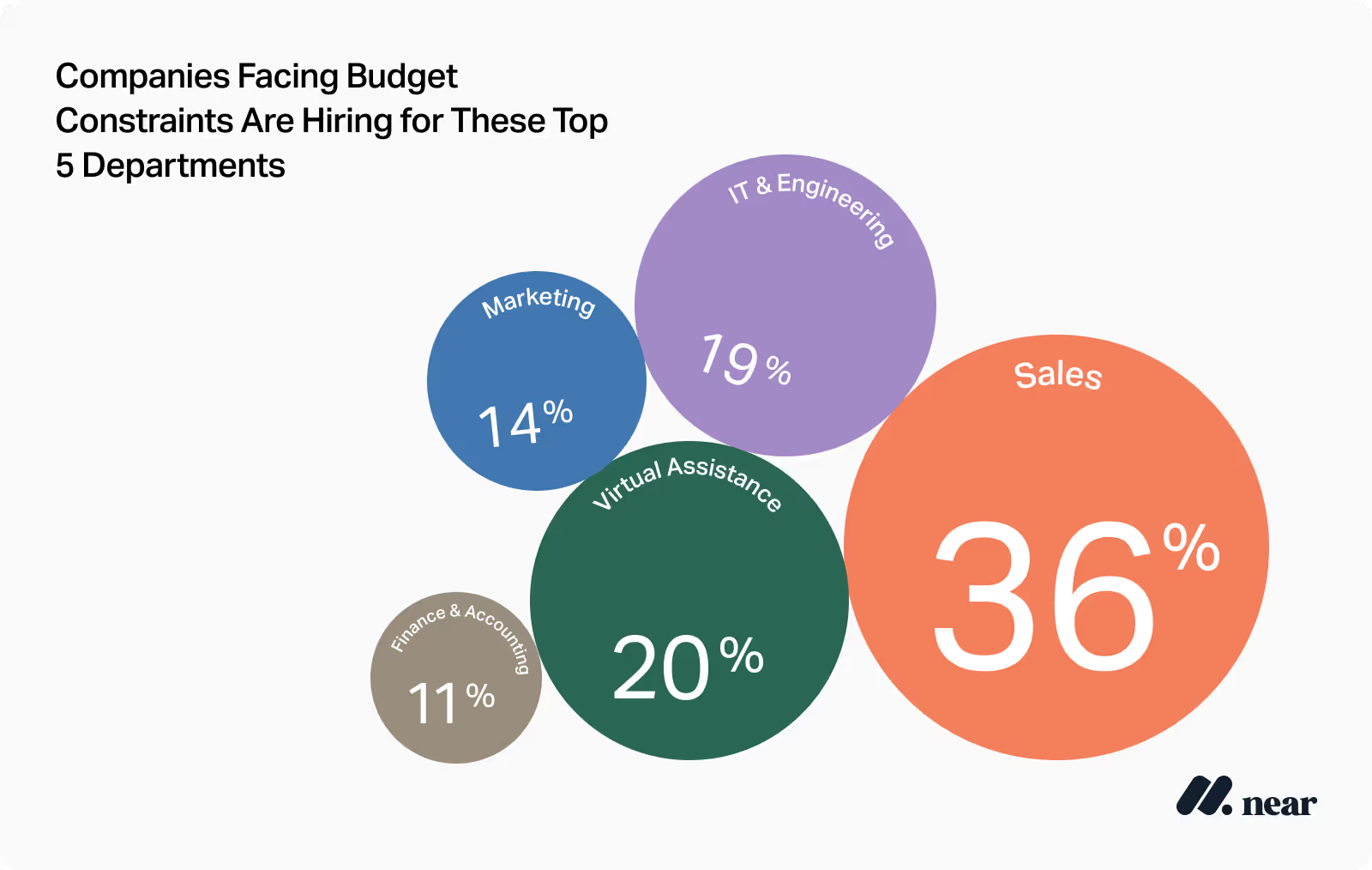
{{table-3}}
How Latin American hiring solves budget challenges
Latin American talent solves this budget constraint without forcing companies to compromise on quality. In fact, it often enables them to hire up. Companies can bring on senior-level professionals—people with 5–10 years of experience, strong skill sets, and proven track records—at rates that would only get them junior talent in the US.
We’ve seen clients hire senior developers, marketing specialists, and finance controllers at 30–70% of US costs—and these hires become long-term team members who drive real business growth.
They’re not settling for less capable people; they’re accessing better talent than their budget would otherwise allow.
For example, we’ve had accounting leaders see real gains when they look to LatAm to hire senior finance talent. CyberFortress was unable to fill senior-level professionals in the US. Once they built a full LatAm finance team with Hire With Near—saving $1.2M annually compared to US hiring—they strengthened their operations.
Reason #2: Companies Want to Switch from Offshore to Nearshore Hiring for Better Alignment
{{reason-2-testimonial}}
Challenges with traditional offshore hiring
Offshore hiring—especially from distant countries like India and the Philippines—comes with challenges that companies eventually hit: massive time zone gaps lead to communication delays and difficulty with real-time collaboration.
What we’re hearing from companies about offshoring challenges
{{what-hearing-1}}
{{what-hearing-2}}
{{what-hearing-3}}
Why time zones matter
For most departments, time zone alignment is crucial for productivity. Teams need meaningful overlap in their workdays for real-time Slack messages, same-day standups, and quick feedback loops. When your developer is asleep during your entire workday, projects slow down. When your team can’t hop on a quick call without scheduling around a 12-hour time difference, things break.
Latin America solves this. Teams work US hours. Cultural alignment is strong. Communication flows naturally.
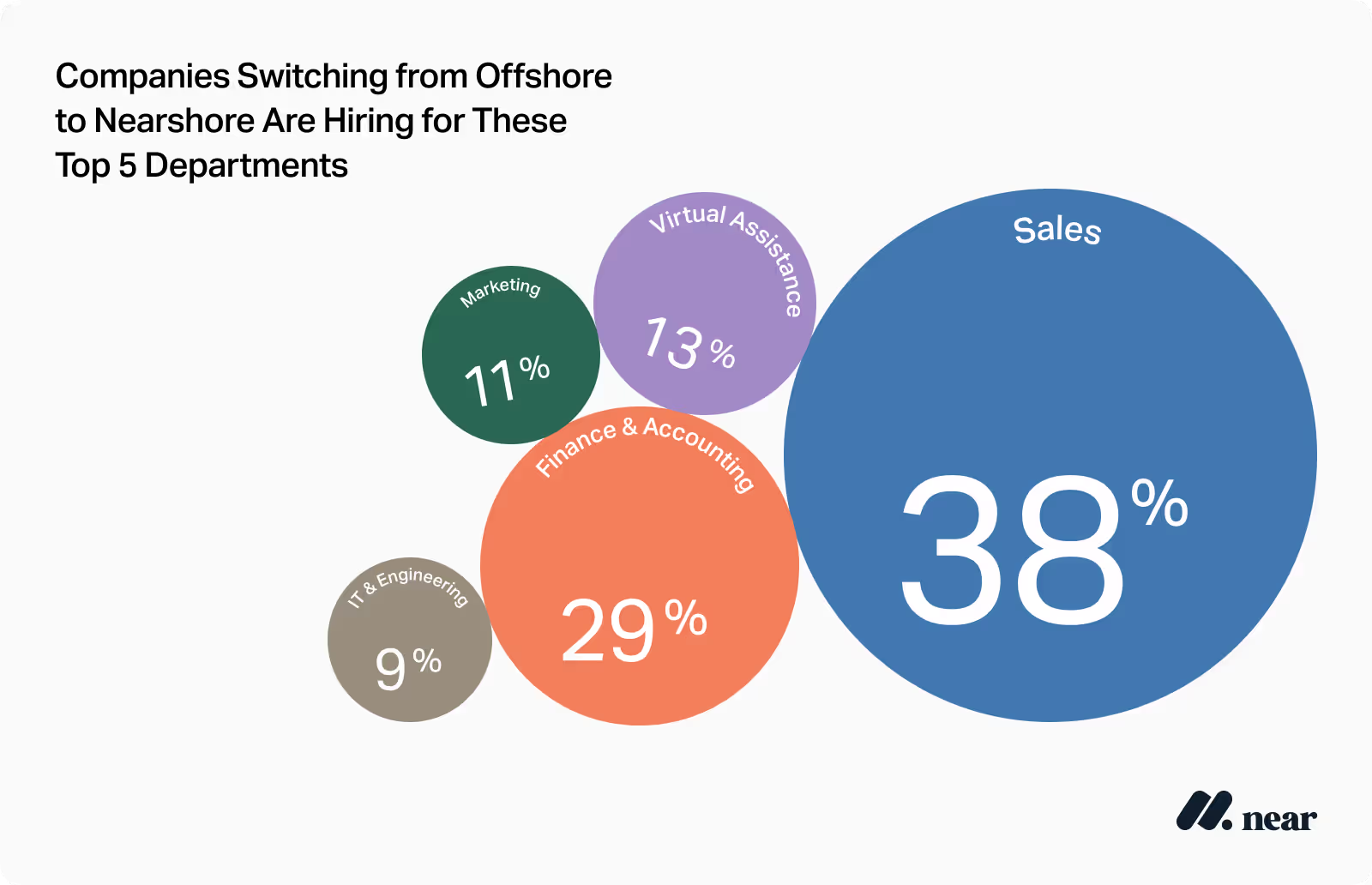
{{table-4}}
Benefits of hiring in Latin America compared to traditional offshore regions
Nearshore talent gives companies the overlap they need without sacrificing quality. We’ve placed QA engineers, developers, accountants, and sales reps who integrate seamlessly into US teams, attending standups, collaborating in real-time, and delivering results without the friction of extreme time differences.
That’s exactly why Kordis, a fractional CFO services firm, made the switch. They moved their accounting and executive assistant roles from the Philippines to Latin America to gain real-time collaboration.
And of course, for companies that need bilingual (Spanish or Portuguese) support, Latin American talent solves that problem.
Reason #3: Companies Want to Replace Outsourcing with Direct Latin American Hiring
{{reason-3-testimonial}}
Why companies grow frustrated with outsourcing agencies
Outsourcing agencies and freelancers serve a purpose for many companies for a while. But companies grow tired of the middleman, the lack of control, the revolving door of people who never quite feel like their team.
What we’re hearing from companies about outsourcing
{{what-3-1}}
{{what-3-2}}
{{what-3-3}}
Why companies want their own team members
Companies want ownership. They want people who understand their business, learn their systems, and grow with them. Outsourcing feels transactional. It’s fine for one-off tasks, but it falls apart when you need consistency, institutional knowledge, and someone who cares about your business the way an employee does.
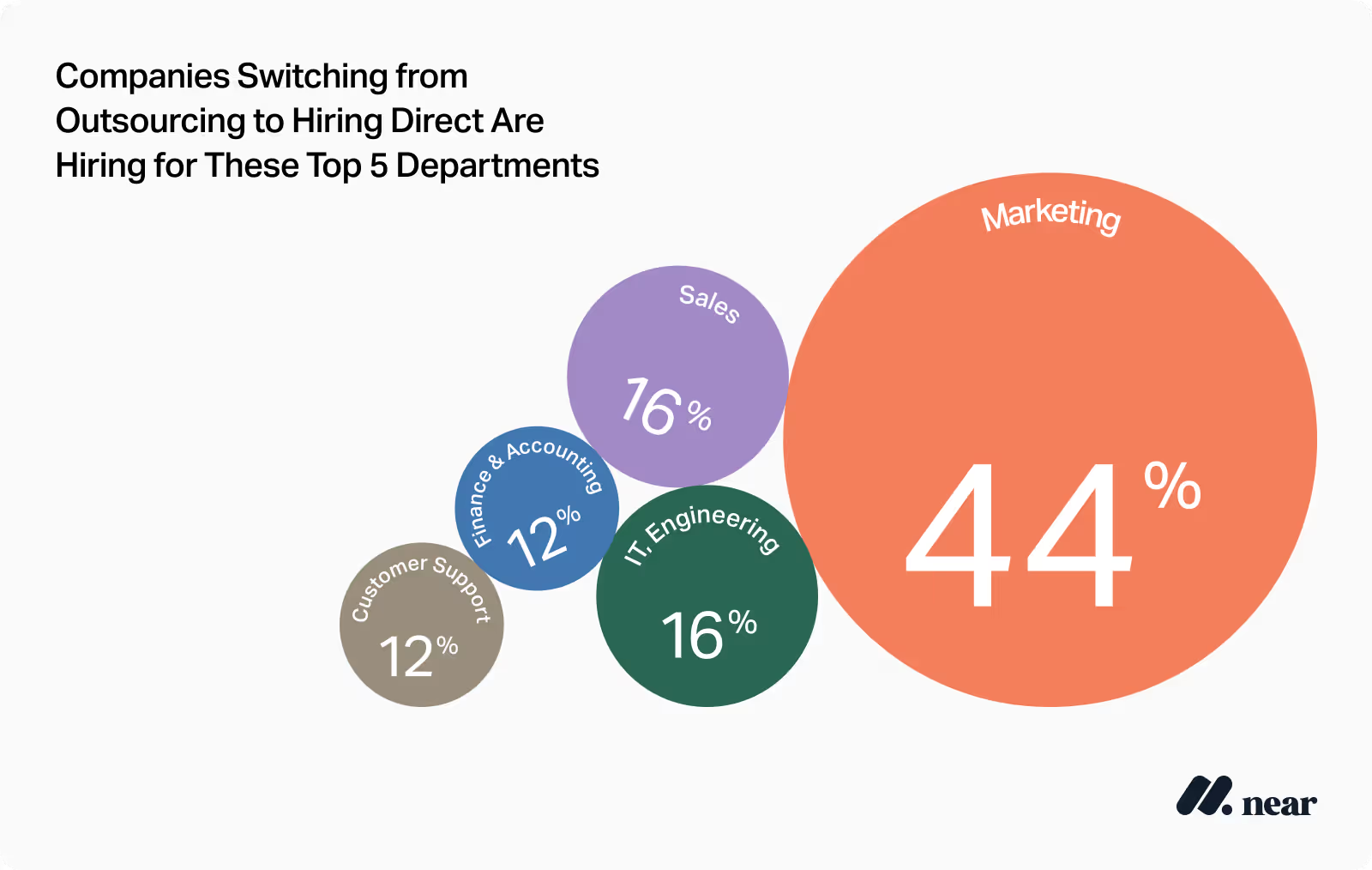
{{table-5}}
Advantages of building your own Latin American team
Hiring your own team in Latin America gives you the best of both worlds: cost savings without the middleman markup and real team members who are dedicated to your business. Companies that make this switch report better retention, deeper expertise, and a sense that they finally have “their own people.”
Reason #4: Companies Are Already Hiring in LatAm But Want to Scale or Need Better Vetting
{{reason-4-testimonial}}
Challenges when scaling Latin American hiring without the right partner
Some companies have already figured out that Latin American talent works. They’re not exploring LatAm hiring—they’re all-in. They’ve made a few hires, seen the results, and now they’re ready to scale.
But finding candidates is time-consuming, and they need help moving faster. Some are not happy with the level of vetting they’re getting elsewhere, and they need a partner who can help them scale faster without sacrificing quality.
What we’re hearing from companies about scaling LatAm hiring
{{what-4-1}}
{{what-4-2}}
{{what-4-3}}
Why companies need help scaling Nearshore hiring
Scaling successfully requires more than just posting jobs. Latin America is a big place, and knowing which universities produce top talent, which companies are respected employers, and what competitive salaries look like requires boots-on-the-ground expertise. Companies need a partner who can identify exceptional candidates at scale — someone who actually understands the local markets they’re hiring from.
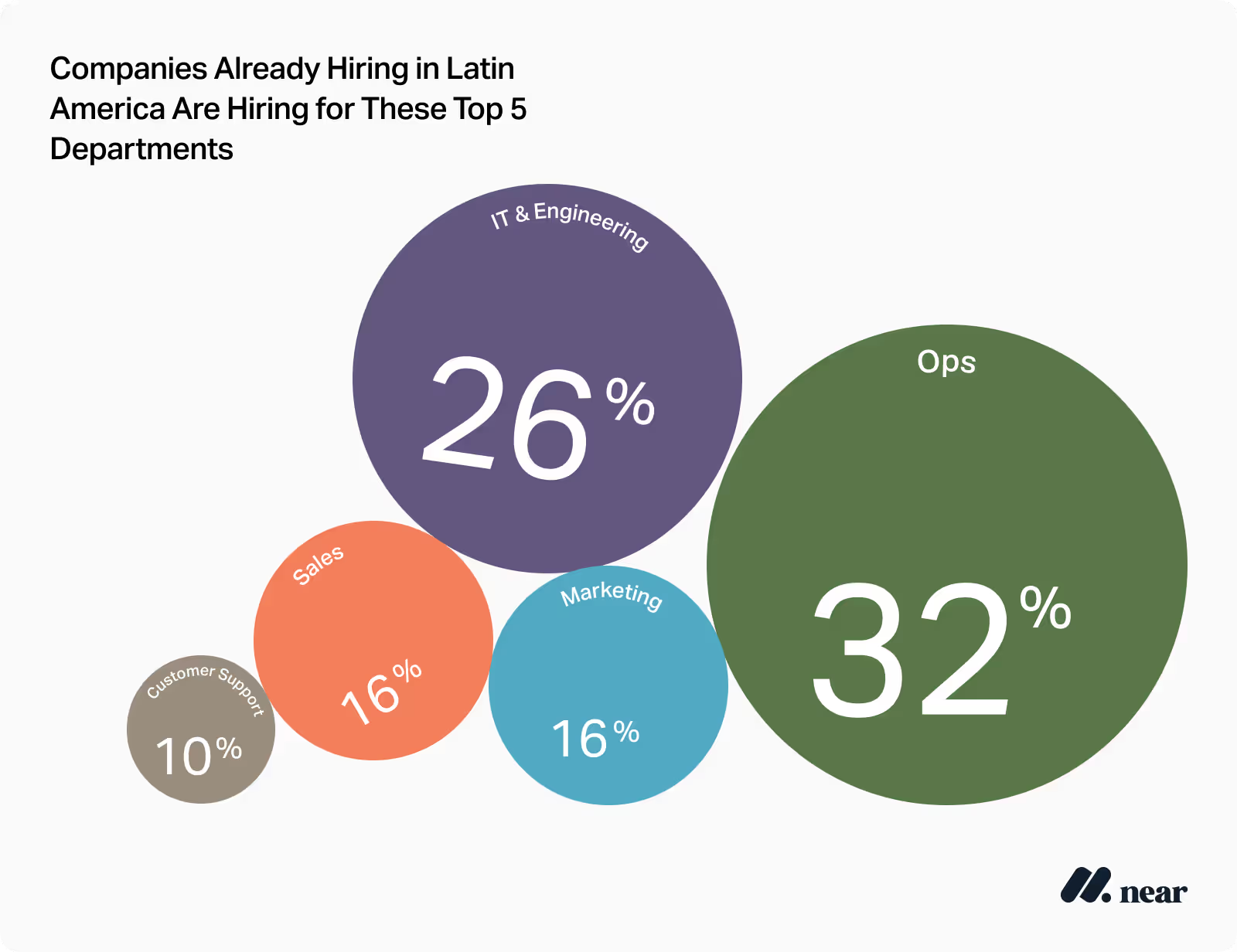
{{table-6}}
How working with the right nearshore hiring partner makes a difference
For companies ready to scale their Latin American teams, Hire With Near provides pre-vetted candidates, faster turnaround times, and a streamlined hiring process. We’ve helped clients go from 3 placements to 10+ in a matter of months, supporting their growth without the bottleneck of managing recruitment in-house.
The quality of talent they can hire often exceeds expectations. For example, here’s one recent message: “We were very pleased with the caliber of talent you were able to find, to the point where we are considering hiring two developers instead of one.” And our recruiters hear this all the time.
When you find exceptional talent at rates that make sense, you can suddenly afford to upskill your team or increase velocity in ways that weren’t possible before.
Reason #5: Companies Can’t Easily Find the Skills They Need in the US Market
{{reason-5-testimonial}}
Why companies struggle to fill some roles in the US
Some roles are just hard to fill domestically. The job’s been open for months. Qualified candidates don’t apply. Competition from bigger companies makes it impossible to land anyone good. Companies are finding it increasingly difficult to find candidates with the drive, commitment, and reasonable expectations they need.
What we’re hearing from companies about long hiring cycles
{{what-5-1}}
{{what-5-2}}
{{what-5-3}}
How slow hiring and talent scarcity impact business growth
The issue isn’t always that the talent doesn’t exist at all in the US. It’s that the timeline to fill these roles doesn’t match business needs. Long hiring timelines aren’t just inconvenient—they’re business blockers. When a critical role sits open for months, projects get delayed, revenue opportunities disappear, and existing teams stretch to cover work that should be distributed.
And increasingly, the scarcity isn’t just about finding people with the right technical skills. It’s about finding people with the right attitude. Some clients also noted a difference in work ethic and expectations. One put it bluntly: “I hate to throw my own country under the bus, but I think a lot of Americans have gotten lazy. I think a lot of Americans have increased their expectations beyond reason.”
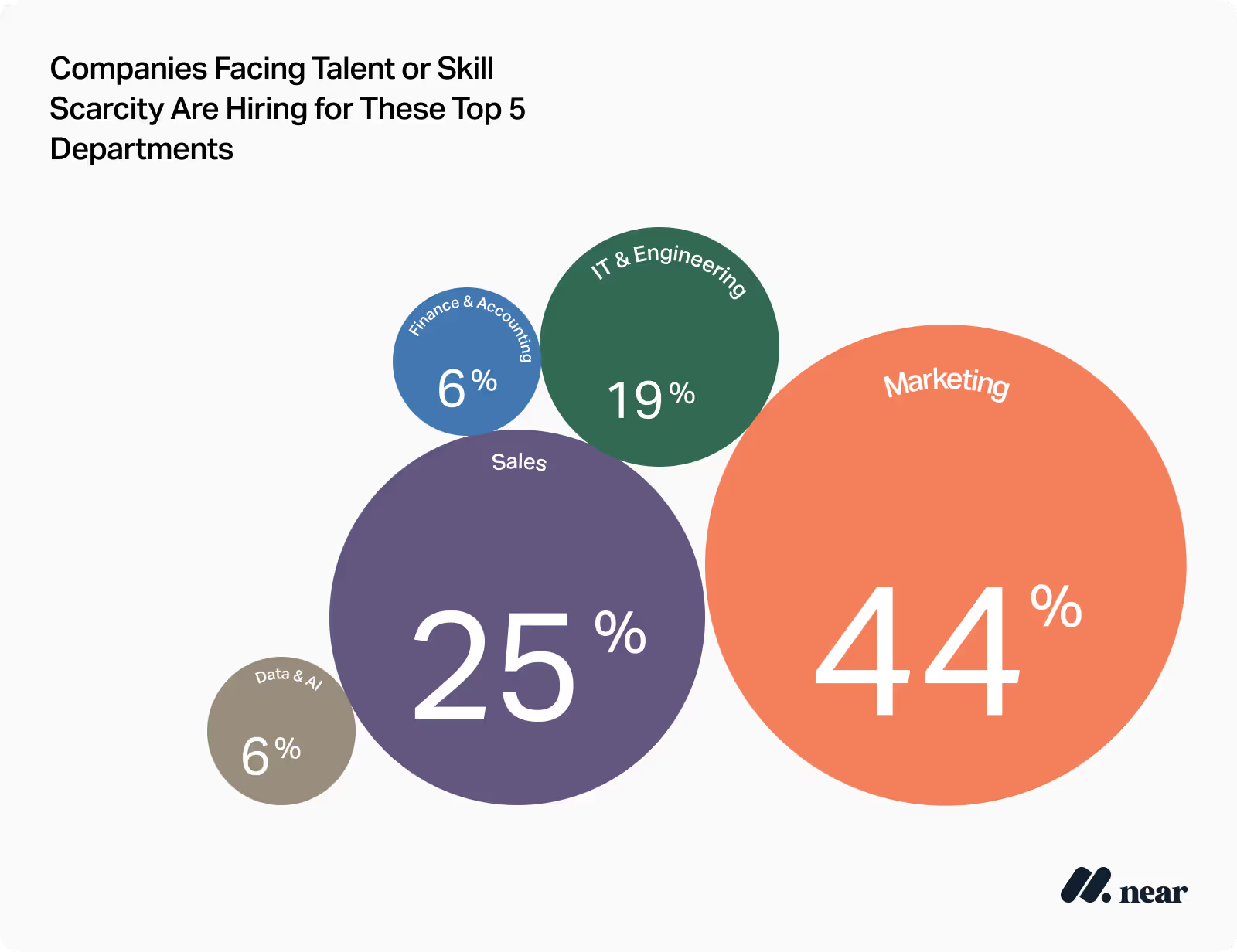
{{table-7}}
How Latin America solves U.S. talent shortages
Latin America opens up access to a talent pool that’s often overlooked. We’ve seen companies fill accounting roles, marketing positions, and engineering jobs they struggled to staff domestically, and the candidates they hire are often more qualified than what they were seeing in the US.
Plus, Latin American professionals bring a hunger and drive that companies find refreshing—they’re eager to prove themselves and deliver results.
For example, AvantStay was frustrated with previous attempts to find great US-based SDRs, so they built a LatAm SDR team, which went on to drive $20 million in ARR.
What This Means for Your Business
When US companies reach out to Hire With Near, they’re looking to:
- Fill roles within a budget that makes US hiring prohibitive
- Switch from hiring in more distant regions to LatAm for the time zone alignment
- Find the skills or attributes they need that they can’t find or afford in the US
- Move from outsourcing to hiring their own team
- Find a partner to help improve their current hiring in LatAm
If you’re facing any of those challenges, hiring in Latin America with Hire With Near’s help might be the move you need.
This isn’t about replacing US hiring. It’s about building the team you actually need to grow your business.
If you want to dig deeper into what this looks like across roles and countries, download The 2025 State of LatAm Hiring Report below.
It breaks down what companies are actually saving by role and where they’re finding the strongest talent across Latin America.
.svg)


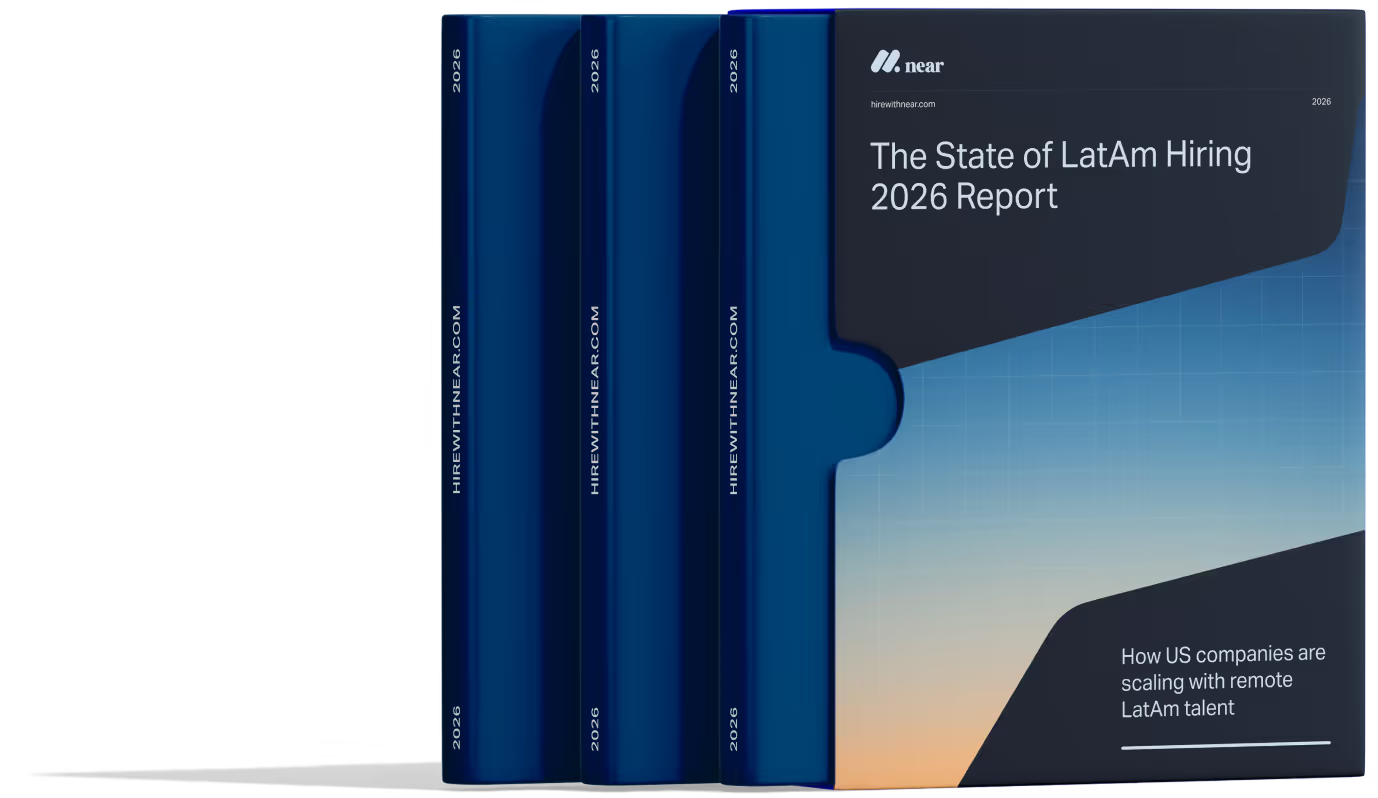
Free Download: The 2026 State of LatAm Hiring Report
We studied data from 2,000+ remote LatAm hires to reveal how top US companies use nearshore hiring to grow faster and recruit top talent while saving $35,000+ annually per hire.
Frequently Asked Questions
On average, companies save 30–70% compared to US salaries for equivalent roles. But it’s not just about savings—you’re getting experienced professionals who are often earning above their local market rates, which means strong retention and commitment. Check out our LatAm vs. U.S. Salary Guide to see specific ranges for your roles.
Hire With Near pre-vets every candidate. We screen for technical skills, English proficiency, cultural fit, and work ethic. We’ve placed over 2,000 professionals with 700+ US companies, and our clients consistently report that the talent quality meets or exceeds their expectations. Many say their LatAm hires are on par with the best people they’ve worked with in the US.
English proficiency is a key part of our vetting process. The professionals we place are fluent and comfortable communicating in business settings. Many are bilingual, which is a strategic advantage if you serve Spanish-speaking markets.
You’re not alone. Many of our clients are hiring remotely for the first time. We provide guidance on best practices for remote management, onboarding, and team integration. Plus, most LatAm professionals are experienced remote workers and adapt quickly to US business culture.
Absolutely. Many clients start with one or two placements to test the model before scaling. There’s no minimum commitment. If it works, great—we’ll help you scale. If it doesn’t, you’re not locked in.
Yes. Hire With Near provides full payroll, benefits administration, contracts, and ongoing support if you choose our staffing model. If you prefer to handle these on your own, we have an option for that too. Many companies, especially those that have already been hiring in LatAm, prefer our recruitment-only model and working with an EOR company like Deel for payroll and compliance support.
Expect your first curated shortlist (with candidate videos) in 3 business days after your kickoff call with your recruiter. Most roles close in 21 days or less. We handle scheduling, keep the process moving, and you can interview candidates for free.
Yes. Hire With Near offers a 180-day replacement guarantee. If the candidate doesn’t work out in that window, we’ll find you a new placement at no additional cost.
No. With Hire With Near, you never pay unless you make a hire. Discovery calls, kickoff calls, shortlists, and interviews are free. There’s no cost or commitment to meet candidates and see the caliber of talent we can bring.
Yes. This is our default. Dedicated recruiters learn your preferences, customize our evaluation criteria to match what you value most in candidates, and adapt our process to match how you like to hire. We’ll even help administer assessment tests if that’s part of your process.
Methodology
This report draws on an analysis of over 2000 calls conducted by Hire With Near with US companies exploring Latin American hiring. We examined the conversations across different company sizes and industries to identify patterns in hiring motivations and role needs.
For each call, we categorized the primary driver behind the company's interest in hiring Latin American talent. When a company mentioned multiple factors, we identified the core constraint or challenge that initiated their search. In cases where the reason wasn't explicitly stated, we analyzed contextual cues throughout the conversation—such as budget discussions, timeline pressures, or previous hiring experiences—to determine the most accurate categorization.
Many companies indicated interest in hiring for multiple departments. We focused on the role they identified as their top priority or most urgent need, providing a clearer picture of what drives initial nearshore hiring interest.
All client quotes are drawn directly from call transcripts and represent common themes expressed across multiple conversations.



%203.svg)
Discover Why Hiring in LatAm is a Cheat Code.
Download our FREE Guide Now.