


%203.svg)
Key Takeaways
- The 10 companies to consider for outsourcing mobile app development are Hire With Near, Trango Tech, OpenXcell, Alliance Recruitment Agency, Appinventiv, BairesDev, Chop Dawg, TRIARE, Andersen, and The NineHertz, ranging from full-service agencies to firms that place dedicated developers on your team.
- Choose by how the work will run: an agency for a defined, time-boxed build, freelancers for small tasks or a quick prototype, staff augmentation to add capacity to a team you already run, and dedicated developers hired through a staffing partner when the app is your product and needs continuous work after launch.
- Where the team sits decides how much of your day you share: Latin America shares most of the US workday, while India, Vietnam, and the Philippines share almost none. Agency rates bundle developer pay with the vendor’s margin, so compare total cost, not headline rates.
Building an app can be an exciting challenge, but it takes the right partner to make it a success. From navigating technical requirements to managing costs and timelines, the process demands precision at every step. That's why so many companies choose to outsource mobile app development rather than build the team from scratch.
Companies outsource mobile app development to hand the build, or part of it, to an outside team that already has the design, engineering, and QA skills an app needs. It can get an app to market faster than recruiting a team from scratch, but the result depends on the model you choose, where the team sits, and what the contract says.
In this guide, I cover when outsourcing makes sense, what to look for in a partner, the benefits and challenges, the options (agencies, freelancers, and staff augmentation), what it costs, the best countries, and 10 companies worth a look. I also explain when building your own team of dedicated Android developers or iOS developers in Latin America is the better call.
When Should You Outsource Mobile App Development?
Outsource mobile app development when you have a defined build and no in-house mobile team, need specialized skills you won't need forever, or need to ship faster than you can hire. Keep the work in-house by hiring dedicated developers when the app is your product and will need the same professionals improving it for years.
The deciding question is how long you'll need the knowledge that goes into the code. A one-off build can go out and come back as a finished app. A product you'll change every sprint needs people who stay on your team for the long run.
Outsource when:
- You have a clear scope (an MVP, a v1, or a redesign) and no mobile developers on staff.
- You need a specialized skill for one project, such as AR features, in-app payments, or a native port of an existing app.
- Your launch date is closer than the time it would take to recruit and onboard a team.
Build your own team when:
- The app is the product, and you'll ship updates every few weeks for years.
- It handles sensitive data or core IP you'd rather not spread across a vendor's staff.
- You'll need the same engineers' knowledge of the codebase long after launch.
Top-performing companies are drawing the same line. In McKinsey's Global Tech Agenda 2026, “nearly half of top performers plan to increase insourcing to bring strategic technology expertise back in-house” over the next two years, compared with 37% of other organizations. McKinsey sums it up as “outsourcing builds capacity, but insourcing builds capability.”
For a mobile app, that usually means clearly scoped or routine work goes to an outside team, while the core product stays with people who report to you.
Where those professionals sit is a separate choice. Our comparison of local vs. offshore developers covers when each model wins.
What Should You Consider When Outsourcing Mobile App Development Services?
When considering outsourcing an app build, vet the outsourcing partner on eight traits: technical depth in your app category, industry knowledge, communication, development methodology, cultural fit, post-launch support, cost transparency, and client reviews.
Outsourcing mobile app development services is a big decision, and getting the partner right is what separates a standout app from one that falls flat. Here's what each trait looks like when you're checking for it:
1. Technical expertise and experience
A great app starts with the right technical foundation. Look for a mobile app development team with a portfolio of similar projects, and hold them to the bar you'd use when hiring mobile app developers directly. If you're building an e-commerce app, a partner experienced in secure payment gateways and user-friendly interfaces can spare you a lot of rework.
If your project involves iOS features, check if the partner has real iOS app development experience rather than a generalist team. That's what keeps a build from stalling on platform-specific problems late in the project.
Our Recruitment Consultant Natasha Tarapow always asks candidates about a project they've worked on. Use that question when interviewing an outsourcing partner: ask not just about the language used, but what was done. A team that can walk you through a shipped app in plain language, including what went wrong, tells you more than a deck of logos.
2. Industry knowledge
An outsourcing partner with deep industry knowledge creates solutions that fit your business. They understand your market's unique challenges, your users' needs, and the trends shaping your industry.
For example, a partner with experience in the fintech industry can help you navigate strict compliance rules, while someone familiar with retail knows how to craft smooth shopping experiences. That background makes sure the app is truly useful to the business.
The same test applies if you hire developers instead of an agency: a partner doing IT and tech recruiting in Latin America every day knows who has shipped in your sector.
3. Communication skills
Clear communication is the foundation of any successful outsourcing partnership. A reliable partner will prioritize open dialogue and use preferred tools like Slack or Zoom for real-time updates, progress reports, and collaboration.
But great communication isn't just about talking; it's also about active listening. Your partner should be receptive to your ideas, quick to address concerns, and proactive in solving challenges.
Ask who you'll speak with day to day, and whether that person is writing the code or relaying messages.
4. Development methodology
Look for an outsourcing partner that embraces agile practices. With Agile, for example, your app is built in manageable steps, allowing you to review and tweak as the project unfolds.
A great partner will explain their app development process clearly, outlining how they handle sprints, prioritize tasks, and manage unforeseen challenges.
Whether they lean on Agile, Waterfall, or a mix of both, the goals are the same: steady progress, fewer surprises, and a final product in line with your vision.
5. Cultural fit
Cultural fit might not be the first thing you think of when outsourcing app development, but it's key to a successful partnership. An outsourced team that shares your communication style and approach to problem-solving needs less managing and fewer meetings to reach the same decision.
If your company values collaboration and innovation, your outsourcing partner should encourage open discussions and welcome creative ideas. Consider time zones and holidays, too, as a strong cultural fit fosters trust, minimizes misunderstandings, and creates a partnership in which everyone is working toward the same goals.
6. Post-launch support and maintenance
Post-launch support and maintenance are where a real partnership shows itself because the work isn't over once the app is live: Bugs might pop up, user expectations may shift, and new technologies could make updates necessary. As of August 2026, 75% of the top 1,000 Android apps on the Google Play Store are updated at least once a month.
A reliable outsourcing partner makes sure your app keeps pace with your business needs. Look for a team that offers regular updates, monitors performance, and is ready to jump in for bug fixes.
7. Cost transparency and payment models
Clear and transparent pricing is non-negotiable when outsourcing mobile app development. From development to ongoing support, understanding the cost of outsourcing mobile app development means you know exactly what you're paying for.
Flexibility in payment models is also a big plus. Fixed-price agreements work well for straightforward projects, while the time-and-materials model offers more adaptability for evolving needs. A partner who walks you through these options shows they're invested in your success.
8. Client reviews and testimonials
Client reviews and testimonials are a window into your outsourcing partner's reliability and expertise. Genuine feedback from previous clients highlights their strengths and reveals what it's really like to work with them, how they handle challenges, and whether they deliver on promises.
Look for reviews that share real stories, like how a partner met a tough deadline or solved a tricky technical issue. Testimonials on their website are helpful, but don't stop there. Platforms like Clutch, G2, Trustpilot, and Google Reviews often provide a more well-rounded picture.
What Are the Benefits of Outsourcing Mobile App Development?
Outsourcing mobile app development pays off in three ways: lower costs, real-time collaboration when the team shares your working day, and access to skills your own team doesn't have.
Here are three ways to make outsourcing work smarter for your business goals.
1. Cost savings with value in mind
While outsourcing often reduces costs, focusing solely on price can backfire. Evaluate the full scope of a provider's offerings, including any hidden fees, support packages, and the quality of their past work.
A low-cost partner that lacks experience with secure payment gateways could lead to expensive fixes down the line. Balancing cost savings with quality helps your app deliver value without cutting corners.
2. Real-time collaboration through time zone overlap
How much of your working day you share with the outsourced development team sets the pace of the project. Research from Harvard and INFORMS found that larger time-zone gaps force employees to work outside their own normal business hours just to stay in sync with a distant team.
That pattern creates real strain and contributes to burnout and turnover on the offshore side. The same research recom
If you'd rather skip the agency model entirely and build your own team, the same time zone logic applies to hiring Latin American developers directly: they work your hours as employees on your team, not as a vendor's staff. With a team whose workday ends as yours begins, whether outsourced or hired, the same loop costs a day.
3. Access to skills your team doesn't have
Outsourcing gives you access to skills that might not exist within your team. For example, if your app needs advanced AI features or reliable integration with third-party platforms, a team that has already shipped those features won't spend your budget learning them.
A partner with fintech experience, for instance, won't just add payment gateways but will also make sure they're secure, user-friendly, and scalable.
What Are the Challenges of Outsourcing Mobile App Development?
The main challenges of outsourcing mobile app development are knowledge that leaves when the engagement ends, less day-to-day control, time zone gaps that slow reviews and QA, developers whose attention is split across clients, and costs that weren't in the original quote.
In dozens of conversations with the recruiting team at Hire With Near this year, these five come up again and again when US founders describe what went wrong with an app agency before they came to us. The good news is all five are manageable when you set up the engagement around them.
1. Knowledge walks out when the engagement ends
When an agency hands over a finished app, you get the code and, ideally, documentation. You don't get the people who know why the code is written the way it is, so the next feature, bug, or OS update starts with someone learning the codebase from scratch.
ParkMobile, a Hire With Near client, runs a parking app that is used in more than 4,200 cities across 21 countries, and for years its back-end and platform work ran through third-party agency developers. Because the app is the company’s core product, that dependence became a business risk.
Mariana Lepassar, Head of Engineering for Mobile Payments and Billing at ParkMobile, put it this way: “From a business viability perspective, it creates a huge risk for us.”
Keeping the code and accounts in your name protects the asset. Keeping the knowledge takes a team that stays.
2. Less day-to-day control, with a middleman in between
Most agencies route communication through a project manager. That keeps things organized, but your requirements pass through one more person before they reach the developer, and details get lost on the way. Staff augmentation and dedicated developers give you direct access to the people writing the code.
3. Time zone gaps that slow review and QA
When your team and the outsourced team barely share a working day, every question, code review, and test cycle waits overnight. Releases slow down or go out without the checks needed.
One startup founder whose senior QA engineer works from Asia-Pacific described the effect on releases:
She's based in Sri Lanka, and I don't get her enough during my day to actually allow to keep on that high quality and high throughput for my team. So we often release without her. It's not good, right?
The problem there is the schedule. A team that works during your business hours can review and test the same day the code is written.
4. Shared attention across client accounts
Agency developers often split their week across several client projects, and agencies move people between accounts as priorities shift. You may start a build with one team and finish it with another.
Confirm whether the developers on your project are dedicated to it, and have the contract commit the vendor to a specific team: the roles, the seniority, and how much of each person’s time goes to your build.
5. Costs that weren't in the quote
A fixed quote covers the scope as written. Change requests, post-launch support, OS and app store updates, and rework after a missed requirement usually cost extra. Read what a quote excludes before you compare two of them, and agree on support terms in writing.
Agencies are still the right call for plenty of projects, and the next section covers which ones.
Which Outsourcing Option Should You Choose: Agency, Freelancers, or Staff Augmentation? Plus, an Alternative
Choose a full-service agency for a defined, time-boxed build, freelancers for small, well-defined tasks or a quick prototype, and staff augmentation to add capacity to a team you already run.
The alternative to outsourcing is hiring dedicated developers through a staffing and recruiting partner when the app is the product and needs continuous work after launch.
Three differences decide it:
- Who manages the work day to day.
- Who still understands the codebase six months after launch.
- What happens when the engagement ends.
These are the same options you'd weigh for any outsourced development team.
Here's how the models compare:
Here's how each one works for mobile development outsourcing, from most hands-off to most owned:
Full-service development agency
An agency takes your spec and runs the whole build (design, development, QA, and release), managed by its own project manager. That makes it a strong fit when you have a defined scope and no technical lead in-house: you get one team, one contract, and a price and timeline you can plan around.
An agency that has shipped many apps also brings experience with app store submission and release processes that a first-time team would have to learn.
The weak point is what happens after handover. One founder of a small US tax-software company described where an app built by project contractors left them:
They've since kind of disappeared or fell off the map to us. [...] It's really kind of an MVP right now. There's a limited feature set.
If you go the agency route, decide before the contract ends who will own and extend the code.
Freelance platforms
Freelance platforms are a lighter route. Sites like Upwork and Toptal give you fast access to individual contractors, which works for small, well-defined tasks or a quick prototype.
For an app you'll maintain for years, you end up managing quality, coordination, and continuity yourself, contractor by contractor.
Related reading: Hire With Near vs. Toptal: Which Is Best for Remote Talent?
Staff augmentation
Staff augmentation adds pre-vetted developers to your existing team for a project or a flexible period. They work under your direction, in your tools and stand-ups, while the partner handles payroll, benefits, and compliance.
It fits companies that already have a mobile lead or product manager and need more hands without committing to permanent headcount.
If you're comparing it directly with project outsourcing, our breakdown of staff augmentation or outsourcing goes deeper on the trade-offs.
The alternative: Dedicated developers through a staffing partner
When the app is the product, the strongest option for most companies is hiring dedicated developers who join your team for the long term. A staffing partner finds and vets the candidates and you choose who to hire. The developers work as part of your team while the partner handles payroll and compliance.
When you're ready to build that team, you can hire software engineers in Latin America who work during your business hours.
Hiring your own developers isn't automatically the slower path. One US healthtech startup came to Hire With Near needing seven senior engineers, including mobile, and kept its eight-step interview process intact. It hired all seven at a 14-day average time-to-hire, saving $323,000 a year against US salaries. Among the hires was a senior React Native engineer who had led a four-person team on an app used by tens of thousands of people.
Our guide on whether to hire a developer or outsource lays out the decision step by step, while the article about hiring Latin American developers covers costs, top countries, and hiring models.
{{offshore-talent}}
What Are the Best Practices for Outsourcing Mobile App Development (and Protecting Your Project)?
To outsource mobile app development safely, write a tight scope, own the code repository and app store accounts, sign IP assignment before any code is written, start with a paid trial, vet developers on real work, put QA and support terms in writing, and work directly with the developers.
Together, these practices protect what you own and confirm the team can deliver before you commit to the full build, whichever model you choose.
From the editorial work I do interviewing our recruiters, one point comes up more than any other: most outsourcing problems were visible early, in the contract or the first few weeks of work, if anyone had checked.
1. Write a tight scope and acceptance criteria before you ask for quotes
List the features, the platforms (iOS, Android, or both), the integrations, and what done means for each one. Quotes built on a vague brief can't be compared, and every gap in the brief turns into a change request later.
2. Own the repository, cloud accounts, and app store accounts from day one
Create the code repository, the cloud hosting, and the Apple App Store and Google Play developer accounts in your company's name, giving the outside team access. Moving an app out of someone else's developer account later is slow and depends on their cooperation.
Require code to be committed to your repository as it's written, not delivered in a zip file at the end.
3. Put IP assignment and confidentiality in the contract before any code is written
The contract should assign all intellectual property in the work to your company, include confidentiality terms, and state that the work is made for hire. Sign it before the first commit.
If the developers are in another country, work with a partner whose contracts already include IP assignment, so your protection doesn't hinge on enforcing an NDA in another country's courts.
4. Start with a paid trial or first milestone
Before you commit to the full build, pay for one feature, a technical spike, or the first milestone. You'll see code quality, communication, and how the team handles feedback on a real part of your app, at a fraction of the cost of finding out halfway through.
5. Vet the people, not the pitch deck
A pitch deck shows a vendor’s best work, not the team you’ll get. Request a call with the developers who would build your app, plus a technical lead, and treat that call as part of the evaluation.
Have each engineer walk you through a shipped mobile project in plain language: what their role was, what went wrong, and how they fixed it. Years of professional experience with your specific framework tell you more than total years of coding.
The same signals Hire With Near’s recruiters screen for in individual candidates apply here, and two are red flags: an engineer who can’t explain their own role in past projects, and one who avoids talking about mistakes.
A short paid pilot, such as a bug fix, a refactor, or a small feature, shows you the vendor’s code quality, communication, and handling of feedback before you commit to the full build. Review it with the team on a call so you hear how they think, and keep it brief so evaluation doesn’t eat the weeks you’re trying to save.
If you’re not technical yourself, knowing what to ask is the hard part. Julieta Gorodetzky, a Tech Recruiter at Hire With Near, sees this often:
When a client isn't technical, it's very hard for them to know what to ask. I've sent clients an interview guide with questions for round one and round two. And if they don't have someone technical who can evaluate a take-home assignment, we recommend they hold a live technical discussion with the candidate instead.
6. Agree on QA, release cadence, and post-launch support in writing
Write down who tests each release and on which devices, how often releases go out, and what post-launch support covers: bug fixes, OS updates, and response times. If testing is a gap on your side, a dedicated QA engineer who works your hours closes it.
7. Insist on direct access to the developers writing your code
Ask for the developers in your Slack channels and stand-ups, not only a weekly status report from a project manager. Direct access catches misunderstandings while they're still cheap to fix.
How Much Does It Cost to Outsource Mobile App Development?
Most mobile app projects reviewed on Clutch cost between $10,000 and $49,999, and the average project runs about $90,780 over roughly 11 months. App development agencies typically charge $25 to $49 an hour, according to Clutch's App Development Pricing Guide.
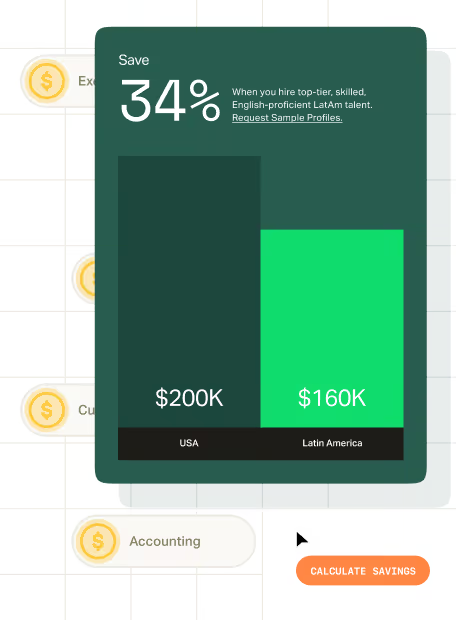
If you hire dedicated developers instead, our salary data puts a mobile developer in Latin America at $48,000 to $120,000 a year depending on seniority, compared with $83,000 to $188,000 in the US.
Your total depends on four things: the scope of the app, the model you choose, where the team is based, and what post-launch support costs.
Agency and outsourcing rates
Clutch's pricing guide puts typical agency rates for mobile app development at these levels by country:
Source: Clutch App Development Pricing Guide, updated September 2026.
Clutch's typical bracket is the same for the United States and Mexico, so for agency work, the firm you pick moves the price more than the country does.
Listed rates for top-ranked US app studios on Clutch's US directory range from $25-$49 up to $200-$300 an hour, with well-known studios such as Fueled and Goji Labs at $150-$199. The top-ranked studios on its Latin America directory, Designli, Somnio Software, and Swovo, list $50-$99.
These are directory listings rather than market averages, but they show why two quotes for the same app can land far apart.
Developer salaries if you hire dedicated developers
If you'd rather hire dedicated mobile developers than pay agency rates, here's what they earn in Latin America compared with the US, according to Hire With Near's salary benchmarks:
For the most up-to-date figures, see Hire With Near's US vs Latin America Salary Guide.
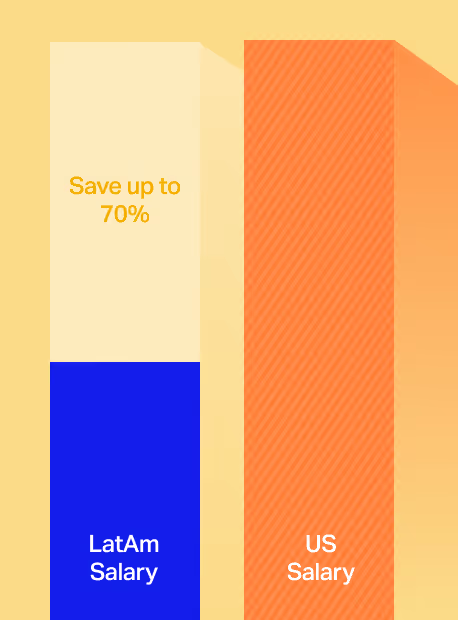
The savings run up to 55–71%, and the gap reflects the lower cost of living in Latin America. Taking mid-level as an example, a mobile developer in Latin America has salary expectations of $60,000 to $78,000 a year versus $94,000 to $164,000 in the US, according to our salary data.
Our guide to IT salaries in the US vs. Latin America covers the other engineering roles on a typical app team.
Those ranges describe experienced engineers: according to Hire With Near’s 2026 State of LatAm Hiring Report, 98% of engineering placements were mid-level or senior.
An agency quote and a salary aren't a like-for-like comparison. A quote pays for a scoped build with a handover at the end. A salary pays for ongoing capacity, and the knowledge of your codebase stays on your team.
{{salary-guide-cta}}
What Are the Top 7 Countries to Outsource Mobile App Development?
Mexico, Brazil, Argentina, India, Poland, Vietnam, and the Philippines are the seven countries US companies most often turn to for outsourced mobile app development.
Each one leads on a different combination of talent, cost, and time zone overlap, so the right fit depends on which of those three matters most for your project.
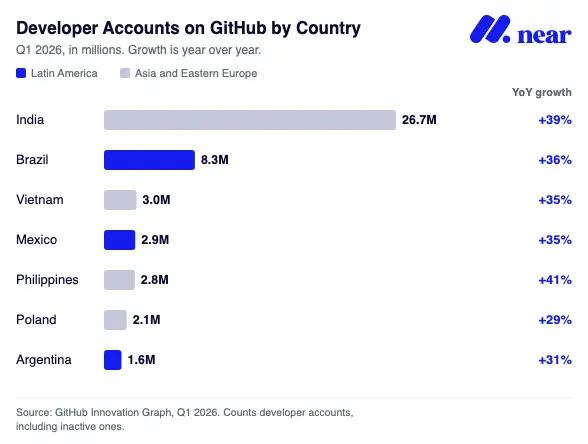
According to GitHub’s Innovation Graph, India had about 26.7 million developer accounts on GitHub in the first quarter of 2026, Brazil about 8.3 million, Mexico about 2.9 million, the Philippines about 2.8 million, and Argentina about 1.6 million. All five grew by more than 30% year over year, with the Philippines up 41% and India up 39%.
If Latin America is the one you're weighing, our free guide to hiring remotely in Latin America covers how it works.
1. Mexico
Mexico is a leading nearshore outsourcing hub for US businesses. Developers based in Mexico work through most of a US business day and are used to US work practices, so collaboration happens live rather than overnight. English varies by engineer, so confirm it in a conversation.
The country's tech industry has grown alongside strong university engineering programs, which means a steady supply of skilled developers ready for complex projects.
2. Brazil
Brazil's tech scene is booming, and developers in Brazil are known for their innovative thinking and technical depth. Whether you need help with mobile game apps or enterprise solutions, Brazil offers a wide range of expertise at highly competitive rates.
Plus, developers based in Brazil are generally used to US product and code-review practices, so there's less to explain at kickoff.

3. Argentina
Argentina is a strong option for high-quality, scalable mobile apps. Strong STEM programs and high English proficiency (No. 1 in Latin America according to the 2025 EF English Proficiency Index) mean you'll find developers who can hold their own in an architecture review, and it's simple to hire developers in Argentina full time rather than per project.
Whether you're building an e-commerce app or a large enterprise platform, Argentina belongs on your shortlist for outsourcing mobile app development.
4. India
India has more than 26 million GitHub accounts and rates run well below US levels. The depth of that talent pool makes it easy to find specialists for any type of app.
The tradeoff is the working day. Some teams in India offer overlapping hours with US clients, but with a 9.5- to 13.5-hour difference, that overlap usually comes out of someone's evening, so ask what it looks like week to week.
If you're weighing the two regions, we've put Latin America and India side by side on cost, overlap, and hiring models.
5. Poland
Poland has built a reputation as an Eastern European tech leader, offering developers who combine technical expertise with creativity. They’re especially known for valuing collaboration, making them easy to work with.
Clutch’s typical agency bracket for Poland ($50 to $99 an hour) is higher than for Mexico, India, Ukraine, or the Philippines, so Poland competes mainly on engineering depth.
Working hours overlap only the early part of a US day, so plan for asynchronous handoffs rather than live pairing through most of the afternoon.

6. Vietnam
Vietnam has grown quickly as an outsourcing destination, and its developers work at some of the most competitive rates globally. Whether you need cross-platform or iOS app developers, you'll find teams in Vietnam doing both.
Check the working day before anything else. Vietnam is 11 to 15 hours ahead of the continental US, so shared hours are thin. Confirm which local shift a team will work to align with yours.
7. Philippines
The Philippines stands out for its skilled, English-speaking developers who excel in communication and adaptability. Developer teams in the country are known for being responsive and client-focused, which keeps projects moving.
The Philippines built its outsourcing industry primarily on business process outsourcing (BPO), customer support, back-office operations, and call centers. Software development is a smaller, newer branch of that same ecosystem.
It's there, but vetting matters more here than the country's overall outsourcing reputation might suggest, since a provider that's excellent at customer support isn't automatically the right fit for building your app.
Working hours barely overlap a US day. The Philippines sits 12 to 16 hours ahead of the continental US, so plan for asynchronous handoffs rather than live collaboration through most of your workday.
What Are the 10 Top Companies to Consider for Outsourcing Mobile App Development?
The mobile app outsourcing companies worth considering are Hire With Near, Trango Tech, OpenXcell, Alliance Recruitment Agency, Appinventiv, BairesDev, Chop Dawg, TRIARE, Andersen, and The NineHertz.
The list below includes full-service agencies that run the project for you, staff augmentation and dedicated team providers, and recruiting partners that place developers on your team. Hire With Near is one of the ten, so I have an obvious stake here, and I’ll be clear about where another company fits better.
It’s in no particular order, since the best choice depends on your requirements, budget, and preferred working style.
Here's how the 10 companies compare at a glance:
1. Hire With Near

Hire With Near is a full-service staffing and recruiting agency that helps US companies of all sizes hire top-performing remote talent in Latin America across all industries and departments, including app development and other software engineering roles.
We help companies build their teams with top mobile app developers in Latin America. Unlike development agencies that manage entire projects, we connect you with pre-vetted developers who work directly as part of your team. This gives you direct control over your app development, with developer salary expectations typically 30–70% below US levels.
We specialize exclusively in Latin American talent, giving us deep networks and strong relationships with top developers across tech hubs in countries like Argentina, Mexico, Colombia, and Brazil. Whether you need Android, iOS, or cross-platform developers, we can help you find the exact skills your project requires.
We also help you hire senior engineering leaders, such as heads of mobile and engineering managers, through our executive search service.
We’re ranked No. 118 on the 2026 Inc. 5000 list of the fastest-growing private companies in America.
ParkMobile case study: ParkMobile, part of the global mobility platform Arrive, shows what building your own team can look like instead of outsourcing. For years, its back-end and platform engineering had been handled by outside development agencies, and every time a contractor rolled off, their knowledge of ParkMobile's systems left with them.
Working with Hire With Near, the company hired nine senior engineers across platform, backend, and iOS roles in Bogotá, Colombia, a market they'd never recruited in before. The first candidate shortlists arrived within a week, and the average time to hire was 24 days. The result: $1,066,085 in annual savings, a 73% reduction against US rates.
Watch ParkMobile's Talent Acquisition Lead describe the partnership:
Key features:
- Rapid hiring: Our recruiters source from a pool of 160,000+ candidates, plus run fresh sourcing for your stack, and run first-round interviews, so you interview a vetted shortlist. Most companies make a hire in under three weeks.
- Time zone advantage: Latin American developers share most of their working hours with US business hours, enabling real-time collaboration without communication delays.
- Transparent pricing: No upfront fees. Only pay once you hire. One-off fee or a monthly fee per hire if you want us to handle payroll and compliance. Transparent contracts (you’ll know exactly what your developer earns).
Client review: “Working with Hire With Near has been an outstanding experience. They provided us with a pool of qualified candidates across multiple roles, which gave us the opportunity to choose from several excellent professionals rather than settling for limited options. The entire hiring process was smooth, organized, and efficient from start to finish.” (Customer review on G2)
2. Trango Tech
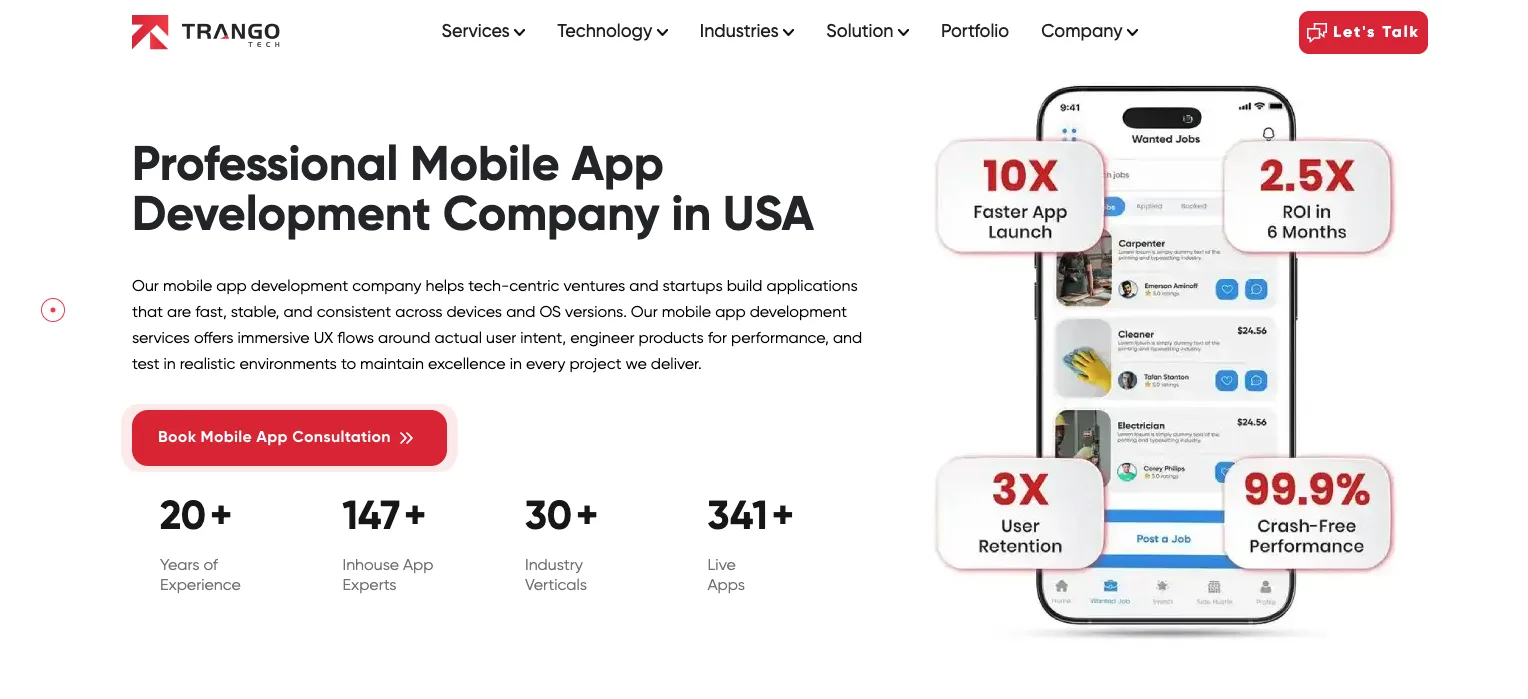
Trango Tech is a mobile app development company with over 20 years of experience. They have offices in Pakistan and throughout the US, including Chicago, San Jose, Dallas, and New York.
Key features:
- Technical focus: Know their way around iOS, Android, Flutter, React Native, cross-platforms, and IoT.
- Engagement options: Staff augmentation and BPO (business process outsourcing services).
- Team composition: Over 100 certified and trained developers with 15 years of experience.
Client review: “We have recently partnered with Trango Tech for mobile app development services, and unexpectedly, the app they delivered was beyond our expectations.” — (Customer review on Clutch)
3. OpenXcell
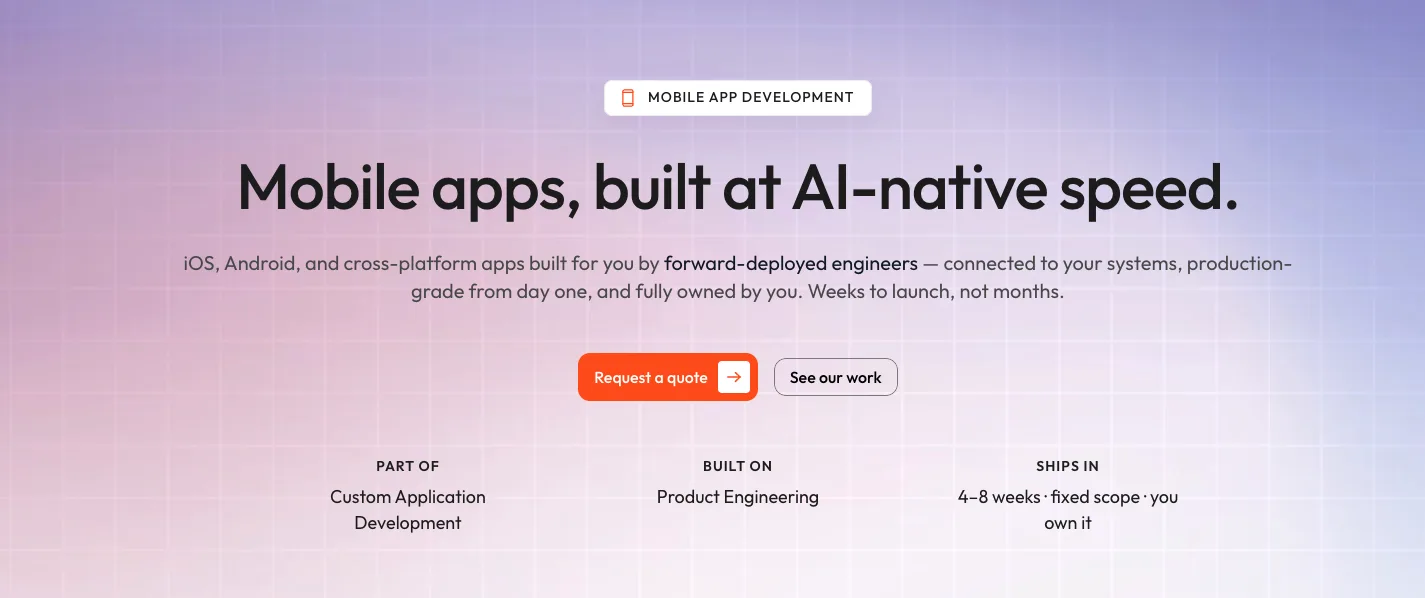
Founded in 2009, OpenXcell is an IT consulting agency with offices in the United States, United Kingdom, India, and Australia. They have helped businesses in industries like healthcare, e-commerce, edtech, sports, and media and entertainment.
Key features:
- Technical focus: Android, iOS, Flutter, React Native, Xamarin, etc.
- Comprehensive services: Offers full-cycle mobile app development services.
- Elite talent pool: Hire mobile app developers who are capable of integrating technologies like AI/ML, VR, and IoT.
Client review: “Every member of my team was amazing. The enthusiasm they all shared working on my projects made it very exciting going through the process.” — (Customer review on G2)
4. Alliance Recruitment Agency
Alliance Recruitment Agency is a recruitment company that helps businesses find talent for their web development, mobile app development, web design, and marketing both within the US and globally.
Key features:
- Technology focus: Android and iOS app development.
- Global reach: Ability to source talent from over 25 global locations, with a talent pool of over 200,000 pre-vetted professionals.
- Engagement options: Project-based hiring, RPO (Recruitment Process Outsourcing), and executive search.
Client review: “We were 100% satisfied with their services.” — (Customer review on Clutch)
5. Appinventiv
Appinventiv has been in the software development market since 2015 and provides custom app development, UI/UX design, and cloud integration services. They have over 1600 experts in their arsenal.
Key features:
- Tech focus: AI-driven mobile applications.
- Engagement options: Full-cycle development and dedicated developer hiring.
- Notable clients: Adidas, IKEA, Domino’s, and KFC.
Client review: “They always work in a collaborative manner to adjust and refine the backlog based on the learnings from these tests.” — (Customer review on Clutch)
6. BairesDev

Founded in Buenos Aires, Argentina in 2009, BairesDev is a nearshore software outsourcing company that connects Latin American developers with companies needing software solutions, including Android and iOS app development.
Key features:
- Technical focus: Mobile applications for enterprises in frameworks like React, Flutter, Java, and more.
- Engagement options: Staff augmentation, dedicated teams, and software outsourcing.
- Timezone alignment: Latin America-based developers working in US business hours.
Client review: “BairesDev effectively sources and filters talent, building a team that perfectly fits our needs. They all have experience in financial services, which is exactly what we wanted.” — (Client review, Clutch)
7. Chop Dawg
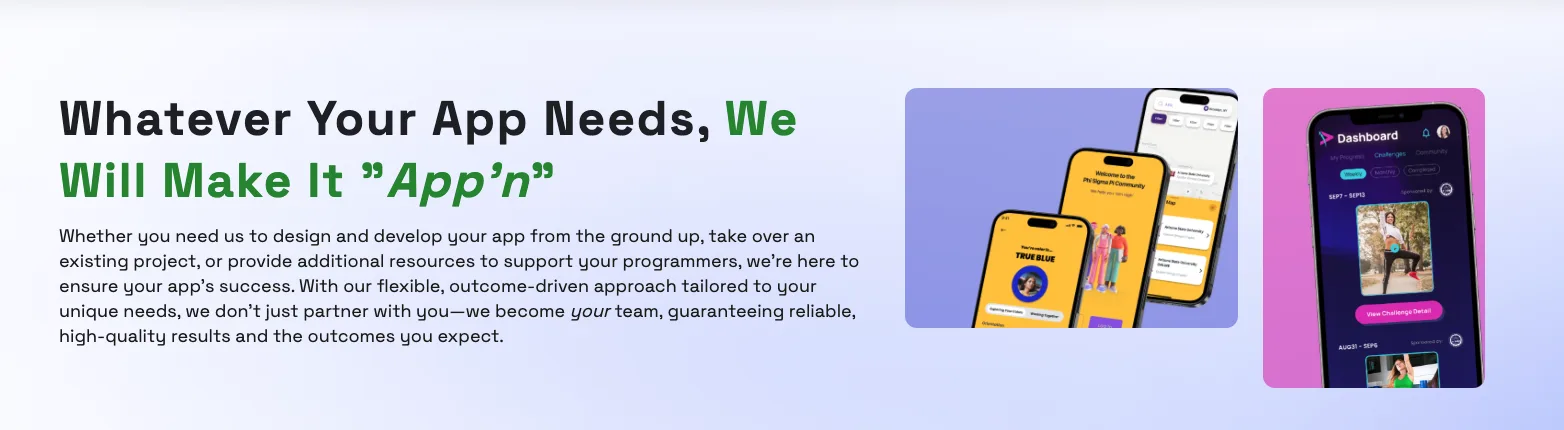
Founded in 2009, Chop Dawg has partnered with over 500 startups, Fortune 500 companies, government agencies, and nonprofits to develop more than 400 apps. Headquartered in Philadelphia, Pennsylvania, the company operates across six continents.
Key features:
- Technical focus: Specializes in mobile and web app development, including blockchain and AI technologies.
- Engagement options: Offers fixed-price projects with dedicated project management.
- Client-centric approach: Maintains a 92% client retention rate.
Client review: “They feel like true partners and demonstrated that they had our best interest in mind throughout the various phases of our project.” — (Customer review on G2)
8. TRIARE
TRIARE is a web and mobile app development company founded in 2015, with a team of 50–99 professionals. They offer full-cycle development for mobile apps, and if the product they deliver doesn’t function according to the specified requirements, they promise to resolve any issues for free.
Key features:
- Technical focus: Proficient in iOS, Android, React.js, Ruby on Rails, Node.js, and PHP.
- Engagement models: Offers flexible collaboration, including full-cycle development and dedicated teams.
- Industry focus: Specializes in logistics, edtech, and entertainment sectors.
Client review: “They were quick in terms of revisions, and everything remained within scope. Moreover, communication was great. Although they were based in Ukraine, we still managed to coordinate and stay organized efficiently.” — (Customer review on Clutch)
9. Andersen

Andersen is a global software development company with 18 years of experience in software development. Headquartered in Warsaw, Poland, they have offices across the United States and Western Europe.
Key Features:
- Technical focus: Android, iOS, React Native, and Flutter, as well as big data, AI, and machine learning.
- Engagement Models: Offers flexible collaboration options, including building dedicated teams or augmenting in-house staff.
- Team composition: 3500+ in-house software developers, of which over 250 are mobile app developers.
Engagement Models: Offers flexible collaboration options, including building dedicated teams or augmenting in-house staff.
Team composition: 3500+ in-house software developers, out of which over 250 are mobile app developers.
Client review: “They were always there to answer questions, and the final product was delivered on time with no extra costs or delays. I can say their team is very professional and has a global approach.” — (Customer review on G2)
10. The NineHertz
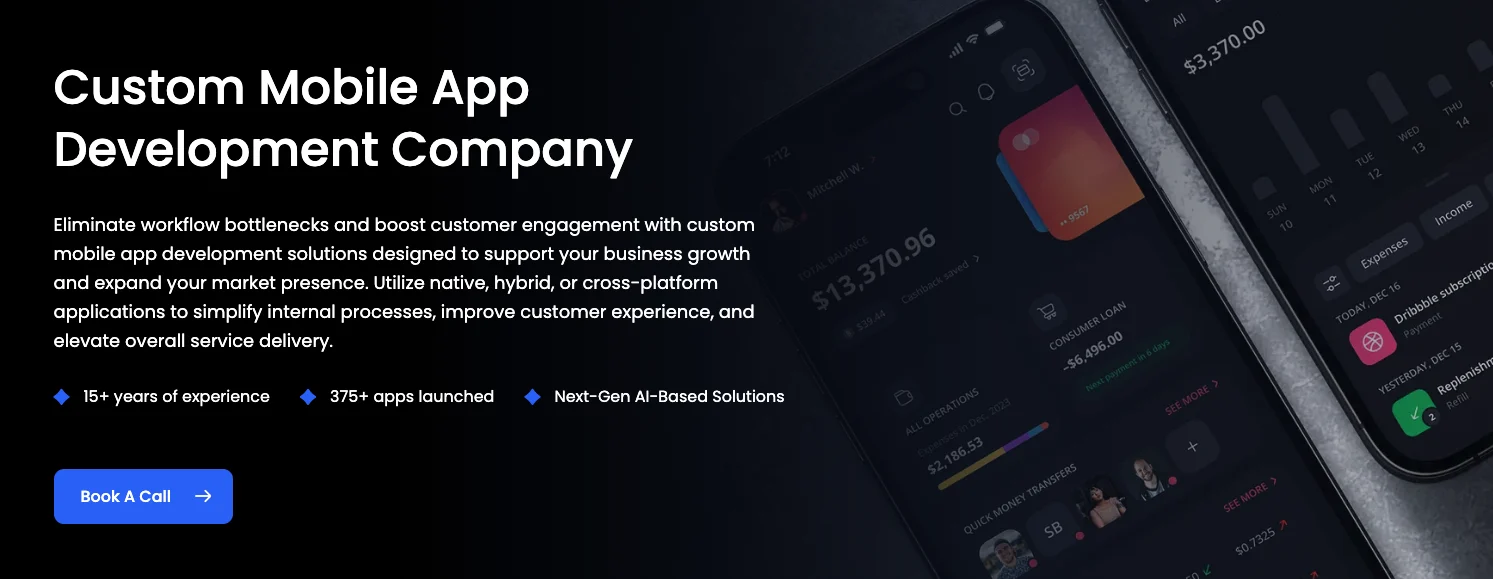
The NineHertz is a global mobile app development agency with offices in India and the United States. They were founded in 2008 and have since delivered more than 1,000 mobile apps for both iOS and Android platforms.
Key Features:
- Technical Expertise: Specializes in IoT, augmented reality, virtual reality, big data, and blockchain.
- Engagement Models: Offers flexible hiring options such as contract-to-hire and temporary staffing.
- Team composition: Has a team of over 350 full-stack developers at their disposal.
Client review: “Their honest feedback and willingness to roll up their sleeves and get involved in the details have made a huge difference.” — (Customer review on Clutch)
Final Thoughts
The right partner for outsourcing mobile app development keeps your attention on the business while the app gets built properly. Which one that is comes down to the eight traits above, the region you pick, and whether you want a project run for you or developers of your own.
In Hire With Near's research on why US companies hire in Latin America, 12% of companies said they were exploring the region specifically to move off an outsourcing agency and hire their own developers directly. Their reasons: no direct management of the work and a revolving door of people.
At Hire With Near, we help US companies hire software engineering talent in Latin America, including mobile developers who work as part of your team rather than as an outside vendor.
If you're weighing that against an agency, book a free consultation to talk about your requirements with our team. We'll give you salary benchmarks, walk you through how hiring developers in Latin America works, and be straight with you about timing, so you have what you need to decide.
{{consultation}}
Frequently Asked Questions
What mobile app development roles can I hire in Latin America?
In Latin America, you can hire iOS developers, Android app developers, remote React Native developers, and nearshore Flutter developers, plus generalists who cover both platforms.
The native-versus-cross-platform split is the first decision: native work means two specialists and two codebases, while React Native and Flutter let one team ship for both, cutting cost and timeline in exchange for some platform-level control.
Either way, they work during your business hours, so code review and stand-ups happen live.
Will an outsourced mobile development team work in my time zone?
It depends on where the team is based: a team in Latin America usually shares most of your working day, while teams in Eastern Europe or Asia overlap far less. In Latin America, the exact overlap still varies by country.
If the team is in Eastern Europe, you typically get a few hours of overlap in your morning, since the workday there ends in your mid-to-late morning on Eastern time. If it's in Asia, real-time overlap rarely happens unless someone on the team is working overnight to match your hours.
Overlap tops the list of questions tech leaders ask about hiring developers in Latin America, alongside English level and whether developers can join daily stand-ups.
How good is the English of mobile developers in Latin America?
English varies by country and by engineer. Argentina ranks first in Latin America on EF’s 2025 index (High); Brazil, Colombia, and Mexico score Low or Very Low nationally, though IT professionals score higher in Colombia. Confirm it in a conversation, not from a line on a resume.
The marker to test for is whether a candidate can explain a technical decision to a non-technical listener without being asked to simplify. Run at least one round with someone non-technical in the room.
We want to outsource mobile app development to Latin America but need engineers who work US hours and are employed compliantly. Which IT outsourcing companies specialize in this model?
Staffing and recruiting partners that focus on Latin America specialize in this model. From this list, Hire With Near and BairesDev both place Latin America-based engineers who work during US business hours. With Hire With Near, you hire dedicated mobile developers who join your team and work under your day-to-day direction, while we handle payroll, local compliance, and benefits.
BairesDev offers staff augmentation and dedicated teams from the same region. For a wider shortlist, our roundup of the best companies to hire top developers in Latin America compares more options.
Which outsourcing firms handle full project delivery, not just staffing?
Of the companies on this list, BairesDev is the nearshore firm that handles full software delivery from Latin America. Project agencies like Chop Dawg (fixed-price, based in the US) and TRIARE (full-cycle, based in Ukraine) take on complete builds from outside the region. Hire With Near focuses on staffing, so we fit when you want developers on your own team rather than a delivered project.
Our roundup of the best LatAm outsourcing companies for US teams covers more firms that run whole projects. If the app will need continuous work after launch, price a build against dedicated developers before you sign.
What are the best companies to outsource mobile application development?
The best companies to outsource mobile application development include Hire With Near, Trango Tech, OpenXcell, Alliance Recruitment Agency, Appinventiv, BairesDev, Chop Dawg, TRIARE, Andersen, and The NineHertz.
The right one depends on the model you need: full-cycle and fixed-price agencies for a scoped build with a handover, staff augmentation firms for extra capacity, and partners that place dedicated developers when the app is your product. The companies table above shows each firm's model at a glance.
How do I protect my app's code and IP when outsourcing?
Protect your app's code and IP by signing IP assignment and confidentiality terms before work starts and keeping the code repository, cloud accounts, and app store accounts in your company's name.
Give the outside team access to your accounts rather than letting them host anything, and limit production credentials to the people who need them. For developers based abroad, pick a partner whose standard contracts already assign IP to your company, since an NDA alone is hard to enforce across borders.






.webp)


%203.svg)
.avif)




%20(1).avif)

%20(1).png)