%203.svg)
Key Takeaways
- Two common business models for managing development projects are software development outsourcing and staff augmentation: staff augmentation adds temporary external talent to your team, while development outsourcing lets you delegate entire software projects to a third-party provider.
- Choose staff augmentation when you need to fill skill gaps more efficiently or temporarily boost your team for short-term software development projects, or when you need to scale fast without the overhead of full-time hires.
- Opt for software development outsourcing when dealing with larger, more complex projects that require end-to-end development and you lack the in-house resources needed and want minimal involvement in day-to-day management.
Here’s a situation you might recognize: You need more developers, but hiring in the US is taking forever and costing a fortune. You know you need to look at other options, and you’ve probably heard about software development outsourcing and staff augmentation as potential solutions.
Both approaches can work, but they solve different problems. Pick the wrong one, and you’ll waste time and resources trying to make it fit. Let’s cut through the confusion and look at what actually works in different situations.
What Is the Difference Between Staff Augmentation and Software Development Outsourcing
Finding good developers is harder than ever. Whether you’re struggling to hire because local talent is too expensive or because your hiring process takes forever, you’ve probably looked into both staff augmentation and software outsourcing.
But what makes these two models different? Let’s take a closer look.
Staff augmentation: Adding developers to your team
IT staff augmentation is straightforward: you're bringing in additional developers temporarily to work remotely with your existing team—typically for 3–6 months while you complete a specific project.
These developers integrate directly into your team’s workflow, whether your current setup is in-office, remote, or hybrid.
They join your daily standups, use your development tools, and report to your team leads—just like a regular hire would.
The key difference from traditional hiring? The agency employs these developers, handles their payroll and benefits, and may rotate them to other clients when your project ends or their skills are needed elsewhere. You get temporary capacity without the commitment of permanent employment.
What sets this method apart from outsourcing, however, is the level of control you maintain.
You still get to manage the day-to-day tasks and project timelines while leveraging external expertise, which works well if you already have strong internal management and a clear understanding of your project needs.
Software outsourcing: Delegating entire projects
A highly popular model, software outsourcing is chosen by 60% of companies to access specialized expertise and cut costs by handing off at least some of their development.
Software development outsourcing takes a more hands-off approach. It involves delegating an entire project or specific tasks to an external company specializing in software development, reducing the need for internal oversight and costly resource allocation.
The outsourcing provider manages the project from start to finish, including planning, execution, and delivery.
Unlike staff augmentation, outsourcing shifts most responsibilities to the external provider, allowing you to focus on core business activities.

Pros and Cons of Staff Augmentation vs. Software Outsourcing
Both approaches can work well, but they solve different problems.
Let’s break down the advantages and challenges of each so you can see which one actually fits your situation better.
Pros of staff augmentation
Here’s what makes staff augmentation particularly effective:
- Faster than traditional hiring: Instead of spending 3–6 months on recruitment cycles, you can get qualified developers working with your team within weeks. The staff aug company has already built a network of vetted talent—you just need to pick the best fit.
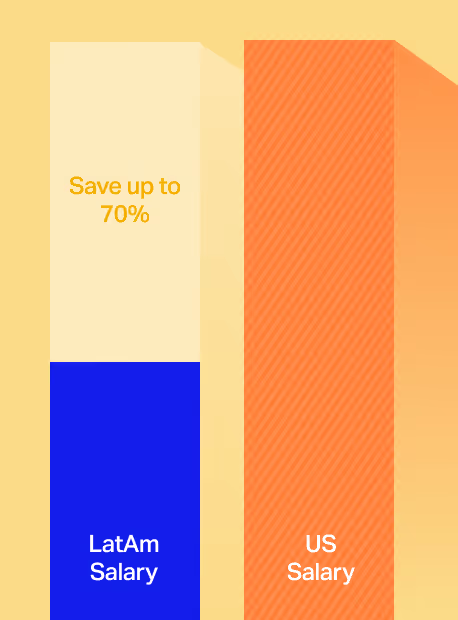
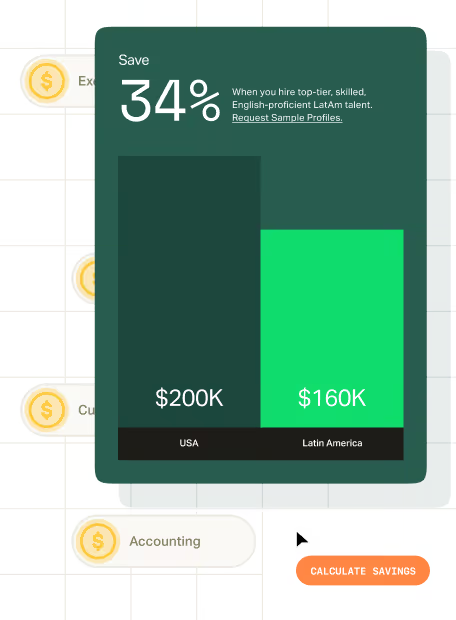
- Cost efficiency: Paying for temporary staff for a project is often more cost-effective than onboarding full-time employees, especially when hiring from nearshore and offshore locations with lower costs of living than the US. For example, you can work with LatAm developers for 30-70% less than US rates while still offering competitive local compensation.
- Flexibility: Running multiple projects and need to quickly ramp up development? Staff augmentation lets you add developers as needed and scale back when projects wind down. No layoffs or difficult conversations—just flexibility to match your business needs.
- Control: As mentioned, unlike outsourcing, you maintain complete control over your projects. The augmented developers report directly to your team leads and work within your existing processes and tools.
- Specialized skills: Need someone who knows both React and Python? Or an expert in a specific framework? Staff augmentation lets you bring in exactly the skills you need, when you need them, without having to train existing team members or make a long-term hire.
- Seamless integration: Augmented staff can align with your existing workflows, fostering continuity in your projects.
- Knowledge retention: When augmented developers work directly with your in-house development team, everyone benefits from the exchange of expertise. Your permanent team members learn new technologies and approaches hands-on, while the augmented developers bring fresh perspectives to your existing processes. Unlike outsourcing, where knowledge might stay siloed with the external team, staff augmentation creates lasting improvements in your team’s capabilities.
- Knowledge transfer: When augmented developers work directly with your in-house development team, everyone benefits from the exchange of expertise. Your permanent team members might learn new approaches as the augmented developers bring fresh perspectives to your existing processes. Unlike outsourcing, where knowledge might stay siloed with the external team, staff augmentation can create lasting improvements in your team’s capabilities.
Cons of staff augmentation
Staff augmentation isn’t perfect; it also comes with its share of challenges.Here are some you’ll need to plan for:
- Team integration takes work: Getting new developers up to speed takes time and effort. You’ll need solid documentation and clear processes. Plan for at least 2 weeks of reduced productivity while new team members learn your systems and workflows.
- Over-reliance: Having too many augmented staff may create gaps in internal expertise. Balance is key to maintaining long-term capabilities.
- Cultural alignment: Remote developers need to mesh with your team culture and communication style. Look for developers who have experience working with US companies and are comfortable with direct communication. Your staffing partner should screen for this specifically.
- Management overhead: Your team leads will need to actively manage these new developers. If you don’t have strong technical leadership in place, or if your leads are already stretched thin, adding augmented staff might overwhelm them.
- Project continuity: When augmented developers finish their contracts, you need a clear handoff plan. Set up proper documentation from day one, and build in time for knowledge transfer before contracts end.
These challenges aren’t deal-breakers—they’re just part of the process.The best IT staff augmentation companies can mitigate these challenges through careful planning and robust support.Researching and selecting the right partner can ensure these cons don’t get the best of you.
Pros of software outsourcing
Software outsourcing streamlines the development process as you’re letting a third party handle the work, which has a lot of advantages.Among them include:
- Fixed pricing: Most outsourcing contracts work on a fixed-price basis. You agree on deliverables and timelines upfront, and that’s what you pay for. No surprises with hourly rates or other overhead costs.
- Self-sufficiency: Guided by their own team lead, these external development teams operate independently. This significantly eases the management and training responsibilities of your internal team.
- Large-scale capacity: Outsourcing boosts development capacity, making it perfect for bigger and more complex projects requiring faster development.
- Defined deliverables: Good outsourcing contracts spell out exactly what you’re getting and when. This clarity helps keep projects on track and makes it easier to measure success.
- Ready-made teams: Need to build a new product fast? Outsourcing providers already have complete teams that work well together. You’re getting developers, designers, QA specialists, and project managers all in one package.
- Specialized expertise: Building something that needs specific domain knowledge? Outsourcing firms often have teams that specialize in particular industries or technologies. They’ve likely built similar solutions before.
- Focus on core activities: Delegating non-core tasks allows your team to focus on strategic objectives like innovation and enhancing your competitive advantage.
Cons of software outsourcing
While outsourcing has many benefits, it also comes with challenges you should consider.Here are some drawbacks:
- Reduced control: Outsourcing reduces your direct oversight of project management and execution. You’re essentially handing over the reins to an external team. While you can set high-level direction, you won’t have much say in day-to-day decisions about how things get built.
- Communication takes extra effort: Without proper communication channels, language barriers, time zones, and cultural differences may hinder collaboration.
- Less flexibility: Because outsourcing agreements have defined contract terms, they may limit your ability to make changes mid-project.
- Data security concerns: Sharing sensitive information with external vendors increases the risk of data breaches. Implementing strict security measures is a must.
- Knowledge stays external: Since your internal team isn’t hands-on with development, they might struggle to maintain or modify the software later. Plan for a thorough handover process if you’ll need to maintain the code in-house.
- Vendor lock-in risk: Switching outsourcing providers mid-project is painful and expensive. You need to choose your partner carefully and have contingency plans in case things go wrong.
These challenges don’t make outsourcing a bad choice—they just mean you need to choose your projects and partners carefully. Outsourcing works best when you have clear, stable requirements and can define success in concrete terms.

Which Model Fits Your Business Needs?
Every business has different needs, and choosing the wrong model can cost you time and money.
Here’s how to make the right choice:
When to choose staff augmentation
Staff augmentation is your best bet when:
- You have a defined project with a clear endpoint: You need extra capacity for 3-6 months to complete a specific initiative, after which you can scale back down.
- You have a strong technical team already: You’ve got good processes and leadership in place, but you need more hands on deck.
- You need specific skills temporarily: Maybe your team is great with backend work, but you suddenly need React expertise for a new feature. Instead of spending months hiring a permanent React developer, you can bring in someone who’s ready to go.
- You want to stay lean: You need to scale up for upcoming projects, but you don’t want to commit to permanent hires. Staff augmentation lets you grow or scale back your team as needed.
- You prefer direct control over project-based work: You want contractors working directly within your team processes during the engagement, following your workflows and contributing to deliverables.
- You're testing nearshore/offshore capacity: You want to try working with remote talent before committing to building a permanent team.
When to choose software outsourcing
Go with outsourcing when:
- You have a standalone project: If you need to build something that’s relatively self-contained—like a mobile app or a specific feature—outsourcing can be more efficient than building an internal team.
- You lack technical leadership: If you don’t have experienced tech leads who can manage developers day-to-day, outsourcing gives you a ready-made team with their own management structure.
- You want minimal involvement: You’d rather focus on business goals and let someone else handle the technical details. Outsourcing lets you set high-level requirements and then step back.
- You need a full team quickly: Instead of hiring developers, designers, and project managers separately, outsourcing gives you an entire team that’s already worked together.
When to consider building your own team
Here's what many companies discover after trying staff augmentation: their "temporary" need isn't actually temporary. They need development capacity this quarter, next quarter, and the quarter after that. They're building core product features, not working on time-limited projects.
That's when direct hiring makes more sense than paying ongoing agency markups for what's actually permanent capacity.
With direct hiring:
- Developers invest in understanding your codebase deeply
- Team members build institutional knowledge instead of rotating out when projects end
- You're not paying ongoing agency fees for what's become a permanent role
- You get better retention and cultural integration
If your need is truly temporary (you genuinely need someone for just 3-6 months), staff augmentation makes sense. But if you find yourself renewing staff augmentation contracts or constantly needing that capacity, you're probably better off hiring software engineers directly.
[https://www.youtube.com/watch?v=hE2QUR5upbY]
We explore the trade-offs between outsourcing and direct hiring in Latin America in depth in our article "Nearshore Staff Augmentation: What It Is and Why Long-Term Hiring Might Be Better."
Making the final call
Still not sure? Ask yourself these questions:
- Is this truly a temporary need? → If yes, staff augmentation. If no, consider direct hiring.
- Do you have the technical leadership to manage additional developers? → If not, outsourcing might be better.
- Is this a one-off project or ongoing development? → One-off projects often work better with outsourcing. Ongoing needs suggest direct hiring.
- How much control do you want over day-to-day development? → More control = staff augmentation (for temp needs) or direct hiring (for permanent needs).
Final Thoughts
There’s no one-size-fits-all answer here. Staff augmentation and outsourcing both work—it’s about choosing the right model for your situation. Some companies even use both: they might outsource a complete app rebuild while using staff augmentation to strengthen their core development team. The key is being honest about your needs and capabilities:
- How much technical leadership can you provide?
- What’s your real timeline?
- Do you want to build internal capabilities or just get a project done?
Your answers to these questions will point you in the right direction.
If you're confident staff augmentation is right for your temporary needs, check out our guides on finding the right provider:
- Best Staff Augmentation Companies for a comprehensive overview
- Top 5 Staff Augmentation Companies in Latin America if you're focused on nearshore options
If you want to explore direct hiring in Latin America, with Near you can hire pre-vetted, top-level Latin American developers in less than 21 days. We’ve already done the hard work: building the network, screening for technical skills, and verifying English proficiency. Our developers have solid experience working with US companies and work during US business hours.
Fill outp this form to receive a list of pre-vetted candidates and see the quality of talent and cost savings you can unlock.







.webp)



%203.svg)

.avif)





%20(1).avif)

%20(1).png)