


%203.svg)
Key Takeaways
- Companies are hiring fewer people overall, consolidating work into mid-level and senior positions rather than expanding headcount.
- AI is changing who companies hire as they increasingly prioritize experienced professionals who can oversee automation, make judgment calls, and focus human effort on high-impact work.
- US companies are hiring in Latin America to access experienced talent at a lower cost, making selective senior hiring financially sustainable
Recent U.S. job reports haven’t painted a particularly optimistic picture of the labor market, fueling renewed speculation about a broader slowdown in hiring.
From what we’re seeing across hiring activity, the picture is nuanced.
Hiring isn’t grinding to a halt. Instead, many organizations are slowing down to reassess who they actually need, what skills matter now, and how their teams should be structured going forward.
We have observed that demand across several business-critical functions has continued to grow, even as companies post fewer roles overall in the US.
The difference is that those hires are more deliberate and for more experienced talent.
Companies Are Redesigning Their Org Charts, Not Freezing Growth
According to the Challenger Report, “US-based employers announced 108,435 job cuts in January, an increase of 118% from the 49,795 cuts announced in the same month last year.” That is the highest number since 2009.
Recent US Bureau of Labor Statistics (BLS) open jobs reports have also shown relatively low numbers of open jobs.
Put together, these paint a picture that US companies aren’t hiring. However, our data suggests otherwise.
Companies are hiring, but many companies are first stepping back and rethinking their organizational structure altogether. They’re reexamining how work is distributed across people and technology.
AI tools are increasingly being used to handle high-volume, repetitive tasks across departments. That shift isn’t eliminating the need for human workers, but it is changing which parts of the job require people and what skills those folks need to bring to the table.
Across departments like marketing, sales, engineering, and customer support, companies are narrowing their focus to roles where judgment and experience matter most.
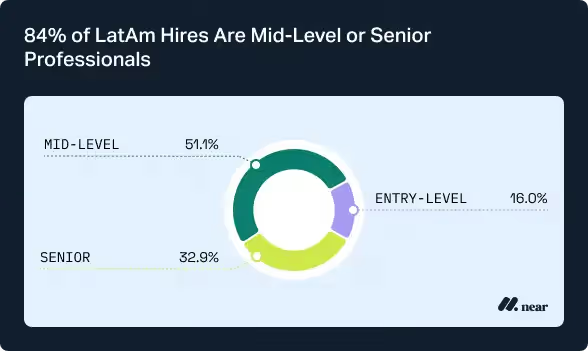
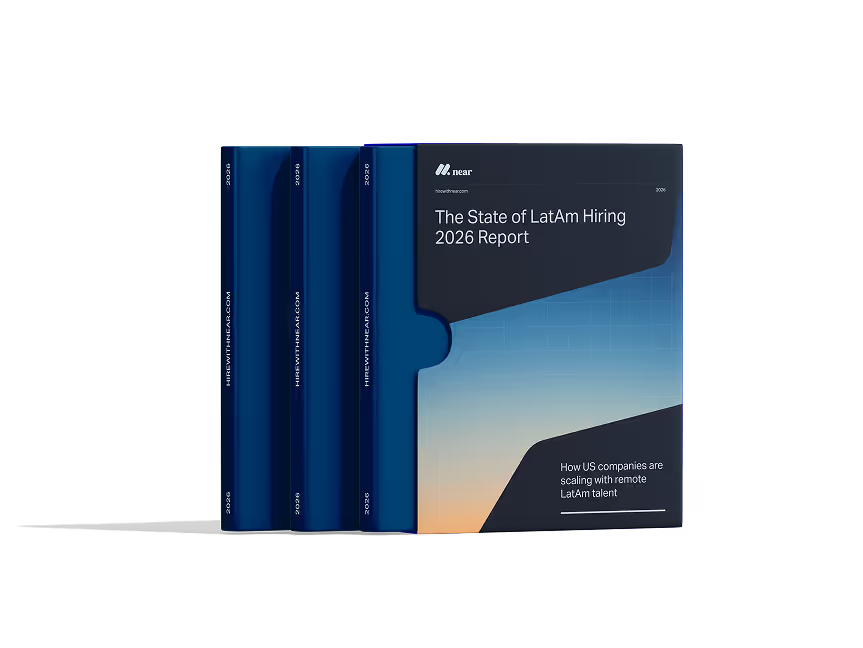
In fact, Near’s State of LatAm Hiring 2026 Report shows that 84% of hires over 2025 were for mid-level and senior positions.
Customer Support: Automation for Volume, Humans for Complexity
Customer support is one of the clearest examples of this transition.
Many companies are deploying AI-powered chatbots and automated workflows to handle routine requests, such as basic troubleshooting, account questions, or order updates. These tools allow teams to resolve a significant share of inbound issues without human involvement.
At the same time, companies still need people available for live conversations, especially when issues are complex or emotionally charged.
As a result, the emphasis has shifted away from scaling support headcount broadly and toward ensuring experienced humans are available when automation falls short.
That approach has already led to tangible workforce changes at large companies.
For example, Salesforce publicly acknowledged that after deploying AI agents to handle routine customer service interactions, it reduced its support workforce by roughly 4,000 roles, nearly cutting the team in half.
CEO Marc Benioff said the company “needs less heads” now that AI can handle a large portion of customer conversations.
Rather than eliminating support altogether, the change reflects a broader shift: automation handles volume, while humans are reserved for the moments that require judgment and empathy.
Sales Teams Are Using AI to Save Time, not Replace Great Sellers
Good sales teams aren’t using AI to remove humans entirely from the sales process. They’re using it to strip out the repetitive work and concentrate human effort where it moves revenue.
In practice, this looks like:
- AI tools handling prospect research, account enrichment, and list building, dramatically reducing the time reps spend preparing outreach.
- Automated systems generating first-pass personalization for emails and LinkedIn messages, allowing reps to add that final human touch.
- AI-driven lead scoring and intent signals, helping teams prioritize which prospects are worth a follow-up by a rep.
These changes are directly influencing hiring decisions.
Rather than adding large numbers of junior sales reps to increase activity volume, many companies are prioritizing fewer, more experienced sellers who can interpret signals, manage complex objections, and close deals once AI has filtered the noise.
The net effect is smaller teams with higher expectations per role.
Marketing Is Shifting Toward Fewer, More Senior Operators
Marketing teams are seeing a similar shift.
AI is increasingly used to handle execution-heavy tasks that once required additional headcount, including:
- Drafting early versions of blog posts, landing pages, and ad copy.
- Generating variations for paid campaigns and A/B tests.
- Collating and summarizing performance data and flagging anomalies across channels.
From what we’re seeing, many teams no longer need as many specialists focused purely on execution.
Instead, they’re prioritizing marketers who can direct AI output (including evaluating AI-generated work rather than blindly shipping it), make strategic decisions, and tie activity back to revenue.
Software Engineering Shows How Complicated the Hiring Picture Really Is
Software development is often cited as one of the roles most likely to be disrupted by AI. But hiring data suggests that automation hasn’t reduced demand for engineers. Rather, it has changed which engineers companies want to hire.
Our State of LatAm Hiring report showed that demand for software engineers grew 250% year over year in 2025. At the same time, 98% of those engineering hires were mid-level or senior professionals.
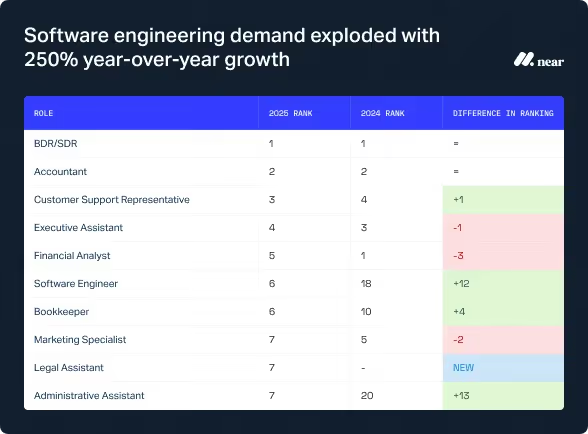
Rather than eliminating engineering roles, companies are consolidating responsibility into fewer, more experienced hires. Senior developers are increasingly expected to design systems, review AI-generated output, and make architectural decisions that automation alone can’t handle.
This pattern mirrors what’s happening across other functions: AI is absorbing routine work, while increasing demand for people who can oversee systems, make decisions, and operate effectively in more complex environments.
Related reading: How AI and Time Zones Are Driving U.S. Companies to Hire Developers in Latin America
Why Latin America Is Becoming a Key Hiring Market for U.S. Companies
As companies rethink how work gets done and consolidate responsibility into fewer, more experienced positions, many are running into a practical constraint: experience is expensive.
As a result, some organizations are expanding their search beyond the U.S., particularly for roles that can be done remotely.
From what we’re seeing at Near, hiring in Latin America has become an increasingly popular way for US companies to access experienced professionals without committing to the full cost of US-based salaries.
This is especially true in functions where time-zone alignment and real-time collaboration matter.
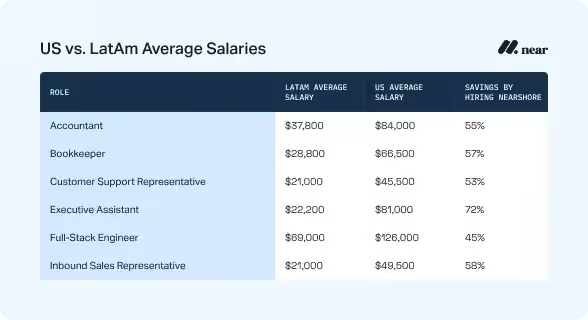
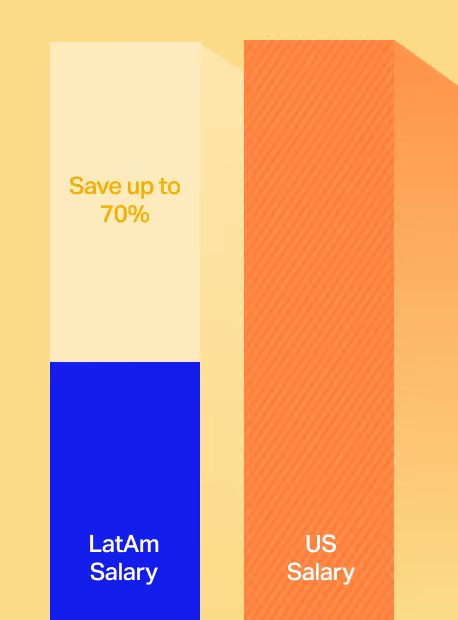
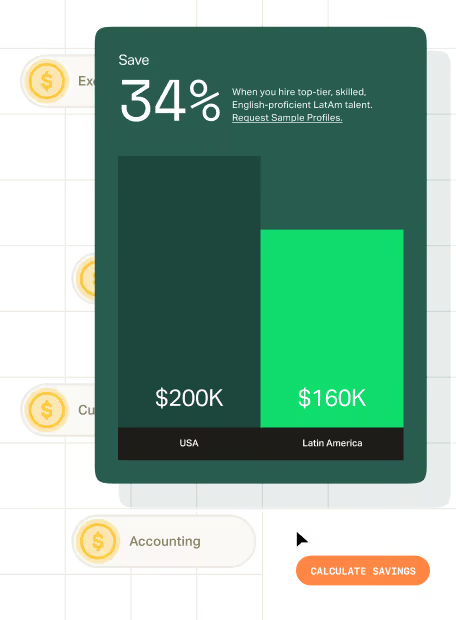
On average, US companies can save 30–70% on salary costs by hiring in Latin America, thanks to lower living costs there.
That cost difference allows companies to hire at a higher seniority level than their US budgets might otherwise support, and in many cases, continue hiring when domestic compensation expectations would put team expansion on hold.
Final Thoughts
The current hiring environment can look contradictory at first glance. Job openings are down, and companies are cautious about headcount. Yet hiring activity continues in key areas.
Rather than hiring broadly, many companies are focusing on fewer roles with higher expectations, prioritizing experience, adaptability, and the ability to work alongside AI tools.
Companies will continue to hire. But they will also continue to evaluate which parts of the work still require a human, and which skills those humans need to bring to justify the role.
That shift is one of the reasons more US companies are expanding where they hire, particularly in Latin America, where they can access experienced professionals while staying aligned with tighter budgets and leaner team structures.
To learn more about what’s driving the increase in US companies looking to Latin America, see our report on the top reasons US companies are hiring in Latin America.


.webp)

.webp)





%203.svg)
.avif)





%20(1).avif)

%20(1).png)