


%203.svg)
Key Takeaways
- The strongest DevOps recruitment agencies fall into three groups: specialist nearshore partners, large US IT staffing firms, and global networks of vetted developers. Nearshore partners place full-time engineers in Latin America at 30 to 70% lower salary cost than comparable US hires, the staffing firms cover contract and on-site work at enterprise scale, and the developer networks fill short-term project gaps.
- DevOps recruitment agencies connect you with pre-vetted engineers who have the technical skills and cultural fit an infrastructure role needs. A generalist recruiter can read a tool list off a resume, but rarely knows which of those tools the candidate has run in production.
- The main benefits of using a DevOps recruitment agency are access to a specialist talent pool, technical expertise in vetting candidates, and a faster shortlist at a lower cost per hire. Discretion is the fourth: an agency can run a sensitive search without your company name on the outreach.
A bad developer hire delays a product roadmap, but a bad infrastructure hire breaks deployment loops, creates security vulnerabilities, and triggers engineer burnout. Sourcing this talent requires a DevOps recruitment agency that evaluates how candidates handle real-time system dependencies, not just one that matches keywords on a resume.
Yet, many technical leaders treat DevOps recruitment agencies as interchangeable vendors, only to restart their search months later when candidates lack the required operational depth or struggle with time zone alignment.
Below is a breakdown of the ten best DevOps recruitment agencies in 2026, categorized by how they deliver talent so you can skip the trial-and-error phase.
Full transparency: Hire With Near is one of the ten options below. We know our model inside out, but we’ll clearly point out where a specialized peer agency is the better call for your team.
What Is a DevOps Recruitment Agency?
A DevOps recruitment agency connects companies with pre-vetted DevOps professionals who have the specific technical skills and cultural fit needed for successful infrastructure and automation roles.
DevOps roles sit at the intersection of development and operations, which means they require a unique mix of technical skills, collaboration ability, and systems thinking.
Most general recruiters can spot “Docker” and “Kubernetes” on a resume, but they can't tell you whether someone knows how to build reliable CI/CD pipelines or troubleshoot production issues at 2 a.m.
DevOps recruitment agencies, sometimes called DevOps staffing agencies or DevOps headhunters, understand what these roles entail. They know the difference between someone who's used automation tools and someone who's built automation from scratch.
They can evaluate whether a candidate has the problem-solving mindset to handle the inevitable infrastructure fires that come with the territory.
Why Should Companies Partner with a DevOps Recruitment Agency?
The right DevOps recruitment partner gives you access to specialized talent networks, technical expertise, and a process that cuts your time-to-hire from months to weeks.
Here are the four reasons that matter most.
1. Access to a large candidate pool
Specialized DevOps recruitment agencies have spent years building pools of infrastructure engineers, platform architects, and site reliability specialists across industries, seniority levels, and regions.
Working with one gives you immediate access to candidates who have already been screened, so the first shortlist arrives in days instead of after weeks of inbound applications you have to filter yourself.
2. Expertise in the DevOps field
DevOps recruiting agencies specialize in what these roles entail. They know the culture, the methodologies, and the tooling, which is what lets them read a resume the way an engineering manager would. They stay current on job descriptions and tech stacks, down to which CI/CD and infrastructure-as-code tools teams are standardizing on this year.
That specialization is worth more than it was five years ago. According to SignalFire's State of Tech Talent Report 2026, demand has migrated to engineers who can build models, ship infrastructure, and manage complex customer integrations, and software engineers now make up 55% of all hiring at the largest tech companies, up from 46% in 2019.
Hiring is concentrating on the engineers who ship infrastructure, and a recruiter who can't read a pipeline can't screen for them.
3. Time and cost savings
Running the search yourself means sourcing, then screening dozens or even hundreds of resumes, then coordinating interviews around your own week.
A specialist agency has already built that funnel, so the first qualified shortlist arrives in days rather than months and the interviews get booked without you chasing calendars.
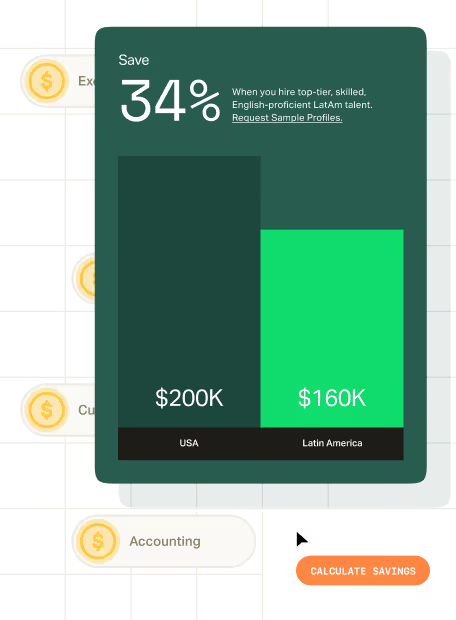
The numbers behind that are concrete on our side. Our recruiters send a first shortlist in 3 to 5 days, most of our clients make a hire in under three weeks, and hiring the same engineer in Latin America runs 30–70% below comparable US salaries.
4. Confidentiality and discretion
Some searches can't run in the open. If you're replacing an engineer who still holds production credentials, or staffing a platform rebuild you haven't announced internally, a public job post tells your team and your competitors before you're ready.
A DevOps recruitment agency can run that search confidentially: your company name stays out of the outreach, candidates learn who you are at the first call rather than from a job board, and the engineer you're replacing never sees their own role advertised.
If you want the mechanics of running the search yourself, we cover how to hire a DevOps engineer separately.
What Technology Roles Do DevOps Recruitment Agencies Source?
DevOps recruitment agencies source the whole infrastructure side of an engineering team: DevOps engineers, release managers, security engineers, cloud engineers, automation engineers, and site reliability engineers.
Most of these searches sit inside a bigger plan to hire software engineering talent in Latin America, because the same pipeline work touches build, release, security, and reliability. Demand for that whole layer keeps climbing.
According to the U.S. Bureau of Labor Statistics, employment of computer network architects is projected to grow 12% from 2024 to 2034, much faster than the average for all occupations, with about 11,200 openings a year over the decade.
Here are the roles agencies fill most often:
DevOps engineer
A DevOps engineer has expertise in different areas, including development, operations, coding, infrastructure management and monitoring, and system administration.
They excel in fostering collaboration and speeding up processes, making them key players in creating a productive work environment.
Release manager
Release managers own the software release process. They plan release schedules, coordinate with development and operations teams, and cut the risk that ships with each release: bugs, compatibility breaks, or capacity constraints nobody sized.
Security engineer
Security engineers identify threats, put controls in place, and reduce the risk of a breach. Their role also involves automating testing processes and running security assessments and code audits to close vulnerabilities, all while improving how fast the company responds to threats.
On many teams, this role sits next to a cybersecurity analyst, who monitors and responds to threats rather than building the controls in the first place.
Cloud engineer
Cloud engineers design, build, and manage cloud infrastructure. They work with providers like Amazon Web Services (AWS), Microsoft Azure, or Google Cloud Platform to build cloud environments that stay up under load and cost less to run than the setup they replaced.
Automation engineer
Automation engineers take the manual work out of a delivery pipeline: the nightly job someone kicks off by hand, the release checklist a person walks through step by step, the test suite that only runs when someone remembers. Handing those to a script frees the time back and takes out the human error that comes with repetition.
Many of these hires come from the same pool as RPA developers, who build the bots and scripts that replace repetitive manual steps outright.
Site reliability engineer (SRE)
Site reliability engineers, often called SREs, are in charge of system reliability, availability, and performance in a production environment. They make sure systems and applications run smoothly and efficiently, with minimal downtime or disruptions, which is what keeps an on-call rotation survivable.
Most agencies cover several of these roles at once. A security engineer search often widens into a full cybersecurity recruitment project, and teams that start shipping weekly sometimes find the next gap is ownership of the roadmap rather than the pipeline, which is a case for hiring your first product manager instead of a second engineer.
Ask any agency on your shortlist which of these roles they place every week, and which they would hand back.
What Is the Process for Working with a DevOps Recruitment Agency?
Every agency works differently, but most follow a similar framework: discovery, sourcing, screening, and placement.
The key is understanding what makes each step effective and knowing what to expect from a quality partner.
Here's the typical process and how it should work:
1. Define your list of requirements
Don't just list technologies. Think about what a DevOps engineer means for your team. Do you need someone who can architect CI/CD pipelines from scratch, or someone who can maintain existing infrastructure? Are you looking for AWS expertise specifically, or general cloud knowledge?
The clearer you are about technical requirements, seniority level, and cultural fit, the better results you'll get.
2. Research and select a reputable agency
Not every IT staffing agency gets DevOps roles. Look for agencies that can speak your language: ones that understand the difference between infrastructure as code and configuration management, or why site reliability engineering matters.
Check their track record with similar companies and roles, then ask four questions before you sign anything:
- What does your technical screening consist of, step by step?
- Is there anything to pay upfront, and what triggers payment?
- How long is the replacement window if the hire doesn't work out, and does it cover a performance-based exit or only a resignation?
- Who does the sourcing: your own recruiters, or a partner network I never meet?
The replacement question is the one buyers skip most often. Our guide on how to choose the right recruitment agency covers the rest of the diligence.
Fee transparency belongs on the list too. One founder of a small e-commerce holding company told us what went wrong with their previous agency:
Our issue with the other company was they wouldn't tell us how much we were paying them. And one of the people that I interviewed said that the job was listed at like 50% less than what they told us we'd be paying. So that means that their fee was super high. And yeah, that's something that just really didn't sit right with me.
3. The consultation call
A good DevOps recruiter pushes past your job description and digs into what the role has to do. For example, here's how we approach it at Hire With Near, where nearshore staffing and recruiting is the entire business.
Our kick-off calls build the profile for the hire you need: in 30 minutes, we cover your tech stack, your team culture, and what senior means on your stack. We ask about your deployment frequency, your monitoring setup, and your biggest infrastructure pain points.
That call is where we find out whether the real problem is deployment frequency, on-call load, or a migration nobody owns. Each one points to a different engineer.
4. Candidate screening and presentation
A real technical screen is one the agency can describe to you step by step, and you shouldn't be the first person to check whether a candidate can do the job. Here's what that looks like on our side:
Our engineering recruiters ask candidates to walk through setting up and maintaining CI/CD pipelines they have owned, including how they handled reliability and scalability. They ask which of AWS, Azure, or Google Cloud the candidate is strongest in and why, how they manage and secure cloud and on-premises infrastructure, and what automation tooling they have used for deployment and monitoring.
Depth with your specific tools is what you're paying for, but versatility counts too: proficiency with one cloud provider usually transfers to another.
We also deliberately source candidates with more years of experience than the job description asks for, which gives you room to compare.
One red flag is worth knowing: claimed proficiency across a huge stack of tools picked up in a short period. That is resume inflation, not breadth, and it’s the fastest thing to catch on a resume.
Natasha Tarapow, Recruitment Consultant at Hire With Near, describes the filter this way:
We always ask candidates to tell us about a project they've worked on, not just that they use this language and that one, but what their role was and what they actually did. It's important that they can explain their work to someone who isn't a developer. If they can do that, that tells me a lot.
— Natasha Tarapow, Recruitment Consultant, Hire With Near
Once screening is done, you get a shortlist in 3 to 5 days with video introductions, so you can watch how each candidate explains their own work before you book a single interview.
Here's Hayden Cohen, Hire With Near’s CEO, walking through how that screening process runs:
5. Interviews and selection
Stay involved during this phase. The best agencies want your feedback and will adjust their search based on what you learn about candidates.
Use the interview for the two things a screen can't fully settle: how the candidate reasons about failure, and how they explain it. Ask about a deploy that broke production, what they changed afterwards, and how they told the rest of the business. Then, give your recruiter specifics on what you liked and what you didn't, because that is what re-aims the next batch of candidates.
6. Making the hire work
The relationship doesn't end when someone accepts an offer. Good agencies follow up to make sure the integration works and are available if issues arise.
This is also where the replacement guarantee you asked about in step 2 either exists or doesn't. Get the window in writing: how long it runs, whether it's a replacement or a refund, and whether it applies when you end the placement for performance rather than the hire resigning.
Most agencies offer 30 to 90 days, and a few go to six months, which is real money on an engineer you have already spent weeks onboarding.
Remember what you're buying here. You're adding someone who'll be responsible for keeping your systems running and your deployments smooth. Choose an agency that understands those stakes.
What Are the Top DevOps Recruitment Agencies?
The ten agencies below are the strongest options for DevOps hiring, and they split into three groups: specialist nearshore partners, large US IT staffing firms, and global networks of vetted developers. Which group you belong in is decided by the hire, not by the agency: a dedicated full-time engineer in your working hours, contract coverage across several US offices, and a freelancer for a defined project are three different purchases.
How I built this list: I only included companies with at least 50 client reviews on an established review platform (G2, Clutch, Trustpilot, GoodFirms, or ClearlyRated, client ratings only) and an overall rating of 4.5 or above.
From the firms that cleared that bar, I looked at DevOps hiring specifically: whether cloud, CI/CD, and platform work is a named practice, which countries the engineers are based in, what each firm publishes about speed and cost, and which engagement models are on offer.
The goal here is to provide you with a shortlist of two or three worth a call, not a winner. If your search is broader than DevOps, our lists of engineering recruitment agencies and software engineer staffing agencies cover the wider function.
The companies below are in no particular order. There’s no single best option for everyone; the right fit depends on your roles, budget, timeline, and how you like to work.
Note: To keep this list current with our selection criteria, we regularly check ratings on third-party review sites (G2, Clutch, Trustpilot, GoodFirms, and ClearlyRated) and update them as required.
Hire With Near

Website: hirewithnear.com
Headquarters: San Antonio, Texas, United States
Rating: 4.9/5 on G2 (150+ reviews) as of August 2026
Services: Full-service nearshore staffing and recruiting, direct hire, staff augmentation, executive search
Focus Regions: Latin America only
Hire With Near is a full-service staffing and recruiting agency that helps US companies hire top-performing remote talent in Latin America across all departments and industries, including DevOps and infrastructure engineering. We handle sourcing, vetting, candidate presentation, payroll, compliance, and onboarding end to end.
We work only in Latin America and only as a full-service recruiting partner, a narrower focus than most firms here. We have worked with over 950 companies, including Expensify and Deel, and we source from a pre-vetted pool of 160,000+ Latin American professionals.
Hire With Near ranked No. 118 on the 2026 Inc. 5000 list of the fastest-growing private companies in America.
One US healthtech startup came to us with two internal recruiters and an eight-step interview process it refused to shorten. It hired seven senior engineers through us, including a DevOps engineer with 12+ years in Kubernetes and CI/CD, at a 14-day average time to hire with that process fully intact, and saved $323,000 a year against US salaries.
Key features:
- DevOps and infrastructure roles placed every week: We place DevOps, cloud, platform, and site reliability engineers every week, with specialist engineering recruiters who screen past the tool list. Our recruiters ask candidates to walk through pipelines they have built and maintained, and they know that claimed proficiency across a huge stack in a short period is resume inflation rather than breadth.
- Quality-first approach: We fill 97% of the roles we take on, and our client satisfaction score is 9.1. We screen for drive, readiness, and cultural match alongside the technical skills, so the shortlist stays short and each candidate is worth an interview.
- One partner, one process: Scale across functions with one dedicated team and a repeatable hiring cadence. First candidates in 3 to 5 days with video introductions, and most of our clients make a hire in under three weeks.
- 180-day replacement guarantee: Twice the 90 days most agencies offer. If a hire doesn't work out in the first six months, we find a replacement at no additional cost to you.
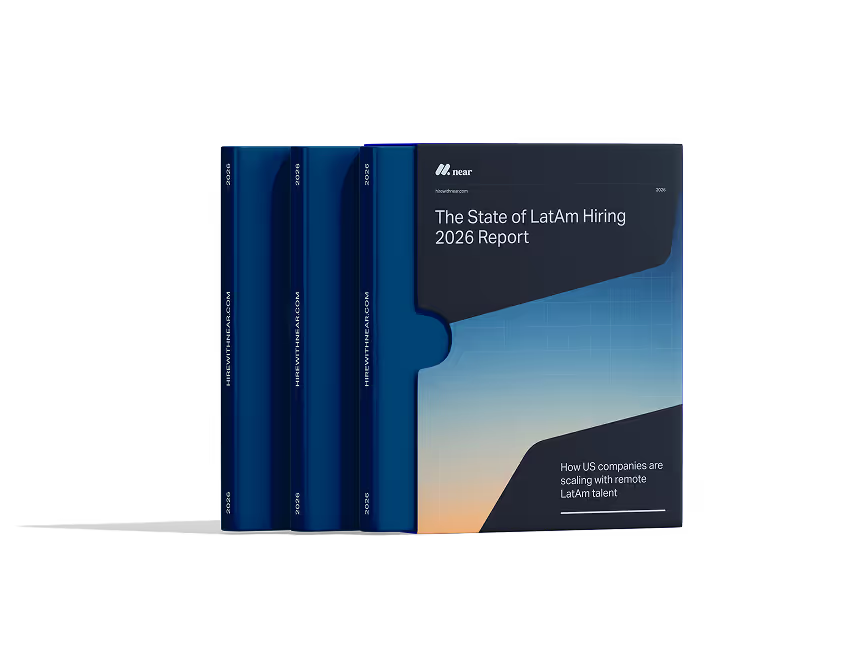
According to Hire With Near's State of LatAm Hiring Report, which analyzes 2,000+ placements, companies hiring talent in Latin America save an average of $35,000 to $64,000 per role compared with US hiring, while holding the same technical standards.
Best for: US companies hiring one or more full-time, dedicated DevOps or infrastructure engineers who need to work inside the company's own business hours, and who want the search, payroll, and compliance handled by one partner.
Client perspective: “They're thorough and timely in their recruiting, they send over written summaries, video interviews, and everything you'd need for an initial assessment, and they project manage further interviews, referrals, etc. Everyone on their team is engaged and extremely professional.” — Sakinna G, Head of RevOps, G2
Limitations: We source only in Latin America, so we’re not the right call if you need engineers on-site in a US office, a large contract bench at enterprise scale, or a freelancer for a two-week project. We place full-time roles rather than hourly work.
Pricing: No upfront cost. Two models once you make a hire: a one-time recruiting fee for direct hire, or a monthly fee when we also handle payroll and compliance. You set the salary for your hires, and we share benchmarks and fees before you commit to anything.
Apex Systems

Website: apexsystems.com
Headquarters: Richmond, Virginia, United States
Rating: 4.8/5 on ClearlyRated (775+ client reviews) as of August 2026
Services: IT staffing, contract and contract-to-hire placement, direct hire, IT consulting and managed solutions
Focus Regions: United States, Canada, Mexico, Europe, India
I included Apex Systems for the reach of its delivery network. Founded in Richmond, Virginia, in 1995, the firm now operates under the Everforth Apex brand following its parent company's April 2026 rebrand.
It has a presence in more than 70 markets across North America, Europe, and India, with over 18,000 consultants on assignment at any given time.
It has won ClearlyRated's Best of Staffing Client award every year since 2012, which is a long run of consistent client scores in a category where most firms manage one good year.
Key features:
- Cloud and platform partnerships: Named partner relationships with AWS, Microsoft, Google Cloud, Databricks, Salesforce, ServiceNow, Snowflake, and Workday, so infrastructure work can be staffed or delivered as a managed project.
- Local branch coverage: More than 70 branch offices means recruiters who know a specific metro's talent market, which matters if the role needs someone on site or badging into a data center.
- Internal delivery bench: More than 4,000 internal employees supporting delivery, the kind of depth that lets a firm absorb a twenty-person infrastructure ramp without renegotiating scope.
Best for: Enterprises and large mid-market companies staffing several contract or contract-to-hire DevOps and cloud roles across multiple US locations at once.
Client perspective: “They are a go-to resource for us, always able to jump in and help with our needs quickly.” — Eric E., client review on ClearlyRated
Limitations: Built around contract and consulting engagements at enterprise scale, so a single direct-hire DevOps search is a small engagement here. No Latin American nearshore sourcing. The parent-company rebrand also means the branding you encounter may not match the name on your paperwork.
Pricing: Not publicly listed.
The Judge Group
Website: judge.com
Headquarters: Wayne, Pennsylvania, United States
Rating: 4.9/5 on ClearlyRated (220+ client reviews) as of August 2026
Services: Technology and IT staffing, executive search, IT consulting (cloud migration, infrastructure, digital transformation), learning solutions
Focus Regions: United States, Canada, India
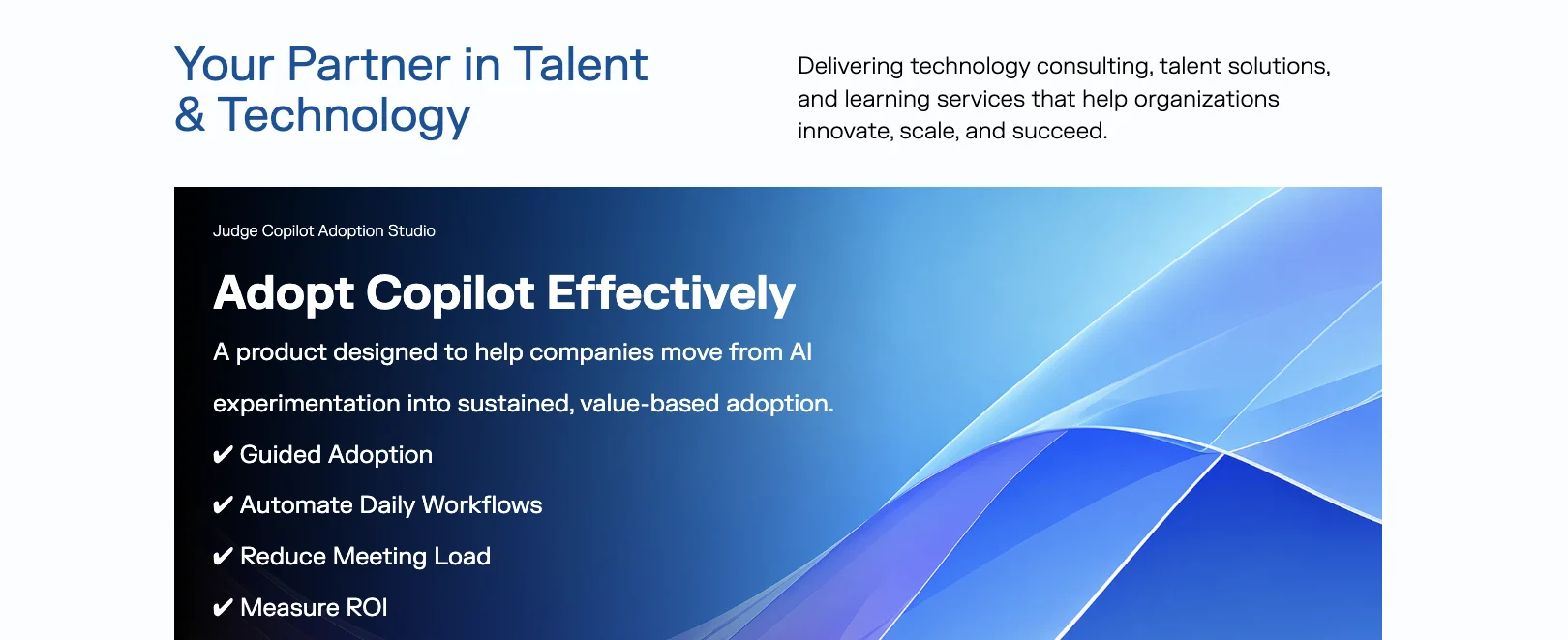
The Judge Group earned a spot on this list because of the client roster sitting behind its rating. The firm says 60 of the Fortune 100 partner with it, and it holds the highest client score of any agency here.
Founded in 1970 and running more than 30 offices across the United States, Canada, and India, Judge pairs staffing with a consulting arm that delivers cloud migration and infrastructure projects outright, so the same firm can supply an engineer or take on the work itself.
Key features:
- Candidate database depth: A stated 8 million+ candidate database and 10,000+ consultants across disciplines, which is a wide net for niche infrastructure skills.
- Notable clients: 60 of the Fortune 100, concentrated in banking and financial services, government, healthcare, life sciences, and manufacturing, all sectors with strict controls around infrastructure access.
- Four delivery models: Project-based staffing, on-demand talent, fully managed capacity, and direct hire, so a DevOps gap can be filled as a person or as an outcome.
Best for: Regulated enterprises that want one partner covering both DevOps staffing and the surrounding cloud or infrastructure project work.
Client perspective: Individual review excerpts are not published on the profile. The aggregate is 4.9/5 across 220+ client reviews, with a 2026 Best of Staffing Client 10 Year Platinum award.
Limitations: Enterprise-oriented, so a small company may not be a priority account. Talent is sourced in the United States, Canada, and India rather than Latin America, so there is no nearshore cost profile on offer.
Pricing: Not publicly listed.
Eliassen Group

Website: eliassen.com
Headquarters: Reading, Massachusetts, United States
Rating: 4.8/5 on ClearlyRated (220+ client reviews) as of August 2026
Services: Technology staffing and consulting (cloud infrastructure, cybersecurity, AI and data, application development, integration), business advisory, life sciences solutions
Focus Regions: United States
What stood out about Eliassen Group is that cloud and infrastructure is a named practice rather than a keyword on a staffing page. The firm has been operating for nearly 40 years out of Reading, Massachusetts, and describes its model as practitioner-led execution, meaning the people who scoped the work stay involved through delivery.
Its client score has remained high enough for long enough to earn a 2026 Best of Staffing Client 5 Year Gold award.
Key features:
- Infrastructure as a consulting capability: Cloud infrastructure and integration sit alongside AI, data, and cybersecurity as delivery practices, so an engagement can start as advisory and convert into staffing.
- Regulated-industry experience: Client stories span digital banking, investment banking, and renewable energy, sectors where infrastructure changes go through audit.
- Business advisory in the same firm: Accounting, risk, compliance, and SOX practices under one roof, useful if the DevOps hire sits inside a controls-heavy environment.
Best for: US companies that want an onshore DevOps or cloud consultant, with the option to convert the engagement into a project the firm delivers.
Client perspective: “I feel they are a true partner when it comes to their quality of talent, speed of delivery, and communications” — Client in investment banking, eliassen.com
Limitations: Talent is United States-based, so the cost profile is a US cost profile. The practice mix reaches across life sciences and business advisory, so DevOps is one specialism among several rather than the whole business.
Pricing: Not publicly listed.
Procom
Website: procomservices.com
Headquarters: Toronto, Canada
Rating: 4.7/5 on ClearlyRated (840+ client reviews) as of August 2026
Services: Contract IT staffing, direct hire, Employer of Record and Agent of Record contractor management, direct sourcing, IT consulting
Focus Regions: United States and Canada
Procom is here because of the delivery numbers it publishes, which almost no staffing firm does. The company reports a 72-hour average time to shortlist on priority roles and an NPS of +81 across a client base that includes Air Canada, RBC, TD Bank, CIBC, Scotiabank, Deloitte, and Accenture.
After 45 years in IT staffing and with ten offices across Canada and the United States, DevOps and cloud is one of its named practice areas rather than a line in a capabilities list.
Key features:
- Contractor administration built in: Employer of Record and Agent of Record services cover onboarding, compliance, and payroll for contract engineers, including cross-border arrangements.
- Enterprise platform coverage: Named practices for Salesforce, SAP, Oracle, ServiceNow, Workday, Dynamics 365, Epic, and Guidewire, which is where a lot of real infrastructure work lands.
- Notable clients: Major Canadian banks and airlines alongside global consultancies, a signal the firm can clear enterprise vendor review.
Best for: North American companies hiring contract DevOps engineers who also want the contractor payroll, compliance, and classification administration handled for them.
Client perspective: “Procom is always responsive. I have confidence in the team and how our contractors are managed daily.” — Jenn Furlano, Air Canada, procomservices.com
Limitations: Strongest in Canada and the United States, so no nearshore cost advantage. Weighted toward contingent and contract work rather than permanent hires.
Pricing: Not publicly listed.
Oxford Global Resources

Website: oxfordcorp.com
Headquarters: United States, with offices across the United States and Europe
Rating: 4.6/5 on ClearlyRated (585+ client reviews) as of August 2026
Services: Specialized technical staffing, co-managed services, fully managed services across cloud, cybersecurity, AI, and enterprise applications
Focus Regions: United States and Europe
I chose Oxford Global Resources for how it handles the roles other firms hand back. Oxford has more than four decades in specialized technical consulting and organizes delivery into three levels of ownership: staffing, co-managed, and fully managed.
It runs 17 US offices plus 11 more across Belgium, Germany, Ireland, the Netherlands, Spain, Switzerland, and the United Kingdom, and it cleared ClearlyRated's Best of Staffing Client bar again in 2026.
Key features:
- Escalating levels of ownership: The same firm can supply a consultant, share accountability for a workstream, or own an entire program, which helps when a DevOps gap turns out to be a platform problem.
- Regulated-industry depth: Dedicated practices for pharmaceutical, biotechnology, and medical technology clients, where infrastructure changes carry validation requirements.
- Platform partnerships: Named work with AWS, Salesforce, SAP, and Workday across cloud, AI, cybersecurity, and enterprise applications.
Best for: Companies with a genuinely hard-to-fill infrastructure role in a regulated industry, or a scope that needs a consultant rather than an employee.
Client perspective: Individual review excerpts are not published on the profile. The aggregate is 4.6/5 across 585+ client reviews, with a 2026 Best of Staffing Client award.
Limitations: Consulting-first, so you are buying day rates rather than a salary, and it is less suited to a permanent in-house hire. Talent is based in the United States and Europe.
Pricing: Not publicly listed.
Toptal

Website: toptal.com
Headquarters: San Francisco, California, United States
Rating: 4.7/5 on G2 (270+ reviews) as of August 2026
Services: Freelance talent network for software engineering, DevOps, design, product, finance, and marketing, on hourly, part-time, or full-time contracts
Focus Regions: Global, 140+ countries
Toptal caught my attention for how much of its screening it publishes. The network accepts fewer than 3% of applicants through a five-stage process that runs three to eight weeks.
It also discloses the pass rate at each stage: 26.4% after the language and communication interview, 7.4% after the in-depth skill review, 3.6% after live screening, and 3.2% after a one- to three-week test project.
For a DevOps hire, the practical draw is speed, with a stated average match time under 24 hours.
Key features:
- Named DevOps tooling: Engineers indexed by Docker, Kubernetes, Terraform, Jenkins, Ansible, Prometheus, Grafana, CircleCI, GitLab CI, and GitHub Actions, across AWS, Azure, and Google Cloud.
- Trial before you commit: Clients work with a new engineer on a trial basis and pay only if satisfied, and Toptal reports that 98% of clients hire after the trial.
- Notable clients: Bridgestone, Zoetis, the Cleveland Cavaliers, USC, and Precision Drilling, against a stated 35,000+ clients served.
Best for: Teams that need a senior DevOps engineer on a project or part-time basis within days, and would rather pay an hourly rate than run a search.
Client perspective: Verbatim review excerpts are not retrievable from the G2 profile. The aggregate is 4.7/5 across 270+ reviews.
Limitations: Freelance and contract engagements rather than employment, so a permanent dedicated team member is not the model. Rates are set by the individual expert and are not published as ranges. Sourcing is global, so time zone overlap depends on which engineer you match with.
Pricing: Not publicly listed. Hourly, part-time, and full-time contract arrangements, with a pay-only-if-satisfied trial.
Our comparison of Hire With Near and Toptal breaks down how the two models differ.
Andela
Website: andela.com
Headquarters: New York, New York, United States
Rating: 4.7/5 on G2 (110+ reviews) as of August 2026
Services: Placement of vetted engineers into production roles, AI model training and production systems, engineering upskilling programs
Focus Regions: Africa, Latin America, Europe, Asia, and North America
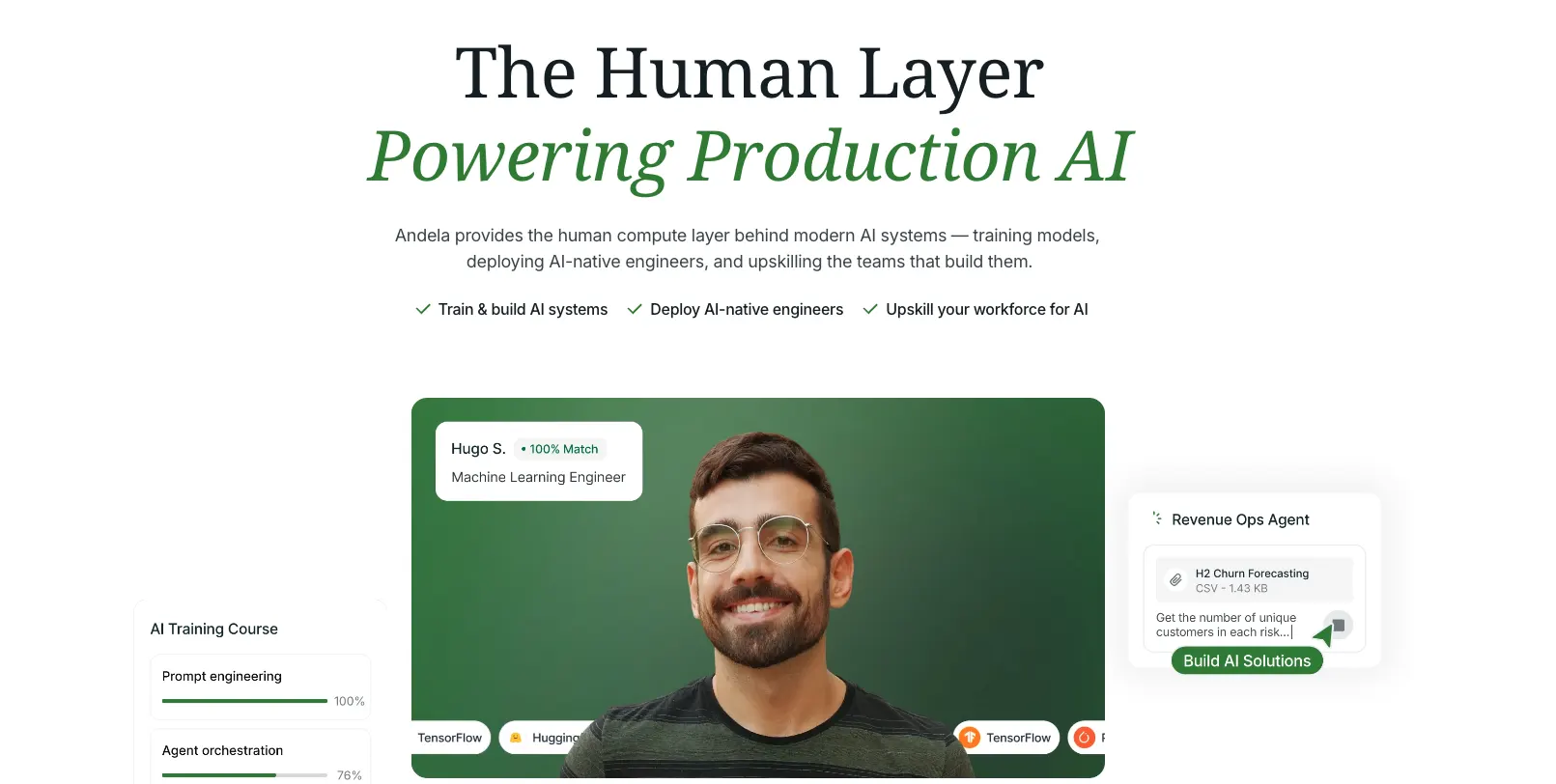
The reason Andela made this list is the enterprise engineering programs it has been trusted with. GitHub, Goldman Sachs, Capital One, SoFi, Coursera, Lattice, Indeed, and The Weather Company all appear as clients, and the company reports 98% enterprise client satisfaction.
Andela has trained 200,000+ technologists on emerging technologies since 2014 and now certifies around 17,000 engineers, sorting the infrastructure people into integrators who build AI systems and infrastructure and scalers who run platform and production engineering.
Key features:
- Infrastructure specialisms named explicitly: DevOps automation engineers and cloud infrastructure specialists working across AWS, Azure, Kubernetes, and Docker, alongside data scientists and platform engineers.
- Blended global teams: Clients describe teams assembled across Europe, Kenya, Brazil, India, and North America, which suits follow-the-sun coverage more than single-time-zone overlap.
- Notable clients: GitHub, Goldman Sachs, Capital One, and Indeed, a roster that signals experience with enterprise procurement and security review.
Best for: Enterprises staffing an AI or cloud infrastructure program that needs several engineers and can work asynchronously across regions.
Client perspective: “They integrated with our teams seamlessly.” — Kathy Rudy, Chief Data and Analytics Officer, International Service Group, andela.com
Limitations: The positioning has moved toward AI engineering, so a straightforward DevOps hire is not the headline offer. Talent spans several continents, so overlap with US hours varies engineer by engineer.
Pricing: Not publicly listed.
Revelo

Website: revelo.com
Headquarters: Miami, Florida, United States
Rating: 4.7/5 on G2 (129+ reviews) as of August 2026
Services: Individual engineer placement, full team hiring, end-to-end software project delivery, AI training data services
Focus Regions: Latin America, 18 countries including Brazil, Argentina, Mexico, Colombia, and Peru
Revelo belongs on this list for the size of its Latin American bench. Founded in 2015 and headquartered in Miami, the company describes itself as Latin America's largest talent network, with 400,000+ vetted software engineers across 18 countries and 2,500+ companies using it to scale engineering capacity.
It also publishes the numbers a buyer asks about: shortlists within 72 hours, a 14-day average time to hire, and 30 to 50% savings against US hires.
Key features:
- Time zone overlap as a matching rule: Revelo states that its engineers work within two hours of US Eastern time, and it treats that as a constraint on who it will match rather than a marketing line.
- Month to month with a trial: Engagements run month to month with no headcount commitment, a 14-day risk-free trial, and payment only if you hire.
- DevOps and cloud in the catalogue: DevOps, cloud infrastructure on AWS, AI and machine learning engineering, data science, and QA sit alongside front-end, back-end, and mobile.
Best for: Companies that want Latin American engineers on a flexible monthly arrangement, or a full squad assembled quickly, rather than a permanent in-house hire.
Client perspective: “Revelo just feels more like we're an extension of the same company. That is an incredible difference.” — Frank Wittkampf, VP of Applied AI Engineering at Databook, revelo.com
Limitations: Platform-led matching rather than a full-service recruiting process, so more of the evaluation stays with you. Engagements are contract-style rather than direct employment, and the published savings range reflects that model rather than a like-for-like salary comparison.
Pricing: Rates are not publicly listed. You pay only if you hire, and there is a 14-day risk-free trial.
Our comparison of Hire With Near and Revelo breaks down how the two companies differ.
Lemon.io

Website: lemon.io
Headquarters: Not publicly listed
Rating: 4.8/5 on Trustpilot (295+ reviews) as of August 2026
Services: Vetted freelance developer matching across full-stack, DevOps, cloud, AI, data, mobile, and QA automation
Focus Regions: Europe, Latin America, North America, and Asia, 40+ countries
Lemon.io makes the list on speed. The company states it matches clients in roughly 24 hours and has delivered vetted profiles for final interviews within a day, the fastest published turnaround of any firm here.
It screens from a pool of 50 million+ profiles down to a 1.2% acceptance rate, using AI agents trained on ten years of engineering assessments followed by a technical interview with a senior engineer.
It has been operating since 2015 and reports 2,000+ completed hires.
Key features:
- You keep only the last mile: Sourcing, screening, and vetting happen before you see anyone, so your involvement is the final interview.
- DevOps among the listed specialisms: DevOps and cloud engineers sit alongside full-stack, mobile, AI, data, blockchain, and QA automation across 50+ technologies.
- No upfront fee: Clients pay for work delivered rather than a placement fee, with no stated minimum project duration or hour commitment.
Best for: Startups and small teams that need a vetted freelance DevOps engineer this week for a defined piece of infrastructure work.
Client perspective: “Reached out on Monday evening, connected Tuesday morning, had four qualified candidates by Wednesday.” — Brian DeSpain, CEO, 10X ERP, lemon.io
Limitations: Freelance contracts rather than employment, so it is not built for a permanent team member. The network spans four continents, so overlap with your hours depends on the match. Headquarters and hourly rate ranges are not published, and the Trustpilot profile carries both client and developer reviews.
Pricing: Not publicly listed. No upfront fee, and clients pay for work delivered.
Final Thoughts
Pick the agency whose model matches the hire you are making, and the shortlist gets short fast.
A dedicated full-time engineer inside your working hours, contract coverage across several US offices, and a freelancer for a six-week project are three different purchases. The ten firms above aren’t interchangeable across them, which is why the comparison table is organized around fit rather than a score.
Across the 950+ US companies Hire With Near has helped build Latin American teams for, one pattern holds. The teams that end up with strong infrastructure decide what senior means for their own stack before they contact a single agency, then choose the partner shaped like that hire. The ones that keep restarting the search skipped that step.
If your search runs broader than DevOps specialists, compare the best LatAm staffing firms as well. Then schedule a free consultation with Hire With Near to walk through the role, the salary benchmarks for your stack, and what the search would look like, or go straight to hire a DevOps engineer in Latin America.
{{consultation}}
Frequently Asked Questions
How long does it take to hire a DevOps engineer through an agency?
Quality DevOps recruitment agencies present a first shortlist in days rather than weeks, with several firms on this list publishing turnarounds of 72 hours to five days, and most searches closing in three to six weeks.
The timeline depends on the complexity of your requirements and how specific your technical needs are. Agencies with pre-vetted talent pools can move faster than those sourcing candidates from scratch.
At Hire With Near, you get a shortlist in 3 to 5 days, with most clients hiring in under three weeks. One healthtech startup kept its full eight-step interview process, technical screens and coding assessments included, and still averaged 14 days to hire across seven senior engineering roles.
What are the cost savings of hiring DevOps talent in Latin America?
According to our data, companies typically save up to 70% on DevOps roles when hiring from Latin America compared to US-based professionals, with the gap narrowing as seniority rises.
Our salary data puts a senior DevOps engineer in Latin America at $72,000 to $100,000 a year against $122,000 to $197,000 in the US, a difference of 41 to 49%. Junior roles sit closer to the 70% end. These savings reflect a lower cost of living rather than lower technical capability.
See our LatAm vs. US Salary Guide for more information.
How do recruitment agencies make sure DevOps candidates are a cultural fit?
Top agencies should evaluate communication style, collaboration preferences, and work approach alongside technical skills.
For an infrastructure hire, the communication test is specific rather than general: can the engineer explain a failed deploy to someone who isn't an engineer, write a runbook a colleague can follow, and hold their own in an architecture review?
That is what our recruiters screen for when they ask a candidate to describe a project in plain language. Fluency is not the same thing as accent, and no agency should treat it that way.
They should also ask detailed questions about your team dynamics and company culture before screening anyone.
For more on what to probe, see the questions tech leaders ask about hiring developers in Latin America.
What are the benefits of working with DevOps talent in Latin America?
Latin American DevOps engineers work during your business hours, wherever your team sits in the US, which is why deploys, incident response, and on-call rotations are where the region earns its keep.
You also get strong English communication and, for many candidates, direct experience with US companies and modern development practices. How much of the day overlaps depends on which country you hire in and where you are, so check your own city against the country you are hiring in.
One CTO at a fintech company hiring senior DevOps engineers described the problem this way:
We actually have these competences, but we have a problem with managing time. When the New York Stock Exchange is operating, our guys would like to go to bed and sleep, actually, or not spend half of the night up and running, which, for the guys in Latin America, will be exactly the same hours as office hours, plus or minus two hours, depending on the region.
That overlap is a big part of why how to hire Latin American developers is now a standard question in engineering orgs, and why more CTOs are building their teams with LatAm tech talent.
What is the best DevOps recruitment agency?
There is no single best DevOps recruitment agency; the right one depends on which of three shapes of hire you are making.
If you need a dedicated full-time engineer working inside your own business hours, a specialist nearshore partner fits, and Hire With Near is one of those.
If you need on-site or contract coverage across several US locations, a large US IT staffing firm such as Apex Systems or The Judge Group is the better call.
If you need short-term project capacity, a vetted developer network such as Toptal or Lemon.io moves fastest.
How much does a DevOps recruitment agency cost?
Most DevOps recruitment agencies charge a percentage of the hire's first-year salary rather than a flat fee, so the salary itself is the real cost driver.
Two structures are common: a one-time contingency fee you pay only when you hire, which usually costs less over a long tenure, and an ongoing monthly rate when the agency also handles payroll and compliance, which asks for less commitment upfront. Ask any agency whether anything is due before you hire, what triggers payment, and how long the replacement window runs.
For what hiring an engineer costs on top of the fee, see our breakdown of how much offshore developers cost.
What skills should I prioritize when hiring DevOps engineers?
Focus on hands-on experience with your specific tech stack over years of experience alone.
The best DevOps engineers can walk you through CI/CD pipelines they've built, explain their approach to infrastructure automation, and demonstrate how they've solved scalability challenges.
Experience with cloud platforms (AWS, Azure, Google Cloud) and containerization technologies like Docker and Kubernetes are typically essential.







.webp)



%203.svg)
.avif)






%20(1).avif)

%20(1).png)