


%203.svg)
Key Takeaways
- AEs burn out when splitting time between prospecting and closing because context-switching between research and relationship building dilutes performance in both areas.
- You can scale outbound without overworking AEs or overextending your budget by hiring dedicated Latin American SDRs who focus solely on pipeline generation while AEs concentrate on closing deals.
- Hiring SDRs in Latin America gives you experienced, English-fluent professionals at 50–60% lower salaries, with longer average tenure and strong cultural alignment.
If you’re still relying on closers to fill their own pipeline, you’re leaving revenue on the table.
This isn’t a motivation issue. It’s a structural one. When AEs are responsible for prospecting and closing, neither happens at full throttle. Calls don’t get made. Follow-ups slip. Deals stretch. Morale dips.
But for many teams, the alternative—hiring SDRs—feels out of reach. Base salaries alone can run $80K+ in the US, and that’s before tools, commissions, and ramp time. So scaling outbound stays on the back burner, and pipeline stays shallow.
What most teams don’t realize is there’s a way to scale outbound with skilled, full-time reps without wrecking your budget or overloading your AEs.
The Challenge Most Sales Leaders Face
When your top closers are splitting time between prospecting and deal management, you're getting diluted performance in both areas. They're context-switching between research and relationship building, between cold outreach and contract negotiation.
It's an understandable situation; most growing companies go through this phase. But it's also unsustainable. If your AE spends 40% of their time prospecting, you're only getting 60% of their closing capacity. And their prospecting efforts get squeezed into whatever time and mental energy they have left after managing their existing pipeline.
The result? Longer sales cycles, inconsistent pipeline generation, and frustrated AEs who feel like they're juggling too many priorities.
Why Most Teams Haven't Built a Dedicated SDR Function Yet
We talk to sales leaders all the time who know they need dedicated SDRs but keep putting it off. The reasons are pretty consistent:
- Budget concerns are the biggest barrier. Quality US-based SDRs expect $70K–$90K+ base, and that's before you factor in onboarding time, tools, and the risk that they might not work out.
- The talent pool feels risky. Entry-level SDRs need months of training before they contribute meaningfully. Experienced ones often want quick promotions to AE roles, which means constant turnover and recruitment cycles.
- Timing never feels right. There's always next quarter's budget planning, or a big product launch, or concerns about adding headcount when other priorities are competing for resources.
- Past hiring experiences create hesitation. Maybe you've seen other companies struggle with SDR hires who lacked hustle, couldn't handle rejection, or didn't stick around long enough to justify the investment.
These concerns make sense. Building an SDR function with traditional US hiring approaches is expensive, time-consuming, and often frustrating. But there's another path that more sales leaders are discovering.
The Alternative That’s Working: Build Your SDR Team in Latin America
We work with sales leaders who’ve done the math. For the cost of one US-based hire, they can bring on two to three fully dedicated SDRs from Latin America. People who:
- Have already supported US sales teams and understand the market
- Bring the English fluency and sales skills to contribute immediately
- See working with growing US companies as career-defining opportunities
It’s not about outsourcing. It’s about building a real outbound engine—just somewhere you hadn’t considered yet.
Why This Approach Makes Sense
When you meet experienced SDRs from Latin America earning $2,000 to $2,500/month base—professionals who are articulate, hungry, and already familiar with US business culture—the economics become clear.
You can build a sustainable outbound engine with:
- Dedicated professionals whose only job is pipeline generation
- Reps with native-level English and strong cultural alignment
- Experienced reps who commit for the long haul (average tenure of 2+ years vs. 18 months for US SDRs)
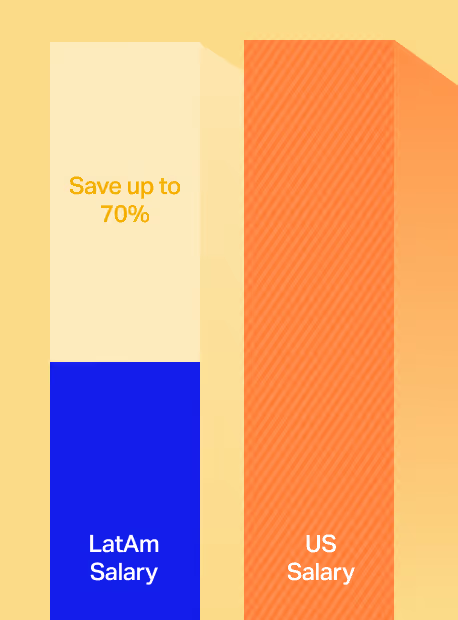
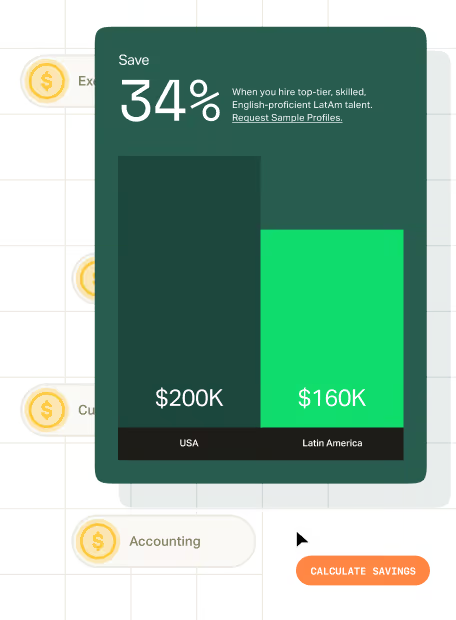
- 50–60% cost savings that let you scale your team as you grow
The real value isn't just cost savings. It's having SDRs who see their role as building something meaningful with your team, not just as a stepping stone to the next promotion.
When companies approach LatAm hiring strategically, the economics and performance become clear. Here’s one example from a company we helped to hire SDRs: AvantStay’s VP of Sales built a 10-person SDR team in Latin America that added $20M in ARR in under a year, while saving more than 50% compared to hiring the same team in the US.
{{banner}}
What Your AEs Gain When You Build a Real SDR Function
When you build a dedicated SDR function with LatAm talent, your AEs get their time back. But more importantly, they get their effectiveness back.
- Your AEs can focus 100% on closing instead of splitting time between prospecting and deal management. That means shorter sales cycles, higher win rates, and better quota attainment across the board.
- Your pipeline becomes predictable because you have dedicated professionals whose only job is filling it. No more feast-or-famine cycles based on whether your AEs had time for outbound that week.
- Team morale improves. AEs hired to close deals feel more fulfilled when they can focus on relationship-building, objection handling, and deal strategy instead of cold prospecting.
How to Build Your LatAm SDR Engine
The most successful companies we work with approach LatAm hiring strategically, not just as a cost-cutting measure.
- Start with one proven performer. Don't try to build a team of five SDRs at once. Hire one experienced LatAm SDR, get them integrated and performing, then scale from there.
- Pay competitive rates for the market. The most successful companies we work with pay competitive LatAm rates while still saving 50–60% compared to US salaries. This attracts top talent and builds long-term retention.
- Focus on experience and cultural fit. Look for SDRs who've already worked with US companies, understand B2B sales processes, and can integrate seamlessly with your existing team.
- Build for the long term. The best LatAm hires see working with US companies as career-defining opportunities. They want to grow with you, not jump ship for the next promotion.
Final Thoughts
Your AEs don't have to keep splitting their time between prospecting and closing. You can build a dedicated SDR function with talented Latin American professionals who are ready to start contributing to your pipeline within weeks.
The companies that are scaling fastest aren't necessarily the ones with the biggest budgets. They're the ones who've figured out how to build world-class teams by thinking beyond traditional hiring approaches.
Want to see what’s possible? Get profiles of three pre-vetted LatAm SDRs who can start contributing to your pipeline within weeks, not months. You can interview candidates for free. Only pay once you make a hire.
Frequently Asked Questions
How long does it take to hire a LatAm sales rep or SDR?
The timeline is much faster than most companies expect.
With Hire With Near, after an initial kickoff call with your dedicated recruiter so they can understand your needs, you’ll have a shortlist of pre-vetted candidates within three days. These aren't random resumes. They're professionals we've already screened for skill, experience, cultural fit, and English proficiency.
You can interview all candidates for free, with no upfront costs or commitment. Most of our clients make a hire within three weeks from start to finish.
Compare that to the typical 6+ months it takes to find and hire top sales reps in the US market, and you can see why companies are making this switch. You're saving money and you're saving time and getting your territories covered faster.
How much does it cost to hire LatAm SDRs?
Base salary expectations vary by experience level, but all represent significant savings compared to US rates:
- Junior SDR (0-2 years): $18,000 – $24,000 annually (vs. $43,000 – $66,000 in the US)
- Mid-Level SDR (2-5 years): $24,000 – $30,000 annually (vs. $66,000 – $76,000 in the US)
- Senior SDR (5+ years): $30,000 – $42,000 annually (vs. $76,000 – $90,000 in the US)
These figures represent base salaries before commission structures. You're looking at up to 64% cost savings without sacrificing talent quality.
The key is offering competitive compensation for the local market while still achieving meaningful savings for your business. Companies that try to save 70%+ typically struggle with retention, while those aiming for 30–60% savings build stable, high-performing teams.
To see how to structure a winning compensation plan, download AvantStay's proven SDR compensation framework that helped their team hit quota in 60 days while adding millions in ARR. Get the complete compensation plan with benchmarks and incentive structure.
What should I look for when hiring an SDR?
When hiring an SDR, look for strong communication skills, a proactive approach to outreach, and experience booking qualified meetings through email, phone, or LinkedIn. Great SDRs are organized, goal-driven, and resilient when handling rejection. Familiarity with CRMs like HubSpot or Salesforce is a plus.
If you’re hiring remotely, prioritize English fluency, time zone alignment, and comfort with virtual collaboration—strengths you’ll consistently find in SDRs from Latin America.
How can I pay LatAm sales reps?
Many companies worry about the logistics of paying international contractors or employees, but it's actually straightforward with the right setup.
You have two main options: work with a recruitment and staffing partner like Hire With Near that handles all payroll and compliance for you, or use an Employer of Record (EOR) service like Deel that manages international payments and legal requirements.
If you're hiring through Hire With Near we can handle contracts, onboarding, invoicing, and monthly payroll with full transparency.
The key is choosing a solution that handles the complexities of international compliance, tax requirements, and currency conversion so you can focus on building your team rather than wrestling with payment logistics.






.webp)
.webp)


%203.svg)
.avif)





%20(1).avif)

%20(1).png)