


%203.svg)
Key Takeaways
- To hire a great Google Analytics expert, focus on candidates who can go beyond dashboard setup. They should be able to configure GA4, translate business goals into measurable KPIs, and explain what your data actually means.
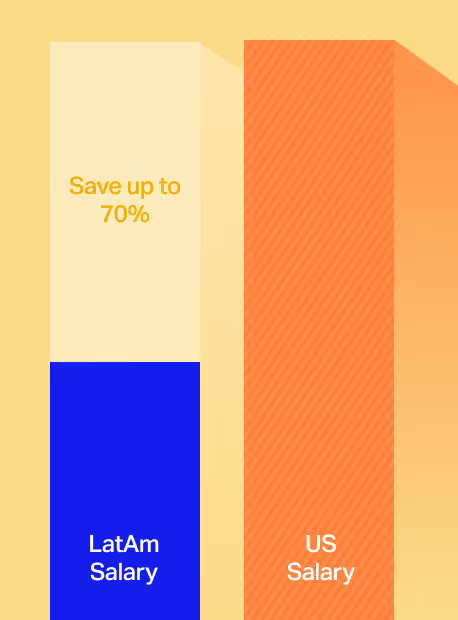
- In the US, full-time Google Analytics experts typically earn $120,000 to $156,500 per year—but hiring from Latin America can reduce that cost by up to 75%, without sacrificing expertise. GA professionals in LatAm often earn between $30,000 and $66,000 annually, offering US-level skills at far more sustainable rates.
- You can find strong analytics talent through job boards, freelance platforms, and referrals—but if you’re hiring internationally or need help vetting technical skills, a recruiting partner can speed up the process and reduce risk.
Your marketing campaigns are generating traffic, but you’re flying blind when it comes to understanding what’s actually working. Without clear insights into user behavior, conversion paths, and campaign performance, you’re essentially throwing budget at the wall and hoping something sticks.
This lack of data clarity doesn’t just waste marketing spend—it compounds over time. Poor tracking means missed optimization opportunities, ineffective budget allocation, and strategic decisions based on incomplete or misleading information. Your competition is making data-driven moves while you’re making educated guesses.
This guide will show you how to find and hire a Google Analytics expert who can transform your data chaos into clear, actionable insights. We’ll cover the specific skills that matter, realistic cost expectations, effective sourcing strategies, and proven evaluation methods to ensure you make the right hire.
What Does a Google Analytics Expert Do?
A Google Analytics expert helps your marketing team understand what’s working, what’s not, and where to optimize by translating raw user data into clear, actionable insights.
They go beyond setting up reports. These professionals configure GA4 to track key business goals, set up events and custom dimensions, manage tag implementations (often via Google Tag Manager), and ensure data accuracy across devices and platforms.
They’re the bridge between your marketing activity and performance measurement.
A strong GA expert doesn’t just build dashboards—they help you interpret what your data actually means. That includes understanding traffic shifts tied to SEO updates, campaign attribution, audience behavior, and the broader analytics stack (GA4 + GSC + BigQuery + Looker Studio).
They often work closely with marketers, developers, and product teams to guide data-driven decision-making.
The demand for these professionals has never been higher. With Google Analytics commanding over 70% of the web analytics market, businesses need professionals who can expertly navigate this dominant platform to remain competitive.
MarketingWeek’s 2024 research revealed that 36.9% of marketers cite data and analytics as their most critical skills gap—a growing pain point that makes finding qualified Google Analytics experts increasingly critical.
It’s important to note what Google Analytics experts typically don’t handle: they’re not responsible for implementing website changes, managing ad campaigns directly, or handling broader business intelligence beyond web analytics. Their expertise is specifically focused on understanding and optimizing digital user behavior.
How Much Does It Cost to Hire a Google Analytics Expert?
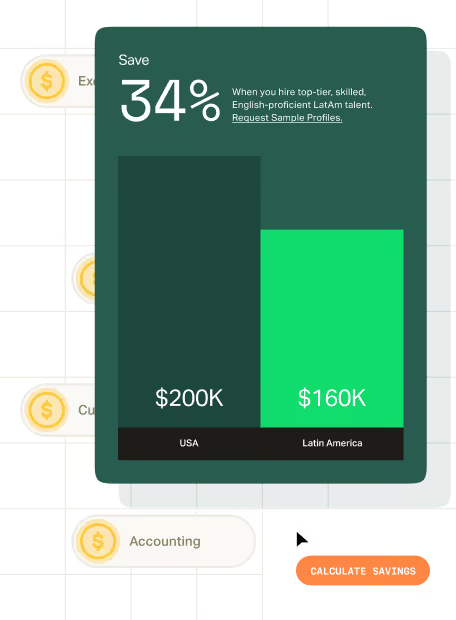
In the US, hiring a full-time Google Analytics expert typically costs between $120,000 and $156,500 annually, depending on experience and specialization. Senior-level experts with deep GA4, BigQuery, and cross-platform attribution skills often command salaries at the top of that range—especially in competitive markets or enterprise settings.
For many companies, though, hiring outside the US opens the door to the same level of expertise at a significantly lower cost.
In Latin America, based on our experience placing analytics professionals, salary expectations are considerably lower—without sacrificing skill:
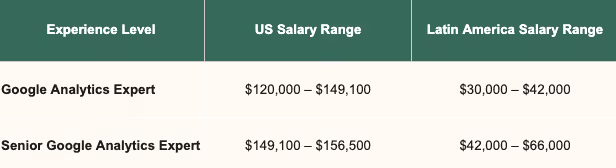
That’s a cost savings of up to 75% compared to US-based hires, and it reflects regional differences in cost of living—not talent or capability.
This kind of salary flexibility allows many companies to bring on senior-level analytics talent for the same budget they’d spend on a junior hire in the US. It also makes it easier to scale up analytics coverage—such as adding CRO, reporting, or tag management support—without doubling headcount costs.
While Latin America is often the most attractive region for US-based teams due to time zone alignment and cultural familiarity, similar cost savings are available in other regions like Eastern Europe and Southeast Asia.
We’ve used Latin America here as the benchmark because it’s where we’ve placed the most analytics talent and can speak confidently to current salary ranges.
If you’re open to international hiring, the budget you’d typically allocate to one US-based analyst could often support a more senior hire—or even an entire offshore analytics pod.
{{salary-guide-cta}}
What Skills Should You Look for When Hiring a Google Analytics Expert?
Finding the right Google Analytics expert requires balancing technical proficiency with strategic thinking and collaborative skills. However, skill evaluation depends heavily on the seniority level you’re targeting.
A junior Google Analytics expert might excel at basic report creation and data collection but need guidance on advanced segmentation and strategic insights. Meanwhile, a senior expert should be able to design comprehensive measurement frameworks, lead cross-functional analytics initiatives, and translate complex data findings into executive-level strategic recommendations.
Understanding these distinctions helps you evaluate candidates fairly and set realistic expectations for performance.
For example, expecting a junior analyst to immediately design attribution models or develop predictive analytics capabilities sets everyone up for frustration. Similarly, hiring a senior expert for tasks that primarily involve basic report generation wastes both their potential and your budget.
Here’s how Google Analytics expertise typically progresses across experience levels:

Regardless of seniority level, all Google Analytics experts should demonstrate certain fundamental capabilities.
Here are the core skills to evaluate:
Hard skills (the must-haves)
These technical competencies are non-negotiable for effective analytics work:
- Google Analytics 4 (GA4) mastery: Your expert should be fluent in GA4’s event-based tracking model, custom dimensions, and advanced reporting features. They should understand the migration from Universal Analytics and be able to set up proper tracking for your specific business model.
- Google Tag Manager (GTM) proficiency: Most advanced tracking implementations require GTM expertise. Look for candidates who can create custom tags, triggers, and variables without needing developer support for every tracking update.
- SQL and data analysis skills: Complex analytics questions often require database queries and custom analysis. Strong candidates should be comfortable writing SQL queries and working with data visualization tools to uncover insights that standard reports miss.
- E-commerce and conversion tracking expertise: If you’re running an online business, your GA expert needs deep knowledge of e-commerce tracking, funnel analysis, and attribution modeling. They should understand how to track complex customer journeys across multiple touchpoints.
- Statistical analysis fundamentals: Understanding statistical significance, confidence intervals, and proper testing methodology is crucial for making reliable recommendations. They should know when data is actionable versus when more information is needed.
- Understanding the shifting search landscape: One of the emerging “musts” for any top-tier GA expert is the ability to contextualize what’s happening in your data. Organic traffic is dropping for many businesses—not because your SEO team failed, but because Google’s interface is changing. Whether it’s AI-generated overviews (AEO), reduced visibility of traditional links, or tighter answer boxes, search behavior is evolving fast.
Your analytics expert should know how to spot these trends in your reporting, interpret their impact, and advise your team on what to measure next. They should be able to tell you if that 15% drop in traffic is a problem—or just a shift in how search visibility works now.
Soft skills (equally important)
Technical skills get the job done, but these soft skills determine how effectively your GA expert integrates with your team and drives business impact:
- Strategic thinking: The best analytics experts don’t just answer questions—they ask the right questions. Look for candidates who can connect data patterns to business objectives and identify opportunities others miss.
- Clear communication: Analytics insights are worthless if stakeholders can’t understand them. Your expert should be able to explain complex findings in simple terms and tailor their communication style to different audiences.
- Business acumen: Understanding how analytics connect to broader business goals is essential. Your expert should grasp marketing funnels, customer lifecycle value, and how different metrics impact revenue and growth.
- Proactive problem-solving: Great Google Analytics experts anticipate issues before they become problems. They should be able to identify data anomalies, troubleshoot tracking issues, and recommend improvements without constant direction.
Nice-to-have skills (the differentiators)
These additional capabilities can give candidates an edge, especially for growing companies with evolving needs:
- Marketing automation platform experience: Understanding how analytics integrate with tools like HubSpot, Marketo, or Salesforce can streamline reporting and attribution.
- A/B testing expertise: Experience with testing platforms like Optimizely or VWO, along with understanding of proper test design and statistical analysis.
- Programming skills: Basic knowledge of JavaScript, Python, or R for custom analysis and automation can be valuable for advanced implementations.
- Industry-specific knowledge: Experience in your specific sector (e-commerce, SaaS, healthcare, etc.) can accelerate time-to-value and provide immediate context for business-relevant insights.
Where Can You Find and Hire Great Google Analytics Experts?
The best Google Analytics experts aren’t always found on traditional job boards—and if you’re only looking locally, you’re likely missing out on stronger candidates at better rates.
To build a pipeline of qualified analytics professionals, you need to decide where to search (local, remote US, or offshore) and how to search (job boards, referrals, freelance platforms, or a recruiting partner).
That’s why the smartest hires often come from expanding your search beyond your local market and tapping into global talent, especially in regions like Latin America where you’ll find strong skill alignment at a lower cost.
Let’s break down how to approach hiring by location and sourcing channel.
Deciding between local, national, or global talent
Google Analytics work is largely remote-friendly. Whether you need an expert to support a one-time audit or integrate GA4 across your entire site ecosystem, the role doesn’t require in-office collaboration.
You have three main options when deciding where to hire:
- Local/in-office: Easier for real-time collaboration and team integration, but the most expensive option—especially in major US cities where top analytics talent commands high salaries.
- Remote within the US: Broadens your talent pool and keeps time zone alignment and cultural familiarity. Still comes with US-level compensation expectations.
- International/offshore: Gives you access to highly qualified analytics professionals, often at 30–70% lower cost. Ideal if you’re open to remote work and want to scale efficiently.
If you’re looking for overlap in US business hours, cultural familiarity, and strong English fluency, Latin America is one of the most strategic regions to hire from.
We’ve seen companies bring on GA4 specialists, technical analysts, and digital performance experts from LatAm who deliver the same caliber of work as their US counterparts—at significantly more sustainable rates.
Countries like Argentina, Colombia, and Mexico, in particular, have large pools of professionals with deep analytics experience, many of whom have worked with US clients and understand business needs beyond just “report building.”
Other regions can also offer similar cost savings, but often with trade-offs in time zone overlap, collaboration speed, and cultural alignment. If you’re exploring a broader search, this guide breaks down some of the best countries to hire remote marketing talent.
Choosing the right sourcing channel
Once you know where you’re hiring from, the fastest way to land the right Google Analytics expert is choosing a sourcing method that aligns with your timeline, budget, and hiring experience.
Some options give you speed but less control; others require more effort upfront but lead to better long-term fits.
Here’s how the most common sourcing channels compare:
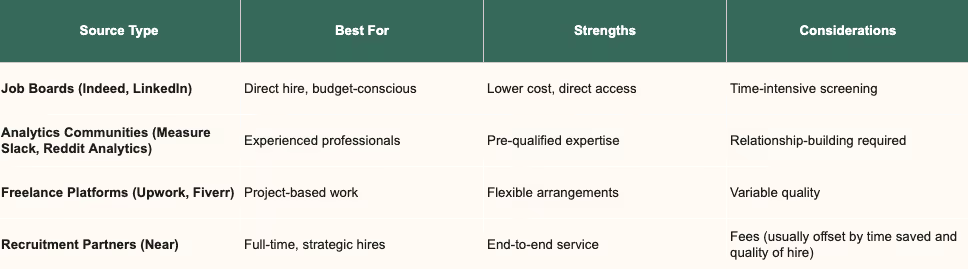
Each of these options can work—what matters is matching the channel to your goals.
If you need someone yesterday, a freelancer may be your best bet—at least for the short term.
If you have time to vet and want someone long-term, a job board or referral can work well.
And if you’re hiring offshore or struggling to surface strong candidates on your own, working with a recruiting firm that specializes in marketing talent might be the fastest path forward.
Why working with a recruiting partner makes a difference
Working with a recruitment partner becomes particularly valuable when hiring Google Analytics experts internationally, where navigating unfamiliar markets, compliance requirements, and cultural considerations can turn a straightforward hire into a months-long ordeal.
You can absolutely find a skilled Google Analytics expert on your own—many companies do successfully. If you have internal recruiting resources, clear evaluation criteria, and time to manage the process, a DIY approach can work well.
However, if you want to hire offshore and unlock incredible talent and cost savings, you need to know where to look, how to vet candidates across borders, and how to navigate the logistics.
Working with a recruitment or staffing company that specializes in international hiring can help you bypass the learning curve that comes with building remote teams abroad.
Here’s why it makes a difference:
- They know the local talent landscape: If you don’t know which companies are respected, which universities produce strong grads, or what salary expectations look like in a given country, it’s easy to misjudge a candidate’s potential. A partner with on-the-ground experience fills in those knowledge gaps fast.
- They’ve already built the network: Instead of starting from scratch, you get access to a curated pool of pre-vetted professionals who have already been screened for technical skills, communication, and alignment with US business norms.
- They help you avoid compliance headaches: From contracts and payroll to local labor laws, international hiring can quickly get complicated. The right partner helps you sidestep risks and ensures you’re set up correctly from day one.
- They move fast—without sacrificing quality: Offshore hiring often feels slower for companies doing it for the first time. A top specialized partner knows how to run an efficient process that respects your timeline and still delivers strong candidates.
- They understand what top offshore talent actually wants: Competitive offers abroad aren’t just about salary—they’re about working hours, benefits, growth paths, and cultural fit. A good recruiting partner helps you craft offers that land.
If you’re serious about building a high-performing marketing team beyond the US, the right recruiting partner doesn’t just help you find talent—they make sure you hire the right people, the right way.
{{prevetted-banner}}
How to Hire a Great Google Analytics Expert: Best Practices
Success in hiring Google Analytics experts requires a systematic approach that goes beyond technical assessments to evaluate strategic thinking and cultural fit.
Stage 1: Before and during sourcing
Clear expectations and realistic scope definition are essential before you begin your search.
Define your specific analytics needs
Google Analytics expertise can mean many things. Are you looking for someone to set up basic tracking, conduct advanced analysis, or lead a data-driven transformation? The clearer your requirements, the better you can evaluate candidates. Avoid the “unicorn” trap of expecting one person to handle analytics strategy, technical implementation, marketing insights, and business intelligence.
Craft job descriptions that attract the right candidates
Emphasize the strategic impact of the role, not just technical requirements. Include specifics about your analytics maturity, tools you’re using, and business challenges you’re trying to solve. This helps qualified candidates self-select and reduces time spent on mismatched interviews.
See our guide to writing job descriptions for marketing roles for more insights on this stage.
Stage 2: Screening and evaluation
Moving beyond resume reviews to assess real-world problem-solving abilities is crucial for analytics roles.
Test analytical thinking through scenarios
Present candidates with realistic business scenarios and ask how they’d approach the analysis. For example: “Our conversion rate dropped 15% last month. Walk me through how you’d investigate this.” Listen for systematic thinking, relevant questions, and understanding of multiple variables.
Evaluate technical skills through practical exercises
Rather than theoretical questions, give candidates a sample dataset or GA4 account to analyze. Ask them to identify trends, spot anomalies, or create actionable recommendations. This reveals both technical competence and business judgment.
Assess communication and stakeholder management
Analytics experts must translate complex data into clear insights. Ask candidates to explain a technical concept to a non-technical audience or describe how they’d present findings to different stakeholders. Strong candidates adjust their communication style appropriately.
Stage 3: Making the offer and closing the deal
Securing top analytics talent requires competitive offers and clear value propositions.
Emphasize growth opportunities and learning potential
Google Analytics experts value staying current with evolving tools and methodologies. Highlight opportunities for skill development, conference attendance, or certification programs. This is especially important for international candidates who see US companies as career accelerators.
Structure offers that reflect the value they’ll create
Consider the business impact of improved analytics—better marketing ROI, reduced acquisition costs, enhanced user experience. A skilled expert can easily generate value that exceeds their salary multiple times over.
Top Interview Questions for Hiring Google Analytics Experts
Effective interview questions for marketing roles go beyond testing tool knowledge to assess analytical thinking, problem-solving approach, and business judgment.
“Walk me through how you’d set up analytics tracking for a new product launch.”
This question reveals systematic thinking and understanding of measurement frameworks.
Strong candidates will discuss goal definition, key metrics identification, tracking implementation, and validation processes. They should ask clarifying questions about the product, target audience, and business objectives before diving into technical details.
“Describe a time when your analytics findings contradicted popular opinion or initial assumptions.”
This assesses intellectual courage and analytical rigor.
You want someone who can challenge assumptions with data and communicate findings diplomatically. Listen for examples of thorough investigation, consideration of alternative explanations, and effective stakeholder communication.
“How would you explain a 20% drop in conversion rate to a non-technical executive?”
Communication skills are crucial for analytics experts.
Strong answers will avoid technical jargon, focus on business impact, and provide clear next steps. They should demonstrate ability to tailor their message to the audience while maintaining analytical accuracy.
“What’s your approach to identifying which marketing channels are actually driving valuable conversions?”
This tests understanding of attribution modeling and marketing measurement complexity.
Look for candidates who recognize limitations of last-click attribution, understand cross-channel impact, and can design measurement approaches that provide actionable insights for budget allocation.
“How do you balance the need for comprehensive data with user privacy and compliance requirements?”
This is increasingly important as privacy regulations evolve.
Strong candidates will discuss consent management, data minimization principles, and alternative measurement approaches.
They should demonstrate awareness of GDPR, CCPA, and other privacy frameworks affecting analytics implementation.
Common Mistakes to Avoid When Hiring Google Analytics Experts
Even experienced hiring managers make predictable errors when recruiting analytics talent.
Here are the most costly mistakes and how to avoid them:
1. Confusing technical skills with strategic value
Many companies hire based on tool proficiency rather than analytical thinking ability.
A candidate who can navigate Google Analytics perfectly but can’t connect data to business decisions will create reports, not insights.
Focus on problem-solving approach and business judgment alongside technical competence.
2. Underestimating the importance of domain knowledge
Analytics expertise without industry context often produces technically correct but strategically irrelevant insights.
A candidate with e-commerce experience understands customer journey complexity that someone from B2B might miss. Consider how industry-specific knowledge affects the value they can provide.
3. Overlooking communication and stakeholder management skills
Even brilliant analysts fail if they can’t communicate findings effectively
The best insights are worthless if stakeholders don’t understand or act on them. Evaluate how candidates explain complex concepts, tailor messages to different audiences, and influence decision-making through data storytelling.
5. Failing to define success metrics and expectations
Without clear expectations about deliverables, timelines, and success measures, even great hires can struggle. Define what “success” looks like in the first 30, 60, and 90 days. This helps candidates understand expectations and provides a framework for ongoing performance evaluation.
Final Thoughts
The right Google Analytics expert provides the analytical foundation that enables data-driven marketing, product development, and business strategy.
Finding that person requires looking beyond technical certifications to assess analytical thinking, communication skills, and business judgment. Whether you need someone to establish proper tracking, conduct advanced analysis, or lead a data-driven transformation, the investment in finding the right talent pays dividends across your marketing strategy.
The global talent pool offers exceptional opportunities to find skilled analytics professionals who can work within your budget while delivering enterprise-level expertise. With proper evaluation and onboarding, location becomes irrelevant compared to analytical capability and cultural fit.
At Near, we understand that Google Analytics expertise goes beyond tool knowledge. We match you with pre-vetted Google Analytics experts in Latin America who combine technical proficiency with the analytical mindset needed to drive real business impact.
Our candidates work during your business hours, integrate seamlessly with your team, and deliver exceptional insights at rates up to 75% lower than US-based experts.
If you’re ready to transform your data into strategic advantages, we’ll help you find the perfect analytics partner within 21 days.
Book a free, no-commitment consultation call with our team today.






.webp)
.webp)


%203.svg)
.avif)





%20(1).avif)

%20(1).png)