


%203.svg)
Key Takeaways
- A well-crafted project manager job description should clearly outline core responsibilities like planning, executing, and monitoring projects while avoiding unrealistic requirements that combine multiple specialized roles into one position.
- Including specific qualifications (like PMP certification and experience with project management tools) and a transparent salary range helps attract experienced project managers who have the skills you need and fit your budget, saving you time on unsuitable applicants.
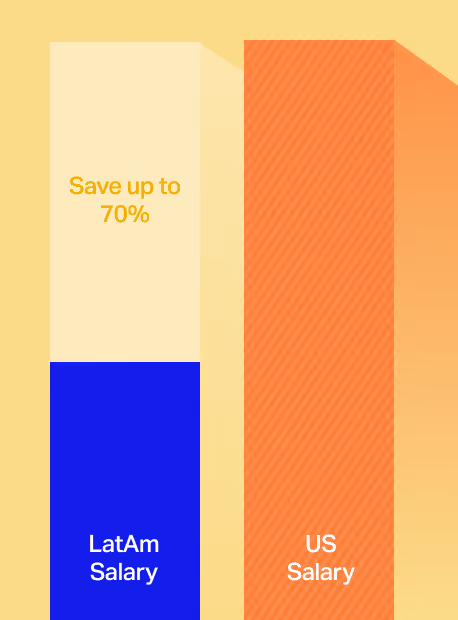
- For remote project manager positions, consider expanding your search to Latin America, where many professionals have strong project management credentials, US business experience, and excellent English skills, while expecting salaries up to 70% lower than their US counterparts.
You need a project manager job description you can post today. One that’s clear enough to attract the right candidates and tight enough to keep out the inbox-flood of generalists and “I’ve done a little bit of everything” applicants.
Here’s how to do it: write for fit and outcomes. Set the scope and decision rights, name the delivery environment (Scrum, Kanban, hybrid), state the must-haves vs. nice-to-haves, and include salary range and time zone expectations so the right people self-select. That clarity saves hours of screening and moves strong PMs to the front of the line.
This guide shows you how to do it in minutes. You’ll get a plug-and-play template, example language you can copy, and quick calibration tips so you attract qualified PMs—not time wasters. Paste it into your ATS, careers page, or job board and publish.
Why Job Descriptions Matter More Than You Think
Your project manager job description is your first screening tool that demonstrates whether you understand effective project management and can attract talent who can handle your specific project challenges.
Sets clear expectations about project complexity
Top project managers want to understand the scope and scale of what they’ll be managing before they apply. Generic descriptions like “manage various projects” tell them nothing about team sizes, budgets, stakeholder complexity, or the types of challenges they’ll face daily.
When you’re specific about project parameters—“oversee software development projects with budgets up to $500K and cross-functional teams of 8-12 people”—you attract candidates who’ve successfully managed similar complexity.
Demonstrates your project management maturity
How you describe the role signals your organization’s project management sophistication. If your job description mentions “keeping projects on track” but doesn’t specify methodology, tools, or how success is measured, experienced PMs will assume your project management practices are underdeveloped.
Speeds up your hiring process
A clear job description helps ensure applicants can actually handle your project environment, reducing time spent on interviews that go nowhere. When candidates can quickly assess whether their experience aligns with your needs, you get better quality applications and faster hiring decisions.
What Makes a Great Job Description for Project Manager Roles?
Great project manager job descriptions specify methodology, emphasize business impact, and clearly describe the project management culture and authority level candidates will have.
The difference between good and great project manager job descriptions comes down to specificity about project methodology and understanding what motivates project management professionals.
Methodology and process clarity
Great project manager job descriptions specify the frameworks and methodologies your organization uses. Instead of generic “project management experience,” mention whether you follow Agile, Waterfall, hybrid approaches, or specific frameworks like Scrum or Kanban.
This specificity helps experienced PMs immediately understand whether their background aligns with your approach and gives them confidence that your organization has structured project processes.
Lead with project impact
Strong project managers are motivated by meaningful outcomes. Start your job description by highlighting the business impact their projects will have:
“You’ll lead the digital transformation initiatives that will increase operational efficiency by 30% and directly impact our ability to serve 50,000+ customers more effectively.”
This immediately attracts candidates who want their project work to drive real business results.
Be specific about your project management culture
Rather than generic statements about “collaborative environment,” describe how your organization actually approaches project management:
“Our project teams have real authority to make decisions, access to stakeholders at all levels, and the resources needed to deliver results. We believe in empowering project managers to drive outcomes, not just follow processes.”
Show the variety and challenge level
Project managers often seek roles that will expand their experience. Describe the types of projects and challenges they’ll encounter:
“Projects range from 3-month product launches to 18-month platform migrations, giving you exposure to different methodologies, stakeholder groups, and technical challenges.”
{{prevetted-banner}}
What Should I Include in a Project Manager Job Description?
Include specific project scope details, methodology requirements, team structure, and clear authority levels to help candidates accurately assess fit and demonstrate your PM sophistication.
Understanding what to include in your project manager job description—and why each section matters—can significantly improve your ability to attract qualified candidates.
Job title
Your job title needs to be both searchable and specific to the type of project management role you’re filling. “Project Manager,” “Senior Project Manager,” or “Technical Project Manager” work better than creative titles like “Project Ninja” or “Delivery Champion.”
If the role has specific focus areas, include those: “Software Project Manager,” “Construction Project Manager,” or “Marketing Project Manager.” This helps qualified candidates find you while helping others self-select out.
Summary of the role
Think of this as your elevator pitch to potential project managers. In 2-3 sentences, capture what makes this project management opportunity compelling:
- What types of projects they’ll manage and their typical scope
- How they’ll fit into your existing team structure
- What makes this opportunity different from other PM roles
For example: “Join our growing product team to manage software development projects from conception through launch. You’ll coordinate cross-functional teams of 6-10 people, work directly with product stakeholders, and own project delivery for our core platform initiatives. This role is perfect for a hands-on project manager who wants to drive meaningful product outcomes in a collaborative environment.”
This immediately tells candidates about project types, team dynamics, and organizational culture.
Key responsibilities
Be specific about the actual work, not generic project management tasks.
Our recruiters find that candidates respond best when they can visualize the day-to-day project challenges and understand the methodology they’ll be working within.
Good examples:
- Plan and execute software development projects using Agile methodology with 2-week sprints
- Coordinate with engineering, design, and product teams to ensure project alignment with business objectives
- Manage project budgets ranging from $100K-$500K and track resource allocation across multiple initiatives
- Facilitate daily standups, sprint planning, and retrospective meetings for distributed teams
- Create and maintain project documentation, including project charters, risk registers, and status reports
Avoid vague statements like “ensure project success” or “manage stakeholder expectations.” Be concrete about the specific project management activities they’ll perform daily.
Required skills and qualifications
This is where many companies go wrong by listing every possible project management skill or certification they’ve ever heard of.
Focus on what’s truly essential for success in the first 90 days.
Require competencies that actually predict success. According to research by SHRM, 73% of organizations that eliminated degree requirements successfully hired candidates they would have previously considered unqualified, often finding better performers than traditional credential-focused approaches.
Essential qualifications typically include:
- Specific years of project management experience in relevant industries
- Required certification (PMP, Agile, Scrum Master) if truly necessary for your projects
- Experience with your primary project management tools (Jira, Asana, Monday.com, etc.)
- Proven track record managing projects of similar size and complexity
Preferred qualifications
This is where you can mention nice-to-have skills that would help someone excel but aren’t deal-breakers:
- Advanced certifications or specialized training
- Experience with additional project management methodologies
- Previous experience in your specific industry vertical
- Knowledge of technical skills relevant to your projects
Salary range
Like most industries, project management professionals expect transparency about compensation. This transparency matters for both legal compliance—with states like California, New York, Illinois, Minnesota, and many others now requiring salary disclosures—and practical recruiting benefits.
Candidates who know what’s truly on offer won’t waste your time if it doesn’t meet their expectations.
Include both base salary ranges and any variable components:
- Base salary range with any performance bonuses
- Benefits overview (health insurance, PTO, professional development budget)
- Remote work stipends or equipment provisions if applicable
For example: “Salary range: $75,000-$95,000 annually based on experience, plus annual performance bonus potential of up to 10%. We also provide a $1,500 annual professional development budget.”
Including salary information shows you’re serious about transparency. Companies that include salary ranges often see improved application quality and faster hiring cycles.
Location and work setup
Be explicit about where project management work gets done, especially since many PM roles can be performed remotely:
- For on-site roles: Include the specific city and office location. Mention any flexibility for remote work during project phases that don’t require in-person collaboration.
- For hybrid roles: Specify expectations for in-office time, especially for team meetings, stakeholder presentations, and project kickoffs.
- For remote roles: Clarify geographical restrictions, time zone requirements, and expectations for occasional travel or in-person meetings.
If you’re open to hiring remote project management talent, consider expanding your search globally to access broader talent pools with competitive compensation expectations.
Many experienced offshore software development project managers have worked with US companies and understand American business practices.
Tools and methodology details
Give project managers a clear picture of their daily toolkit and processes:
- Primary project management software (Jira, Asana, Monday.com, Microsoft Project)
- Communication and collaboration tools (Slack, Teams, Zoom)
- Documentation and reporting systems
- Specific methodologies or frameworks your organization follows
Team structure and project environment
Project managers want to understand the organizational context they’ll be working within:
- Team sizes they’ll typically coordinate
- Reporting relationships and decision-making authority
- Types of stakeholders they’ll interface with regularly
- How project success is measured and evaluated
Growth and advancement opportunities
Experienced project managers are motivated by career progression and skill development. Mention:
- Opportunities to manage larger or more complex projects
- Career advancement paths (senior PM, program manager, PMO leadership)
- Professional development support and certification opportunities
- Potential for expanding into new project domains or methodologies
Try to be specific about development opportunities:
“You’ll have opportunities to earn advanced certifications, lead increasingly complex initiatives, and potentially build out our PMO as we scale from $50M to $200M in revenue.”
How to apply
Make the application process straightforward while gathering the information you need to evaluate candidates:
- Required application materials (resume, portfolio of project examples, certifications)
- Specific information you want about their project management experience
- Any assessments or case studies that will be part of the process
- Timeline for your hiring process and next steps
{{offshore-talent}}
What Are the Common Mistakes to Avoid in a Project Manager Job Description?
The biggest mistakes companies make include combining multiple roles into one position, being vague about authority levels, and focusing on administrative tasks rather than strategic project management.
These pitfalls can significantly hurt your ability to attract quality project management talent:
Unrealistic skill combinations
Asking for “entry-level project manager with 5+ years of enterprise experience” or “technical PM who’s also a certified financial analyst” signals that you don’t understand project management roles or market realities.
Confusing project coordination with project management
Many job descriptions focus heavily on administrative tasks like scheduling meetings and updating spreadsheets rather than strategic project management responsibilities like risk assessment, resource planning, and stakeholder management.
True project managers want to drive outcomes, not just coordinate activities.
Focusing only on methodology without context
Listing certifications and methodologies without explaining how they’re applied in your environment doesn’t help candidates understand whether their experience translates to your projects.
Limiting your search unnecessarily
If project management work can be done remotely, restricting your candidate pool significantly reduces your options. Many excellent project managers work effectively with distributed teams and can manage projects across time zones.
Consider working with project management recruitment agencies that specialize in finding qualified PM talent, including those who can work remotely from other regions.
Unrealistic scope and authority expectations
One of the biggest mistakes companies make is asking for senior-level project management skills while offering junior-level authority or resources. If the role involves managing complex projects but the PM won’t have budget authority or direct team oversight, experienced professionals will recognize the setup for failure.

Sample Project Manager Job Description (Ready to Copy or Customize)
Project Manager
About us: [Company name] is [brief description of company and industry]. We’re [current growth stage] and need an experienced project manager to [specific goal, e.g., lead our product development initiatives, manage our digital transformation projects].
The role: We’re looking for a [seniority level] project manager to [primary responsibility, e.g., own software development projects from planning through delivery]. You’ll work with [team composition, e.g., cross-functional teams of engineers, designers, and product managers] while [additional context, e.g., coordinating with external vendors, managing multiple concurrent projects]. This role is perfect for a [ideal candidate profile] who wants to [growth opportunity or impact] in a [company culture description] environment.
What you’ll do:
- Plan and execute [specific types of projects, e.g., software development projects] using [methodology, e.g., Agile methodology with 2-week sprints]
- Coordinate with [specific teams, e.g., engineering, design, and product teams] to ensure project alignment with business objectives
- Manage project budgets ranging from [budget range, e.g., $100K-$500K] and track resource allocation across [number] concurrent initiatives
- Facilitate [specific meetings/ceremonies, e.g., daily standups, sprint planning, and retrospective meetings] for [team setup, e.g., distributed teams]
- Create and maintain project documentation, including [specific deliverables, e.g., project charters, risk registers, status reports]
- [Additional 2-3 core responsibilities specific to your environment]
What you’ll need:
- Years of project management experience in [relevant industry/context]
- [Required certification, e.g., PMP, Agile, Scrum Master certification] or equivalent experience
- Proven experience with [required tools, e.g., Jira, Asana, Microsoft Project]
- Experience managing projects with budgets of [budget range] and teams of [team size range]
- [Any technical or industry-specific requirements that are truly necessary]
Nice to have:
- [Advanced certifications or specialized training]
- Experience with [additional methodologies or tools that would be helpful]
- Previous experience in [your industry or adjacent industries]
- [Additional languages or skills that would be beneficial]
Salary and benefits:
- Salary range: $[X,000 - Y,000] annually [based on experience/location]
- [Performance bonus structure if applicable]
- [Key benefits: health insurance, PTO, professional development budget, etc.]
- [Remote work stipends or equipment provisions if applicable]
Location and schedule:
- [Remote/Hybrid/On-site] position
- [Time zone requirements if applicable, e.g., “Core hours: 9 AM - 5 PM EST for team collaboration”]
- [Travel requirements if any, e.g., “Quarterly team meetings require in-person attendance”]
- [Any specific schedule considerations]
Tools and methodology:
- Primary PM tools: [specific tools, e.g., “Jira for project tracking, Slack for team communication”]
- [Methodology framework, e.g., “Agile/Scrum methodology with established ceremonies”]
- [Documentation and reporting systems]
- [Any specialized tools relevant to your industry]
Growth opportunities:
- [Career advancement possibilities, e.g., “Clear path to Senior Project Manager and Program Manager roles”]
- [Professional development support, e.g., “$2,000 annual professional development budget”]
- [Leadership opportunities, e.g., “Opportunity to build and lead project management practices as we scale”]
- [Company growth context, e.g., “Join us as we expand from 50 to 200 employees over the next 2 years”]
How to apply: Send your resume to [email/application link] and include:
- [Specific information you want, e.g., “Brief overview of the largest project you’ve managed”]
- [Portfolio or example request, e.g., “One example of how you’ve handled a project that faced significant challenges”]
- [Motivation question, e.g., “Why you’re interested in project management in our industry”]
Our hiring process includes: [brief overview of interview stages]
We’ll review applications on a rolling basis and aim to respond within [timeframe].
Industry-Specific Project Manager Templates
Understanding that project management requirements vary significantly across industries, here are focused samples for the most common sectors that hire project managers:
Software development project manager
Key responsibilities:
- Lead software development projects using Agile/Scrum methodology with 2-week sprints
- Coordinate with engineering, QA, and product teams to define requirements and acceptance criteria
- Manage product roadmap priorities and communicate timeline changes to stakeholders
- Facilitate daily standups, sprint planning, and retrospective meetings
- Track development progress using tools like Jira and ensure timely delivery of features
Essential qualifications:
- 3+ years managing software development projects
- Strong understanding of Agile methodology and software development lifecycle
- Experience with development tools (Jira, GitHub, Slack) and basic technical concepts
- Proven ability to work with engineering teams and translate business requirements
Construction project manager
Key responsibilities:
- Oversee construction projects from planning through completion, ensuring safety and quality standards
- Coordinate with architects, contractors, and subcontractors to maintain project schedules
- Manage project budgets ranging from $500K-$5M and track resource allocation
- Ensure compliance with building codes, safety regulations, and permit requirements
- Conduct regular site inspections and address any issues that arise during construction
Essential qualifications:
- 5+ years of construction project management experience
- Knowledge of building codes, safety regulations, and construction processes
- Experience with construction management software and project scheduling tools
- Strong relationships with contractors, suppliers, and regulatory bodies
Marketing project manager
Key responsibilities:
- Lead marketing campaigns from concept through execution across multiple channels
- Coordinate with creative teams, copywriters, and external agencies to deliver campaign assets
- Manage campaign budgets and track ROI across different marketing initiatives
- Ensure brand consistency and quality across all marketing materials and touchpoints
- Analyze campaign performance data and provide insights for future initiatives
Essential qualifications:
- 3+ years managing marketing projects or campaigns
- Understanding of digital marketing channels and campaign measurement
- Experience with marketing tools (HubSpot, Salesforce, Google Analytics)
- Strong creative judgment and ability to balance multiple concurrent campaigns
Healthcare project manager
Key responsibilities:
- Manage healthcare system implementations, compliance initiatives, and process improvement projects
- Coordinate with clinical staff, IT teams, and regulatory bodies to ensure project success
- Ensure all projects meet HIPAA compliance and healthcare regulatory requirements
- Lead change management efforts to help staff adapt to new systems and processes
- Track project metrics related to patient outcomes, efficiency improvements, and cost savings
Essential qualifications:
- 4+ years of project management experience in healthcare environment
- Understanding of healthcare regulations (HIPAA, FDA) and compliance requirements
- Experience working with clinical staff and understanding healthcare workflows
- Knowledge of healthcare technology systems and implementation challenges
These industry-specific examples can help you create more targeted job descriptions that attract candidates with relevant experience and realistic expectations about your project environment.
Final Thoughts
A thoughtfully crafted project manager job description connects you with project management professionals who can truly drive results for your organization.
But here’s what we’ve learned from placing hundreds of project managers: even the perfect job description won’t solve the fundamental challenge most businesses face today.
The talent gap is real—the Project Management Institute projects the world will need 30 million new project management professionals by 2030, creating unprecedented competition for qualified candidates and making every improvement in your job description effectiveness critical.
By being clear about project complexity, honest about authority and resources, and realistic about your project management environment, you’ll save yourself from reviewing countless unsuitable applications and speed up your entire hiring process.
But if you’ve been searching for months without success, or your budget can’t stretch to match current US market demands, it might be time to consider expanding your search.
The reality is that excellent project management talent exists globally, not just in your local market. While you’re competing with every other company for scarce domestic talent, there are experienced, methodical project managers in Latin America who have the skills you need, the communication abilities to work with your teams, and salary expectations that fit your budget.
And if you’d like help finding them, Near can help you hire top project managers in Latin America in under three weeks.
Schedule a free, no-commitment consultation call to discuss your project management hiring needs and learn how accessing global talent can help you build the project delivery capabilities your business requires.
Frequently Asked Questions
Should I use a recruitment agency to find a project manager?
Working with a specialized agency can speed up hiring, expand your reach to pre-vetted PMs, sharpen the job scope and compensation benchmarks, and cut screening time, especially useful if the role is niche, you’re hiring offshore, or your team has limited bandwidth.
Agencies handle proactive outreach, assessments, and candidate coordination so your team can focus on final interviews and the offer.
What’s the difference between a project manager and a program manager?
Project managers focus on individual projects with specific deliverables, timelines, and budgets. Program managers oversee multiple related projects that work together toward broader organizational goals. For example, a project manager might handle launching a new mobile app, while a program manager coordinates the entire digital transformation initiative that includes the app, website redesign, and system integrations.
What’s the difference between a project manager and a product manager?
A project manager owns delivery and execution: scope, schedule, budget, risk, cross-team coordination, and on-time, in-scope outcomes.
A product manager owns direction: understanding customers and the market, defining the problems to solve, setting the roadmap and success metrics, and partnering with design and engineering to prioritize what gets built.
If delivery is slipping or communication across teams is the pain, hire a project manager. If you need clearer product strategy, prioritization, and measurable impact on adoption, retention, or revenue, hire a product manager.
In early-stage teams one person may wear both hats, but separating them typically improves speed and quality.
Do project managers need a PMP certification?
Not necessarily. While many job descriptions list PMP as “preferred,” what matters more is demonstrated experience managing projects successfully. Often a combination of strong project management experience and coachability often trumps certifications. However, PMP certification can be valuable for career advancement and may be required for certain industries or enterprise-level roles.
What’s the typical salary range for project managers?
Project manager salaries vary significantly by location, industry, and experience level.
In the US, entry-level PMs typically earn $79,000–$98,000, while senior PMs can command $174,000–$229,000 or more.
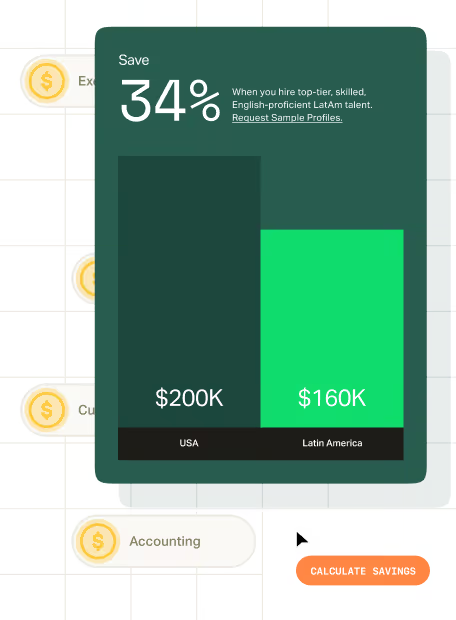
However, if you’re open to remote work, you can find experienced project managers in Latin America with similar qualifications and US business experience at up to 76% lower rates while still offering competitive compensation for their local markets.
From our experience, a senior project manager in LatAm will expect between $42,000 and $54,000.
Can someone become a project manager without prior PM experience?
Yes, many successful project managers transition from other roles. Relevant experience in team coordination, client management, or leading initiatives can translate well to project management. According to our recruiters, “Look for candidates who have shown they can coordinate across different teams, manage deadlines, and communicate with stakeholders—even if their title wasn’t ‘project manager.’"










%203.svg)
.avif)





%20(1).avif)

%20(1).png)