


%203.svg)
Key Takeaways:
- Evaluating shortlisted SEO specialist candidates requires a three-stage process: an initial culture interview, a take-home case study, and a case study presentation with follow-up questions.
- Interview SEO candidates by asking about recent initiatives they led, their AI search optimization experience, and how they measure business impact.
- Identify weak SEO candidates by looking for a focus on vanity metrics, a lack of AI search knowledge, poor communication skills, and unrealistic timeline promises.
You've got your shortlist of SEO specialist candidates. Now you need to figure out who actually knows what they're doing.
Anyone can talk about keywords and rankings, but only the best candidates understand how to drive actual business results.
This playbook walks you through a focused evaluation process—questions to ask, what to listen for, and a sample case study exercise—so you can feel confident about your decision.
Why this matters: Search has changed. Zero-click results, AI overviews, and LLM-driven search mean it’s not enough to just rank on Google. The right SEO Specialist understands both traditional SEO and how to show up in new formats, balancing it all to keep your business visible and growing.
Hire the wrong person, and you’ll waste months watching organic traffic stagnate while your competitors pull ahead. Hire the right one, and you'll have someone who can navigate both Google's algorithm updates and the shift toward AI-powered search.
So here are the questions, assessments, and evaluation criteria we recommend to identify candidates who can deliver measurable results.
What’s the Best Evaluation Process for SEO Specialists?
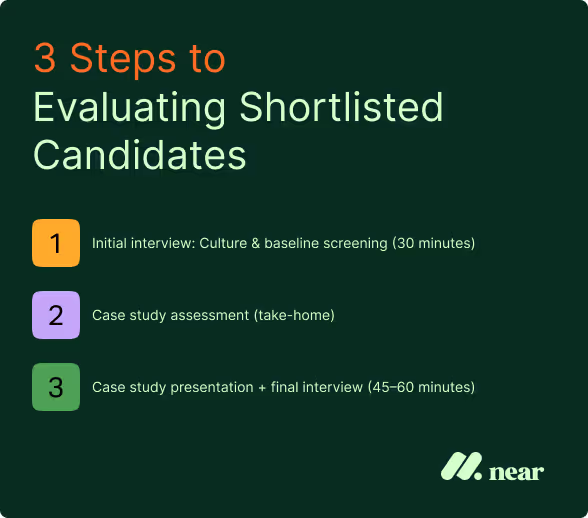
Once you’ve narrowed down to your shortlist of SEO candidates, the goal is to go deeper: testing not just technical skills, but how they think, communicate, and connect their work to real business results.
Here’s a framework we recommend:
Stage 1: Initial interview — Culture & baseline screening (30 minutes)
Focus on cultural fit, communication skills, and basic SEO understanding. Use the interview questions below to assess their strategic thinking and business impact mindset. This stage determines who moves forward to the assessment.
Stage 2: Case study assessment (take-home)
Give your top candidates the case study scenario outlined below. This reveals their strategic planning abilities, understanding of modern SEO/GEO, and resource management skills.
Stage 3: Case study presentation + final interview (45–60 minutes)
Have candidates present their case study findings to your team, then dig deeper with follow-up questions. This reveals how they think on their feet, handle feedback, and communicate with stakeholders.
What Are the Essential Interview Questions for SEO Specialists?
These questions separate candidates who understand SEO as a business function from those who just know tactics. The best responses connect every SEO decision to measurable business outcomes.
Most SEO interview questions focus on technical knowledge: keyword research processes, link-building tactics, or algorithm updates. Those things matter, but they don't predict success. What predicts success is a candidate's ability to think strategically about how SEO drives business growth.
Question 1: Recent SEO initiative deep-dive
Ask: "Walk me through an SEO initiative you personally led or executed in the past 12 months. What was the strategy, what advanced SEO tools did you use, and what measurable results did you achieve?"
What you're looking for:
- Business impact focus: Responses about pipeline, leads, or revenue, not just traffic or rankings
- Advanced toolset: Beyond basic tools like SEMrush, listen for NLP tools or content analysis platforms
- Team coordination: They should mention managing or working with writers, editors, or other team members
- Active leadership role: Personal involvement in strategy development, not just execution
Question 2: LLM and AI search strategy
Ask: "Can you describe your experience generating traffic from LLMs like ChatGPT? How do you approach optimization for these new search formats?"
What you're looking for:
- Immediate recognition: They should know what LLMs are and why it’s important to be showing up in them (if not, major red flag)
- Experimental mindset: Testing approaches since this is cutting-edge territory
- Foundation-first thinking: How traditional SEO fundamentals still apply to AI search
- Brand-building awareness: Mentions of backlinks, PR, or brand mention strategies
Question 3: Business-impact follow-up
For any initiative they mention ask: "When you made that decision about keyword targeting or content strategy, how did you determine it would translate into business results?"
Look for: Clear connection between SEO tactics and business outcomes, understanding of your customer journey, strategic thinking beyond search volume metrics.
What Case Study Assessment Should I Run for an SEO Specialist?
The case study should always be tailored to your business and industry. Use the example below as a model, but make the exercise relevant to your actual goals and context.
The best case studies mirror a real challenge your team is facing, so you can see how the candidate thinks, problem-solves, and communicates in a situation that matters to you.
Example assignment: "Create a 30–60–90 day plan to dominate search results for 5–10 core keywords that would be impossible not to get business from if you ranked for them. Include both traditional SEO and LLM optimization strategies, plus the resources you'd need."
What exceptional candidates will include:
- Business-impact keyword selection (not just high-volume terms)
- Competitive analysis and realistic positioning strategy
- Specific tactics for optimizing content for AI search engines
- Plans for building brand authority and mentions that LLMs will reference
- Realistic resource allocation, including writers, freelancers, or team members needed
- Scalable content creation and quality control processes
- Clear measurement plan connecting SEO efforts to business outcomes
After candidates submit their case studies, have them present their findings and recommendations to your team during the final interview. This isn't just about the quality of their analysis. It's about their ability to communicate strategy, handle questions, and adapt their thinking based on feedback.
What Are the Red Flags to Watch For When Hiring an SEO Specialist?
During interviews:
- Cannot explain business impact: Focuses only on vanity metrics like traffic or rankings
- No LLM awareness: Doesn't understand or dismisses AI search trends
- Poor communication: Cannot explain complex SEO concepts in simple terms
- Solo operator mentality: Claims unrealistic single-handed execution of large initiatives
In case study presentation:
- Generic strategies: Cookie-cutter approaches without customization for your business
- Unrealistic timelines: Promises results too quickly or plans too ambitiously
- Missing business context: Doesn't consider your industry or customer acquisition model
- Old-school only: No consideration of AI search optimization
{{prevetted-banner}}
How Should I Weigh Up SEO Specialist Candidates?
The best SEO specialists think like business owners, not just marketers. They understand that rankings mean nothing if they don't translate to your bottom line.
Key evaluation criteria:
Business understanding (30%)
- Do they grasp how SEO fits into your broader growth strategy?
- Can they articulate the connection between search traffic and revenue?
- Do they ask insightful questions about your market and competitors?
Technical & modern expertise (30%)
- Proficiency with advanced SEO tools and analytics platforms
- Understanding of both traditional search and emerging AI platforms
- Ability to handle technical challenges and site architecture decisions
Execution capability (40%)
- Evidence of successfully managing content teams and complex SEO projects
- Understanding of resource planning and scalable operational workflows
- Track record of delivering measurable business results, not just improved metrics
If you're stuck between two strong candidates:
- Give them a more complex case study focused on your specific industry challenges
- Ask for specific examples of how they've handled similar business situations in past roles
Trust your instincts on:
- Communication style: Can they clearly explain their strategies and report on progress?
- Genuine curiosity: Do they ask thoughtful questions about your business challenges?
- Results focus: Do their examples consistently tie back to business outcomes rather than just SEO metrics?
Ready to Start Your Search?
Anyone can promise to boost your rankings. The right SEO Specialist will connect strategy to revenue, adapt to AI-driven search, and manage the resources it takes to deliver results.
This playbook gives you a framework for identifying A-players.
If you don’t yet have your shortlist yet, we can help.
If you need help sourcing SEO specialists who understand both traditional search and AI optimization, we can handle that heavy lifting for you.
We'll deliver pre-vetted SEO specialist candidates in LatAm who've already been assessed for technical skills and business impact thinking. You can jump straight to the interview stage with confidence.
Schedule a free, no-commitment consultation call to discuss your SEO hiring needs.
Frequently Asked Questions
How long does it take to hire an SEO specialist with Hire With Near?
After a kick-off call to find out your exact requirements, we deliver a vetted shortlist in 3 days, saving you weeks of searching on your own. Most clients are ready to make a hire within 2–3 weeks.
Why should I hire an SEO specialist with Hire With Near?
Hire With Near connects US companies with top SEO talent across Latin America, including SEO specialists and SEO managers. We pre-vet for technical skills, business impact, and culture fit, so you start with a shortlist of three strong options.
Clients choose Hire With Near for the speed, high quality of our placements, and the advantages of hiring in LatAm: time-zone alignment and cost savings.
For example, Rankings.io hired 6 SEO specialists, saving $463,000. HR Director Gillian Alvillar said: “When I check with the department managers, they all say, ‘It’s like 100 out of 10.’ The talent we’ve brought in through Hire With Near has been professional, articulate, intelligent, and absolutely the right fit for our team.”
What are the benefits of hiring an SEO specialist in Latin America?
Thousands of US companies are hiring in Latin America for three reasons:
- Skilled talent – professionals who perform at the same level as your best US hires.
- Time-zone overlap – seamless collaboration with US teams.
- Cost efficiency – significant savings vs. US hires.
Learn more here: Why thousands of leading U.S. companies are hiring LatAm talent.
How much does it cost to hire an SEO specialist in Latin America?
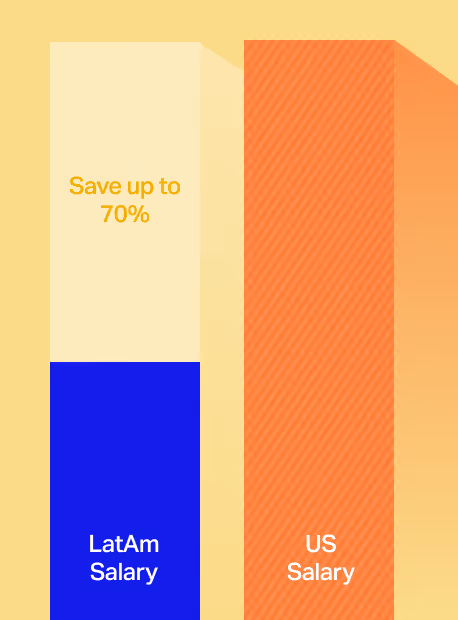
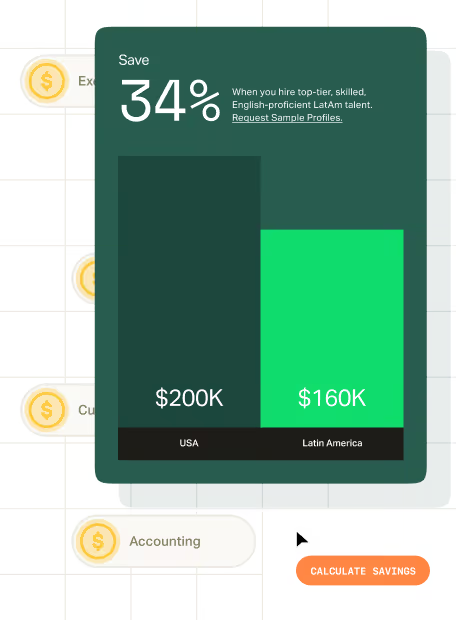
Salaries vary by country and experience level. On average, companies save 30–70% compared to US salaries while hiring equally qualified talent. The salary of an SEO specialist in the US ranges from $44k to $113k annually. While SEO experts in LatAm expect between $36k and $50k annually.
What overall skills should I evaluate during the shortlisting process?
During initial screening, strong SEO candidates often show:
- Experience with technical SEO (site architecture, indexing, Core Web Vitals)
- Proficiency with analytics and SEO tools (Google Analytics, Search Console, SEMrush, Ahrefs, Screaming Frog)
- On-page optimization skills (keyword research, content strategy, internal linking)
- Off-page expertise (backlink building, digital PR, brand mentions)
- Adaptation to new formats like AI/LLM-driven search
For a complete breakdown of SEO skill sets, see our full guide: How to Find an SEO + GEO Specialist Who Can Drive Real Business Results.
Why should I hire an SEO specialist at all?
SEO is still the backbone of organic growth, but today’s specialists do more than optimize for Google. They also help your content surface in AI-powered search results, protect your organic foundation, and build long-term brand authority. Without one, you risk falling behind as search continues to shift.
What other SEO and marketing roles can I hire alongside an SEO specialist?
SEO rarely works in isolation—US companies commonly pair an SEO specialist with local SEO experts for location-based search, SEO copywriters for optimized content production, digital marketing specialists for broader channel execution, email marketing specialists to nurture organic traffic into leads, marketing automation specialists to streamline workflows, and programmatic marketing specialists for automated ad buying. Latin American talent in these roles typically offers the same technical depth as US-based professionals, with better time zone alignment than offshore alternatives and significant cost savings.






.webp)
.webp)


%203.svg)
.avif)





%20(1).avif)

%20(1).png)