%203.svg)
Key Takeaways
- To hire an RPA developer successfully, focus on a structured process: clearly define your automation requirements, prioritize candidates with hands-on experience in major RPA platforms (UiPath, Automation Anywhere, or Blue Prism), evaluate both technical skills and business process understanding, then move quickly with competitive offers once you find the right candidate.
- RPA developer salaries in the US range from $63,000 to $183,000 depending on experience level, but hiring from Latin America can provide cost savings of 30-70%, with salaries ranging from approximately $42,000 to $96,000.
- You can source RPA developers through specialized forums like the UiPath Community, freelance marketplaces (Upwork, Toptal), general job boards (Indeed, LinkedIn), professional networks, or recruitment partners like Near.
You’ve finally decided to automate that process that’s been eating up 40 hours of manual work every week. You’ve got executive buy-in. Budget’s approved. The business case is solid.
But now you’re stuck on the next step: finding someone who can actually build it.
You post the job and wait. Applications trickle in, but most candidates list every RPA tool under the sun with no real indication they’ve built anything production-ready. The ones who seem promising are asking for salaries that would blow your entire automation ROI. And when you do bring someone in to interview, they can’t explain how they’d approach your specific use case.
This guide walks you through how to hire an RPA developer the right way. You’ll learn what skills actually matter, how much you should expect to pay, where to find qualified candidates, and how to evaluate them beyond their resumes. Whether you’re hiring locally or considering offshore talent, the fundamentals stay the same.
What Does an RPA Developer Do?
An RPA developer designs, builds, and maintains software robots that automate repetitive business processes, turning hours of manual work into minutes of automated execution.
These developers spend their time analyzing existing workflows, identifying automation opportunities, building bots using RPA platforms, testing for edge cases, and maintaining deployed automations. Whether they’re automating invoice processing, customer onboarding, or data entry across multiple systems, their job is to eliminate repetitive manual tasks that drain productivity.
In practice, an RPA developer bridges the gap between business operations and technology. They work closely with process owners to understand workflows, then translate those requirements into automated solutions using tools like UiPath, Automation Anywhere, or Blue Prism.
A typical day might include documenting a business process that currently takes 8 hours of manual work, designing a bot that can complete the same process in 15 minutes, coding the automation using visual workflow builders and scripting, testing the bot against different scenarios, deploying it to production, and monitoring its performance over time.
That doesn’t mean every RPA developer handles the full lifecycle. Some specialize in bot development, focusing purely on building automations. Others take on architect roles, designing enterprise-scale automation frameworks. In larger organizations, you might have separate developers, testers, and infrastructure specialists. In smaller teams, one developer often wears all these hats.
What RPA developers don’t typically do: rebuild your entire tech stack, replace your IT department, or automate processes that require complex judgment calls. They’re automation specialists who excel at handling rules-based, repetitive tasks—not strategic decision-makers who redesign your business operations.
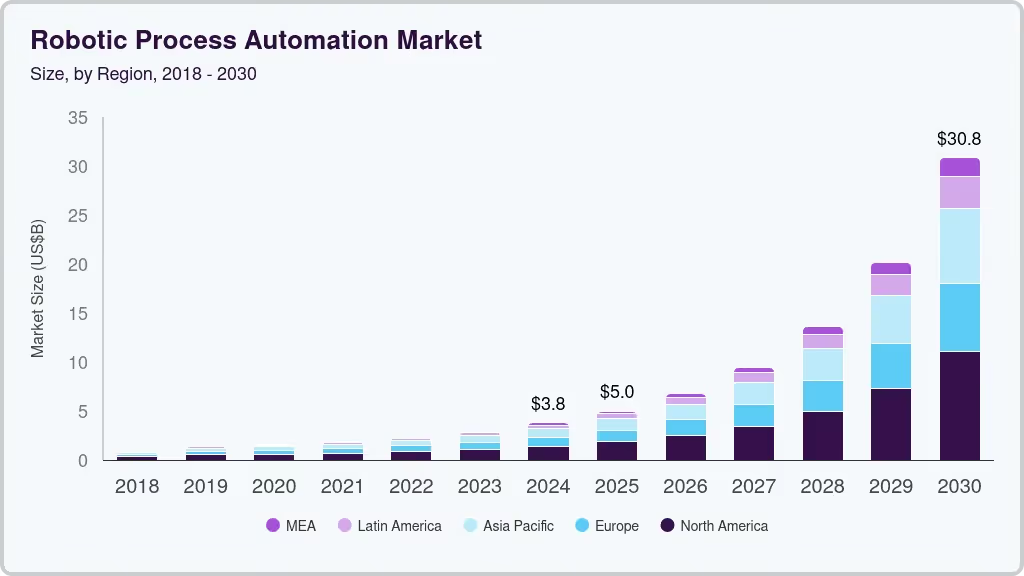
According to Grand View Research, the robotic process automation market size is expected to grow at a CAGR 43.9% from 2025 to 2030. This impressive growth isn’t really surprising with the push in most organizations to automate as much as possible.
How Much Does It Cost to Hire an RPA Developer?
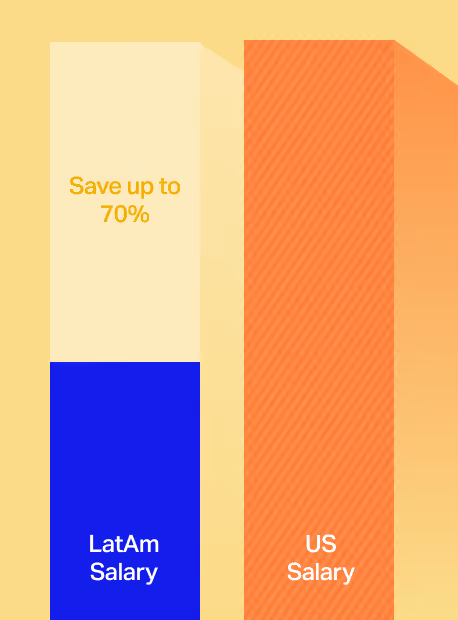
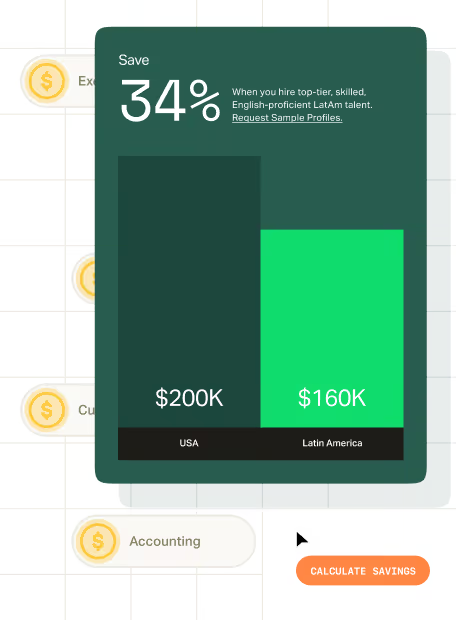
In the US, hiring an RPA developer typically costs between $63,000 and $183,000 annually, but hiring in Latin America can reduce costs by 30-70% while maintaining quality.
RPA developer salaries vary significantly based on experience, platform expertise, and location. In the US market, you’re looking at these ranges:
- Junior RPA Developer (0–2 years): $63,000 – $96,000
- Mid-Level RPA Developer (3–5 years): $85,000 – $144,000
- Senior RPA Developer (5+ years): $111,000 – $183,000
These numbers reflect a competitive market where automation skills are in high demand. Developers with certifications in UiPath, Automation Anywhere, or Blue Prism—especially those with production deployment experience—command premium salaries.
If those ranges feel steep, you’re not alone. Many companies struggle to justify these costs, especially when they’re just starting their automation journey and don’t yet have proven ROI.
The good news: expanding your search internationally can dramatically reduce costs without sacrificing quality. Latin America, in particular, offers strong RPA talent at more accessible rates.
Based on our experience and market research, here’s what you can expect when hiring RPA developers from Latin America:
- Junior RPA Developer: $42,000 – $54,000
- Mid-Level RPA Developer: $54,000 – $72,000
- Senior RPA Developer: $72,000 – $96,000
That translates to cost savings of 30-70% compared to US hires, depending on seniority level and specific skill requirements.
These differences reflect regional cost-of-living variations, not talent quality. Many Latin American RPA developers have extensive experience working with US companies, hold the same certifications as their US counterparts, and work in overlapping time zones that make real-time collaboration seamless.
Companies successfully hiring RPA developers from Latin America often find they can either save significant budget or use those savings to build larger automation teams that can tackle more processes simultaneously.
{{salary-guide-cta}}
What Skills Should You Look For When Hiring an RPA Developer?
Great RPA developers need platform expertise, business process understanding, problem-solving ability, and clear communication skills to translate manual workflows into automated solutions.
Hard skills (the must-haves)
The foundation of any successful RPA developer includes:
- RPA platform expertise: Your developer should have hands-on experience with at least one major RPA platform—UiPath, Automation Anywhere, or Blue Prism. Platform certifications are valuable signals, but production deployment experience matters more than credentials alone.
- Programming and scripting knowledge: While RPA platforms use visual workflows, real-world automation often requires scripting. Look for proficiency in Python, VBA, C#, or JavaScript to handle custom logic, API integrations, and complex data transformations.
- Process analysis capabilities: The best RPA developers can analyze existing workflows, identify automation opportunities, and design solutions that account for exceptions and edge cases. Ask candidates how they’ve documented processes and translated them into automation requirements.
- Database and SQL skills: Most automation involves reading from or writing to databases. Your developer should be comfortable with SQL queries, understand relational database structures, and know how to handle data extraction and transformation.
- API integration experience: Modern RPA solutions often need to interact with web services and APIs. Look for candidates who can work with REST APIs, handle authentication, and troubleshoot integration issues.
- Error handling and exception management: Production bots encounter unexpected situations. Strong candidates build robust error handling into their automations and know how to design for reliability, not just happy-path scenarios.
Soft skills (equally important)
Technical skills get bots built, but these soft skills determine whether those bots actually solve business problems:
- Business process understanding: The best RPA developers think like business analysts. They understand why processes exist, ask thoughtful questions about requirements, and design automations that align with business goals.
- Clear communication: RPA developers work with non-technical stakeholders daily. They need to explain technical concepts to process owners, gather requirements from subject matter experts, and document their solutions clearly for future maintainers.
- Systematic problem-solving: Automation projects involve constant troubleshooting. Look for candidates who approach problems methodically, can debug complex workflows, and don’t give up when something doesn’t work as expected.
- Attention to detail: Small mistakes in automation logic can cause major operational issues. Strong candidates demonstrate thoroughness in their testing, document edge cases, and think through potential failure scenarios before deployment.
- Self-direction and ownership: Many RPA developers work semi-independently on automation projects. You want someone who can manage their own workflow, prioritize tasks effectively, and take ownership of their bots from design through deployment.
Nice-to-have skills (the differentiators)
These additional capabilities can give candidates an edge, especially for growing automation programs:
- OCR and document processing: Experience with intelligent document processing, Optical Character Recognition (OCR), and tools for extracting data from unstructured documents can expand your automation possibilities.
- Machine learning integration: As RPA evolves toward intelligent automation, developers who understand how to integrate ML models for document classification or decision-making provide additional value.
- Cloud platform knowledge: Familiarity with cloud-based RPA deployments on AWS, Azure, or Google Cloud can be valuable for scalable automation architectures.
- Multiple platform experience: While depth in one platform is more valuable than shallow knowledge of several, developers who’ve worked across different RPA tools can provide perspective on which platform best fits specific use cases.
- Process mining exposure: Understanding of process mining tools and methodologies helps identify the highest-impact automation opportunities across your organization.
Where Can You Find and Hire Great RPA Developers?
The best RPA developers aren’t always found on general job boards—your sourcing strategy needs to balance location decisions with platform-specific channels that attract automation specialists.
Let’s break down how to approach both the “where” and “how” of finding RPA talent.
Deciding between local, national, or global talent
RPA development is inherently remote-friendly. Bots don’t care where their developer sits, and most RPA platforms support remote collaboration natively. This flexibility opens up your hiring options significantly.
- Local/in-office hiring makes sense if you need frequent face-to-face collaboration with process owners, have security requirements that mandate onsite work, or are just starting your automation program and want hands-on support. However, you’ll face higher costs and a limited talent pool, especially outside major tech hubs.
- Remote US-based hiring expands your options while maintaining time zone alignment and cultural familiarity. You’ll still pay US-level compensation, but you can access talent across the entire country rather than competing only in your local market.
- International/offshore hiring offers the largest talent pool and most significant cost savings.
For RPA roles, Latin America provides an excellent balance: you get skilled developers with RPA certifications, time zone compatibility for real-time collaboration, strong English proficiency, and cost savings of 30-70% compared to US rates.
Many Latin American developers have worked extensively with US companies and understand American business processes and expectations. This experience translates to faster onboarding and better alignment with your automation goals.
Read more about why you should hire RPA developers in Latin America.
Choosing the right sourcing channel
Once you’ve decided where to hire, here are your main options for finding candidates:
- UiPath Community Jobs Board: The UiPath Forum hosts what they claim is “the largest RPA community” and includes a dedicated jobs section where you can post jobs for UiPath-certified developers. This is particularly useful if you’ve standardized on UiPath as your platform.
- Freelance platforms: Upwork, Toptal, and similar freelance marketplaces list RPA developers available for project-based or contract work. This works well for pilot projects or short-term automation needs, though expect to vet carefully for production deployment experience.
- General tech job boards: LinkedIn, Indeed, or specialist nearshore job boards all have RPA developer listings. You can cast a wide net with these, but be prepared for high volume and variable quality in applications.
- Professional networks and referrals: RPA communities, automation-focused LinkedIn groups, and referrals from your existing team can yield high-quality candidates who are already embedded in automation circles.
- Working with a recruiting partner: For many companies, especially those hiring internationally or building out entire automation teams, partnering with a recruitment firm that specializes in RPA talent accelerates the process and reduces hiring risk.
Why Working With a Recruiting Partner Makes a Difference
A trusted recruitment partner helps you access qualified RPA developers faster, ensures better culture and skill fit, and handles the complexities of international hiring if you’re looking beyond the US.
Many companies hire RPA developers on their own, and that can work just fine—especially if you’re hiring locally, have a strong employer brand in tech, and have the internal capacity to source and vet candidates thoroughly.
But when you’re expanding your search internationally, working against tight timelines, or don’t have deep RPA platform knowledge internally, a recruiting partner makes a real difference.
Here’s what changes when you work with a recruitment or staffing firm experienced in sourcing tech talent:
- Faster access to qualified candidates: Rather than posting and waiting, you get introduced to pre-vetted developers who already have relevant platform experience, certifications, and proven track records building production automations.
- Platform-specific vetting: Not all recruiting firms understand the difference between someone who took a UiPath course and someone who’s deployed enterprise-scale automations. Specialized partners know what questions to ask and what experience actually matters.
- International hiring expertise: If you’re considering, for example, Latin American talent to access cost savings and expanded availability, a recruiting firm that specializes in sourcing LatAm developers will handle vetting, cultural fit assessment, compliance, and payroll complexities you’d otherwise need to figure out yourself.
- Reduced hiring risk: A good partner guarantees their placements, meaning if a developer doesn’t work out in the first few months, they’ll find you a replacement at no additional cost. This significantly reduces the risk of a bad hire.
- Better culture and role alignment: Beyond technical skills, partners who take time to understand your company culture, team dynamics, and specific automation goals can match you with developers who’ll actually succeed in your environment.
For RPA specifically, where technical depth matters but so does business acumen and communication ability, having someone who can assess the complete picture—not just check boxes on a requirements list—leads to better long-term outcomes.
How to Hire the Best RPA Developers: Best Practices
Hiring strong RPA developers requires more than scanning resumes for platform names—you need a structured process that evaluates hands-on automation skills, business thinking, and culture fit at every stage.
Here’s how to approach hiring RPA developers systematically.
Stage 1: Before and during sourcing
Define your automation requirements, not just technical skills
Before writing your job description, be specific about what you need automated. Are you looking for someone to handle document processing workflows? System integrations across legacy applications? High-volume data entry automation?
The clearer you are about your automation use cases, the easier it becomes to identify candidates with relevant experience. An RPA developer who’s built invoice processing bots brings different expertise than one who’s automated HR onboarding workflows.
Write job descriptions that filter for production experience
Your job post should emphasize real-world automation deployment, not just training or certifications. Include language like “must have deployed at least 5 production automations” or “experience supporting enterprise-scale RPA implementations with 50+ active bots.”
Mention your specific RPA platform if you’ve already standardized on one. If you’re platform-agnostic, state that clearly and emphasize you’re looking for strong automation thinking over tool-specific expertise.
Call out the business processes you’re looking to automate. This helps candidates self-select based on domain relevance and attracts people who think about business outcomes, not just technical implementation.
For more general tips, see our guide on writing job descriptions for developer roles.
Stage 2: Screening and evaluation
Use practical assessments to evaluate automation thinking
Resumes tell you what platforms someone claims to know. Practical assessments show you how they actually approach automation.
Give candidates a real business process (simplified but realistic) and ask them to walk you through how they’d automate it. This reveals their analysis skills, how they think about exceptions, and whether they understand the difference between automating a process versus just replicating manual steps.
For technical evaluation, consider a take-home project where they build a simple bot. This doesn’t need to be complex—automating a login sequence, extracting data from a website, or processing a spreadsheet can reveal a lot about their coding quality, error handling, and documentation practices.
According to research by SHRM, 54% of organizations now use pre-employment technical assessments, and 78% those that do report an improvement in hire quality.
Look beyond platform expertise to business understanding
During interviews, spend as much time discussing business processes as technical capabilities. Ask how they’ve worked with non-technical stakeholders, how they prioritize which processes to automate first, and how they measure automation success beyond “bot completion rate.”
Strong RPA developers speak the language of business operations. They ask questions about process volumes, exception rates, and business impact. They think about maintainability and scalability, not just getting a bot working once.
Assess communication and documentation skills
RPA developers who can’t explain their work clearly create maintenance nightmares. During interviews, ask candidates to explain a complex automation they’ve built. Can they make it understandable to a non-technical audience? Do they emphasize business outcomes or just technical details?
Review their documentation from any take-home project. Is it clear enough that another developer could maintain their bot? Documentation quality is a strong signal of professional maturity.
Stage 3: Making the offer and closing the deal
Emphasize automation impact and growth opportunities
RPA developers want to know their work matters. Highlight the business impact of your automation program—processes saved, hours reclaimed, error reduction achieved. Share your automation roadmap and where this role fits into expanding the program.
If you’re building out an automation center of excellence or scaling from a few RPA bots to enterprise-wide deployment, that growth potential attracts ambitious developers who want to build their careers in automation.
Move quickly for strong candidates
When you find someone who checks all your boxes—strong technical skills, business thinking, good culture fit—don’t delay on the offer.
A drawn-out hiring process gives other companies time to swoop in. Strong RPA developers often have multiple opportunities, so a streamlined decision process and quick offer can be your competitive advantage.
Consider international compensation strategies
If hiring from Latin America or other international markets, ensure your offer is competitive locally while providing clear value.
This might include USD payment, professional development budgets, or flexible PTO policies that respect local holidays.
For more detailed guidance, read our article on making a good job offer to hire and retain top talent.
{{state-latam-hiring}}
What Are the Top Interview Questions to Ask When Hiring RPA Developers?
To find the best RPA developer, ask interview questions that uncover how candidates approach automation, handle complexity, and collaborate with business stakeholders.
“Walk me through a process automation you built from start to finish. What made it challenging?”
This open-ended question reveals their complete experience. Strong answers include process discovery and requirements gathering, design decisions and trade-offs made, technical implementation details, testing approach and edge cases considered, and deployment and post-deployment support.
Listen for whether they emphasize business outcomes or just technical details. The best RPA developers talk about impact first—hours saved, error reduction, process improvement—then explain how they achieved it technically.
“Tell me about a time when a bot you built failed in production. How did you handle it?”
Every RPA developer has had bots break in production. What separates good developers from great ones is how they respond. Look for systematic troubleshooting approaches, transparent communication with stakeholders, and most importantly, what they learned and changed in their development process afterward.
Red flag: candidates who claim they’ve never had a bot fail in production are either lying or lack significant real-world experience.
“How do you decide if a process is a good candidate for automation?”
This question tests business thinking. Strong candidates consider factors like process volume and frequency, rule-based versus judgment-based decisions, exception handling complexity, system accessibility and API availability, ROI calculation and payback period, and change management and user adoption challenges.
Weak answers focus only on technical feasibility (“Can I build a bot for it?”). Strong answers balance technical, business, and organizational factors.
“Describe how you’ve worked with non-technical process owners to gather requirements.”
RPA developers spend significant time with business stakeholders. This question reveals communication skills and stakeholder management ability.
Look for examples of active listening, translating technical concepts to business language, managing expectations about what automation can and can’t do, and building trust with process owners who may be nervous about automation.
“How do you approach error handling and exception management in your bots?”
This technical question reveals code quality and production readiness. Strong candidates discuss specific error handling strategies—retry logic, graceful degradation, business exceptions versus system exceptions—logging and monitoring approaches, alert mechanisms when manual intervention is needed, and designing for maintainability by other developers.
This question separates developers who build demos from those who build production-grade automation.
Common Mistakes to Avoid When Hiring RPA Developers
Even with a solid process, it’s easy to make missteps that lead to bad hires or automation programs that fail to deliver value.
Here are the most common mistakes and how to avoid them.
1. Hiring based purely on platform certifications
RPA platform certifications—UiPath Certified Professional, Blue Prism Developer, Automation Anywhere Advanced—validate that someone understands the tool. They don’t validate that someone can analyze a messy business process, design a robust automation, or deploy it successfully to production.
Certifications are valuable signals, especially for junior developers. But for mid-level and senior roles, prioritize production deployment experience over credentials. Ask for examples of automations they’ve built, maintained, and supported through their full lifecycle.
2. Expecting one developer to automate everything
RPA developers aren’t magicians. They can’t automate processes that lack clear rules, fix broken business processes through automation, or replace your entire IT department.
Set realistic expectations about automation scope and timelines. A single developer might realistically automate 4-8 processes per quarter, depending on complexity. If you have dozens of processes in your automation pipeline, you need a team, not a lone developer.
3. Ignoring business process knowledge in favor of technical skills
An RPA developer with deep UiPath expertise but zero understanding of your industry will struggle. Someone with decent technical skills but strong business process knowledge will often deliver better outcomes faster.
During hiring, balance technical assessment with evaluation of domain knowledge, business thinking, and stakeholder collaboration skills. The best RPA developers are translators between business and technology, not just coders.
4. Overlooking the importance of documentation and maintainability
Bots that work perfectly today but can’t be maintained by anyone except their original creator become technical debt fast. Poor documentation, hard-coded values, and lack of error handling all signal developers who prioritize quick wins over sustainable automation programs.
During technical assessments, evaluate code quality, documentation, and maintainability as much as functionality. Ask candidates about their documentation practices and how they ensure other developers can support their automations.
5. Hiring without adequate technical vetting
When you’re under pressure to start automating processes, it’s tempting to move fast on the first candidate who seems decent. Resist this urge.
A bad RPA hire costs you more than just salary—you lose time while they’re not delivering, you incur technical debt from poorly built bots, and you damage relationships with business stakeholders when automations fail or don’t deliver promised value.
Take time to properly vet candidates through practical assessments, reference checks, and thorough technical interviews. The few extra weeks upfront save months of problems later.
6. Rushing the cultural fit evaluation
It’s easy to focus entirely on technical ability, especially when you’re hiring for a high-impact role like an RPA developer. But if you overlook cultural fit—how a candidate collaborates, communicates, and aligns with your way of working—you risk bringing on someone who may technically be great, but still slow your team down.
Cultural fit isn’t about whether you’d grab a beer together. It’s about how well someone fits into your team’s rhythm, ownership mindset, and communication style.
Does this person take initiative or wait for instructions? Can they give and receive feedback constructively?
These soft skills are often what separate a developer who checks tasks off a list from one who drives real progress.
In our experience, the best developers think in terms of business impact, team dynamics, and long-term maintainability. That’s the kind of fit that fuels growth, not just velocity.
Don’t treat this as an afterthought. A technically strong hire who doesn’t align with how your team operates can be harder to manage—and more disruptive—than having the seat open a little longer.
Final Thoughts
You need an RPA developer, and you need one who can actually deliver results—not just talk about automation theory.
This guide has walked you through what to look for: hands-on platform experience, business process thinking, and proven production deployments. You know what to pay, where to find candidates, and how to evaluate them beyond their resume.
The question now is: how quickly can you move?
If you’re ready to skip the sourcing grind and get straight to interviewing qualified candidates, we can help. At Near, we connect US companies with top Latin American RPA developers who have the platform certifications, production experience, and business acumen you need.
Our developers work in your time zone, speak fluent English, and come pre-vetted for technical skills and cultural fit. You could be interviewing candidates within days, not months—and at 30–70% less than US rates.
We’ve helped hundreds of companies build their teams with talent from Latin America. Whether you need one RPA developer or an entire development team, we can introduce you to candidates who’ll actually move the needle.
Want to see what’s possible? Book a free consultation call to discuss your RPA hiring needs. No commitment required. No payment unless you make a hire.





.webp)
.webp)



%203.svg)
.avif)





%20(1).avif)

%20(1).png)