

%203.svg)
Key Takeaways
- Finding quality Google Ads experts requires looking beyond certifications to assess strategic thinking, campaign optimization skills, and proven ROI results from managing substantial ad budgets.
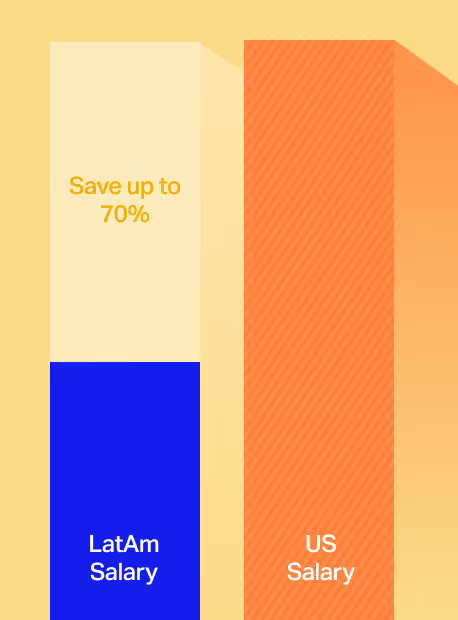
- US-based Google Ads specialists earn $54,000 to $151,000 annually, while equally skilled Latin American experts earn roughly $19,000 to $54,000, a savings of up to 72% without compromising on expertise or working-hour overlap.
- The best candidates combine technical platform mastery with analytical thinking, client communication skills, and the ability to translate business goals into profitable ad campaigns.
There’s a direct path to hiring a Google Ads expert: start by defining the paid-search outcomes you need, screening candidates on real campaign results rather than certifications, and deciding whether to source locally, remotely in the US, or to hire in Latin America, where senior specialists work in your time zone at significantly lower cost.
The problem most companies run into isn’t finding someone who knows Google Ads. It’s finding someone who knows how to drive ROAS, not just clicks. The ability to diagnose why conversions aren’t following traffic is what separates a real expert from someone who manages campaigns on autopilot while your budget slowly disappears.
This guide covers the skills to look for, the interview questions that reveal strategic thinking, where to find the right talent, and what to expect to pay, including the Latin American option most US companies haven’t considered yet.
What Does a Google Ads Expert Do?
A Google Ads expert transforms advertising budgets into measurable business growth through strategic campaign management and continuous optimization.
At their core, they’re responsible for creating, managing, and optimizing Google Ads campaigns to drive qualified traffic, leads, and sales.
Their day-to-day responsibilities typically include:
- Keyword research and competitive analysis to identify high-value opportunities
- Campaign structure and ad group organization for optimal performance
- Ad copywriting and A/B testing to improve click-through and conversion rates
- Bid strategy optimization and budget allocation across campaigns
- Landing page analysis and conversion tracking implementation
- Performance reporting and strategic recommendations based on data insights
What separates exceptional Google Ads experts from basic campaign managers is their ability to connect advertising metrics to business outcomes. They think strategically about audience targeting, bid management, and conversion optimization, not just to maximize clicks, but to understand the customer journey, lifetime value, and business priorities that move your bottom line and drive real ROAS.
How Much Does It Cost to Hire a Google Ads Expert?
In the US, hiring a full-time Google Ads expert typically costs between $54,000 and $151,000 annually, depending on experience and specialization.
Senior-level experts with deep campaign optimization, attribution modeling, and multi-platform advertising skills often command salaries at the top of that range, especially in competitive markets or enterprise settings.
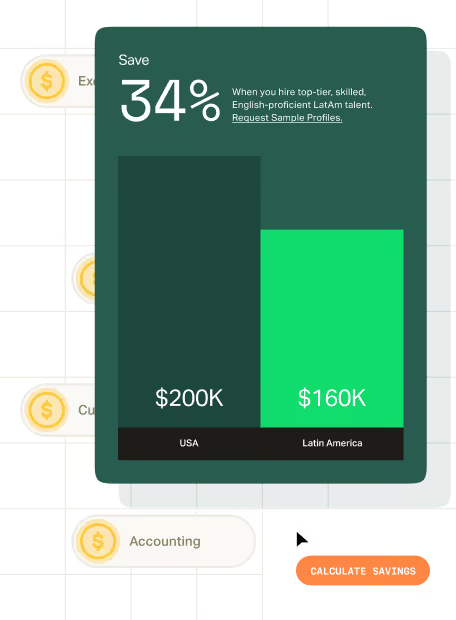
For many companies, that salary range is out of reach. Hiring outside the US opens the door to the same level of expertise at a significantly lower cost. In Latin America, based on our experience placing Google Ads professionals, salary expectations run up to 72% lower without sacrificing skill.
To give you a concrete comparison, here’s what hiring a Google Ads expert costs in Latin America compared to an equivalent US hire, according to Hire With Near’s marketing salary benchmarks:
For the most up-to-date figures, see Hire With Near’s US vs Latin America Salary Guide.
A lower cost doesn’t mean trading down on experience. According to Hire With Near’s 2026 State of LatAm Hiring Report, 84% of our Latin American placements last year were mid-level or senior professionals.
That means companies aren’t settling for junior talent to save money; they’re hiring experienced experts at a lower cost. If you’re open to international hiring, you can hire a senior Google Ads expert in Latin America for what a junior US-based specialist would cost, or invest the difference in scaling up your company’s advertising coverage.
While Latin America is often the most attractive region for US companies due to time zone alignment and cultural familiarity, similar cost savings are available in other regions like Eastern Europe and Southeast Asia. We’ve used Latin America here as the benchmark because it’s where we place Google Ads talent and can speak confidently to current salary ranges.
For a step-by-step look at the region specifically, our guide to hiring marketing talent in Latin America walks through the whole process.
{{salary-guide-cta}}
What Skills Should You Look for When Hiring a Google Ads Expert?
The skills to look for fall into three groups: technical platform skills (campaign structure, keyword research, bid strategy, and conversion tracking), strategic and communication skills (tying campaigns to business goals and reporting results clearly), and differentiators like cross-platform and automation experience.
Evaluating Google Ads expertise isn’t just about checking certifications or years of experience, though. In my three years recruiting marketing talent at Hire With Near, the strongest Google Ads hires are rarely the ones with the longest certification list.
They’re the ones who can talk through a specific campaign in detail: the budget they managed, the changes they made, and the results those changes drove. Certifications are easy to collect, but a track record of real search-campaign decisions isn’t.
A junior Google Ads specialist might excel at campaign setup and basic optimization but need guidance on advanced bid strategies and attribution modeling.
Meanwhile, a senior expert should independently develop comprehensive advertising strategies, manage complex multi-campaign structures, and provide strategic recommendations that align with broader business objectives.
Understanding these distinctions helps you evaluate candidates fairly and set realistic expectations for what each experience level can deliver from day one versus what they’ll grow into over time.
Here’s how Google Ads expertise typically progresses across experience levels:
Regardless of seniority level, all Google Ads experts should demonstrate certain fundamental capabilities. Here are the core skills to evaluate:
Hard skills (the must-haves)
These technical competencies form the foundation of effective Google Ads management across all experience levels:
- Google Ads platform fundamentals: Solid understanding of campaign types, basic bidding strategies, ad formats, and core platform features. All candidates should demonstrate comfort navigating the interface and executing standard optimization tasks.
- Keyword research capabilities: Ability to identify relevant keywords, understand search intent, and use keyword research tools effectively. Look for experience with Google Keyword Planner at minimum, with bonus points for familiarity with tools like Semrush or Ahrefs.
- Basic conversion tracking: Proficiency in setting up conversion tracking and understanding how to measure campaign success beyond surface-level metrics like impressions. They should grasp the connection between advertising activities and business outcomes.
- Data interpretation skills: Ability to read campaign reports, identify performance trends, and make basic optimization decisions based on data. Ask for examples of how they’ve improved campaign performance through systematic analysis.
- Campaign optimization fundamentals: Understanding of Quality Score factors, ad relevance, and how campaign structure affects performance. They should know optimization best practices even if their implementation sophistication varies by seniority level.
Soft skills (equally important)
These interpersonal and strategic capabilities often determine long-term success:
- Strategic thinking: Ability to align advertising campaigns with business objectives and think beyond individual metrics. Look for candidates who ask about your business goals, customer lifetime value, and competitive positioning.
- Communication skills: Clear reporting and explanation of campaign performance to the people who act on it, whether that’s your marketing lead, your finance team, or a founder signing off on spend. They should translate technical metrics into business insights that inform decision-making.
- Adaptability: Google Ads changes frequently, requiring continuous learning and strategy adjustment. Look for candidates who test new bidding strategies and ad formats as Google rolls them out, rather than running the same playbook year after year.
- Problem-solving mindset: When campaigns underperform, great experts systematically diagnose issues and test solutions. Ask about times they’ve troubleshot performance problems.
- Client and team management: Ability to manage expectations with founders, marketing leads, or agency clients, communicate recommendations, and build trust through transparent reporting and results delivery.
Nice-to-have skills (the differentiators)
These additional capabilities can set candidates apart, especially for growing companies or specialized industries:
- Other advertising platforms: Experience with Meta Ads, LinkedIn Ads, or Microsoft Advertising provides valuable perspective on cross-platform strategy and audience behavior.
- Google Tag Manager and tracking setup: Technical ability to implement tracking and troubleshoot measurement issues independently reduces dependence on development resources.
- Scripting and automation: Knowledge of Google Ads scripts or third-party automation tools like Optmyzr can significantly improve efficiency and campaign management capabilities.
- Industry-specific experience: Deep knowledge of your specific industry, including typical conversion rates, seasonal patterns, and regulatory considerations.
- Creative strategy input: Understanding of ad creative best practices and ability to collaborate effectively with design teams or provide creative direction.
Where Can You Find and Hire Great Google Ads Experts?
The best Google Ads experts aren’t always found on traditional job boards. If you’re only looking locally, you’re probably missing out on stronger candidates at better rates.
To build a pipeline of qualified Google Ads professionals, you need to decide where to search (local, remote US, or offshore) and how to search (job boards, referrals, freelance platforms, or a recruiting partner).
That’s why the best hires often come from expanding your search beyond your local market and tapping into global talent, especially in regions like Latin America, where you’ll find strong skill alignment at a lower cost.
Let’s break down how to approach hiring by location and sourcing channel.
Deciding between local, national, or global talent
Google Ads work is largely remote-friendly. Campaign management, optimization, and reporting can be done from anywhere with reliable internet, making geographic flexibility a major advantage in your search.
- Local/in-office hiring provides direct collaboration opportunities and simplified administration, but typically comes with higher costs and a limited talent pool. This works well if you need frequent in-person collaboration or have specific local market knowledge requirements.
- Remote US-based hiring expands your talent pool significantly while maintaining familiar business practices and time zones. You’ll pay US-level compensation but gain access to specialists who might not be available in your local market.
- International hiring provides the largest talent pool and most significant cost advantages. Latin America offers an excellent balance of time zone compatibility, cultural alignment, and technical expertise for US companies, while regions like Southeast Asia and Eastern Europe provide additional options with different cost and time zone trade-offs.
In the video below, Franco Pereyra, Hire With Near’s Co-founder and COO, explains how US companies can legally hire remote workers in other countries:
Time zone overlap is the biggest practical reason that balance favors Latin America. A Google Ads expert based in the region works during your business hours, wherever your team sits in the US, so campaign checks, budget approvals, and quick creative changes happen in real time instead of waiting overnight.
You can see how the time zones overlap in the table below:
Note: Most Latin American countries don’t observe Daylight Saving Time, so these times shift by one hour outside of March–November, when the US reverts to standard time.
That overlap matters more than it might sound. Research from Harvard Business School and INFORMS, published in Organization Science, found that large time zone gaps force employees to shift their working hours to stay in sync, creating measurable collaboration friction and increased work-life conflict.
To see where you might want to focus your search, explore our list of the best countries to hire remote marketing talent.
Choosing the right sourcing channel
Different platforms and approaches work better depending on the type of hire and how quickly you need to move. Here’s how the main options compare:
- Job boards: Give you direct access to active candidates but require significant time investment in screening and evaluation. Best when you have clear requirements and bandwidth to run your own process.
- Freelance platforms: Work well for project-based or short-term needs but can be inconsistent for long-term hires. Vetting is largely self-managed.
- Professional networks and referrals: Often yield high-quality candidates, but limit your reach and the diversity of options you can evaluate.
- Nearshore staffing partners: Handle sourcing, screening, and compliance on your behalf. Best if you’re hiring internationally for the first time, need help with technical skill assessment, or want to move quickly without building the process from scratch.
The DIY approach works well if you understand current market rates and have the bandwidth for thorough evaluation. Many companies successfully hire excellent Google Ads experts this way.
But if speed or international hiring complexity is a factor, working with specialists removes the friction. That’s what we’ll discuss in the next section.
Why Does Working With a Recruiting Partner Make a Difference?
Using a specialized marketing staffing and recruitment partner offers significant advantages when hiring for technical marketing roles, especially when exploring international talent markets.
Expert screening saves time and improves quality
Recruitment partners who specialize in marketing roles understand the difference between platform familiarity and proven expertise. They screen for strategic thinking, campaign management experience, and business impact (criteria that aren’t obvious from resumes alone).
And for paid search specifically, that specialization matters: Google Ads is a distinct skill set from paid social, and a generalist recruiter often can’t tell the difference. One performance-marketing agency we worked with kept running into exactly that gap:
We’ll get candidates that have experience in paid social, like with Facebook Ads and things like that, but not specifically in Google Ads or search campaigns. We feel like we’re almost starting from scratch to a degree when we’re talking to some of these candidates.
A recruiter who knows the difference catches that early, before you’ve spent time interviewing someone who can’t speak to the accounts they managed, the optimizations they made, or the results they drove.
Market knowledge enables better decisions
Specialists understand current market rates, candidate availability, and what motivates top performers in different regions. This knowledge helps you structure competitive offers and avoid common pitfalls that cost time or result in offer rejections.
International hiring expertise reduces complexity
Working with a recruitment or staffing company that specializes in international hiring can help you bypass the learning curve that comes with building remote marketing teams abroad.
If you’re considering Latin America or other regions for the first time, specialist recruitment partners handle cultural considerations, local market dynamics, contracts, and payments, so you’re not figuring those out while also trying to evaluate candidates.
What also helps is reviewing the questions marketing leaders ask about hiring in Latin America before you start.
Access to pre-vetted talent pools
Established recruitment firms maintain relationships with proven performers who may not be actively job searching but are open to the right opportunity. This passive candidate pool often includes higher-quality options than those found through traditional job postings.
This pre-vetted talent pool accelerates the time to hire, reduces the risk of bad hires, and provides access to higher-quality candidates who might not be reachable through other channels.
A recruiting partner like Hire With Near can also help you place senior and leadership marketing hires, from a Head of Marketing to a Marketing Director, through executive search in Latin America.
You can see how this plays out in practice. When Candid Consulting, a Sacramento consulting firm founded by a former Head of Sales at Google, needed to grow but found US salaries out of reach, Hire With Near sourced two roles, a Google Ads Specialist and a Graphic Designer, cutting time-to-hire from six to eight weeks down to two.
The founder saved more than 40 hours of sourcing and interviewing and about 60% on overhead versus US-based hires. What stayed with her was the caliber of the people:
The talent Hire With Near provided is incredibly high quality. I worked at Google for 10 years, where the bar for talent is very high, and I would say the people I placed through Hire With Near are comparable to the people I worked with at Google.
That’s the real payoff of working with a specialist partner: not just a lower cost, but building a high-performing marketing team that you’d put next to your best US hires.
How to Hire the Best Google Ads Expert: Best Practices
Success in hiring Google Ads experts comes from systematic evaluation that goes beyond surface-level qualifications to assess strategic thinking and proven results.
While every company’s hiring process will vary based on their specific needs, timeline, and internal resources, these best practices represent the most critical elements at each stage.
Stage 1: Before and during sourcing
Setting clear expectations and realistic requirements prevents wasted time and helps you attract the right candidates.
Define your true needs, not your wish list
Many companies create “unicorn” job descriptions seeking someone who can handle Google Ads, Meta Ads, SEO, content marketing, and graphic design.
That’s one of the most common mistakes I see. Those are really separate specialties, and expecting a single person to do all of them well usually means none of them get done well.
Focus on your core priority. If Google Ads is your primary need, hire for that expertise and consider how other responsibilities might be handled separately or by existing team members.
Set realistic budget expectations
While there are cost savings available through international hiring, remember that quality Google Ads management directly impacts your revenue. A slightly higher investment in proven expertise often pays for itself through improved campaign performance.
Write job descriptions that attract quality candidates
Include specific details about the types of campaigns they’ll manage, budget ranges they’ll work with, and business objectives they’ll support.
Research shows that job posts mentioning skills see an 11% increase in view-to-apply rates, while adding salary ranges increases applications by 12%. Vague descriptions attract generic applications, while specific requirements help qualified candidates self-select.
Stage 2: Screening and evaluation
Move beyond basic qualifications to assess how candidates think about campaign strategy and optimization.
Evaluate strategic thinking through case studies
Ask candidates to walk through a campaign they’ve optimized, including their analysis process, optimization decisions, and results achieved. This reveals their problem-solving approach and whether they think strategically about business impact.
Assess communication skills through reporting examples
Request sample reports or ask how they would explain campaign performance to a non-technical founder or business owner. Clear communication is crucial for ongoing collaboration and for managing the people who rely on those reports.
Test practical knowledge with scenario questions
Present realistic challenges like declining performance or budget constraints and ask how they would approach the situation. This reveals both technical knowledge and problem-solving methodology.
Stage 3: Making the offer and closing the deal
Strong candidates often have multiple opportunities, so your offer needs to be competitive and compelling beyond just compensation.
Move quickly once you’ve identified the right candidate
In our experience, the best candidates are often evaluating multiple opportunities simultaneously. A delayed decision process can result in losing your top choice to a more decisive competitor.
Structure offers that reflect the role’s revenue impact
Consider performance bonuses tied to campaign results or professional development budgets that help them stay current with platform changes and industry trends.
For international hiring, understand what makes offers competitive locally
This includes payment in USD, clear advancement opportunities, local holidays and other benefits that matter in their local market. Working with recruitment experts familiar with regional expectations can help structure compelling offers that secure your preferred candidate.
The hiring challenge is real: 68% of agencies rate finding PPC specialists as “often or very challenging.” This makes speed and competitive positioning crucial for securing top candidates.
What Are the Top Interview Questions for Hiring Google Ads Experts?
The main questions you should ask a candidate applying to a Google Ads specialist position go beyond basic platform knowledge to assess strategic thinking, problem-solving ability, and how candidates approach real-world campaign challenges.
This type of question is more predictive of job performance than unstructured conversations, making a systematic approach essential for identifying the right candidate.
Here’s how to use each one:
“Walk me through how you would approach optimizing an underperforming campaign.”
This is the question I rely on most when screening paid media candidates. Asking someone to walk through their approach tells me quickly whether the experience on the resume is real or just a list of tools and whether they think systematically or jump straight to tactics.
Listen for a process that includes data analysis, hypothesis formation, and testing. Strong answers cover reviewing account structure, analyzing search terms and audience data, examining landing page performance, and identifying specific optimization opportunities before making any changes. Candidates who skip the diagnosis and go straight to tactics are the ones who’ll burn your budget while they learn.
“How do you determine and communicate the success of a Google Ads campaign to leadership?”
This question assesses both analytical skills and communication ability. You want someone who understands business metrics beyond platform-specific data and can translate performance into business impact.
Look for answers that connect advertising metrics to business objectives, discuss attribution challenges, and demonstrate experience presenting results to different audience types.
Red flags include focusing only on vanity metrics like impressions or clicks without connecting to business outcomes.
“Describe a time when you had to manage campaigns with limited budget constraints. How did you prioritize and optimize for efficiency?”
Budget management reveals strategic thinking and understanding of resource allocation. This question helps you assess whether candidates can maximize results within realistic constraints rather than just managing unlimited budgets.
Strong responses will include specific strategies like negative keyword optimization, dayparting, geographic targeting refinements, and bid strategy adjustments. Look for candidates who can balance performance goals with practical budget limitations.
“How do you stay current with Google Ads changes and industry best practices?”
The platform evolves constantly, making continuous learning essential for long-term success. This question reveals their commitment to professional development and adaptability to change.
Good answers include specific resources like industry publications, Google’s official communications, professional communities, and continuous testing of new features. Avoid candidates who seem disconnected from industry developments or rely solely on outdated practices.
“Tell me about a campaign where you significantly improved performance. What was your approach and what results did you achieve?”
This allows candidates to showcase their best work while revealing their analysis and optimization process. You’re looking for specific, measurable results and clear explanations of their contribution to success.
Pay attention to whether they can articulate their specific role in achieving results, the challenges they overcame, and how they measured success. Strong candidates will have multiple examples and speak confidently about their impact on business outcomes.
What Are the Common Mistakes to Avoid When Hiring Google Ads Experts?
Even with good intentions, companies often make hiring decisions that lead to poor results or missed opportunities.
Here are the most costly mistakes and how to avoid them.
1. Overemphasizing certifications while ignoring practical experience
Google Ads certifications are valuable, but don’t guarantee campaign management success. Many certified professionals have never managed substantial budgets or optimized for complex business objectives.
Focus on real-world experience managing campaigns similar to yours.
Ask for specific examples of budget sizes, campaign types, and results achieved. A candidate with proven results managing $50K monthly budgets will likely outperform someone with perfect certification scores but minimal hands-on experience.
2. Hiring for technical skills while overlooking strategic thinking
Google Ads platform mechanics can be learned, but strategic thinking and business acumen are harder to develop. Many companies hire candidates who can execute tasks but can’t think strategically about campaign optimization or business impact.
As we mentioned, during interviews, assess how candidates connect advertising activities to business outcomes. Ask about their approach to testing, how they prioritize optimization opportunities, and how they make decisions when faced with competing priorities.
3. Expecting immediate results without considering ramp-up time
Even experienced Google Ads experts need time to understand your business, analyze existing campaigns, and implement improvements. Unrealistic timeline expectations often lead to rushed decisions and suboptimal results.
Plan for a 30-60 day learning period where new hires focus on analysis and strategy development before major campaign changes. Set clear milestones for this period that focus on understanding and planning rather than immediate performance improvements.
4. Underestimating the importance of communication skills
Google Ads experts often work independently but need to communicate results, recommendations, and strategic insights to founders, marketing leads, and whoever owns the budget. Poor communication can undermine even excellent technical work.
Test communication skills during the interview process through presentation exercises or reporting discussions. Consider how they explain technical concepts and whether their communication style fits your team dynamics and your leadership team’s expectations.
5. Choosing based solely on cost rather than value
While cost considerations are important, choosing the cheapest option often results in poor campaign performance that costs more than higher-quality talent would have. A skilled expert who improves your ROAS by 30% easily justifies their higher rate through better results.
Evaluate candidates based on their potential impact on your advertising ROI rather than just their rate or salary expectations. Consider the long-term cost of poor campaign performance when making hiring decisions.
Final Thoughts
Hiring a Google Ads expert isn’t just about offloading campaign management. It’s about finding someone who can turn ad spend into measurable growth, someone who can make the difference between “Google Ads doesn’t work for us” and “Google Ads is one of our top revenue drivers.”
Keep your expectations clear, your evaluation process sharp, and your budget aligned with the level of impact you want. And don’t limit your search by geography: some of the most strategic, ROI-focused professionals are outside the US, working in real time with their clients and delivering serious results.
At Hire With Near, we understand what US companies need in a Google Ads expert. We match you with pre-vetted Latin American Google Ads experts who fit your specific requirements, work style, and budget.
Our marketing candidates work during your business hours, work as an integrated part of your team using your existing tools and workflows, and deliver strong results at rates up to 72% lower than US-based experts.
Book a free consultation call with our team today. We’ll share a shortlist of candidates within 3–5 days and finalize the hiring process within 21 days.
{{latam-hiring-cta-v2}}
Frequently Asked Questions
Should I hire a freelance Google Ads expert, work with an agency, or hire in-house?
Choose a freelance Google Ads expert for short, well-defined projects, an agency when you need broad multi-channel support, and a full-time hire when you have steady ad spend and want someone embedded in your team.
The right pick depends more on your ad spend level and how involved you want to be than on price alone.
- Freelance experts work best for focused projects or when you want direct communication and personalized attention.
- Agencies provide comprehensive services and backup support, ideal for managing multiple campaigns or when you need broader marketing capabilities.
- In-house hiring offers maximum control and team integration but requires ongoing management.
The one thing all three DIY routes share, whether that’s Upwork, LinkedIn, or posting the job yourself, is that you’re the one vetting every candidate for real paid-search depth. A specialist recruiting partner does that screening for you, which is the trade-off most companies are weighing.
To help think it through, read about the benefits of outsourcing digital marketing services.
Can a Google Ads expert help with other advertising platforms?
Many Google Ads experts also work with other PPC platforms like Microsoft Ads (Bing), but their expertise in social media advertising varies significantly. Some advanced specialists also have experience with programmatic DMP tools for cross-channel audience targeting, though this is less common. Google Ads and Meta Ads require different strategic approaches and optimization techniques.
If you need multi-platform expertise, specifically ask about their experience with other platforms and request case studies. Consider whether you need a specialist who excels at Google Ads or a generalist who can manage multiple platforms adequately.
What’s the difference between hiring a Google Ads expert and a digital marketing specialist?
A Google Ads expert focuses specifically on paid search advertising, campaign optimization, and Google’s advertising ecosystem. They typically deliver better results for Google Ads campaigns but may have limited expertise in other marketing channels like SEO, content marketing, or social media.
A digital marketing specialist understands multiple marketing channels and can manage integrated campaigns across platforms, but may not have the deep Google Ads knowledge needed for complex campaign optimization or advanced bidding strategies.
Choose Google Ads experts for significant ad budgets or complex campaigns, and digital marketing specialists for broader marketing support with moderate advertising needs across multiple channels.
What should I do if my Google Ads expert isn’t delivering results?
First, clarify what “results” means for your specific business goals. Make sure you’re measuring the right metrics (conversions, ROI, qualified leads) rather than vanity metrics (impressions, clicks).
If performance is genuinely poor after 60–90 days, discuss specific issues with your expert and request a detailed improvement plan. If problems persist, consider whether the issue is strategy, execution, or market conditions before making changes.
How do I know if a Google Ads expert is staying current with platform changes?
Ask about their continuing education practices and how they stay informed about Google Ads updates. Strong experts regularly read industry publications, attend webinars, participate in professional communities, and test new features.
Request examples of recent optimization strategies they’ve implemented based on platform changes. Experts who can discuss recent updates (like Performance Max campaigns or GA4 integration) demonstrate ongoing learning commitment.
Should I hire a Google Ads expert with industry-specific experience?
Industry experience can help, particularly if you're hiring for a healthcare company or hiring for a finance company, where regulations shape what the ads can say. It also helps with specialized business models: e-commerce and CPG recruiting calls for someone who understands product feeds and shopping campaigns, and hiring for a SaaS company calls for someone comfortable with longer sales cycles and lead-gen funnels. That said, strong fundamentals and strategic thinking often matter more than industry background alone.
Prioritize candidates who ask intelligent questions about your business model, target audience, and competitive landscape. A skilled expert can quickly learn your industry while bringing fresh perspectives from other sectors.
How do I transition from one Google Ads expert to another?
Document all current campaigns, strategies, and performance benchmarks before making changes. Make sure the outgoing expert provides detailed account documentation and passwords for any associated tools or accounts.
Plan for a brief overlap period if possible, allowing the new expert to understand existing strategies before making changes. Expect 2–4 weeks for a new expert to fully understand your account and begin optimization efforts.
What other marketing roles can I hire from Latin America?
Google Ads experts are one of many marketing roles US companies hire from Latin America. Alongside paid search, teams commonly bring on a Latin American media buyer to run paid social and programmatic, a nearshore Google Analytics expert to own tracking and measurement, or hire a digital marketing manager to coordinate the full channel mix.
Because Hire With Near handles marketing recruiting in Latin America across the whole function, you get the same time zone overlap and cost savings on every one of these hires.







.webp)


%203.svg)
.avif)





%20(1).avif)

%20(1).png)