%203.svg)
Key Takeaways
- To hire a social media manager effectively, focus on strategic thinking and measurable results over creative portfolios. Test candidates with real campaign scenarios, assess their ability to connect social media activities to business goals, and move quickly with strong candidates since top talent has multiple options in today’s market.
- US social media managers typically earn $73,000–$84,000 annually, but you can achieve 30-67% cost savings by hiring in Latin America ($24,000–$36,000) while maintaining time zone compatibility and cultural alignment with US business practices.
- Use behavioral interview questions that reveal real capabilities: ask candidates to walk through a specific campaign they managed from start to finish, explain how they'd handle negative customer comments on social media, and describe how they've adapted to platform algorithm changes—strong answers include specific metrics, strategic thinking, and concrete examples rather than vague responses.
Every day without the right social media manager means missed opportunities to connect with customers, build brand loyalty, and drive conversions.
Your content calendar sits half-empty, customer comments go unanswered, and your social media ROI continues to flatline.
This guide will show you how to hire a social media manager who can turn your social presence into a growth engine—whether they’re working from your office or anywhere in the world.
We’ll cover the essential skills to look for, average salaries, sourcing strategies, and the interview questions that reveal whether a candidate can actually deliver results for your brand.
What Does a Social Media Manager Do?
A social media manager builds and executes the strategy that drives measurable business outcomes from your social media presence—more leads, higher sales, and stronger brand recognition.
While many people think social media management is just about posting pretty pictures and responding to comments, that’s only the surface.
A skilled social media manager serves as the bridge between your brand and your audience, creating content that resonates, campaigns that convert, and communities that engage.
Their day-to-day responsibilities typically include:
- Content strategy and creation: Planning content calendars, developing posts that align with business goals, and creating or coordinating visual assets
- Community management: Responding to comments, messages, and mentions in a way that builds relationships and maintains brand voice
- Campaign management: Setting up and optimizing paid social campaigns, tracking performance, and adjusting strategies based on data
- Analytics and reporting: Monitoring social media metrics, analyzing performance trends, and providing insights to inform future strategy
- Brand messaging and voice consistency: Ensuring all social communications reflect your company’s personality and values across different platforms
What separates great social media managers from average ones is their ability to think strategically about how social media supports broader business objectives. They don’t just post content. They create content that drives awareness, generates leads, and builds lasting customer relationships.
How Much Does It Cost to Hire a Social Media Manager?
Understanding the cost structure helps you make informed decisions about where and how to hire social media talent.
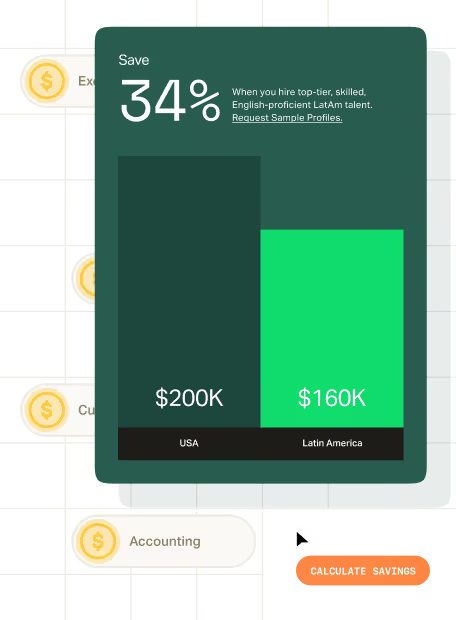
In the US, social media managers typically earn between $73,000 and $84,000 annually, with assistants starting around $36,000 to $61,600.
If those numbers would put a strain on your budget, there’s no reason to stick with US-only hiring.
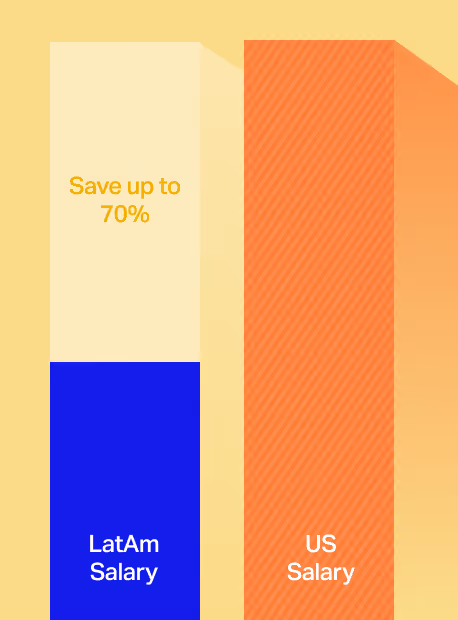
Many companies are finding equally skilled social media managers in Latin America with salary expectations 30 to 67% less than US-based talent. This isn’t because they’re less qualified, but because the cost of living is lower in their home markets.

Latin American social media managers often bring the same strategic thinking, platform expertise, and English fluency as their US counterparts.
For many US companies, this cost structure opens up possibilities that wouldn’t be feasible with domestic hiring: building dedicated social media teams, experimenting with new platforms, or investing more budget in paid campaigns rather than just salaries.
Latin America isn’t your only option for hiring offshore talent. You can also find skilled social media managers in Eastern Europe, Asia, and other regions—each with their own advantages in terms of time zones, cultural alignment, and cost structures.
{{salary-guide-us-latam}}
What Skills Should You Look for When Hiring a Social Media Manager?
Finding the right social media manager requires looking beyond follower counts and post engagement to assess real business skills. The best candidates combine platform expertise with strategic thinking and strong communication abilities.
Hard skills (the must-haves)
These technical competencies form the foundation of effective social media management:
- Platform expertise: Look for hands-on experience with the social platforms most relevant to your audience. This includes understanding each platform’s unique features, best practices, and algorithm changes. A good candidate should be able to explain how they'd adapt content strategy for Instagram versus LinkedIn versus TikTok, and ideally have a view on which social media niches are growing fastest so they can position your brand ahead of the curve.
- Content creation abilities: Whether they’re writing captions, creating graphics, or planning video content, social media managers need to produce engaging material consistently. Look for candidates who can show examples of content they’ve created that drove measurable results.
- Analytics and data interpretation: Social media success depends on understanding what works and why. Strong candidates should be comfortable using native platform analytics tools (Instagram Insights, Facebook Analytics, Twitter Analytics) as well as third-party tools like Hootsuite or Sprout Social.
- Social listening & reputation monitoring: Skilled social media managers use tools like BrandMentions for real-time sentiment analysis tracking brand mentions across social, news, and forums to spot trends early and protect reputation before issues spread.
- Paid social advertising: Most social media strategies now include paid promotion. Look for experience setting up and optimizing social media ads, understanding audience targeting, and managing ad budgets effectively.
- Basic design skills: While they don’t need to be professional designers, social media managers should understand visual principles and be able to create or edit simple graphics using tools like Canva, Adobe Creative Suite, or similar platforms.
Soft skills (equally important)
These interpersonal and organizational abilities often determine long-term success:
Communication and brand voice: Social media managers are literally the voice of your brand online. They need to understand your company’s personality and communicate consistently across all interactions. Look for candidates who can adapt their writing style to match different brand voices.
Community management skills: Building online communities requires patience, empathy, and the ability to handle both positive and negative feedback professionally. Strong candidates should have experience managing customer service interactions through social channels.
Project management: Social media involves juggling multiple campaigns, content calendars, and deadlines simultaneously. Look for candidates who can stay organized and prioritize effectively without constant supervision.
Adaptability: Social media platforms change constantly. The best candidates stay current with new features, algorithm updates, and industry trends. They should be able to explain how they keep their skills updated.
Time management: Social media management involves both planned content and real-time responses. Strong candidates can balance scheduled work with spontaneous opportunities or crisis management.
Nice-to-have skills (the differentiators)
These additional capabilities can set candidates apart:
Video editing and creation: With video content becoming increasingly important across all platforms, candidates with video skills have a significant advantage. Look for experience with tools like Adobe Premiere, Final Cut Pro, or even mobile editing apps.
Influencer outreach: Understanding how to identify, connect with, and collaborate with influencers can expand your brand’s reach significantly. This includes knowing how to structure partnerships and measure their effectiveness.
SEO knowledge: Social media increasingly impacts search rankings. Candidates who understand how social signals affect SEO and can optimize social content for discovery bring added value.
Crisis management experience: When things go wrong online, they can go very wrong very quickly. Candidates with experience managing negative feedback, brand crises, or controversial situations are particularly valuable.
Industry-specific knowledge: If your business operates in a specialized industry (healthcare, finance, B2B technology), candidates with relevant experience can hit the ground running faster.
Where Can You Find and Hire Great Social Media Managers?
The key to finding exceptional social media talent lies in knowing where to look and understanding the unique advantages each sourcing method offers. With social media management being inherently remote-friendly, your options extend far beyond local candidates.
Deciding between local, national, or global talent
Each approach offers distinct advantages depending on your specific needs:
- Local talent provides face-to-face collaboration and shared cultural context, which can be valuable for brands with strong local ties. However, you’re limited to your immediate talent pool and typically pay premium rates.
- Remote US-based talent expands your options significantly while maintaining cultural familiarity and easy collaboration. You’ll still pay US-level salaries, but you gain access to a broader talent pool.
- Offshore talent offers the widest selection and best cost efficiency. You can find skilled social media managers across multiple regions—each with different strengths depending on your priorities.
When hiring offshore, you’ll typically face tradeoffs between time zone alignment and cost savings. Eastern European and South and Southeast Asian markets often provide the lowest costs, but require more asynchronous collaboration.
Latin America offers significant cost savings (30–67% less than US rates) with time zones that closely align with the US and strong cultural alignment with US business practices.
According to one of our recruiters, “Clients are often surprised by the high quality of talent in LatAm: skilled candidates with experience working with international companies.”
To better understand the talent landscape across different regions, we’ve listed the 22 best countries to hire marketing talent so you can explore the advantages of various international hiring markets.
If you’re building out a comprehensive social media strategy as part of a larger marketing effort, you might want to consider how to build a high-performing marketing team for 68% less by leveraging international talent across multiple marketing roles.
Choosing the right sourcing channel
Where you look for candidates matters as much as what you’re looking for.
Each sourcing method attracts different types of professionals and works better for different hiring situations. Understanding these differences helps you spend your time and energy in the right places.
Different platforms and methods excel at finding different types of candidates:

For companies looking to hire internationally, particularly in Latin America, specialized recruitment partners offer significant advantages. They understand local markets, can assess cultural fit, and handle the complexities of international hiring compliance, which we’ll cover a bit more in detail later on.
Related reading: Should You Outsource Social Media Marketing? A Guide to Making the Right Choice
How to Hire the Best Social Media Manager: Best Practices
Hiring a social media manager who can actually drive results requires a systematic approach that goes beyond reviewing portfolios.
Here’s how to structure your hiring process for success:
Stage 1: Before and during sourcing
Define your social media priorities before you start looking
Social media management in many cases covers everything from content creation to community building to paid advertising. Trying to find someone who excels at everything often leads to hiring someone who’s mediocre at most things.
Be specific about what you need most: Are you looking for someone to build brand awareness, drive website traffic, generate leads, or manage customer service? Do you need heavy content creation or more strategic oversight? Your priorities should shape both your job description and your candidate evaluation.
Write job descriptions that attract the right candidates
Your job description is your first opportunity to assess a candidate’s attention to detail and brand alignment. Include specific examples of the types of content they’ll create, the platforms they’ll manage, and the business goals they’ll support.
According to our recruiter, “When writing a job description for a social media manager, clearly outline responsibilities, required tools, and communication skills (fluent English, in this case). Avoid listing unnecessary skills and use precise language to detail daily tasks. Highlight growth opportunities and company culture to attract motivated candidates.”
For detailed guidance on crafting effective job descriptions, check out our guide to job descriptions for remote talent, which covers best practices for attracting the right candidates while setting clear expectations.
Set realistic expectations about workload and timelines
Social media management involves both planned work and real-time responses. Be clear about your expectations for response times, content volume, and availability. If you need someone to monitor social channels outside business hours or respond to customer inquiries within specific timeframes, state this upfront.
Stage 2: Screening and evaluation
Look beyond follower counts and engagement metrics
A candidate’s personal social media following doesn’t predict their ability to grow your brand. Instead, focus on their strategic thinking, content quality, and ability to drive business results. Ask for specific examples of campaigns they’ve managed and the outcomes they achieved.
Test their understanding of your industry and audience
Give candidates a scenario based on your actual business challenges. Ask them to outline how they’d approach building your social media presence or handling a specific type of customer interaction. Their responses reveal whether they understand your audience and can think strategically about social media’s role in your business.
Stage 3: Making the offer and closing the deal
Move quickly with strong candidates
Good social media managers have options, especially in today’s remote-friendly job market. If you find someone who’s a great fit, be prepared to make a competitive offer quickly.
Structure offers that appeal to social media professionals
Beyond salary, consider what matters most to social media managers: flexible schedules, opportunities for creative input, a professional development budget for staying current with platform changes, and clear growth paths within your organization.
Set clear expectations for onboarding and early success
Social media managers need to understand your brand voice, target audience, and business goals before they can be effective. Plan for a comprehensive onboarding process that includes getting familiar with brand guidelines, competitor analysis, and clear success metrics for their first 90 days.
Top Interview Questions for Hiring Social Media Managers
The right interview questions help you assess both technical skills and strategic thinking. Here are four questions that consistently reveal whether a candidate can deliver results for your brand:
“Walk me through a specific social media campaign you managed from start to finish. What were the goals, what did you do, and what results did you achieve?”
What this reveals: This question shows how candidates think strategically, execute tactically, and measure success. Look for specific metrics, clear problem-solving approaches, and the ability to connect social media activities to business outcomes.
What to listen for: Strong candidates will mention specific platforms, target audiences, content types, and measurable results. They should be able to explain their decision-making process and what they learned from the campaign.
Red flags: Vague responses, inability to provide specific metrics, or answers that focus only on vanity metrics like likes and followers rather than business results.
“How would you handle a situation where a customer posts a negative comment about our company on social media?”
What this reveals: This tests crisis management skills, brand voice consistency, and customer service abilities. Social media managers often serve as the first line of defense for brand reputation online.
What to listen for: Look for responses that prioritize quick acknowledgment, professional tone, and moving sensitive conversations to private channels when appropriate. The best candidates understand when to respond publicly versus privately.
Red flags: Candidates who suggest ignoring negative comments, responding defensively, or who don’t understand the public nature of social media interactions.
“Tell me about a time when you had to adapt your social media strategy because of platform changes or algorithm updates. How did you handle it?”
What this reveals: Social media platforms constantly evolve, and successful managers need to stay current and adapt quickly. This question assesses their ability to learn, pivot, and maintain performance through changes.
What to listen for: Specific examples of platform changes they’ve navigated, how they stayed informed about updates, and concrete steps they took to maintain or improve performance.
Red flags: Candidates who can’t provide specific examples or who seem unaware of recent platform changes in their area of expertise.
“If you had to choose three social media platforms to focus on for our business, which would you choose and why?”
What this reveals: This tests their understanding of your business, target audience, and platform strengths. It also shows their ability to prioritize and make strategic decisions rather than trying to be everywhere at once.
What to listen for: Answers that demonstrate research about your company and audience, understanding of platform demographics and strengths, and strategic thinking about resource allocation.
Red flags: Generic responses that don’t consider your specific business, insistence on using every platform, or recommendations that don’t align with your target audience.
For more questions, see your list of 10 effective interview questions for remote marketing professionals.
{{state-latam-hiring}}
Common Mistakes to Avoid When Hiring Social Media Managers
Even with a solid process, it’s easy to make costly mistakes that lead to poor hires or missed opportunities. Here are the most common pitfalls and how to avoid them:
1. Prioritizing creativity over strategy
Many companies get dazzled by beautiful visuals and clever captions, but social media success depends on strategic thinking. A candidate who can create stunning content but doesn’t understand your business goals will struggle to drive meaningful results.
How to avoid it: Ask candidates to explain how they’d connect social media activities to your specific business objectives. Look for evidence of strategic thinking in their previous work, not just creative output.
2. Focusing too heavily on follower counts and vanity metrics
A candidate’s personal social media following or their ability to generate likes and comments doesn’t predict their ability to drive business results for your brand. These vanity metrics can be misleading and distract from more important qualifications.
How to avoid it: Focus on business outcomes like website traffic, lead generation, customer acquisition, or brand awareness metrics. Ask for specific examples of how their social media work contributed to business goals.
3. Underestimating the importance of brand voice alignment
Social media managers become the voice of your brand online. If they don’t understand or can’t consistently maintain your brand personality, it will show in every interaction and piece of content they create.
How to avoid it: Include brand voice assessment in your interview process. Have candidates review your existing social media presence and explain how they’d maintain consistency while bringing fresh ideas.
4. Overlooking community management skills
Creating content is only half the job. Social media managers also need to engage with your audience, respond to comments and messages, and build relationships. Poor community management can damage your brand reputation quickly.
How to avoid it: Ask specific questions about customer service experience and how they’d handle different types of online interactions. Look for evidence of patience, empathy, and professional communication skills.
5. Rushing the evaluation process
Social media management requires both creative and analytical thinking. Candidates who interview well might not perform well in practice, and vice versa. Making quick decisions based on limited information often leads to mismatched hires.
How to avoid it: Include practical tests in your hiring process. Ask candidates to create sample content, analyze your current social media presence, or outline a strategy for a specific challenge you’re facing.
Why Working With a Recruiting Partner Makes a Difference
You can absolutely find a great social media manager on your own—many companies do. If you have the time to source candidates, assess cultural fit, and navigate the complexities of remote hiring, a DIY approach can work well.
But if you’re facing pressure to fill the role quickly, lack experience evaluating social media candidates, or you’re exploring international hiring for the first time, a specialized recruiting partner can save you significant time and help you avoid costly mistakes.
This is particularly true when hiring internationally.
Understanding which local companies represent quality experience, how to assess English proficiency for social media roles, and navigating different cultural communication styles requires expertise that most companies don’t have in-house.
A recruiting firm experienced in hiring for marketing roles offshore can help you:
- Access pre-vetted candidates who’ve already been screened for both technical skills and cultural fit
- Navigate salary expectations and offer structures that make sense in different markets
- Avoid the most common hiring mistakes that lead to quick turnover
- Handle the administrative complexities of international hiring
The investment in recruiting expertise often pays for itself through reduced time-to-hire, better candidate quality, and higher retention rates, especially for remote roles where cultural fit and communication skills are crucial.
For broader insights into international hiring strategies, consider reading about Is Offshore Marketing Right for You? Pros, Cons, and Top Tips, which explores the strategic considerations for building remote marketing teams.
Final Thoughts
You need someone who can handle your social media, and you probably needed them yesterday. The question isn’t whether you need to hire. It’s how to do it efficiently without making costly mistakes.
If you have the bandwidth to source candidates, screen for cultural fit, and manage the hiring process yourself, going direct can work well. But if you’re under pressure to fill the role quickly, lack experience evaluating social media talent, or you’re considering international hiring for the first time, working with a recruiting partner might be the smarter move.
If working with a recruiting partner seems like the right approach, consider a specialized firm that can make the hiring process seamless, efficient, and stress-free.
At Near, we understand that hiring a great social media manager isn’t just about finding someone who knows the platforms—it’s about finding someone who understands your brand, your audience, and your business goals. We match you with pre-vetted Latin American social media managers who combine platform expertise with strategic thinking and excellent English communication skills.
Our candidates work during your working hours, integrate seamlessly with your team, and deliver exceptional results at rates 30-67% lower than US-based talent, without compromising on quality or cultural fit.
Book a free consultation call with our team, and we’ll help you find the perfect match within 21 days. You can interview for free. There’s no fee until you make a hire.
Frequently Asked Questions
Should I hire one social media manager for all platforms, or a specialist per platform?
One generalist social media manager works well for most small-to-mid-size brands running 2–4 platforms with a unified voice; platform specialists make sense once a single channel (like TikTok or LinkedIn) becomes a major growth driver on its own.
Splitting platforms too early often means paying for redundant strategy work across multiple hires. Start with one strong generalist, and only add a platform specialist once that channel's demands genuinely exceed what one person can manage well.
How do I know if my social media manager is actually performing well?
Look past vanity metrics like follower count and track engagement rate, click-through to your site, and whether social-driven traffic converts into leads or sales.
A strong hire should be able to explain why a post performed the way it did, not just report the numbers. Set clear 30-60-90 day benchmarks tied to your actual business goals (brand awareness, lead gen, customer support deflection) rather than generic social media KPIs, since what "good" looks like varies a lot by what you hired the role to do.
What other marketing roles can I hire alongside a social media manager?
Social media rarely works in isolation—US companies commonly pair a social media manager with content marketing managers to lead broader content strategy, community managers to own audience engagement at scale, brand managers to ensure consistent positioning, media buyers to manage paid social spend, digital marketing managers to oversee the full channel mix, SEO managers to drive organic search, growth marketing managers to run experimentation, and product marketing managers to align messaging with launches. Latin American talent in these roles typically offers the same technical depth as US-based professionals, with better time zone alignment than offshore alternatives and significant cost savings.







.webp)


%203.svg)
.avif)





%20(1).avif)

%20(1).png)