

%203.svg)
Key Takeaways
- WordPress developers can be hired through job boards, freelance platforms, referrals, or recruitment partners like Near.
- The best WordPress developers combine technical skills with soft skills like strong documentation, stakeholder communication, and problem-solving.
- A structured hiring process that includes realistic technical tests, thoughtful screening, and fast, compelling offers helps you secure top talent.
With WordPress being the world’s most popular CMS, WordPress developers are in high demand, and the most capable ones don’t stay available for long.
If you’re looking for guidance on how to hire a WordPress developer who can deliver real results, this guide will help. It applies whether you’re hiring in-office, remotely within the US, or internationally.
We’ll cover the skills that matter, where to find great candidates, how much to budget, what to ask during interviews, and the mistakes that often slow teams down.
What Do WordPress Developers Do?
WordPress developers build, customize, and maintain websites that support key business goals like lead generation, e-commerce, and content publishing.
Their job isn’t just about making something look good. It’s about building a site that works fast, functions reliably, and can scale as your business grows.
According to the State of Enterprise WordPress survey, most WordPress sites are used for publishing content or news. That makes developers a crucial part of marketing, communications, and editorial workflows, and not just IT.
There are different types of WordPress developers:
- Front-end developers handle themes, user interfaces, and layout structures.
- Backend developers work with plugins, APIs, custom functions, and database performance.
- Full-stack developers do both.
Typical deliverables include theme development, plugin customization, WooCommerce integration, API connections, and performance tuning. They may also handle security hardening or technical SEO setups.
They usually don’t create content, design assets, or write copy. And unless you’re hiring an agency, most won’t manage your hosting or ongoing content strategy either.
How Much Does It Cost to Hire a WordPress Developer?
Salaries for WordPress developers vary significantly depending on location and expertise.
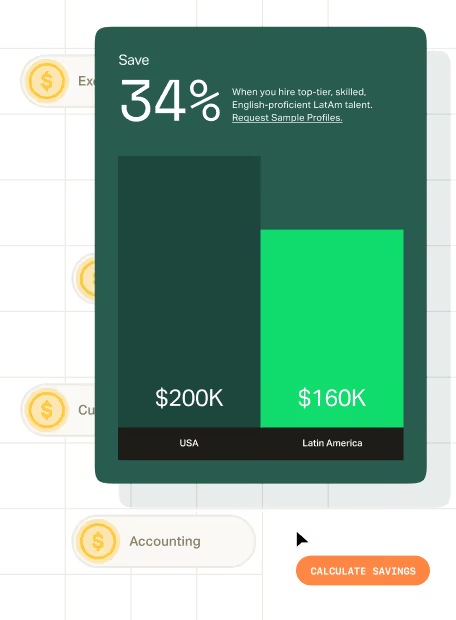
Based on our benchmarks, you can expect to pay up to $121,000 for a full-time WordPress developer in the US.
Companies willing to look beyond the US can access talent at a more affordable rate.
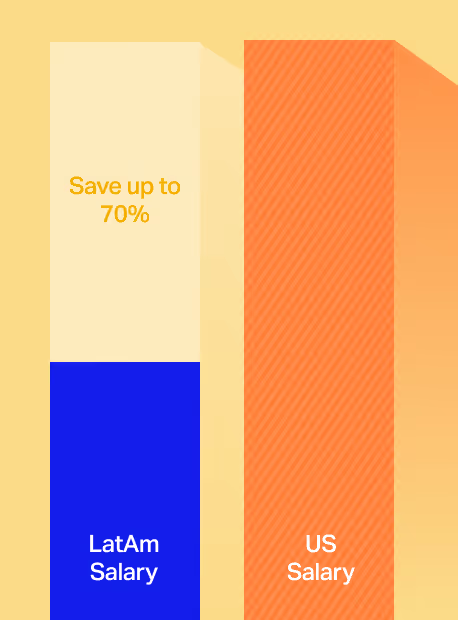
For example, in our experience, WordPress developers in Latin America with comparable skills typically earn the following compared to their US pee
By hiring in LatAm, US companies can save up to 56%.
These differences reflect variations in local living costs, not talent quality.
Many businesses find they can afford a senior-level developer on a junior-level budget by hiring Latin American developers, giving their projects more technical leadership without stretching resources.
While Latin America offers advantages like time zone compatibility and cultural alignment for US teams, similar cost savings are also possible when hiring from other regions such as Southeast Asia, Eastern Europe, and Africa, particularly for companies comfortable with asynchronous collaboration or flexible scheduling.
What Skills Should You Look For When Hiring WordPress Developers?
PHP, JavaScript, and HTML/CSS consistently rank among the most widely used languages in the Stack Overflow Developer Survey.
That means plenty of developers are familiar with the building blocks of WordPress. But knowing the tech isn’t enough. Great WordPress developers go beyond basic functionality to build scalable, secure, and user-friendly websites that support your business goals.
Let’s break down the skills that matter most.
Hard skills (the must-haves)
These are the technical capabilities your WordPress developer needs to hit the ground running:
- PHP and MySQL: These are the foundations of WordPress. Candidates should be comfortable writing custom functions, querying databases efficiently, and working with PHP error logs during debugging.
- Deep understanding of WordPress core and plugin architecture: Look for developers who understand how hooks, filters, and actions work. They should be able to customize WordPress without breaking core functionality or creating update issues.
- Theme development and experience with page builders: Whether it’s Elementor, Gutenberg, or a custom theme setup, strong developers know how to turn a Figma file or style guide into a clean, responsive layout.
- REST API familiarity: Familiarity with REST API is especially important if you plan to integrate with third-party tools or use WordPress as a headless CMS. Good candidates should know how to send and consume data using REST.
- Performance optimization, technical SEO, and security best practices: WordPress developers should understand how to reduce bloat, improve site speed, and follow security best practices like sanitizing inputs and hardening admin areas. They also play a key role in helping your site meet SEO expectations—like Google’s Core Web Vitals—by optimizing front-end code, eliminating render-blocking scripts, and ensuring fast load times. (While SEO is a shared responsibility across dev, content, and marketing teams, a technically sound foundation starts with the developer.)
Soft skills (equally important)
Technical skills matter, but your developer also needs to communicate well, manage their own work, and contribute to a team.
- Strong communication with non-technical stakeholders: WordPress developers often work with marketers, content teams, or operations managers. Look for candidates who can explain technical decisions in simple, practical terms.
- Clear documentation habits: From inline comments to setup instructions, clear documentation makes it easier for teams to maintain or extend what’s been built. Ask candidates to share samples if possible.
- Collaborative approach with designers and backend teams: A good developer can translate design systems into functional pages, align with backend API contracts, and contribute to discussions about user experience.
- Receptiveness to feedback: One of our recruiters recommends asking questions that reveal how a developer handles feedback from peers or managers. A strong candidate should be able to point to specific situations where they used feedback to improve their work or the project overall.
Nice-to-have skills (the differentiators)
These bonus skills aren’t essential for every project, but they can make a great developer even more valuable, especially for complex sites or fast-moving teams.
- WooCommerce experience: If you run an online store or plan to, look for candidates who’ve worked with WooCommerce customizations, product filters, or payment gateway integrations.
- Headless WordPress setup knowledge: Developers familiar with using WordPress as a headless CMS (paired with tools like Next.js or Gatsby) can help you modernize your stack while keeping familiar workflows.
- Git and version control workflows: It’s a baseline for any collaborative dev environment. Bonus points if they know how to structure commits clearly or handle rollback scenarios.
- Accessibility and responsive design experience: Good WordPress developers should understand how to build sites that work well for all users. This means WP should work across devices, screen readers, and varying bandwidths.
- Understanding of marketing and business goals: Developers who understand the site’s goals, such as conversions, SEO, or lead generation, can make better technical decisions that align with your KPIs.

Where Can You Find and Hire Great WordPress Developers?
Hiring a WordPress developer starts with two decisions:
- Where your developer can be located
- How you’ll actually find and hire them in that location
Let’s walk through each part of that process.
Choosing the right location: Local, national, or global?
Location has a major impact on everything from collaboration to cost.
Your choice depends on your budget, how your team works, and whether real-time communication is a priority.
Local/in-office developers
Hiring locally offers face-to-face collaboration and the ability to integrate developers into your broader team culture.
This can be helpful for projects that require constant iteration or tight coordination with design, marketing, or leadership. However, US-based WordPress developers tend to be expensive, and competition is high in tech-heavy cities.
Remote US-based developers
This option expands your reach while keeping things simple.
Candidates are already familiar with US workflows, business norms, and tools. But you’re still working within the US salary range, and the most experienced developers often get hired quickly or work freelance at premium rates.
International/offshore developers
Offshore hiring gives you access to a larger talent pool and far better budget flexibility. If you’re open to asynchronous communication or already use remote workflows, this can be a great way to find experienced developers without overspending.
If you’re looking beyond the US, it’s worth taking the time to choose between offshoring to distant countries or “nearshoring” your software development to countries in Latin America.
While all offshore talent can offer cost savings over hiring in the US, nearshoring to Latin America often delivers stronger alignment in time zones, communication, and collaboration. These are key factors for faster WordPress development and smoother project management.
We’ve seen nearshore software development in Latin America work incredibly well for US businesses. The combination of technical skill, cultural familiarity, and cost efficiency makes it a compelling option.
Other countries in South or Southeast Asia, like the Philippines, and Eastern European countries like Poland and Romania, also offer strong technical talent, although time zone differences can add complexity.
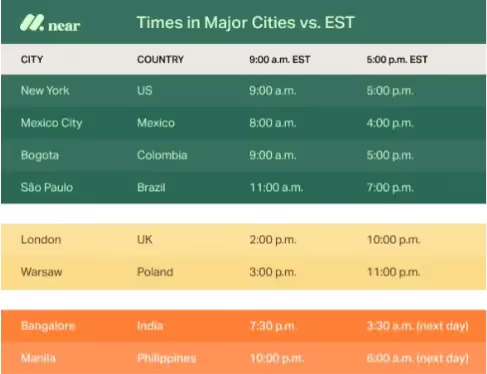
If you’re hiring outside the US, it’s worth reading up on things you should know before offshoring WordPress development to avoid surprises.
You’ll get better results if you go into the process with clear expectations and the right support.
Choosing the right sourcing channel
Once you’ve decided where to hire from, the next step is choosing how to source candidates.
But first, it’s important to decide whether you’re looking for a freelance contractor or a long-term hire.
Freelancers can be a great fit for small, time-bound projects like plugin updates or one-off theme customizations.
But if your site is central to your business operations—or you’re planning ongoing iterations—it often makes more sense to bring someone on in a full-time or dedicated long-term capacity.
Defining this upfront will help narrow your search and avoid mismatched expectations down the line.
Here’s a look at the most common sourcing options:
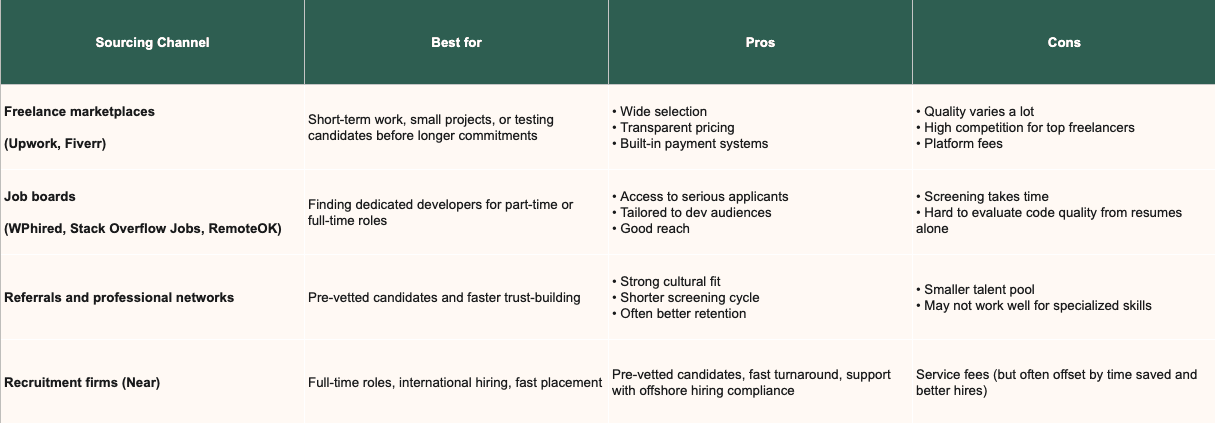
Each approach has distinct advantages depending on your goals, timeline, and budget. Many companies start with referrals or post on targeted job boards, then consider recruitment support if those channels don’t produce the right candidates.
How to Hire the Best WordPress Developers: Best Practices
Hiring can feel overwhelming when the options range from hobbyists to high-level engineers with agency backgrounds. The key is to use a structured hiring process. Without one, teams waste time, miss strong candidates, or hire someone who’s not a real fit.
A sharper hiring process helps you define what you actually need, evaluate candidates effectively, and move quickly when the right person shows up.
Here’s how to approach each stage with focus and confidence.
Stage 1: Before and during sourcing
Start by defining your tech stack and roadmap
WordPress development can mean a lot of things. Are you using a builder like Elementor or running a custom theme? Will you need WooCommerce support? Or are you planning to outsource any e-commerce development? Are there custom API integrations on the horizon?
According to our recruiters, being upfront about your current tools and future plans helps filter candidates who have done this kind of work before.
Avoid the “unicorn” trap
Resist the urge to ask for everything from one person. It’s tempting to list every possible tool, skill, and platform, but doing that just narrows your pool and attracts generalists who check boxes rather than specialists who solve problems.
Write a job post that reflects the real work
Be clear about what they’ll actually do day to day. Will they maintain existing sites, build new themes, or optimize performance? Include the technologies they’ll use, the type of team they’ll work with, and how success is measured.
Developers read between the lines. A focused, accurate job post is more likely to attract serious candidates who are ready for the actual work and not just the title.
Take a look at our guide on how to write a software developer job description that attracts qualified candidates for more tips on the subject.
Stage 2: Screening and evaluation
Don’t overvalue resumes
Plenty of strong developers don’t have degrees or flashy job titles. This doesn’t mean they’re not great WordPress developers.
A resume is curated and is often not a real representation of a candidate’s ability.
What matters is whether they can explain the choices they made in previous projects and how those choices improved the site’s performance, stability, or maintainability.
Test their technical judgment, not just syntax
Ask how they’d improve a site that loads slowly, or what plugin trade-offs they consider before adding one. Their answers should go beyond naming tools. Look for candidates who ask questions, weigh impact, and think beyond the code.
Evaluate communication skills early
During interviews or technical reviews, ask candidates to walk you through a previous project or explain how they solved a specific problem. Their ability to clearly articulate their thinking, not just what they did but why they did it, reveals how involved they were in the work.
Our recruiters have noticed that developers who can explain their decisions in simple, structured ways are more likely to contribute meaningfully to your team and collaborate well across departments. Make this a core part of your screening process, not something you leave until the end.
Stage 3: Making the offer and closing the deal
Move fast
The best WordPress developers are rarely on the market for long. Once you’ve found someone who fits, don’t drag out the decision. Show them you’re serious by moving quickly and communicating clearly throughout the final stages.
Make your offer compelling
Great developers have options. Your offer should speak to what they care about: ownership of their work, a clear role in the roadmap, and room to grow. Highlight flexibility in schedule or PTO, support for learning new tools, and give them the setup they need.
WordPress developers often use tools like PhpStorm and Visual Studio. Offering to cover their preferred IDE is thoughtful and shows you want them to do their best work from day one.
Hiring is competitive, especially in international markets. A strong offer isn’t just about salary. It’s about creating a role where developers feel trusted, equipped, and excited to contribute.
To really make your offer stand out, take a look at our guide on creating strong job offers and learn how it helps secure top talent and retain the devs you’ve already got.
Top Interview Questions for Hiring WordPress Developers That Reveal the Right Fit
Resumes and portfolios rarely tell the full story. If you want to understand how a WordPress developer actually thinks, builds, and collaborates, you need to go deeper during the interview.
Here are five targeted questions to help you uncover technical skill, problem-solving ability, and ownership—all critical traits in a great WordPress hire.
“Tell me about a time you optimized a WordPress site for performance. What did you do, and why?”
This tests their practical knowledge of site speed, which directly impacts user experience and SEO.
Strong candidates will mention things like caching strategies (e.g., object caching, page caching), image compression, removing or replacing heavy plugins, reducing HTTP requests, and using a CDN.
Red flags: Vague responses like “I made it faster” without explaining how. Look out for buzzwords with no technical explanation or over-reliance on plugins without discussing trade-offs.
“Walk me through a custom feature or plugin you built for WordPress.”
This reveals their development skills and whether they follow best practices.
You’re looking for someone who can explain their approach to writing clean, modular code using hooks and filters, and who understands how to avoid conflicts with core or third-party functionality.
Red flags: General answers with little detail, or responses that suggest they copied code without understanding it. Also, watch for candidates who can’t explain how their work solved a real problem.
“What steps do you take when debugging a broken WordPress site or plugin conflict?”
WordPress sites break. How a developer responds matters.
Strong answers include methodical steps like enabling debug logs, deactivating plugins one by one, checking the theme’s functions file, reviewing server logs, or using Query Monitor.
Red flags: Candidates who jump straight to reinstalling WordPress or switching themes without trying to isolate the issue first. Look for signs they panic or guess rather than troubleshoot systematically.
“How do you make sure the sites you build are secure?”
This tests awareness of common vulnerabilities and the steps they take to prevent them.
Look for developers who mention input sanitization, escaping output, using nonces for form validation, keeping themes and plugins updated, and limiting admin privileges.
Red flags: Overgeneralized answers like “I use good plugins” or “WordPress takes care of that” usually signal a lack of understanding about application-level security.
“What’s a piece of feedback you received on a WordPress project, and how did you act on it?”
This shows whether they take the initiative to learn and grow, or get defensive when things go wrong.
A good answer involves specific feedback (technical or interpersonal), what they changed, and how it improved the outcome.
Red flags: Candidates who say they’ve never received feedback or who blame others instead of reflecting on how they could improve. Lack of detail or complete avoidance here is a warning sign.
If you’re looking to hire a remote WordPress developer, you may also want to explore some interview questions to ask remote workers. Those questions can help you assess communication habits, time management, and how candidates handle collaboration across time zones.
Common Mistakes to Avoid When Hiring a WordPress Developer
These are five common mistakes we have seen companies make when hiring WordPress developers, along with how to avoid them.
1. Overemphasizing portfolio polish over coding ability
A visually impressive portfolio doesn’t always reflect strong technical skills. Many WordPress portfolios showcase front-end design or launch screenshots, but they rarely show what’s happening behind the scenes. You won’t see how they handled plugin conflicts, optimized performance, or structured their code.
Why it matters: You could end up hiring someone based on visual appeal, only to discover gaps in their backend development or site performance knowledge.
What to do instead: Use the portfolio as a conversation starter, not as the final word. Ask about their technical decision-making, how they built specific features, and what challenges they solved during the project.
2. Requiring a formal degree when it’s not necessary
Some of the best WordPress developers built up their experience by working on real projects long before they completed a degree, or without one at all. Limiting your search to college graduates can screen out capable, experienced candidates.
Why it matters: You risk overlooking highly skilled developers who have proven themselves through hands-on work.
What to do instead: Focus on how they think, how they code, and how they communicate. Practical experience often tells you more than academic background.
3. Making the hiring process too complicated
Long assessments, multiple interviews, and unclear timelines can wear candidates down. Strong developers are evaluating you just as much as you are evaluating them. If your process feels slow or disorganized, they will move on.
Why it matters: You could lose great candidates simply because your process takes too long or lacks structure.
What to do instead: Keep it simple. A short technical task, a project discussion, and one or two interviews are usually enough to make a well-informed decision.
4. Choosing candidates based on the lowest salary expectations
Whether you’re hiring locally or internationally, focusing purely on who will accept the lowest salary can backfire. Candidates with unusually low salary expectations might seem attractive when you’re working with a tight budget, but this approach often leads to costly problems down the line.
Why it matters: WordPress development isn’t just about getting a site to function. It’s about building something that loads fast, stays secure, and can handle changes without breaking. Developers who accept significantly below-market salaries may lack the experience to deliver on these fundamentals, leading to performance issues, security vulnerabilities, or code that’s hard to maintain.
You might save money upfront, but you’ll likely spend more later dealing with site crashes, plugin conflicts, or having to rebuild sections from scratch.
What to do instead: Focus on value over cost. Look for developers who can clearly explain their approach to common WordPress challenges, show examples of sites they’ve optimized for performance, and demonstrate they understand security best practices. A developer who expects a market-rate salary but delivers clean, maintainable code will cost you less in the long run than someone who creates problems you’ll need to fix later.
5. Assuming your WordPress developer will do everything
Developers can build and customize a site, but they aren’t designers, content strategists, or branding experts. If you need someone to handle every part of the site creation process, you may be setting the wrong expectations for both sides.
Why it matters: Developers can get overwhelmed by responsibilities that fall outside their expertise, and you may end up with a site that looks unfinished or lacks direction.
What to do instead: Be specific about your needs. If you need someone to handle branding, design, content, and development, you may be better off outsourcing to a web development team that covers all of those roles.
Why Working With a Recruiting Partner Makes a Difference
You can absolutely find and hire a WordPress developer on your own. If you have a solid hiring process, know the skills you’re targeting, and have the time to manage sourcing and screening, DIY hiring can work.
But if you’re under pressure to fill the role quickly, hiring developers offshore for the first time, or unsure how to evaluate technical candidates with confidence, working with a recruiting partner can save time, reduce risk, and improve your outcomes.
Recruiting across borders adds extra layers. It means navigating international job boards, knowing salary benchmarks, managing compliance, and juggling time zones.
That’s where expert help makes a difference. A good recruiting partner with WordPress hiring experience can cut sourcing time, pre-vet qualified candidates, and handle the logistical details that would slow you down.
There’s a cost involved, but it’s often offset by:
- Time saved in sourcing and screening
- Reduced risk of hiring the wrong person
- More competitive offers that close faster
- Access to talent in lower-cost markets without sacrificing quality
Final Thoughts
Hiring a great WordPress developer takes more than checking for technical skills. The best candidates combine solid engineering ability with clear communication, strong judgment, and an understanding of what makes websites succeed in the real world.
Whether you’re hiring one developer or building out a full team, a thoughtful process pays off. Clarity upfront and consistent evaluation help you find someone who can contribute from day one.
If hiring pre-vetted WordPress developers through a recruitment partner sounds like the right move, consider working with a firm that knows this role inside and out.
At Near, we connect US companies with skilled WordPress developers in Latin America who bring time zone alignment, cost efficiency, and proven experience.
Book a free consultation to hire vetted WordPress talent within 21 days.
Frequently Asked Questions
How can I tell if a WordPress developer is truly skilled in custom coding (not just using plugins)?
Check their portfolio for examples of custom themes or plugins, and ask them to walk you through a recent project—what tools they used, why they chose them, and how they solved problems along the way.
Should I hire a freelancer or a full-time developer?
If the project is one-off—like a plugin update or theme tweak—a freelancer is often more cost-effective. For ongoing site work, new feature roadmaps, or strategic upgrades, a full-time or long-term contractor offers continuity and deeper company knowledge.
Should I hire my own WordPress developer or outsource to a development company?
It depends on your goals. Hiring your own dedicated developer gives you more direct control, long-term continuity, and the ability to integrate them into your internal team and processes compared to using development companies.
On the other hand, outsourcing to a WordPress development company can be a good choice for one-off builds, urgent timelines, or when you need access to a wider range of technical expertise without hiring multiple people.
What's the difference between hiring a WordPress developer and other types of web developers?
WordPress developers specialize in building and customizing sites using the WordPress CMS, while offshore web developers may work across multiple platforms and frameworks. If your project extends beyond WordPress, you might also consider hiring full-stack developers who can handle both front-end and back-end work, or PHP developers who work with the core language that powers WordPress.






.webp)


%203.svg)
.avif)




%20(1).avif)

%20(1).png)