Key Takeaways
- Outsourcing development buys delivered work from a vendor that employs and directs the engineers, while hiring remote developers puts a full-time developer on your own team, under your day-to-day management.
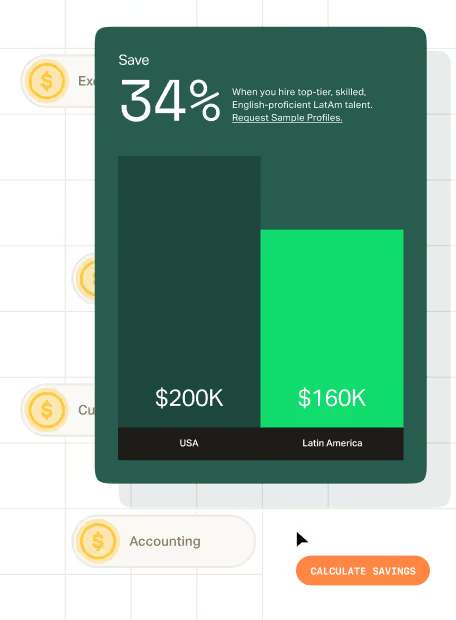
- Hiring a mid-level developer in Latin America costs $48K–$72K a year against $87K–$157K for a comparable US hire, according to Hire With Near’s salary data.
- Whether you outsource to remote developers or hire them directly, the 10 companies below span four models: outsourcing firms and dev shops, freelance marketplaces, staff augmentation partners, and direct-hire staffing and recruiting.
Most companies land on the decision to outsource or hire remotely the same way: hiring locally would take too long, cost too much, or simply wouldn’t fill the role with the skill set they need.
Once that’s true, they can either outsource the project to a vendor who delivers it with their own team, or bring on a remote developer who joins the team directly the way a local hire would.
A remote hire based in the US doesn’t fully solve the problem, though. Salaries don’t drop much just because someone works from home, and depending on the state, you could still end up with a multi-hour time zone gap.
That’s the problem Latin America solves: developers there have salary expectations well below US rates, and their working day overlaps yours.
This guide reviews ten companies that cover both paths in Latin America, what each one sells you, how they price the work, and how they vet the people you’d be working with. If you’re building your own team rather than outsourcing a project, hiring a remote developer in Latin America is the route most companies on this list don't take.
What’s the Difference Between Outsourcing Development and Hiring Remote Developers?
Outsourcing development means paying a vendor to deliver a defined piece of work using engineers the vendor employs, assigns, and manages. Hiring a remote developer means adding a full-time person to your own team, someone who reports to you, joins your stand-ups, and owns part of your system.
Both get code written. They differ on one aspect that decides almost everything else: who the developer answers to.
From the editorial work I do interviewing Hire With Near’s developer recruiters, the same misread comes up constantly. A company compares five providers on price and vetting claims, signs with one, and only later discovers it bought a fundamentally different relationship from the one it wanted.
When should I choose outsourcing?
Outsourcing is the right answer when the work has a beginning and an end and you would rather buy the result than manage the people. A marketing site rebuild, a one-time data migration, an app you will ship and not iterate on: a vendor can scope those, staff them from an existing bench, and hand back a finished outcome.
You also get elasticity. A dev shop can put six engineers on a deadline and take five off when it passes, which no hiring process can match.
When should I choose hiring my own developer?
Hiring wins the moment the work stops being a project and becomes a system somebody has to own. Your product backend, your deployment pipeline, your test suite: those need someone who remembers why a decision was made 14 months ago.
A developer you hire stays with your codebase, sits in your planning, and builds the context that makes the second year cheaper than the first. That context is the asset. It’s also what you don’t keep when a vendor contract ends.
Strong developers tend to prefer it too, and it’s not just about the work itself. Hayden Cohen, Hire With Near’s CEO and Co-founder, explains why in the video below:
If you want to compare the two paths on your own project, our guide on whether to hire an in-house developer or outsource walks the decision in more detail.
What each model costs you in control and continuity
With an outsourcing vendor, requests route through an account or project manager. That layer is doing real work, but it slows down every small request that would otherwise take a two-minute Slack message.
The second cost is continuity. Vendors rotate engineers between accounts, so the person who learned your system in March may be on someone else’s roadmap by September.
A RevOps leader at a mid-market SaaS company running an offshore team through a managed-services agency put the effect plainly: it “ends up not feeling like they’re part of the team, like they’re an agency that works with us.”
Hiring has its own costs, and they’re real. You carry the salary whether this quarter is busy or slow, and you own the performance conversation if it goes badly. If you run the search yourself rather than through a staffing partner, you’re also absorbing the time and risk of finding the right person.
That trade is worth it for work you can’t afford to hand over, and a bad trade for a six-week build.
When companies switch from outsourcing to hiring
In Hire With Near’s analysis of 2,000+ hiring conversations, 12% of US companies said they came to Latin America specifically to move off an outsourcing model and start hiring directly. The reasons they gave were the middleman layer, a revolving door of people, and workers who never felt like part of the team.
That’s one of the top reasons US companies are hiring in Latin America, and within that group, IT and engineering teams are 16% of the companies making the move.
The practical test is simple. If you could hand the work to a different vendor next quarter without losing anything important, outsourcing fits. If losing the person would set you back months, hiring a Latin American developer would be a better choice.
What Are Your Options for Getting Remote Development Work Done?
You have four realistic options for getting the dev work done without hiring locally: outsourcing to a vendor who delivers a finished project, hiring freelancers through a marketplace, staff augmentation, or hiring your own developer through a staffing and recruiting partner.
They differ on who directs the developer, how the provider gets paid, and how easily you can walk away. They run from the model that hands over the most control to the one that leaves you with the most:
An outsourcing firm or dev shop
A vendor scopes the work, staffs it with its own engineers, and delivers against a statement of work. You pay a project fee or a blended hourly rate, and the engagement ends when the project does. There’s no notice period, no severance, no ongoing obligation once the deliverable is accepted.
That makes it the easiest model to walk away from on this list, but also the one where you own the least: the vendor keeps the team and the accumulated knowledge.
Our guide on how to hire an outsourced software developer covers what to put in that scope.
A freelance marketplace
You post the work, pick a contractor, and manage them yourself. Platforms handle contracts, time tracking, and payment, and take a cut for it.
The honest limitation is structural: marketplaces are built around split attention, because a freelancer’s business depends on carrying several clients at once.
That’s a feature for a two-week task and a problem for a system that needs someone thinking about it on a Tuesday afternoon.
Staff augmentation
A staff augmentation partner places a pre-vetted engineer onto your team to work under your direction, and handles payroll, benefits, and local compliance for you. You pay a recurring monthly fee per engineer, and you can scale the team up or down as the roadmap changes.
It sits between a marketplace and a permanent hire: far more vetting and accountability than a platform, less commitment than headcount.
Our comparison of staffing agencies and employer of record services covers what each model handles.
A direct-hire staffing and recruiting partner
A staffing and recruiting partner in Latin America runs the search, screens the candidates, and presents a shortlist. Your job is interviewing the candidates and making a final choice so the developer can join your team permanently. You pay a one-time recruiting fee, or a monthly fee if you want payroll and compliance handled with it.
Recruitment companies that specialize in remote hiring exist because the do-it-yourself version, posting on job boards and working your network, is where most searches stall: the sourcing is slow and the screening is yours.
This is also the route for senior leadership hires. Executive search firms that specialize in Latin American placements fill VP of Engineering and CTO roles, and some of the same firms can staff the rest of the engineering team too, which is worth asking about before you sign with a separate vendor for each level.
What Development Work Should You Outsource, and What Should You Hire For?
Use this as your rule of thumb: outsource work that’s scoped and finite, hire for work that owns a system long-term.
A one-time marketing site build is a vendor job. The web platform your customers log into every day is not, that’s the kind of thing a team keeps in-house because someone has to be accountable for it every day it’s running, not just the day it ships. Most companies end up doing both: outsourcing the one-off builds and hiring for whatever they can’t afford to hand back.
This distinction is exactly what comes up in the nearshore IT and tech recruiting conversations we have with engineering leaders: which pieces of the roadmap are truly one-and-done, and which ones need someone who’ll still be there next year.
Web development
Remote developers can handle everything from building responsive websites to maintaining complex web platforms.
If your team is focused on other priorities, outsourcing web development keeps your online presence strong without pulling your own developers off other work.
If the platform is a product you keep shipping to, hire web developers instead.
Mobile app development
Building an iOS or Android app takes specialized skills and months of work. Outsourcing app development lets you work with experienced developers who design the app, build it, and tune performance before launch.
An app you launch and largely leave alone is a good outsourcing candidate. An app with a roadmap, a release cadence, and a support queue needs someone who stays.
Custom software development
Need software built for a workflow no off-the-shelf tool covers? You can find remote software developers with the expertise to design and implement custom applications, whether it’s an enterprise tool or a niche platform.
Watch the ownership question here more than anywhere else. Custom software that becomes core to how your business runs is the hardest thing to inherit from a vendor two years later.
UI/UX design
Good product decisions come out of design work, not just implementation. Remote UI/UX designers create interfaces that are visually clear and easy to move through, and they can work either way: a vendor design sprint for a redesign, or a designer on your team when the interface changes every month.
Quality assurance and testing
QA outsourcing works well for a release-crunch testing push, a short burst of coverage before a launch. A permanent QA function is different: someone who owns the test suite and decides what “ready to ship” means, that’s a remote QA engineer you hire, not a service you rent for a sprint.
DevOps
Remote DevOps professionals improve your development pipelines, automate repetitive tasks, and keep integrations and deployments running. Their expertise speeds up delivery, and this is one of the clearest hire-not-outsource cases on the list. Your deployment pipeline is infrastructure someone has to be on call for.
Technical support and maintenance
Ongoing maintenance and support keep your systems running. Remote IT support specialists can handle updates, troubleshoot issues, and reduce downtime without burdening your internal team. If the systems are yours and the users are yours, this usually belongs in-house over time.
You don’t have to pick one model for everything
Outsourcing doesn’t have to be an all-or-nothing decision. You may find that outsourcing just one function, UI/UX design, QA testing, or app development, fills a real gap in your in-house capacity without committing to one model across your whole roadmap.
Most teams end up running both at once: hiring for the systems they own long-term, and outsourcing the scoped, finite pieces around them. That’s not a compromise, it’s usually the correct answer once you’ve sorted your work by the rule of thumb above.
How Much Does It Cost to Hire a Remote Developer?
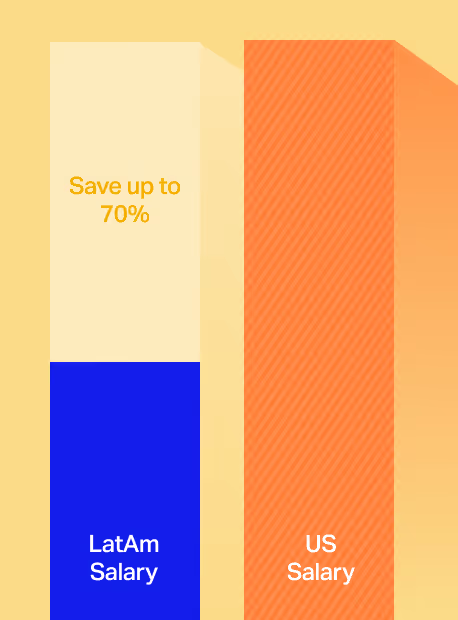
Hiring remote developers in Latin America costs 43–68% less than comparable US hires, according to our salary data, and the exact savings depend heavily on the specific role and seniority level.
Here’s what hiring a remote developer costs across the roles most teams build around, compared to equivalent US hires, according to Hire With Near’s salary benchmarks:
For the most up-to-date figures, see Hire With Near’s US vs Latin America Salary Guide.
These bands aren’t junior pricing, which is the objection they usually invite. According to Hire With Near’s 2026 State of LatAm Hiring Report, which analyzes 2,000+ placements, demand for software engineers grew 250% year over year, and 98% of the engineers placed were mid-level or senior. A digital product consultancy that hired a senior PHP developer at $6,500 a month is a typical shape for the senior end of that range.
Our IT roles salary guide: US vs Latin America breaks the same comparison out by specialization, and how much US companies save by hiring in Latin America shows what those figures look like across completed hires.
What else you’ll pay beyond the salary
Salary is only half the number, and what goes on top depends entirely on which model you picked:
- An outsourcing firm or dev shop bills a blended hourly rate or a project fee. The engineer’s salary is inside that rate, and you won’t usually see it broken out.
- A freelance marketplace takes a platform cut on top of the contractor’s own rate, plus contract or payment fees. Most publish those fees, so the platform cost is knowable before you post a job.
- A staff augmentation partner charges a recurring monthly fee per engineer that covers payroll, benefits, and compliance alongside its own margin.
- A direct-hire staffing and recruiting partner charges either a one-time recruiting fee or a monthly fee, and the salary is paid by you at a level you set.
Ask any provider to show you the all-in monthly number before you commit, not the headline rate. If you’re benchmarking against other regions, our Offshore Developer Rates article gives the wider comparison, and our guide to hiring offshore software developers covers how those engagements are usually structured.
{{salary-guide-cta}}
What Are the 10 Best Companies for Outsourcing to or Hiring Remote Developers in 2026?
The ten companies below split into four models:
- Outsourcing firms and dev shops (BairesDev, AgileEngine) deliver scoped work with their own engineers.
- Freelance marketplaces (Toptal, Upwork, CloudDevs, Lemon.io) let you pick and manage a contractor yourself.
- Staff augmentation partners (Andela, Revelo, BEON.tech) place a vetted engineer on your team on a monthly engagement and handle payroll and compliance.
- Direct-hire staffing and recruiting (Hire With Near) means you hire the developer yourself and they stay with you.
How I put this list together: I only included companies holding at least a 4.5 out of 5 rating with 50 or more client reviews on at least one established review platform: G2, Clutch, Trustpilot, GoodFirms, or ClearlyRated (client ratings only).
From the companies that cleared that bar, I looked at how each one engages developers, which regions they recruit from, what they publish about vetting and speed, and how they charge.
Six of the ten recruit from Latin America, which is where most LatAm outsourcing companies and LatAm staffing firms now source engineers, because the working-hours overlap with US teams makes daily collaboration possible.
The companies below are in no particular order. My goal is to help you build a shortlist worth calling, whether you want to hire top remote developers of your own or hand a build to a vendor, not to declare a winner.
The table below shows all ten at a glance, with the engagement model in the second column:
1. Hire With Near

Website: hirewithnear.com
Headquarters: San Antonio, Texas.
Model: Staffing and recruiting (direct hire and monthly staffing).
Rating: 4.9/5 on G2 (155+ reviews)
Services: Full-service nearshore staffing and recruiting, RPO, staff augmentation, executive search.
Focus Regions: Latin America only.
Hire With Near is a full-service staffing and recruiting agency that helps US companies hire top-performing remote talent in Latin America across all departments and industries, including software engineering. We handle sourcing, vetting, candidate presentation, payroll, and compliance, and the developer works as part of your team under your day-to-day management.
We were ranked No. 118 on the 2026 Inc. 5000 list. More than 950 companies have hired with us from a pre-vetted pool of 160,000+ professionals, including Deel and Expensify.
One of these companies was a US healthtech startup that added seven senior engineers at a 14-day average time to hire while keeping its own eight-step interview process and its own interviewers. Another example is ParkMobile, which hired 9 senior engineers across platform, backend, and iOS at a 24-day average, saving $1,066,085 a year against US rates, a 73% reduction.
Key features:
- Elite talent for engineering positions: We place senior back-end and front-end developers, mobile, QA, and data and machine learning engineers every week. The person you hire works on your product only, not on three other clients’ backlogs.
- Quality-first approach: We fill 97% of the roles we take on and hold a 9.1 client satisfaction score, and both come from obsessing over fit: the drive, readiness, and cultural match to contribute from day one, not just the skills.
- One partner, one process: Scale across functions, not just engineering, with one dedicated team and a repeatable hiring cadence. First candidates in 3 to 5 days with video introductions, and most of our clients make a hire in under three weeks. We remember what worked last time and adapt based on your feedback, so each search gets easier.
- 180-day replacement guarantee: Double the industry standard. If a hire doesn’t work out in the first six months, we find a replacement at no additional cost to you.
Best for: US companies that want a full-time developer of their own, working in overlapping hours, hired permanently rather than rented by the hour.
Client perspective: “It was shocking to see the difference between the talent Hire With Near brought versus other firms I worked with.” Thomas Elliott, VP of Product Management, Bonfire
Limitations: We recruit in Latin America only, and we don’t deliver projects. If you need a vendor to own a scoped build end to end, one of the outsourcing firms on this list is the better call.
Pricing: Two models. Direct hire is a one-time recruiting fee; the staffing model is a monthly fee with payroll and compliance included. You set the salary, we show benchmarks and fees up front, and you pay nothing until you hire.
{{consultation}}
2. Toptal

Website: toptal.com
Headquarters: San Francisco, California.
Model: Vetted freelance marketplace.
Rating: 4.7/5 on G2 (270+ reviews)
Services: Freelance developers, designers, product and project managers, and finance and consulting experts.
Focus Regions: Global, 140+ countries served.
What stands out about Toptal is how much risk it removes from a first engagement: the network is built on a screening process the company says only the top 3% of applicants clear, and clients start on a trial basis rather than a contract commitment.
Toptal reports 35,000+ clients served and a 98% trial-to-hire success rate. For a US team that needs one senior specialist on a defined piece of work and has someone internal to direct them, it’s among the fastest routes to a vetted person.
Key features:
- Matching in under 24 hours: Toptal states an average match time of under a day, with engagements starting within 48 hours.
- Pay-only-if-satisfied trial: Work begins on a trial basis, so an engagement that isn’t working can end before you have paid for it.
- More than engineering: Designers, product and project managers, management consultants, and finance experts sit in the same network, so one relationship can cover work beyond code.
Best for: Short-term or specialist work where you want a pre-vetted freelancer quickly and can manage them yourself.
Client perspective: “Toptal were able to assist with our needs and helped us to progress our software. The team at Toptal were very helpful and worked with us to try and find solutions to reduce to overall spend and continue our relationship.” — Customer review (G2)
Limitations: Rates sit at the premium end of the freelance market and are quoted per engagement rather than published. The model is built around contract work, so it’s a poor fit if what you want is someone permanent.
Pricing: Not publicly listed; quoted per engagement.
If you’re interested in Toptal, check our Hire With Near vs. Toptal comparison page.
3. BairesDev

Website: bairesdev.com
Headquarters: San Francisco, California.
Model: Outsourcing and dev shop.
Rating: 4.9/5 on Clutch (60+ reviews)
Services: Software outsourcing, dedicated teams, staff augmentation.
Focus Regions: Latin America.
BairesDev earned a spot on this list because it’s the largest nearshore delivery firm most US buyers will consider, with 4,000+ time-zone-aligned engineers and published case studies with Google, Pinterest, Rolls-Royce, and the Associated Press.
It’s also the clearest example of the outsourcing model on this list: you describe the outcome, and BairesDev staffs and runs the team that produces it.
Key features:
- Three engagement shapes: Staff augmentation to embed engineers in your team, dedicated teams for a pod focused on one product, and full software outsourcing where BairesDev owns the delivery lifecycle.
- Coverage across 100+ technologies: Node.js, Python, React, Java, .NET, and Go, plus AI and machine learning work, with QA engineers, UX designers, data scientists, and project managers available alongside developers.
- Bench-speed staffing: The company says teams come together in a matter of days after a discovery call, which is what a large internal bench buys you compared with running a search.
Best for: Companies with a defined project or product roadmap that want a vendor to own delivery with its own engineers.
Client perspective: “They always had something solid and impressive to show.” — Co-Founder and CTO, Freeplay (Clutch)
Limitations: The relationship is with the firm rather than with a person you manage. Engineers can rotate between accounts, so the product knowledge sits with the vendor.
Pricing: Not publicly listed.
If you’re interested in BairesDev, check our Hire With Near vs. BairesDev comparison page.
4. Upwork
Website: upwork.com
Headquarters: Santa Clara, California.
Model: Open freelance marketplace.
Rating: 4.5/5 on G2 (3,225+ reviews)
Services: Freelance marketplace across development, design, writing, marketing, and operations.
Focus Regions: Global.
Upwork is the widest net on this list and the lowest-cost way to test a small piece of work. No other company on this list gives you same-day access to that many developers across that many specializations, with contracts, time tracking, and payments handled in one place.
The trade-off is that the vetting is yours: Upwork confirms the platform mechanics, not whether a given engineer can carry your codebase.
Key features:
- Every specialization, immediately: Developers across web, mobile, data, cloud, and AI work, plus adjacent roles like designers and QA testers, available to contract the same day.
- Contracts and payments handled: Built-in agreements, milestone payments, time tracking, and invoicing keep short engagements administratively simple.
- Published fee structure: Upwork lists client-side fees openly, with a marketplace fee of roughly 5% on payments to freelancers on its basic plan plus a small contract initiation fee, so the platform cost is knowable before you post.
Best for: Small, well-defined tasks, overflow work, and testing an idea before you commit to a hire.
Client perspective: “From a pricing and ROI perspective, Upwork is very valuable because I can hire the right professional for each phase of a project, control the budget, and still get professional results.” — Luis M., Business Owner (G2)
Limitations: Quality varies widely and screening is entirely on you. Freelancers work with several clients at once, so continuity on a long-running system is hard to protect.
Pricing: Freelancer rates are set by each freelancer. Platform fees are published on Upwork’s client pricing page.
5. Andela
Website: andela.com
Headquarters: New York, NY.
Model: Staff augmentation and managed teams.
Rating: 4.7/5 on G2 (1,535+ reviews)
Services: Engineering staff augmentation, blended global teams, AI engineering.
Focus Regions: Africa, Latin America, Europe, and Asia.
Andela is here because of the client roster and the scale behind it: Goldman Sachs, GitHub, SoFi, Capital One, Johnson and Johnson, Coursera, and Indeed all appear as customers, and the company reports 17,000 certified engineers with 200,000+ technologists trained on emerging technologies.
Its current positioning is squarely on AI systems work, with engineers grouped as builders, integrators, and scalers depending on whether you need application engineering, infrastructure, or production platform work.
Blended teams spanning four regions are a normal engagement shape here rather than an exception.
Key features:
- Flexible engagement structure: Clients can staff a single engineer or a full blended team, and the company supports both project-based and long-term placements, which is why it works for a first AI hire and a multi-year platform build alike.
- AI-focused engineering categories: Talent is organized around LLM and RAG systems, MLOps, Kubernetes, Docker, and cloud platforms rather than generic full-stack labels.
- Multi-region blended teams: Engineers from Europe, Latin America, Africa, North America, and Asia can be combined on one team, useful for follow-the-sun coverage.
Best for: Larger companies staffing AI or platform programs that need engineers at scale across four regions.
Client perspective: “They meet with us weekly to keep on top of our candidate pipeline and to help us along the way. They give us advice for how to attract better candidates. And this is all on top of providing a great candidate experience for the technical challenges.” — Aaron M., Principal Software Engineer (G2)
Limitations: The enterprise orientation makes it a heavier fit for a startup adding its first or second engineer, and time zone overlap depends on which region your team is drawn from.
Pricing: Not publicly listed.
6. Revelo

Website: revelo.com
Headquarters: São Paulo, Brazil.
Model: Staff augmentation with payroll handled.
Rating: 4.8/5 on G2 (160+ reviews)
Services: Individual engineer placement, full squads, end-to-end software development, and AI training data.
Focus Regions: Latin America, 18 countries.
The reason Revelo made this list is the depth of its Latin American network combined with how much of the administrative work it absorbs. The company describes itself as LatAm’s largest tech talent network, with 400,000+ vetted engineers across 18 countries and 2,500+ companies served, including Amazon and Meta.
Candidates are identity-confirmed, skills-tested, and human-screened before they reach you, and Revelo says clients see a curated shortlist in 48 hours and average 14 days to hire. Engagements run month to month.
Key features:
- Payroll and compliance across 18 countries: Payroll, benefits, taxes, and compliance are handled by Revelo, so the engagement is a single monthly relationship rather than a country-by-country problem.
- In-market recruiters, not just a database: The company says shortlists of three to five candidates are hand-picked by recruiters in the region and matched to the specific role.
- Risk-free trial and published savings claim: A 14-day trial with no payment until you hire, and a stated 30–50% saving against comparable US hires.
Best for: Teams that want Latin American engineering capacity quickly without setting up their own payroll and compliance in the region.
Client perspective: “Deep access to talent in sometimes difficult technologies. The engagement team is great to work with and very responsive. Have had a 100% success rate over multiple engagements over the past few years.” — Mike P., Senior Director of Engineering (G2)
Limitations: Rates are quoted rather than published, and the monthly model means the ongoing cost continues for as long as the engineer is with you, which is a different financial shape from a one-time recruiting fee.
Pricing: Not publicly listed; month-to-month engagements with a 14-day risk-free trial.
If you’re interested in Revelo, check our Hire With Near vs. Revelo comparison page.
7. AgileEngine
Website: agileengine.com
Headquarters: Boca Raton, Florida.
Model: Outsourcing and product engineering teams.
Rating: 5.0/5 on Clutch (60+ reviews)
Services: Custom software development, UX and UI design, AI development, IT staff augmentation, and mobile and web development.
Focus Regions: Latin America and Eastern Europe.
AgileEngine stands out on review quality: a 5.0 on Clutch with a 100% positive feedback rate, plus a Clutch Global Winner award in 2025. The mix of services is unusual for a dev shop, with UX and UI design and AI development making up a third of its work alongside custom software development. That means the company is set up for product builds where design and engineering move together.
Nearshore teams run out of Argentina, Brazil, Mexico, and Colombia, with additional hubs in Eastern Europe.
Key features:
- Design and engineering in one team: UX and UI design accounts for a fifth of AgileEngine’s work, which matters when the build involves user-facing product decisions and not just implementation.
- Client-selected teammates: Clients report hand-picking candidates for cultural compatibility rather than receiving an assigned team, which is closer to a hiring process than most outsourcing engagements.
- Two nearshore regions: Latin American hubs for US time zone overlap, Eastern European hubs for teams that also need European coverage.
Best for: Design-heavy product builds and AI development where you want a vendor team that integrates with your own workflow.
Client perspective: “The team members work as part of our internal workflow and have adapted to our style of work and project management.” — Director of Application Development, Fix.com (Clutch)
Limitations: The review base is smaller than the largest firms here, and pricing is not published. As with any vendor engagement, the engineers remain AgileEngine’s people.
Pricing: Not publicly listed.
8. BEON.tech
Website: beon.tech
Headquarters: Buenos Aires, Argentina.
Model: Staff augmentation.
Rating: 4.9/5 on Clutch (70+ reviews)
Services: Staff augmentation, dedicated engineers, contract-to-hire.
Focus Regions: Latin America, 23 countries.
BEON.tech earns its place on how tight its screening funnel is and how visibly that is rewarded on Clutch, where it holds recognitions including Best Staff Augmentation Company 2025 and Best IT Staffing Company 2024.
The company draws from 23 Latin American countries and a pool of roughly 74,000 vetted candidates, and reports a three-to-one submit-to-hire ratio, meaning most of the people you interview are hireable.
Named customers include Dropbox, Superhuman, SimplePractice, Evisort, and AutoFi.
Key features:
- Contract-to-hire path: Engagements can convert, so a staff augmentation trial can become a permanent addition to your team if the fit holds.
- Over 100 specializations: Data, AI, cloud and infrastructure, backend, frontend, full-stack, QA, mobile, and project management, across stacks including JavaScript, React, Python, Node.js, and Django.
- No charge until onboarding: You’re only billed once an engineer starts, and BEON.tech says teams are ready to ship in under two weeks.
Best for: Existing engineering teams that need to add vetted Latin American engineers quickly without running the search themselves.
Client perspective: “What impressed us most was their exceptional ability to attract and retain top talent.” — VP Engineering, Stagwell Marketing Cloud (Clutch)
Limitations: The monthly engagement model means costs continue for the life of the placement unless you convert it.
Pricing: Not publicly listed. Billing begins at onboarding.
9. CloudDevs
Website: clouddevs.com
Headquarters: Wilmington, Delaware.
Model: Developer marketplace.
Rating: 4.9/5 on G2 (160+ reviews)
Services: Hiring, managing, and paying Latin American developers and designers.
Focus Regions: Latin America, with depth in Mexico, Brazil, Argentina, Colombia, and Peru.
What puts CloudDevs on this list is price transparency, which is rare in this category. All-inclusive rates are published at $45 to $75 an hour depending on seniority, so you can budget before you talk to anyone.
Vetting runs in three stages, covering communication and attitude, a skills assessment, and a live problem-solving challenge with plagiarism monitoring.
The company says it can match talent in your time zone within 24 hours and onboard larger teams inside three weeks, and it names Dr. Squatch, Basis Theory, and PERTS among its customers.
Key features:
- Published hourly rates: $45 to $75 an hour, all-inclusive, with no fees until a hire is made and no minimum commitment.
- Seven-day risk-free guarantee: If the developer isn’t right in the first week, CloudDevs replaces them or refunds the engagement.
- Full-time or freelance, individual or team: The same pool covers a single contractor for a month and a squad you keep for a year.
Best for: Teams that want Latin American developer capacity at a known hourly rate without a sales process.
Client perspective: “CloudDevs.com stands out for its focus on experienced, pre-vetted remote developers. Instead of browsing through large volumes of mixed-skill profiles, the platform presents candidates who already meet a higher technical standard.” — Minerva M., Manager (G2)
Limitations: The relationship is hourly and platform-mediated, so it suits capacity more than it suits building a permanent team. Enterprise-scale programs aren’t the focus.
Pricing: $45 to $75 per hour, all-inclusive, published on the company website.
10. Lemon.io

Website: lemon.io
Headquarters: Not publicly listed.
Model: Freelance developer marketplace.
Rating: 4.7/5 on Trustpilot (360+ reviews)
Services: Vetted freelance developers for startups, in-house or on contract.
Focus Regions: Global, with depth in Latin America and Europe.
Lemon.io belongs here for its acceptance rate and its speed. The company reports a 1.2% acceptance rate against a pool of 50 million+ sourced profiles, and matches in roughly 24 hours across 50+ technologies covering full-stack, mobile, DevOps, AI, data, blockchain, and automation QA.
It’s explicitly built for startups, and the case studies read that way, with senior engineers placed inside a week. Named customers include Retool, tvScientific, SkyFi, and Adherium.
Key features:
- One-day matching: Candidates typically arrive within 24 hours of the brief, one of the fastest published turnaround times on this list.
- No upfront fees: You pay for work delivered rather than for access to the network or for a search.
- Startup-shaped engagements: Developers can work in-house alongside your team or on contract, with the flexibility to change as the roadmap does.
Best for: Startups that need one strong senior developer this week and want the search handled for them.
Client perspective: “Lemon cares a tremendous amount about finding high quality developers that are the right long term fit.” — Grant Wilkinson (Trustpilot)
Limitations: Trustpilot reviews come from both clients and developers, so the score reflects both sides of the marketplace. The model is contract work, so it doesn’t produce a permanent team member.
Pricing: Not publicly listed; rates quoted per engagement, with no upfront fees.
Final Thoughts
Pick the model that best fits your needs before you pick the company. If the work is scoped and finite, an outsourcing firm or a dev shop is the right answer, and several of the strongest ones are on this list. If the work owns a system for the long haul, you want a developer of your own.
Every company on this list has real strengths. The differences come down to who directs the developer and what you’re left holding when the engagement ends.
What we do differently at Hire With Near is treat that person as your hire, not our resource. We help you hire full-time developers in Latin America who join your team, sit in your stand-ups, and stay: 80% of our placements are still there two years later.
If you want to see the caliber of talent before anything else, browse pre-vetted candidates available right now. If you’re ready to talk specifics, schedule a free, no-commitment consultation call. It takes about 20 minutes, and you’ll leave with salary benchmarks for the roles you’re filling and a straight answer on whether an outsourcing firm is the better fit.
{{prevetted-banner}}
Frequently Asked Questions
What's the difference between outsourcing to remote developers and hiring offshore web developers?
While outsourcing to remote developers refers broadly to hiring talent outside your local area, hiring offshore web developers specifically focuses on web development expertise from regions like Latin America, Eastern Europe, or Asia. Offshore web developers specialize in building and maintaining web platforms, offering cost savings of 36-56% compared to US rates while providing the same quality standards. The key advantage of offshore web development is accessing specialized web expertise—whether you need front-end frameworks like React, back-end systems, or full-stack capabilities—at a fraction of domestic costs.
How much does it cost to hire a developer?
Hiring a developer in Latin America costs $48K–$72K a year at mid-level, against $87K–$157K in the US, according to our salary data. On top of salary, an outsourcing vendor bills a blended hourly or project rate, a marketplace takes a platform cut, and a staffing partner charges either a one-time recruiting fee or a monthly fee.
How long does it take to hire a remote developer?
Most of our clients make a hire in under three weeks, with a shortlist of candidates in three to five days. The US healthtech startup mentioned earlier in the article added seven senior engineers at a 14-day average time to hire while keeping its own eight-step interview process. What usually sets the pace is how quickly your own interviewers can move once the shortlist arrives.
What happens if the developer doesn’t work out?
Every Hire With Near placement is backed by a 180-day replacement guarantee, double the industry standard, so if a hire doesn’t work out in the first six months we find a replacement at no additional cost. Ask every provider on this list for its replacement guarantee in writing, because the terms vary widely. Our placements stay an average of three years.
What other types of developers can I hire remotely from Latin America?
Beyond general software developers, Latin America offers deep talent pools across specialized technical roles. You can hire nearshore DevOps engineers who manage infrastructure and deployment pipelines, remote front-end developers focused on user interfaces, nearshore back-end developers handling server-side logic, QA engineers who test releases before they ship, and full-time AI developers building machine learning solutions.
The region has invested heavily in STEM education, producing graduates with expertise in modern frameworks and technologies.
Which companies are best for hiring developers specifically from Latin America?
If you’re specifically looking to hire developers based in Latin America, several of the best companies to hire developers in Latin America focus exclusively on the region. The advantage of working with LatAm-focused companies is that they’ve already built relationships with top universities and tech employers in the region, which means faster access to pre-vetted candidates who are used to US work practices.