%203.svg)
Key Takeaways
- Offshoring backend development connects businesses with global talent, providing cost-effective solutions without sacrificing quality.
- Nearshore regions like Latin America offer overlapping work hours, cultural compatibility, and highly skilled developers—streamlining collaboration and speeding up timelines.
- Companies can choose between development firms for end-to-end solutions or individual contractors for flexibility.
Backend development isn’t just about apps—it’s the backbone of any digital platform, from websites and e-commerce stores to enterprise systems and cloud services. It covers everything from data management and user authentication to system performance and reliability.
However, building a robust backend in-house can quickly strain resources, especially for businesses focused on scaling.
Offshoring backend development provides access to specialized global talent, accelerates project timelines, and keeps your internal team focused on driving strategic growth.
This guide will explain what you need to know about offshoring backend development, from the key benefits and common challenges to costs.
We’ll also highlight top service providers to get your search for the ideal offshore partner started.
7 Reasons Why You Should Consider Offshoring Backend Development
Backend developers are responsible for building and maintaining the server-side logic and infrastructure that power websites, applications, and software systems. They focus on the “behind-the-scenes” functionality that users don’t see but heavily rely on for seamless performance.
In other words, they are critical to your development team, and if you can’t find them—or afford them—locally, then you need to look offshore.
Here’s why businesses are turning to offshore backend development to stay competitive and scale efficiently.
1. Access to top global talent
Finding skilled backend developers can be one of the biggest hurdles for a growing business. Whether your in-house team is maxed out or you’re struggling to compete for local talent, the challenge is real—and it’s holding back your ability to scale.
Offshoring opens the door to a global talent pool so you can find the deep expertise you need, whether in API integration, database optimization, or another backend specialty.
Instead of being limited by local talent shortages, you can hire professionals who match your exact project requirements, ensuring high-quality results.
2. Cost-effective solutions without cutting corners
Backend development is a serious investment, but it doesn’t have to break the bank.
When you offshore to regions like Latin America or Southeast Asia, you can get high-quality work at a fraction of the cost (we’ll dig into the costs more in a bit).
These developers bring the same level of expertise as their US counterparts (sometimes even more) and often have a proven track record of delivering high-quality results without the hefty price tag.
3. Around-the-clock progress
Think of time zone differences as an asset, not a hurdle. When you work with offshore development teams in distant time zones, your project doesn’t sleep. While your local team wraps up their day, offshore developers are just getting started.
4. Scalability on demand
Backend development needs aren’t always predictable. Some projects require an all-hands-on-deck approach, while others may only need support for a limited time.
Offshoring gives you the flexibility to expand or scale down your team as needed without the lengthy onboarding process or overhead of hiring full-time employees.
5. Free up your core team
Outsourcing backend tasks allows your in-house team to stay focused on high-value strategic initiatives. By offloading complex backend work to offshore developers, you free up internal resources to drive innovation and business-critical projects.
6. Fresh ideas and problem-solving power
An offshore team of developers can bring unique insights and problem-solving approaches from working on diverse global projects.
Their fresh perspectives can lead to more efficient workflows, new features, and stronger backend architecture, all tailored to your business goals.
7. Faster time-to-market
Offshore teams are often ready to hit the ground running, helping you meet tight deadlines and roll out features faster. Whether you’re building a new application or scaling an existing one, offshoring can help you maintain a competitive edge.
In short, offshoring backend development is a smart way to scale your team, improve productivity, and fast-track your product roadmap, contributing to long-term business growth.
With the right partner, you get world-class talent and the flexibility to grow on your terms while streamlining your development process.

Challenges and Solutions in Outsourcing Offshore Backend Development
Offshoring backend development offers incredible benefits, but it’s not without challenges. Whether it’s navigating communication barriers or addressing quality concerns, having a clear strategy can make all the difference.
Here’s a breakdown of the most common hurdles and how to overcome them for a seamless outsourcing experience.
Communication barriers
Clear communication is the backbone of successful collaboration, but different time zones, languages, and work cultures can complicate things.
Solution: Work with nearshore development teams in Latin America, where overlapping work hours and cultural alignment minimize communication gaps.
Additionally, establish clear communication protocols using tools like Slack, Zoom, and project management software to ensure everyone stays on the same page.
Plus, by assessing the English proficiency of potential partners ahead of time, language barriers don’t need to be an issue.
Time zone differences
Time zone differences can be a double-edged sword. While they allow for 24/7 development—enabling your project to move forward even after your in-house team clocks out—this doesn’t work for everyone.
If your project requires real-time collaboration and quick feedback, significant time zone gaps can slow things down and create frustration.
Solution: Consider your team’s specific needs. If 24/7 development aligns with your goals, offshore teams in regions with opposite time zones can be a great asset.
However, if real-time communication and seamless collaboration are priorities, choose developers from Latin America.
Their overlapping work hours with the US make same-day meetings, instant feedback, and real-time problem-solving much easier, ensuring a smoother workflow.
Clearly communicate your expectations upfront to find developers who can work within your preferred schedule.
Quality control
Worried about inconsistent deliverables or bugs slipping through the cracks? Quality control can be a pain point if expectations aren’t aligned.
Solution: Partner with companies that prioritize quality assurance from the start. Look for an offshore development company that offers built-in testing and milestone-based deliverables to ensure high standards at every step.
Security risks
Offshore projects sometimes raise concerns about data privacy and security, especially when dealing with sensitive business information.
Solution: Look for outsourcing partners that follow strict security protocols and comply with industry standards like GDPR or ISO certifications.
Providers should offer secure communications channels and encrypted data handling and be willing to sign NDAs to safeguard your intellectual property.
Cultural differences
Varying work styles, expectations, and business practices can lead to friction and misalignment within the team.
Solution: Choose offshore developers who align with your company’s culture and values.
If you are working with a good recruitment partner, they should screen for cultural compatibility. For example, Near focuses on matching clients with developers who not only have the right technical expertise but also fit your company culture, allowing you to build a remote team that feels like an extension of your in-house team.
By working with experienced partners and implementing these solutions, you can overcome common challenges and unlock the full potential of your offshore remote team.

Top 9 Companies for Finding Offshore Backend Developers
Finding the right backend developers can make or break your project, especially when you’re building complex systems.
Some businesses prefer dedicated recruitment firms for tailored team-building, while others lean towards platforms for hiring individual developers or full-service development companies.
This list covers all types of companies—whether you’re looking for a fully managed solution or flexible freelance talent.
(This list isn’t ranked in any particular order, so focus on finding the best fit for your needs.)
1. Near
Near (Hire With Near) is a full-service staffing and recruiting agency that helps US companies of all sizes hire top-performing remote talent in Latin America across finance, accounting, sales, software engineering, AI, data, marketing, operations, and virtual assistance.
When you need backend developers who hit the ground running, we connect you with engineers who have the technical chops and the communication skills to integrate seamlessly with your team. Our engineers work in your time zone, join your daily standups, and become part of your team rather than distant contractors checking boxes.
- Fast, done-for-you hiring: We deliver candidate shortlists within 3-5 days and complete most placements in under 3 weeks, so your projects don't stall while you wait for the right talent.
- Engineers who perform like your best US hires: Access Latin America's top backend developers with expertise in Node.js, Python, Java, and more. According to Near's State of LatAm Hiring Report, companies save an average of $35,000 to $55,000 annually per role while maintaining the same quality standards.
- Zero upfront costs: You only pay once you make a hire. Choose between a one-off recruitment fee or a monthly staffing fee (which includes payroll and compliance management).
- Proven track record: With a 97% success rate, 9.1+ client satisfaction score, and 4.9 out of 5 rating on G2, we've helped companies build engineering teams that stick around and deliver results.
- Access beyond our network: While we maintain a pre-vetted talent pool of over 45,000 candidates, we don't stop there. We actively source until we find backend developers who meet your exact technical requirements and cultural fit.
2. Toptal
Toptal’s claim to fame is its rigorous selection process, only accepting the top 3% of global tech talent. Its developers excel in backend technologies like Node.js, Python, and Java, making them ideal for businesses needing specialized expertise.
Toptal’s flexible contracts make it easy to hire for both short-term projects and long-term support.
3. BairesDev
Based in San Francisco, BairesDev sources expert developers from Latin America, ensuring time zone alignment and cultural compatibility. Its backend developers have experience across various industries, from e-commerce to finance.
With its scalable services, BairesDev is an excellent choice for projects of any complexity.
4. Upwork
Upwork remains one of the largest global platforms for hiring freelance backend developers. On it, you’ll find professionals with diverse experience levels and specializations, all available for project-based or long-term engagements.
While it requires some due diligence, Upwork’s flexible model makes it a cost-effective solution for businesses of all sizes.
5. Andela
Andela connects companies with highly skilled backend developers across Africa and Latin America. Known for nurturing top-tier tech talent, Andela’s developers undergo rigorous training and vetting to guarantee high-quality performance.
If you’re looking for backend engineers who can hit the ground running, Andela is a great partner.
6. Gun.io
Gun.io focuses on matching businesses with top freelance developers in record time. Its service stands out for its combination of quality control and rapid turnaround.
Each developer is pre-vetted, and Gun.io handles everything from contract management to onboarding, making your hiring process fast and hassle-free.
7. Arc.dev
Arc.dev specializes in helping startups and enterprises hire pre-vetted backend developers for remote roles. Its streamlined platform offers access to freelance, contract-to-hire, and permanent candidates.
If you want experienced developers with strong communication skills and a startup mindset, Arc.dev is an ideal option.
8. Crossover
Crossover focuses on connecting businesses with elite, full-time backend developers. Its data-driven vetting process ensures that candidates are technically proficient and aligned with your company’s goals.
If you’re seeking high-performing, long-term team members, Crossover offers top-tier backend specialists across global markets.
9. Turing
Turing brands itself as the “talent cloud” for finding pre-vetted remote developers. Its platform uses AI to match you with backend developers who meet your exact requirements in terms of skills, timezone preferences, and availability.
Turing’s transparent process makes hiring offshore talent feel as seamless as hiring locally.
Each company on this list brings something unique to the table. Choosing a partner who aligns with your needs can help you build a strong backend development team that will drive your project forward.
What Is the Cost of Outsourcing Offshore Development
The cost of outsourcing backend development varies significantly depending on whether you partner with a development company or hire individual contractors.
Let’s break down the differences to give you a clearer picture.
Working with development companies
When outsourcing to an offshore software development company, costs are typically project-based. They can vary widely from $50,000 to over $100,000, depending on the scope and complexity of the project.
This generally includes:
- Backend development
- Quality assurance and testing
- Post-launch support
While this all-in-one option provides the convenience of a cohesive team handling the entire development process, it tends to come at a higher price due to bundled services.
However, it can be a valuable choice for businesses seeking end-to-end solutions without the need to manage individual contractors.
Hiring individual contractors
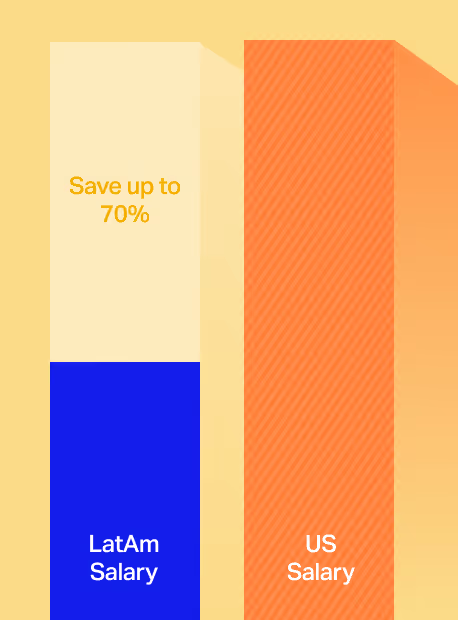
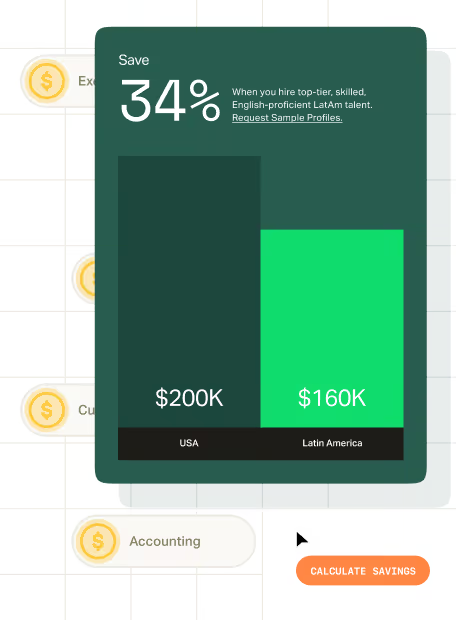
Opting for individual contractors or freelancers often offers more flexibility and cost savings. According to our Salary Guide, hiring backend developers from Latin America can significantly cut costs compared to US-based hiring.
Here’s how the numbers compare:
- US-based backend developer: up to $165,100 annually
- LatAm-based backend developer: up to $78,000 annually
By hiring LatAm talent, companies can save up to 53% without sacrificing quality.
A regional comparison
Here are some additional average salary insights across different regions (salaries sourced from Salaryexpert.com):
- India: $22,183 annually
- Philippines: $14,267 annually
- Ukraine: $17,753 annually
- Indonesia: $25,015 annually
- Poland: $44,323 annually
Developer salaries directly impact the prices charged by development companies, as labor costs form the foundation of project pricing. So whether you choose to hire developers directly or work with a development agency, these figures should help you choose a region to focus on.
Ultimately, the right option depends on your project’s size, budget, and preferred level of involvement.
For a further look at the cost of hiring developers, including costs in other regions, see our article “How Much Do Offshore Developers Cost? A Breakdown for US Companies.”
Final Thoughts
Here's what you need to know about offshore backend development: you have two main paths forward.
You can work with a development company for project-based work, which makes sense if you need a complete solution delivered and handed off. Or you can hire your own backend developers who become actual team members, which works better if you're building long-term and need people who understand your codebase, join your standups, and grow with your business.
Most companies we work with have already tried the project-based route. They know what they're building and they know how to manage engineers. What they need is access to senior backend talent they can actually afford and hire quickly.
That's where Latin America makes sense. You get engineers with strong technical skills who work in your time zone and cost 30–60% less than US hires. The time zone piece matters more than most people realize because real-time collaboration means fewer delays, faster problem-solving, and better team cohesion.
At Near, we help you hire backend developers who become part of your team. We handle the sourcing, vetting, and logistics so you can focus on building your product. Most placements happen in under three weeks, and you only pay once you've made a hire.
If you're ready to see what's available, schedule a call, and we'll show you backend developers who match your technical requirements and salary range.
Frequently Asked Questions
What's the typical timeline for hiring offshore backend developers?
Hiring timelines vary by approach and region. For example, by working with Hire With Near you can hire developers in 21 days on average.
Freelance platforms offer fast initial connections, but vetting and onboarding can extend the process. Development companies typically require 2–4 weeks for team assembly.
For fast results with quality assurance, consider agencies like Hire With Near that specialize in sourcing developers.
What are the main advantages of nearshore vs. offshore backend development?
Nearshore development in Latin America offers overlapping work hours with US time zones, enabling real-time collaboration during your business day. This means faster feedback cycles, easier project management, and better team integration compared to offshore regions with 10+ hour time differences.
Latin American developers also typically have strong English proficiency and cultural alignment with US business practices. While offshore regions like Southeast Asia or Eastern Europe may offer lower hourly rates, nearshore often provides better value when you factor in communication efficiency and reduced project delays.
What are the benefits of working with talent in Latin America?
Latin American developers work in time zones that overlap with US business hours, making real-time collaboration natural and efficient. This proximity means you can have morning standups with your team, provide feedback during their work day, and solve urgent issues without waiting overnight.
The region offers strong English proficiency, cultural alignment with US business practices, and high-quality technical education. Companies typically achieve 30–60% cost savings compared to US salaries while maintaining similar quality standards, making it an ideal balance of value and convenience.






.webp)
.webp)


%203.svg)
.avif)





%20(1).avif)

%20(1).png)