%203.svg)
Key Takeaways
- Appointment setters bridge the gap between marketing and sales by qualifying leads and scheduling meetings, but the best ones understand your business deeply enough to have meaningful conversations that generate real interest.
- Cost savings through international hiring can be substantial. While US appointment setters earn $33,000 to $92,000 annually, skilled Latin American professionals with fluent English only expect $12,000 to $24,000.
- The most successful appointment setters combine sales skills with systematic organization. They don’t just make calls but track metrics, follow up consistently, and adapt their approach based on what’s working.
When your best salespeople are stuck doing initial outreach instead of closing qualified prospects, your revenue potential shrinks. When leads don’t get timely follow-up, your marketing investment goes to waste.
This guide will show you how to hire an appointment setter who can bridge that gap effectively.
We’ll cover the specific skills that separate results-driven appointment setters from order-takers, where to find candidates who understand both sales and systematic process, and how to evaluate their ability to represent your brand professionally while consistently filling your calendar with qualified prospects.
What Does an Appointment Setter Do?
An appointment setter handles the initial outreach and qualification process that determines whether a lead is worth your sales team’s time.
They are the bridge between your marketing efforts and your sales team, turning leads into scheduled meetings with qualified prospects.
They research prospects, make contact through calls or emails, conduct preliminary discovery to assess fit, and schedule meetings for your closers.
But the best appointment setters go beyond just booking calendar slots. They understand your business well enough to have meaningful conversations that generate genuine interest. They know your ideal customer profile, can articulate your value proposition clearly, and qualify prospects properly so your sales team isn’t wasting time on unqualified meetings.
A skilled appointment setter typically handles cold calling, email outreach, lead qualification, calendar management, and basic CRM updates. They don’t close deals or handle complex negotiations. That’s your account executives’ job.
Instead, they focus on the systematic prospecting work that ensures your closers spend their time on the highest-value activities.
If you’re looking for someone to go beyond booking meetings—someone who can conduct deeper discovery, qualify leads based on multiple factors, and serve as a more strategic bridge between marketing and sales—what you really need is to hire an SDR (Sales Development Representative).
SDRs are often more experienced and are trained to assess whether a lead is truly sales-ready before passing it along to your account executive. They don’t just book meetings—they protect your pipeline quality.
If that sounds more like the role you’re hiring for, check out our full guide on how to hire SDRs.
How Much Does It Cost to Hire an Appointment Setter?
Understanding the financial investment in appointment setter talent helps you make informed decisions about where to source and how to structure compensation.
In the US, appointment setters typically earn between $33,000 and $92,000 annually, depending on experience level and location.
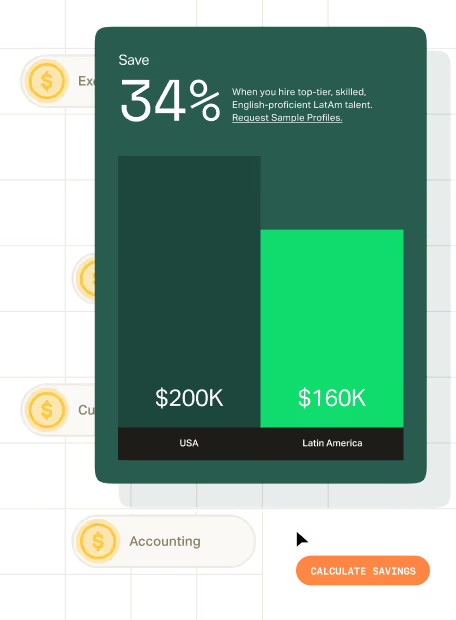
However, hiring internationally can provide significant cost advantages without compromising on quality. By working with skilled professionals in regions with lower costs of living, many companies achieve 30–70% cost savings while maintaining the same level of expertise and professionalism.
As an example of the potential savings, here’s how appointment setter salaries in Latin America compare to US rates, based on our experience placing candidates:
Again, these savings reflect different costs of living, not differences in capability or professionalism. Many Latin American appointment setters have extensive experience working with US companies, understand American business culture, and work during US business hours.
The cost advantage lets you invest in more comprehensive prospecting coverage or hire more experienced talent than your budget might otherwise allow. Some companies use the savings to hire multiple appointment setters to cover different territories or time zones.
Further reading: How to Compete with Bigger Budgets When You Can’t Afford US Sales Salaries
What Skills Should You Look For When Hiring an Appointment Setter?
Finding an effective appointment setter requires looking beyond basic sales experience to identify candidates who combine communication skills with systematic execution.
However, the specific skills and expectations you should have depend heavily on the seniority level you’re targeting. A junior appointment setter might excel at making high-volume calls and basic lead qualification but need guidance on complex objection handling and strategic conversation flow.
Meanwhile, a senior appointment setter should be able to manage multiple campaigns simultaneously, mentor junior team members, and adapt their approach based on campaign performance data.
Understanding these distinctions helps you evaluate candidates fairly and set realistic expectations for their performance from day one.
It also prevents you from expecting senior-level strategic thinking from a junior hire or paying senior rates for someone who only has basic calling skills.
The key is matching your budget and expectations with the right experience level for your specific needs.
How Appointment Setter Skills Progress Across Experience Levels
Hard skills (the must-haves)
These foundational skills apply across all experience levels, though the sophistication and independence in execution will vary.
Cold calling proficiency: They need to be comfortable making high-volume outbound calls, handling rejection professionally, and maintaining energy throughout the day. Look for candidates who can discuss their call metrics: average calls per day, connect rates, and conversion rates.
Lead qualification techniques: The best appointment setters know how to ask the right questions to determine if a prospect is a good fit. They should understand qualification frameworks like BANT (Budget, Authority, Need, Timeline) and be able to adapt their approach based on your specific qualifying criteria.
CRM and sales tool proficiency: They’ll need to navigate your CRM system, update lead statuses, log call notes, and track their activity. Look for experience with common platforms like:
- CRM Systems: Salesforce, HubSpot, Pipedrive, or Zoho CRM
- Auto-dialers: Five9, RingCentral, or Outreach
- Email automation: Mailchimp, Constant Contact, or built-in CRM email tools
- Calendar scheduling: Calendly, Acuity Scheduling, or HubSpot Meetings
- Lead intelligence tools: ZoomInfo, LinkedIn Sales Navigator, or Apollo
Even if they haven’t used your specific tools, experience with similar platforms shows they can adapt quickly to new systems.
Email and LinkedIn outreach: Modern appointment setting often involves multi-channel outreach. They should be able to craft personalized messages that get responses and manage follow-up sequences across different platforms.
Basic sales process understanding: While they’re not closing deals, they need to understand how sales conversations flow, what information sales teams need, and how to position your solution appropriately during initial conversations.
Soft skills (equally important)
The interpersonal and organizational abilities often determine whether an appointment setter succeeds or struggles in the role.
Resilience and persistence: Appointment setting involves significant rejection. Look for candidates who can maintain motivation despite low connect rates and who view “no” as information rather than defeat.
Professional communication: They’re often the first impression prospects have of your company. They need to sound confident, articulate, and professional while maintaining a conversational tone that builds rapport.
Systematic organization: Effective appointment setters follow structured processes for lead prioritization, follow-up timing, and activity tracking. They should be able to manage multiple prospects simultaneously without losing track of important details.
Active listening skills: The best appointment setters pick up on subtle cues that help them qualify prospects more effectively and position your solution appropriately.
Adaptability: They need to adjust their approach based on different prospect types, industries, and responses while maintaining consistency in their overall process.
Nice-to-have skills (the differentiators)
Industry-specific knowledge: Understanding your industry’s terminology, challenges, and buying processes helps them have more credible conversations with prospects.
Multiple language capabilities: If you’re targeting diverse markets, bilingual appointment setters can expand your reach significantly.
Social selling experience: Candidates who understand how to leverage LinkedIn and other social platforms for prospecting bring additional value.
Basic marketing understanding: Those who grasp how lead generation works can better align their efforts with your marketing campaigns.
Previous experience with your target market: If they’ve worked with similar companies or industries, they’ll understand your prospects’ pain points and language.
Where Can You Find and Hire Great Appointment Setters?
Finding great appointment setters involves two key decisions: where geographically you’ll look for talent, and how you’ll actually find and evaluate candidates in those locations.
Appointment setting is inherently remote-friendly work. Since the role centers on phone calls, emails, and CRM management rather than in-person meetings, there’s no compelling reason to limit yourself to local talent.
Building a remote sales team should always be on the table, especially when it opens access to skilled professionals at more competitive rates.
Deciding between local, national, or global talent
Local hiring offers the advantage of in-person collaboration and shared cultural context, but significantly limits your talent pool and typically comes with higher costs. It works well if you have specific local market knowledge requirements or prefer face-to-face management. For appointment setting, which is largely phone and email-based work, the local advantage is often minimal while the cost premium is substantial.
Remote US-based talent opens up the entire country, giving you access to experienced appointment setters who understand American business practices and communication styles. However, you’ll still pay premium rates in a competitive market where skilled appointment setters have multiple options.
International hiring opens access to skilled professionals who often have extensive experience working with US companies but at more cost-effective rates. Latin American professionals, in particular, bring a combination that’s hard to beat: extensive experience working with US companies, strong English communication skills, cultural alignment, and the ability to work during US business hours—all at rates that let you invest in more experienced talent or build a larger prospecting team.
Many US companies are discovering that they are able to fuel growth by nearshoring to Latin America because of the strategic advantages beyond just cost savings. According to our recruiters, clients are often surprised by “the level of experience and English proficiency Latin American talent has.”
To better understand the talent landscape across different regions, we’ve listed the 21 best countries to hire sales talent so you can explore the advantages of various international hiring markets.
Further reading: “Do LatAm Sales Reps Have Accents?” and Other Questions Sales Leaders Ask
Choosing the right sourcing channel
Once you’ve decided where to look geographically, you need to choose how to find candidates. Each sourcing method has different strengths and trade-offs, so the right approach depends on your specific needs: whether you’re looking for immediate availability, proven experience, or cost efficiency.
Industry-specific platforms like Sales Jobs often yield candidates with more relevant experience, while broader platforms like LinkedIn allow you to search for specific qualifications and see candidates’ full professional backgrounds.
For offshore hiring, working with a specialized recruitment partner often provides the most efficient path to qualified candidates, especially when navigating different market conditions and ensuring cultural fit.
If you’re considering exploring talent in Latin America specifically, we have a list of the top companies for hiring LatAm sales talent to help you evaluate different options for finding appointment setters in the region.
How to Hire the Best Appointment Setter: Best Practices
Hiring an effective appointment setter requires a structured approach that evaluates both their sales capabilities and their ability to execute systematically. Following proven best practices increases your chances of finding someone who can consistently deliver results.
Stage 1: Before and during sourcing
Define your ideal customer profile clearly: Before you start looking, nail down exactly who your appointment setter should be targeting. Are they calling C-level executives or department managers? Are they reaching out to specific industries or company sizes? The more specific you can be about your target market, the better your appointment setter can qualify prospects effectively.
Set realistic activity expectations: According to our recruiters, one common mistake is “not being clear on quotas, achievements, and the number of calls or activities per day.”
A skilled appointment setter might make 500+ calls per day, but actual conversations and scheduled meetings will be much lower. Be clear about your expectations for call volume, connect rates, and meeting-to-show ratios.
Create a detailed job description: Your job description should specify the sales process they’ll be following, the tools they’ll be using, and the specific outcomes you’re measuring. Include information about your target market, typical deal size, and what constitutes a qualified appointment. This helps attract candidates who understand the scope of the role.
Our guide to writing job descriptions for sales talent provides comprehensive guidance on crafting job descriptions that attract quality candidates while setting clear expectations.
Stage 2: Screening and evaluation
Test their communication skills with a role-play exercise: Our recruiters recommend “a cold calling simulation or a roleplay with a mock client can be very effective.” Have them call you or a team member as if you’re a prospect. Listen for how they handle objections, qualify needs, and maintain professionalism under pressure.
Look for measurable achievements: The best candidates have clear, measurable achievements on their CVs. Ask for specific metrics from their previous roles: How many calls did they make per day? What was their connect rate? How many meetings did they schedule per week?
Evaluate their understanding of your business: Test whether they can quickly grasp your value proposition and ideal customer profile. The best appointment setters don’t just read scripts—they understand the business deeply enough to have meaningful conversations.
Stage 3: Making the offer and closing the deal
Structure compensation competitively: You don’t need a full-blown OTE structure like you would for hiring a sales rep. But it’s smart to include a small performance incentive alongside a fixed base. Most appointment setters are paid a flat hourly or monthly rate. But adding a bonus for meetings booked or hitting daily activity benchmarks (like number of dials or connects) can help drive consistency and motivation.
Keep it simple: a flat base plus a clear, achievable incentive tied to outcomes that actually matter. For example:
- $10–$20 per qualified meeting booked
- Weekly bonuses for hitting call volume targets
This kind of structure gives them upside without the complexity of full commission plans — and helps you keep performance on track from day one.
Move quickly with strong candidates: Our recruiters note that “Some companies take too long to make decisions and lose top candidates.” Appointment setters who can demonstrate consistent results have options. If you find someone who fits your criteria, move through your process efficiently.
Clarify growth opportunities: Top appointment setters often view the role as a stepping stone to full sales positions. Be clear about potential career progression within your organization and what skills they can develop in the role.
{{hiring-remotely}}
Top Interview Questions for Hiring Appointment Setters
These questions help you assess both the candidate’s sales skills and their systematic approach to prospecting work.
“Walk me through your typical day as an appointment setter. How do you prioritize your activities?”
This question reveals their organizational skills and understanding of effective prospecting workflows. Strong candidates will describe structured approaches to lead prioritization, call scheduling, and follow-up management. Listen for systematic thinking rather than just “I make calls all day.”
“Tell me about a time when you had to handle a particularly difficult prospect. How did you approach the situation?”
You want to understand their problem-solving abilities and resilience. Look for answers that show they can remain professional under pressure, adapt their approach based on prospect feedback, and turn difficult conversations into opportunities.
“How do you handle rejection, and what’s your process for following up with unresponsive prospects?”
This question assesses their mental resilience and systematic approach to follow-up. Strong candidates will have specific strategies for managing rejection and structured processes for re-engaging prospects at appropriate intervals.
“Describe a time when you had to quickly learn about a new industry or product to set appointments effectively.”
This tests their adaptability and learning ability. The best appointment setters can quickly absorb new information and apply it in prospect conversations. Look for examples of how they researched, learned, and applied new knowledge.
“What questions do you typically ask to qualify whether a prospect is worth my sales team’s time?”
This question reveals their understanding of the qualification process and their ability to think strategically about prospect fit. Strong candidates will have specific qualifying questions and clear criteria for determining when to schedule a meeting.
Common Mistakes to Avoid When Hiring Appointment Setters
Even with a solid hiring process, certain mistakes can lead to poor hires or missed opportunities with strong candidates.
Focusing only on call volume instead of quality
Many companies get caught up in activity metrics—how many calls per day, how many emails sent—without focusing on the quality of those interactions. An appointment setter who makes 100 calls but can’t have meaningful conversations with prospects won’t deliver results.
Look for candidates who understand the difference between activity and productivity. The best appointment setters focus on connect rates, conversation quality, and meeting-to-show ratios, not just raw call volume.
Overlooking the importance of industry knowledge
While appointment setters don’t need to be technical experts, they do need to understand enough about your industry to have credible conversations. A candidate who’s only worked in consumer sales might struggle when calling B2B software executives.
However, our recruiters note that “sometimes clients overemphasize industry-specific experience when what really matters is adaptability and sales skill.”
The key is finding the right balance—someone who has the base knowledge to learn your industry quickly while bringing strong core sales skills.
Hiring based on resume alone
Like many sales roles, appointment setting success isn’t always predictable from a resume. Some of the best performers come from unexpected backgrounds, while candidates with impressive-looking experience might not execute well in practice.
Always include practical assessments in your hiring process.
Expecting immediate results
Even experienced appointment setters need time to learn your business, understand your prospects, and optimize their approach. Companies that expect immediate results often give up on good candidates too quickly.
Plan for a 4–6 week ramp-up period where you’re coaching actively and adjusting their approach based on what you’re seeing.
Even experienced appointment setters need time to understand your business, your ideal customer profile, and how to have conversations that actually convert. A structured onboarding process can make the difference between someone who ramps quickly and someone who struggles for months.
The goal isn't just to teach them what to say—it’s to help them understand why they’re saying it, and how to adjust when conversations go off-script.
The First 90 Days: A Simplified Framework
Why Working With a Recruiting Partner Makes a Difference
While many companies successfully hire appointment setters on their own, working with a specialized sales recruitment partner can significantly streamline the process and improve your odds of finding the right fit.
This is especially true if you’re exploring international hiring for the first time or need to fill the role quickly to support growing sales demands.
A recruitment partner experienced in sales hiring can help you move faster by pre-screening candidates for both sales skills and cultural fit.
They understand what separates effective appointment setters from those who just sound good in interviews, and they can surface candidates who might not be actively looking but would be strong fits for your specific needs.
When hiring internationally, a specialized partner handles the complexities of different markets, salary expectations, and cultural considerations. They know which countries have the strongest pools of English-speaking sales talent and can help you structure offers that attract top performers without overpaying for the local market.
The investment in working with a recruitment partner often pays for itself through faster time-to-hire, better candidate quality, and reduced risk of making a costly hiring mistake. You get access to pre-vetted talent pools and expert guidance on structuring roles for remote success.
Final Thoughts
The right appointment setter becomes a crucial part of your sales engine, consistently filling your calendar with qualified prospects while freeing your closers to focus on what they do best. But finding that person requires looking beyond basic sales experience to evaluate their systematic approach, communication skills, and ability to represent your brand professionally.
The investment in finding the right talent pays dividends in shortened sales cycles, higher-quality meetings, and improved conversion rates.
If working with a recruitment partner seems like the right approach, consider a specialized firm that can make the hiring process seamless, efficient, and stress-free.
At Near, we understand that appointment setters need to combine sales skills with systematic execution abilities. We match you with pre-vetted Latin American appointment setters who have experience working with US companies, operate during your business hours, and deliver consistent results at rates 30–70% lower than US-based talent.
Our candidates understand American business culture, have strong English communication skills, and bring the professional persistence needed to keep your sales pipeline full of qualified opportunities.
To see the results that are possible by hiring Latin American sales talent, read how AvantStay's VP of Sales hired 10 SDRs and grew ARR by 30%. Their new hires hit quota in just 2 months compared to the 6+ months it used to take with US-based talent.
{{banner}}
Frequently Asked Questions
What other sales roles should I consider hiring?
Beyond SDRs, building a high-performing sales team often requires different specialists working together. If your SDRs are generating qualified meetings faster than your team can handle them, you'll need account executives focused on closing deals while SDRs continue prospecting.
For companies needing more pipeline generation, outbound sales representatives can drive proactive prospecting efforts, while inbound sales representatives handle leads coming through your marketing channels. Business development representatives (BDRs) often complement SDR teams by focusing specifically on cold outreach and new market development.
As your team grows, you'll eventually need a sales manager to coach reps, optimize processes, and drive consistent performance across the entire team.
Your sales tech stack matters just as much as your team. For example, if you use Salesforce, a Salesforce administrator keeps your CRM running smoothly with proper data management and automation, while a Salesforce consultant can optimize your processes and implement custom solutions. For larger operations, a Salesforce manager oversees your entire CRM strategy and team.
The key is identifying where your bottlenecks are. If you're struggling to generate enough qualified meetings, focus on SDRs and BDRs. If you have plenty of opportunities but can't close them fast enough, prioritize account executives.
What's the difference between an appointment setter and a sales development representative (SDR)?
While the roles overlap, appointment setters typically focus specifically on scheduling meetings, while SDRs often handle more complex lead qualification and nurturing activities. Appointment setters are usually entry-level positions that can serve as stepping stones to SDR roles.
Should I hire an appointment setter in-house or outsource?
In-house hiring is usually the better option because it gives you complete control over training, culture, and processes. Your appointment setter becomes a true extension of your team, deeply understands your business, and can adapt their approach based on your specific needs and feedback.
Outsourcing sales roles can provide immediate access to trained professionals and may seem more cost-effective initially, but you often sacrifice control over quality, training consistency, and cultural alignment. It works best for short-term needs or when you lack the internal resources to properly hire and train.
We compare both approaches more fully in our article on the top sales outsourcing companies.
How long does it take to train a new appointment setter?
Most appointment setters need 4-6 weeks to become fully productive, though they can start making calls within their first week. The key is having structured training that covers your products, processes, and ideal customer profile, followed by ongoing coaching and feedback.
What tools do appointment setters need to be successful?
Essential tools include a CRM system (like Salesforce or HubSpot), auto-dialer software, email automation platforms, calendar scheduling tools, and reliable phone/internet connection. Many also benefit from lead intelligence tools like ZoomInfo or LinkedIn Sales Navigator.
How do I measure appointment setter performance?
Key metrics include calls made per day, connect rate (conversations per call), appointment-to-call ratio, show-up rate for scheduled appointments, and lead quality scores. Focus on both activity metrics and outcome metrics to get a complete picture of performance.
What's a realistic appointment-to-call ratio for new appointment setters?
This varies significantly by industry and target market, but generally expect 1–3 appointments scheduled per 100 calls made. Experienced appointment setters in ideal markets might achieve higher ratios, while new hires or difficult markets might see lower numbers initially.
How do I handle appointment setters who aren't meeting quotas?
First, analyze whether the issue is activity-based (not making enough calls) or skill-based (not converting calls to appointments). Provide additional training, adjust their target market, or modify their approach based on what you discover. Some appointment setters may need 2–3 months to find their rhythm.
Can appointment setters work remotely?
Yes, appointment setting is inherently remote-friendly since it's primarily phone and email-based work. The key is having proper technology setup, clear processes, and regular communication. Many companies successfully manage remote appointment setters across different time zones.







.webp)


%203.svg)
.avif)






%20(1).avif)

%20(1).png)