Midyear Hiring Report: How US Companies Hired in Latin America in the First Half of 2026


Every placement Hire With Near makes tells us something about where US hiring is heading. At the halfway point of 2026, we pulled our full placement data and compared the first six months of this year with the last six months of 2025.
The short version of the analysis: more US companies are hiring in Latin America.
{{h-cta-component}}
Hiring in Latin America Grew 31% in Six Months
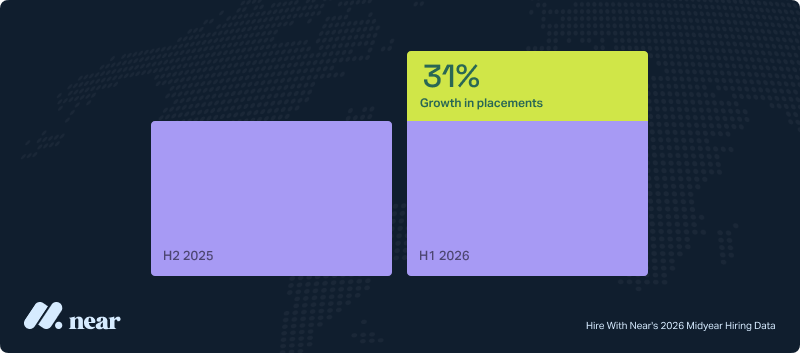
Placements in the first half of 2026 came in 31% higher than the previous six months. Against the first half of 2025, growth was 67%.
That pace wasn't a single spike. The first half of 2026 included our two busiest hiring months on record, and every month ran ahead of the same period a year earlier.
Remote hiring in Latin America moved from an experiment in 2024 and 2025 to a standard practice for a growing number of US companies in 2026.
Brazil Is Now the Top Country for Hires in Latin America
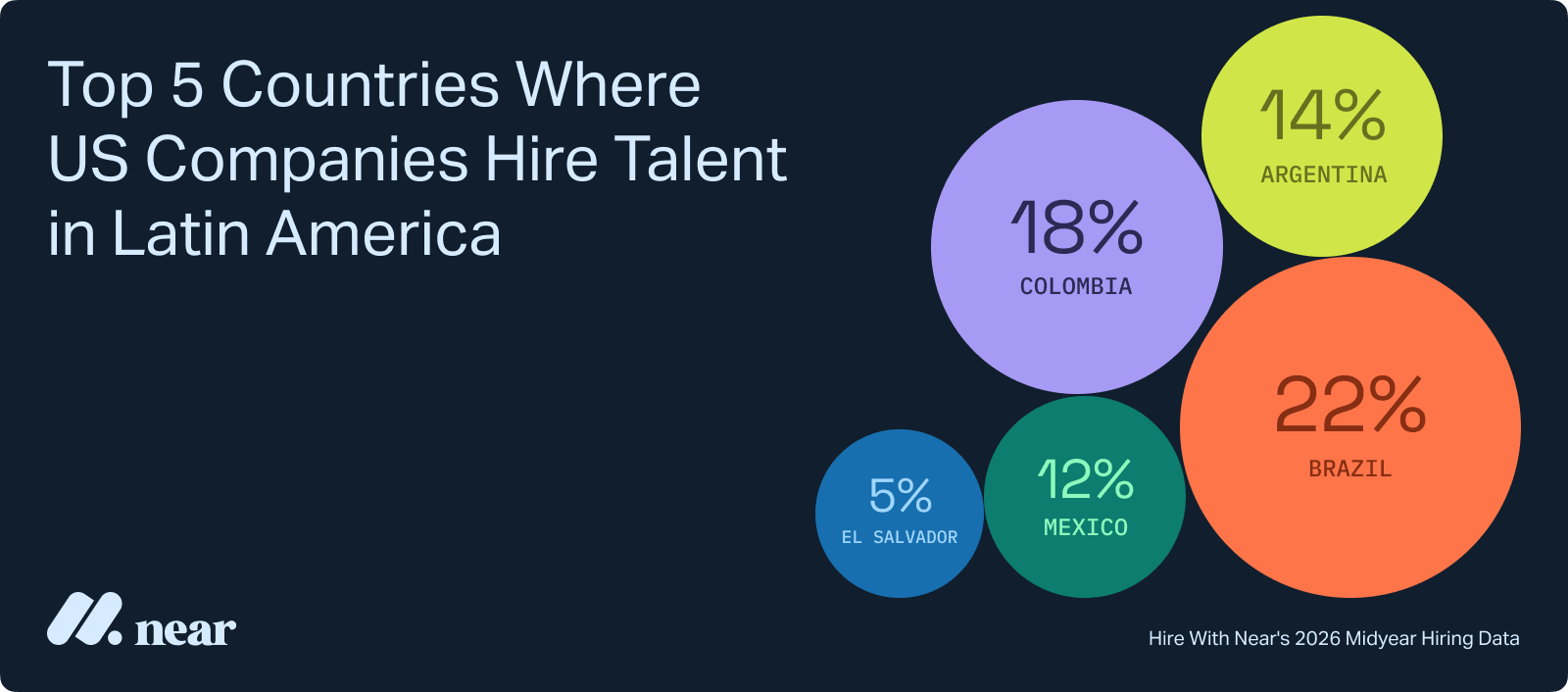
For years, the answer to “where do companies hire the most LatAm talent” moved slowly. Hiring in Argentina was the number one answer for a long stretch. Then, hiring in Colombia became the preference for hiring managers. But in the first half of 2026, Brazil passed them both.
More than one in five professionals placed in the first half of 2026 were based in Brazil, up from roughly one in six in the previous half. Remote talent in Brazil overtook Colombia for the top spot, Argentina slipped to third, both still growing in absolute terms.
The bigger pattern is that hiring is spreading out. Mexico grew more than 80% half over half, while hiring in El Salvador more than doubled.
The Dominican Republic broke into the top ten countries for the first time.
The three biggest countries now account for a slightly smaller share of all hires than they did six months ago, which means US companies are drawing on more of the region, not less.
The Top Roles US Companies Are Hiring in Latin America Shifted Toward Revenue
Hiring sales development representatives held the number one spot, and its lead widened. We placed more than 70% more SDRs than in the previous six months.
Around it, the top ten reshuffled noticeably:
A few roles entered the list: account executives and outbound engagement specialists, both revenue roles. Four of the ten most-placed roles are now sales roles.
Two years ago, it felt like the conversation about hiring in Latin America centered on support and back-office roles. Now, companies are hiring the people who bring money in, not just the people who keep things running.
Bookkeepers Made the Biggest Jump
The single biggest mover was bookkeeper, which climbed from 12th place to 5th. Accountants also moved up a spot to second overall.
Finance roles reward exactly what nearshore hiring offers: strong professional education, real overlap with US working hours, and salary savings of 30% to 70%, depending on the role and seniority.
When a growing company decides its books deserve a dedicated hire instead of a founder's Sunday afternoon, they’re increasingly hiring a bookkeeper in Latin America.
Companies Are Hiring More Managers in Latin America
One shift in the data points to something beyond cost savings: the share of placements at the manager level doubled, from about 4% of all hires to about 8%, and manager placements nearly tripled in absolute terms.
Companies aren't only adding individual contributors in Latin America. They're promoting the model itself: hiring people whose job is to run teams, own numbers, and manage other people. That's not what a company does with talent it considers an experiment.
Related reading: Hire a Sales Manager from Latin America for $3,500/Mo
Hires Are Starting Faster
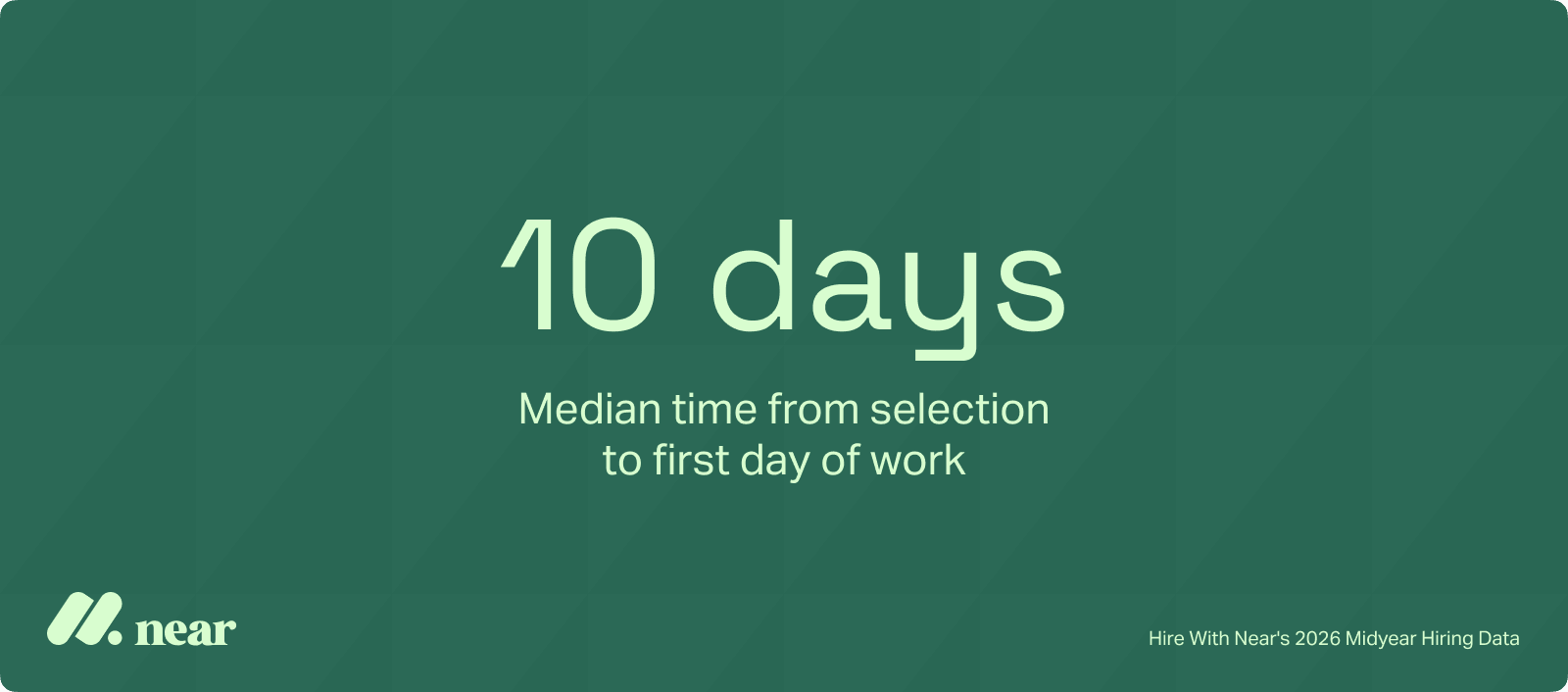
Speed improved on top of everything else. The median new hire we placed started working 10 days after being selected, down from 12 days in the previous half. Nearly 40% started within a single week, and about 75% were at work within two.
That 10-day figure is the tail end of an already fast process. In the first half of 2026, the typical search produced a first shortlist of candidates in four days, and the median role went from open search to signed hire in about three weeks.
For comparison, the average time-to-fill for a US corporate role is measured in months, not days.
Hiring in Latin America Isn’t Just for Large Companies
The companies driving hiring in Latin America aren’t Fortune 500 enterprises with dedicated global HR teams. More than 50% of all of our placements in the first half of 2026 went to companies with 50 or fewer employees. The fastest-growing segment was companies with 26 to 50 people, where placements grew more than 70%.
That tracks with what we see in job descriptions too: for small and midsize companies, hiring in Latin America has stopped being an experiment and has become the default way to add capacity without adding six-figure salaries.
What We’ll Be Watching in the Second Half of 2026
Two threads from this data are worth their own follow-up. The first is the rise of AI-titled roles, which grew from a rounding error to a visible slice of placements in just six months, and mostly outside engineering. We’ve broken that story out into its own article: The New AI Roles Are Mostly Not Engineers.
The second is whether Brazil holds the top spot for the full year, which we'll cover in our annual report.
If the first half of 2026 is any guide, the companies winning right now are the ones treating Latin America as a core part of their growth strategy, revenue roles and managers included.
Hire With Near works with US companies across every department and seniority level covered in this report. If you want to see what that could look like for your company, book a free consultation.
.svg)
See how US companies are scaling with remote talent in Latin America. Download the free report now.