


%203.svg)
Key Takeaways
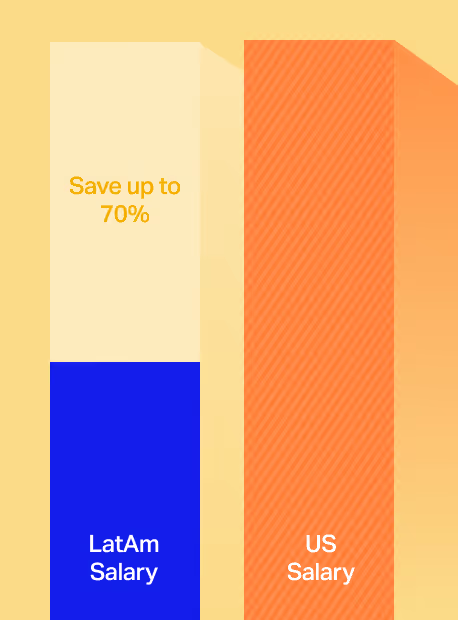
- A bilingual paralegal from Latin America costs $2,600–$3,400/month, compared to roughly $5,200/month for a US-based equivalent, with full overlap to US business hours and native Spanish fluency for serving Spanish-speaking clients.
- Latin American paralegals with personal injury experience bring case management, demand letter drafting, and insurance company coordination to US law firm workflows, without a time zone gap for Central or Eastern time practices.
- Hiring bilingual paralegals from Latin America through a specialized recruiter shortens the search considerably. Hire With Near handles screening, language assessments, and onboarding logistics, with no retainer and no fee until you hire.
A personal injury law firm in Texas serves a largely Spanish-speaking client base. Their paralegals need to draft correspondence in polished English, hold professional conversations with clients in Spanish, coordinate with insurance adjusters, and manage cases through the firm's case management platform. But finding candidates locally who could do all of that, at a cost the firm could justify, was consistently failing.
The firm had been paying $20–$25/hour for local paralegal support. The work product didn't match the cost. Staff struggled with basic tasks, and even after tightening the interview process, the bilingual gap remained.
A US-based bilingual paralegal with personal injury experience typically costs $62,000 or more per year. Placing six paralegals at that rate would have run the firm over $370,000 annually. Instead, the firm came to Hire With Near to find bilingual legal talent in Latin America.
Why the Firm Turned to Latin America for Bilingual Paralegal Hiring
The firm needed professional-level bilingualism: someone who could draft a demand letter in correct legal English, then call a Spanish-speaking client and hold a fluent conversation without switching registers or losing precision in either language.
That combination is genuinely hard to find in most US hiring markets, but it's not unusual in Latin America. Professionals based in Colombia and Mexico who work with US law firms are native Spanish speakers who developed professional English in structured business environments.
Time zone alignment sealed the choice. A paralegal based in Colombia or Mexico works the same core hours as a practice running on Central Time. Insurance companies are reachable during business hours, clients can be called during the day, and the attorney can ask for a document at 9 a.m. and get it before lunch.
The firm also had a performance culture that needed a specific kind of candidate. It runs on a bonus structure tied to case outcomes: paralegals earn when cases settle. Local candidates, in the firm's experience, preferred conventional salary arrangements and weren't drawn to outcome-tied compensation. The LatAm hires responded to the structure. The model aligned.
{{state-latam-hiring}}
What Bilingual Paralegal Talent From Latin America Looks Like
The firm came to Hire With Near with a clear brief: bilingual paralegals with personal injury experience, direct US law firm exposure, and the ability to own a caseload from day one.
We ran a targeted search against those criteria. The first hire joined the team 23 days after kickoff. Over 10 months, we placed six paralegals from Latin America, primarily from Colombia and Mexico.
Each of the hires brought three to five years of paralegal experience in US-facing personal injury work: managing case timelines, drafting demand letters, coordinating with insurance adjusters, handling client intake, and working inside US case management platforms.
These weren’t entry-level hires who needed to be walked through US legal process. They had worked in structured, US-facing legal environments and understood how personal injury cases move from intake through settlement. They could draft in English, communicate fluently with clients in Spanish, and carry a caseload without an extended ramp period.
Monthly salary: $3,400 (the majority of the team; the first hire was placed at $2,600/month)
$134,000 in Annual Savings and a Bilingual Team That Works the Same Hours
The firm now has six bilingual paralegals handling case files, client correspondence, and intake for a Spanish-speaking client base, at a fraction of what six US-based paralegals would cost.
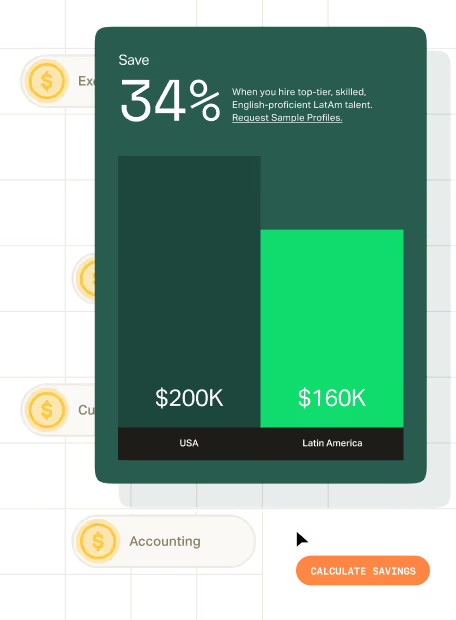
At $3,400/month per paralegal for most of the team, versus roughly $5,200/month for a US-based equivalent, the annual savings across the six hires total $134,000. The bilingual gap that had been hurting the firm's client relationships closed when the first hire started.
The performance bonus structure carried over: paralegals who earn when cases settle are invested in moving cases forward.
Further reading: How to Write a Legal Assistant Job Description That Attracts Top Talent (+ Template)
Why Latin America Works for Legal Firms With Spanish-Speaking Client Bases
Law firms serving US Hispanic populations need more than bilingual staff. They need professionals who can draft in legal English and communicate with clients in native-level Spanish, within the same role, on the same caseload. Working with legal recruiters who understand the bilingual and legal-experience requirements shortens the search considerably.
Bilingual legal talent is concentrated in Latin America
Professionals based in Colombia and Mexico who serve US law firms are native Spanish speakers with professional-level English developed through years of US-facing work. That’s a different profile from someone who learned English as a second language in an academic setting.
For firms whose clients are Spanish speakers, the quality of the Spanish matters as much as the quality of the English.
US legal procedures aren’t unfamiliar territory
Latin American paralegals who have worked with US personal injury firms understand how cases are structured, how insurance adjusters communicate, what goes into a demand letter, and what case management platforms require. They don’t need to be taught US legal basics from the beginning.
Time zone overlap is genuine
Colombia and Mexico overlap with Central and Eastern time without schedule adjustments. A paralegal in Bogotá or Mexico City is working when the insurance company is open and when the client is available.
Spanish-speaking clients get responses from someone fluent in their language, during their working hours, without calls being routed through an attorney or managed up the chain. Real-time communication is the default.
Performance structures translate well
Firms that run on incentive-based compensation often find that local candidates aren’t drawn to bonus-heavy arrangements. LatAm professionals who have worked in results-oriented, US-facing environments tend to understand and respond to that model.
The firm's hiring experience is consistent with what we see across legal placements: the cultural fit on compensation structure tends to be stronger than with local hires.
Salary Benchmarks: Legal Roles in Latin America
Here's what some legal roles typically cost in Latin America compared to US equivalents, based on compensation benchmarks across the region:
Actual compensation for paralegals, legal analysts, and legal assistants depends on experience, scope, and country. We will give you a specific range at the start of a search.
For salary ranges across other legal roles, see the Hire With Near LatAm vs. US Salary Guide.
How to Hire Bilingual Paralegals Through Hire With Near
To hire a paralegal through Hire With Near, the process is simple and moves quickly. Most clients hire a candidate within 21 days.
We start with a kickoff call to understand the firm's practice area, client base, and what the paralegal role involves: tasks, tools, level of English and Spanish required, and whether personal injury experience is mandatory or preferred.
Then, we draft or refine the job description, set realistic compensation expectations for the Latin American market, and begin sourcing. The candidates you see have already cleared our screening process: English and Spanish language assessments, experience verification, and checks for relevant tool and platform proficiency.
You interview two or three finalists, make the call, and we handle the offer and onboarding logistics. You can pay your paralegal directly or run payroll through us.
There’s no retainer and no fee until you hire.





.webp)
.webp)



%203.svg)
.avif)





%20(1).avif)

%20(1).png)