Key Takeaways
- The 10 offshore web development companies worth shortlisting in 2026 are Netguru, xfive, Hire With Near, Innowise, Cheesecake Labs, Diceus, Onix, MindInventory, Saigon Technology, and Riseup Labs. Their delivery teams sit across Eastern Europe, Latin America, and Asia.
- The best offshore company for you is the one that will name the specific engineers on your build and let you see how it vetted them, not the one with the biggest portfolio. Ask for that, along with pricing you can audit line by line, before you sign.
- Contracting an agency isn't your only option. You can build your own team instead, hiring dedicated developers directly through a recruitment partner, adding capacity through staff augmentation, or bringing on freelancers for short, defined work, and keep the institutional knowledge those developers build instead of paying for it every time you sign a new contract.
The best offshore web development companies are the ones that put senior engineers on your build, price the work in a way you can compare, and stay honest about what they can’t do.
If you’re considering offshoring your web development work, here’s where you should start. I selected 10 firms worth shortlisting so you can make the best call. I explain where each one’s engineers really sit, who each one fits, and the key differentiators for each company.
Full disclosure: Hire With Near is on this list. I included us because of our nearshore staffing and recruiting services, which help US companies hire highly qualified software engineers based in Latin America. I’m not a neutral party here, but I’ve held every company on this list, including ours, to the same standard.
What Is an Offshore Web Development Company?
An offshore web development company is an agency that designs, builds, and maintains websites and web applications from a country far from your own, usually one where salaries are lower. You describe what you need, the company staffs the project with its own developers, designers, and QA testers, and hands back a finished build under one contract.
These companies typically run full-cycle engagements: discovery and planning, UX and UI design, front-end and back-end development, QA testing, and deployment, all handled by one team under one roof. Many also offer ongoing maintenance and support once the site or application launches, so the same company that built it can keep it running, patch security issues, and add new features as your needs evolve.
Pricing is usually structured around the project itself rather than an hourly headcount: a fixed quote for a defined scope, or a time-and-materials arrangement for work that’s likely to change as it goes.
Either way, the company handles staffing, project management, and quality assurance internally, so you’re working with a single point of contact rather than coordinating a team of individual contractors yourself.
Why Should You Use an Offshore Web Development Company?
Use an offshore web development company when you need a full build team faster than you could hire one, and you don’t want to carry those salaries once the site ships.
A full team, already assembled
A web build needs a designer, a front-end developer, a back-end developer, and a QA engineer. Most companies don’t have four specialists sitting idle, and hiring all four locally for one project rarely pencils out. An offshore agency already has them assembled and has run the sequence before, which is the strongest argument for the model: you’re buying a process that exists, not building one.
Speed to start
Because the team already exists, work can begin in days rather than the two to four months a US hiring cycle typically takes. There’s no job posting, no resume screen, no weeks of interviews before someone starts writing code. You’re plugging into a team that’s already worked together, already has its own process for handoffs and code review, and doesn’t need to build that muscle from scratch.
For a launch date that’s already set, that head start is often worth more than any discount on the rate.
No permanent headcount
Offshoring lets you staff a build without a permanent headcount commitment. That matters most for product companies with a burst of front-end work ahead of a launch and a much thinner roadmap after it. In these cases, hiring two full-time engineers for a three-month push is the wrong shape of commitment.
Cost, with an honest caveat
Cost is what makes most companies start looking, and the demand is real. Deloitte’s 2024 Global Outsourcing Survey of more than 500 executives found that 80% plan to maintain or increase their investment in third-party providers. The same survey found that 70% have pulled some scope back in-house over the past five years.
That means the model works when the work is well matched to it, and it stalls when it isn’t.
The overlap trade-off
The trade-off is overlap, and it’s worth pricing in before you sign. Hire With Near’s analysis of 2,000+ conversations with US companies exploring Latin American hiring found that 30% were already working offshore.
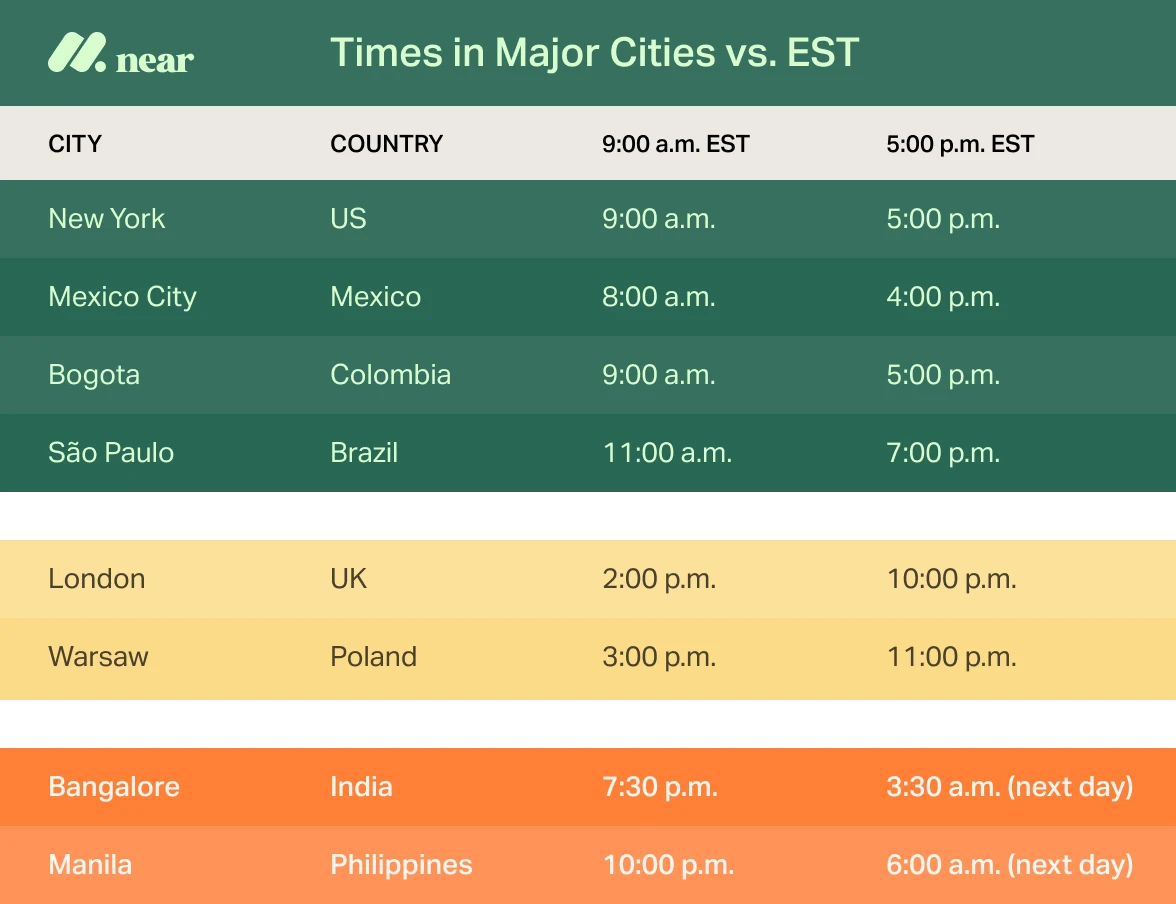
They were switching for one reason: the time zone gap had made real-time collaboration impractical. That doesn’t make offshore the wrong call. It makes the location of the delivery team a commercial term, not a detail.
You can see exactly how much of your workday overlaps with a few selected cities around the world in the table below:
What Are the 10 Best Offshore Web Development Companies to Consider?
The best offshore web development companies to consider are Netguru, xfive, Hire With Near, Innowise, Cheesecake Labs, Diceus, Onix, MindInventory, Saigon Technology, and Riseup Labs.
They range from a 3,500-person full-cycle engineering firm in Poland to a 50-person product team in Brazil, with specialists in front-end craft, insurance platforms, and low-cost app builds in between.
Before going into the specifics of each company, I need to explain how I selected them in the first place. I only included those with a rating of 4.0 or above and at least 40 client reviews on an established review platform: G2, Clutch, Trustpilot, GoodFirms, or ClearlyRated.
I chose that bar deliberately: offshore web development is a niche of small and mid-sized dev shops, and a stricter cutoff would’ve removed credible firms that simply don’t collect 50 reviews on one platform.
From the companies that qualified, I compared where their delivery teams are based, what they build, their published pricing signals, and the industries they work in. I used their own websites and their review profiles as sources.
The companies below are in no particular order, and no ranking is implied. There is no single best option for everyone; the right fit depends on what you’re building, your budget, your timeline, and how you like to work.
All ten of these companies can build you a working website or web application. You get:
- Experienced developers at a lower cost than a comparable US agency
- End-to-end delivery, from design through QA and launch
- Established processes for working with clients in another country
Here’s how the ten compare at a glance:
Here’s what sets each apart.
1. Netguru

Website: netguru.com
Headquarters: Poznań, Poland.
Rating: 4.8/5 on Clutch (70+ reviews) as of September 2026.
Services: Web and product development, product design, digital commerce, cloud engineering, AI.
Where the team sits: Poland, with client-facing staff in the US, UK, DACH, and MENA regions.
Netguru earned a spot on this top offshore web development companies list for the caliber of consumer product it has shipped. In 17 years, the firm has delivered more than 2,500 projects with a team of roughly 400 people, and its client roster includes IKEA, Volkswagen, OLX, Careem, and Vinted.
That’s unusual for a firm this size, and it signals a shop that can handle traffic, scale, and design scrutiny at the same time.
Key features:
- Design and engineering in one team: Product design sits alongside development rather than being subcontracted, which suits builds where the interface is the product.
- Marketplace and commerce depth: Case work includes marketplace scaling and omnichannel commerce platforms, the hardest category of web build to get right.
- Notable clients: IKEA, Volkswagen, OLX, Żabka, Careem, and Vinted.
Best for: Consumer-facing web platforms and marketplaces where design quality and scale both matter, with a budget above $50,000.
Limitations: Netguru’s published minimum project size is $50,000, which rules out smaller marketing-site builds. The team works Central European hours, so a US team only gets live overlap during the first couple hours of its own workday.
Pricing: $50 to $99 per hour, $50,000+ minimum project size (Clutch).
2. xfive
[IMAGE PLACEHOLDER: Xfive logo or homepage screenshot]
Website: xfive.co
Headquarters: Kraków, Poland.
Rating: 4.9/5 on Clutch (60+ reviews) as of September 2026.
Services: Front-end development, WordPress, UX/UI design, web applications, AI adoption.
Where the team sits: Poland, with Australian roots and an office in Hawthorn, Australia.
What stands out about xfive is longevity in one discipline. The firm started in 2005 as XHTMLized, a collective built around turning designs into clean front-end code. It has stayed close to that craft for 20 years, adding design, back-end, and AI capability around it.
It has worked with more than 3,000 companies across the US and Europe, and its front-end work has appeared on eBay, Fox, Rogers, and other websites.
Key features:
- Design-to-code specialism: The core skill is translating a design file into a working, standards-compliant interface, which is exactly where most web builds go wrong.
- CMS and WordPress depth: Long-running WordPress work makes it a fit for content-heavy marketing sites, not just applications.
- White-label capacity: Agencies use xfive as a build partner behind their own brand, an option worth knowing if you’re an agency rather than an end client.
Best for: Marketing sites, front-end rebuilds, and design-heavy projects where interface quality is the deciding factor.
Limitations: The firm is strongest in front-end and CMS work rather than heavy back-end, data, or machine learning engineering. Poland-based hours limit real-time overlap with US teams, particularly on the West Coast.
Pricing: $50 to $99 per hour, $25,000+ minimum project size (Clutch).
3. Hire With Near

Website: hirewithnear.com
Headquarters: United States, with recruiters based across Latin America.
Rating: 4.9/5 on G2 (155+ reviews) as of September 2026.
Services: Full-service nearshore staffing and recruiting, RPO, staff augmentation, executive search.
Where the team sits: Latin America.
Hire With Near is a full-service staffing and recruiting agency that helps US companies hire top-performing remote talent in Latin America across all departments and industries, including web development and software engineering.
We handle sourcing, vetting, candidate presentation, payroll, and compliance, so the hiring side stays simple while you keep full control of the build.
We’re on this list as an alternative to the agency model. When you contract a development shop, you’re buying a share of several people’s attention, and the specific engineers on your project can change between sprints. We help you hire software engineering talent in Latin America: your own web developers who work only for you, in roles you define. They’re online during your business hours, wherever your team sits in the US.
More than 950 companies have hired through us, and IT and tech recruiting in Latin America makes up a large share of that work.
Key features:
- Elite talent for web development roles: We place front-end, back-end, full-stack, QA, and web design professionals every week, with specialist tech recruiters screening beyond keywords for real-world impact. Our recruiters look for engineers who can explain a build decision to someone who isn’t a developer.
- Quality-first approach: Our 97% placement rate and 9.1+ client satisfaction come from obsessing over fit: not just skills, but the drive, readiness, and cultural match to contribute from day one. We look for engineers who raise the bar for everyone around them.
- One partner, one process: Scale across functions, not just engineering, with one dedicated team and a repeatable hiring cadence. First candidates in 3 to 5 days with video introductions, most hires in under three weeks. We remember what worked last time, and we adapt based on your feedback so hiring gets easier and more effective over time.
- Long-term retention: 80% of our hires stay 2+ years because they’re building institutional knowledge and personally investing in your success, not hopping between contract gigs.
Best for: Companies that want a permanent, dedicated web team working in their own business hours rather than a contracted project team.
Limitations: We don’t build websites. We find and hire the people who will build yours. If you want a finished product delivered under a single contract, one of the agencies on this list is the better call. We also hire exclusively in Latin America, so if your project needs engineers in a specific European or Asian market, we’re not the right fit.
Pricing: No upfront cost. You pay only once you make a hire, and you set the salary.
Client perspective: “Hire With Near works today as a valued extension of our internal team, which speaks to their strong partnership approach.” — Akshay Gokarnakar, ParkMobile’s TA Lead
Akshay walks through how the partnership worked in the video below:
4. Innowise

Website: innowise.com
Headquarters: Warsaw, Poland.
Rating: 4.9/5 on Clutch (70+ reviews) as of September 2026.
Services: Full-cycle software development, web and mobile applications, cloud, AI and machine learning, IT staff augmentation.
Where the team sits: Poland and 15+ other countries, including offices in New York and Florida.
Innowise is here because of bench depth. With more than 3,500 IT professionals and over 1,600 completed projects, it’s the largest firm on this list. It can staff a build that needs front-end, back-end, DevOps, QA, data, and design running in parallel.
Its client work spans finance, healthcare, and manufacturing, including the Commercial Bank of Qatar and Topcon Agriculture.
Key features:
- Parallel workstreams: A bench that size can run several specialist teams on one program without subcontracting, which matters on multi-year platform builds.
- Broad technology coverage: React, Angular, and Vue on the front end; Java, .NET, Python, and PHP on the back end; plus blockchain, IoT, and AR/VR practices.
- Staff augmentation option: Innowise will also place individual engineers into your existing team rather than taking the whole project, useful if you have in-house leadership already.
Best for: Enterprise and scale-up builds with multiple workstreams and a long roadmap.
Limitations: A firm of this size comes with account-management layers, and a smaller project can end up further from the senior people who won the work. Ask which named engineers are assigned to you before signing.
Pricing: $50 to $99 per hour, $10,000+ minimum project size (Clutch).
5. Cheesecake Labs
Website: cheesecakelabs.com
Headquarters: San Francisco, California, with its engineering team in Florianópolis, Brazil.
Rating: 4.9/5 on Clutch (60+ reviews) as of September 2026.
Services: Product engineering, web and mobile application development, AI implementation, data and analytics.
Where the team sits: Brazil.
Cheesecake Labs is a US-registered company and sells from San Francisco, but the build happens in southern Brazil, which puts the team inside the US workday rather than a night behind it.
In 13 years, it has shipped more than 300 products, and it works as an embedded engineering team rather than an arm’s-length vendor.
Key features:
- Embedded team model: Engineers join your rituals, your repo, and your planning rather than delivering against a fixed statement of work.
- Nearshore working hours: A Brazil-based team shares most of the working day with US teams, so a question asked in your morning gets answered the same morning rather than overnight.
- Modern data and AI stack: Partner relationships with AWS, Google Cloud, Databricks, Snowflake, and Anthropic back up the AI and data engineering work.
Best for: US product teams that want an engineering partner reachable in real time and are building something more complex than a marketing site.
Limitations: The published minimum project size is $50,000. It’s also a product engineering firm rather than a web design studio, so a straightforward brochure site isn’t the best use of it.
Pricing: $50 to $99 per hour, $50,000+ minimum project size (Clutch).
6. Diceus
Website: diceus.com
Headquarters: Wilmington, Delaware, United States.
Rating: 4.9/5 on Clutch (45+ reviews) as of September 2026.
Services: Custom software and web development, system integration, insurance and banking platforms.
Where the team sits: Delivery centers in Poland and Lithuania, with offices in Denmark, Austria, the UAE, and Ukraine.
The reason Diceus belongs here is regulatory depth. Founded in 2011 and with around 250 engineers, the firm has built its practice around insurance, banking, and fintech, where a web platform has to survive an audit as well as launch.
Its client list includes UNIQA Insurance Group, Vienna Insurance Group, Fairfax, and WTW, which is a meaningful signal for anyone whose site handles regulated data.
Key features:
- Compliance-oriented delivery: Certified QA and security-focused development processes built for industries where data protection rules aren’t optional.
- System integration: Strong track record connecting new front ends to legacy policy, claims, and core banking systems, a common failure point in enterprise web projects.
- US contracting entity: A Delaware-registered company gives US buyers a domestic contracting party even though the engineers are in Europe.
Best for: Insurance, banking, healthcare, and other regulated businesses where a web build touches sensitive data.
Limitations: The firm’s center of gravity is insurance and financial services, so a consumer e-commerce or content-marketing build is outside its sweet spot. Delivery hours run on Central and Eastern European time.
Pricing: $25 to $49 per hour, $10,000+ minimum project size (Clutch).
7. Onix
Website: onix-systems.com
Headquarters: Kropyvnytskyi, Ukraine.
Rating: 4.8/5 on Clutch (55+ reviews) as of September 2026.
Services: Web and mobile application development, AI, VR and AR, UX audits, project rescue.
Where the team sits: Ukraine, with offices in Poland and Slovakia.
Onix is on this list for range at a mid-market price. Founded in 2000 and now with over 370 people, it builds complex web applications across travel, healthcare, fintech, and education technology.
It also publishes an unusual service for this category: project rescue, where it takes over a build another vendor left unfinished.
Key features:
- Project rescue practice: A dedicated offering for inheriting and stabilizing an existing codebase, which is worth knowing if your current build has stalled.
- UX audit service: Independent audits of an existing site or app, available without committing to a full rebuild.
- Emerging tech capability: VR, AR, and 3D work sits alongside conventional web development, useful for product sites that need something more than pages.
Best for: Complex web applications on a mid-market budget, and teams that need to recover a project already in trouble.
Limitations: The firm doesn’t publish named enterprise clients, which makes independent verification of its largest work harder. Ukraine and Poland hours mean limited afternoon overlap with US teams.
Pricing: $25 to $49 per hour, $10,000+ minimum project size (Clutch).
8. MindInventory

Website: mindinventory.com
Headquarters: Ahmedabad, India, with offices in Ohio, England, and the Netherlands.
Rating: 4.7/5 on Clutch (55+ reviews) as of September 2026.
Services: Web and mobile application development, AI and machine learning, data engineering, cloud.
Where the team sits: India.
MindInventory qualifies on scale and price together. Established in 2011, it has served more than 1,800 clients, naming Maersk, Panasonic, and Booking.com among them. Its published rate band sits well below the European firms on this list. For a build that spans a website and companion mobile apps, that combination is hard to find.
Key features:
- Web and mobile under one roof: Teams cover responsive web, iOS, and Android, so a single vendor can ship the whole surface area.
- AI and data engineering practice: Machine learning and data pipeline work is a first-class service rather than an add-on.
- US and European front office: Offices in Ohio, England, and the Netherlands give clients local account contacts.
Best for: Budget-conscious builds that need both a web application and mobile apps, where cost per hour is a real constraint.
Limitations: The engineering team is in India, so overlap with a US working day is minimal in any US time zone. Expect asynchronous updates and a next-day rhythm on questions unless you negotiate shifted hours up front.
Pricing: $25 to $49 per hour, $10,000+ minimum project size (Clutch).
9. Saigon Technology

Website: saigontechnology.com
Headquarters: Ho Chi Minh City, Vietnam.
Rating: 4.9/5 on GoodFirms (50+ reviews) as of September 2026.
Services: Custom software and web application development, mobile apps, AI, dedicated development teams.
Where the team sits: Vietnam, with offices in the United States, Australia, Singapore, and Switzerland.
Saigon Technology stands out for the audit trail behind its process. The firm grew from three engineers in 2012 to more than 400 staff, and it holds ISO 27001 and ISO 9001 certification along with Microsoft Gold Partner status.
Its client work includes Standard Chartered Bank, RSM Singapore, Abbott, and Kaercher, which is a demanding set of buyers for a firm at this price point.
Key features:
- Certified security and quality processes: ISO 27001 and ISO 9001 give procurement teams something concrete to review, which matters if your build handles customer data.
- Dedicated team model: The firm will assign a named, ring-fenced team rather than rotating engineers across accounts.
- US contracting presence: An office in Reston, Virginia, gives US clients a domestic point of contact.
Best for: Long-running builds where cost efficiency matters and your security or procurement team needs documented certification.
Limitations: Vietnam-based delivery means almost no overlap with a US working day, so this model depends on tight written specs and disciplined handoffs.
Pricing: Not publicly listed.
10. Riseup Labs
Website: riseuplabs.com
Headquarters: Dhaka, Bangladesh.
Rating: 4.9/5 on Clutch (45+ reviews) as of September 2026.
Services: Web and application development, cloud, AI and automation, games and AR/VR, staff augmentation.
Where the team sits: Bangladesh, with offices in New York, London, and Dubai.
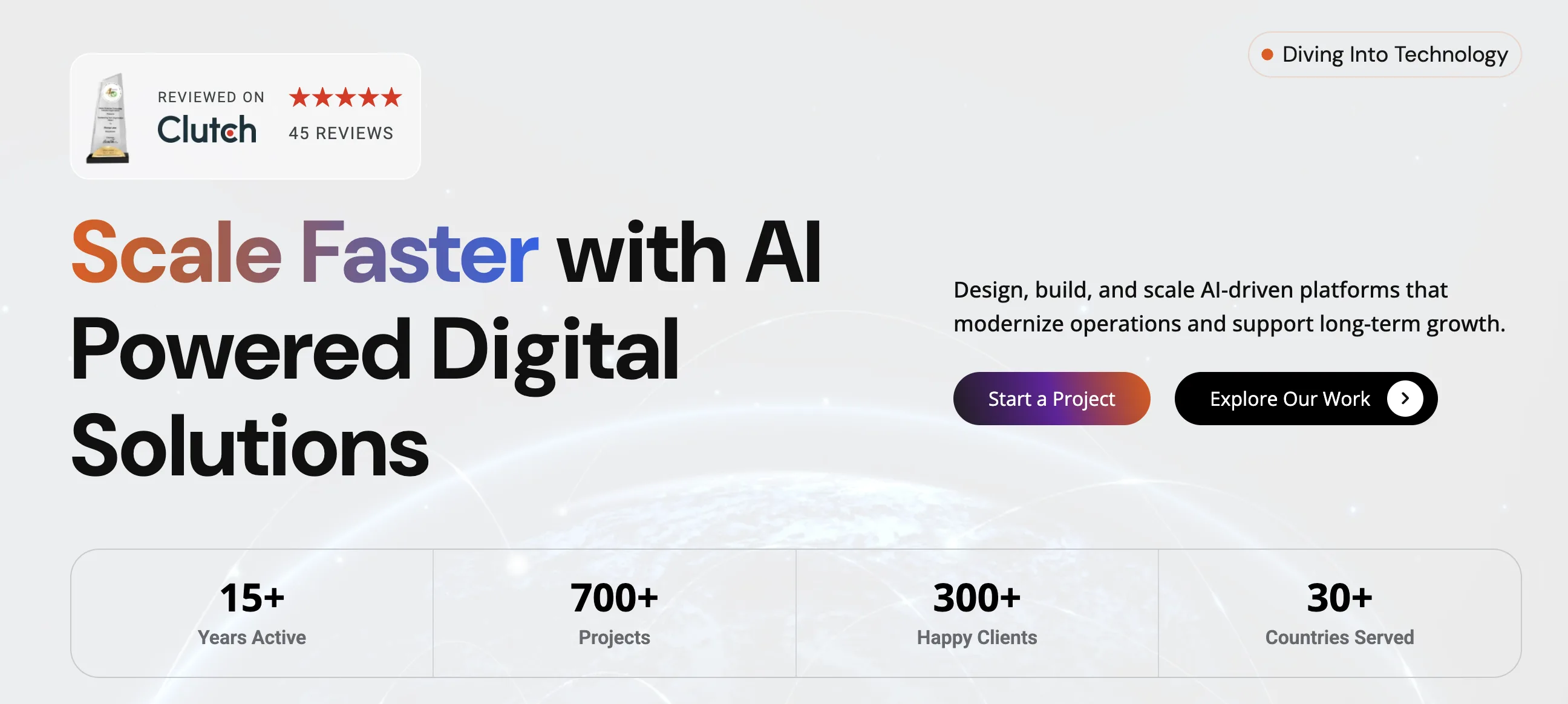
Riseup Labs makes the list because of how low its entry point is. Established in 2010, the firm has delivered over 700 projects for 300+ clients across 30+ countries, and its published minimum project size is $5,000, the lowest here by a wide margin.
Its work with UNICEF Bangladesh, BBC Media Action, and Robi Axiata shows it can meet institutional standards on a modest budget.
Key features:
- Low entry point: A $5,000 minimum makes it viable for a pilot, a single microsite, or a proof of concept before a larger commitment.
- Public sector and NGO track record: Work for UN agencies and national broadcasters means experience with accessibility, documentation, and procurement requirements.
- Full-cycle coverage: Frontend, backend, UX design, and QA testing sit under one roof rather than being subcontracted.
Best for: Small budgets, pilot builds, and organizations that need documented process without enterprise pricing.
Limitations: The service range is broad, spanning games, AR/VR, and BPO alongside web, so it is a generalist rather than a web specialist. Bangladesh-based delivery offers effectively no live overlap with a US workday.
Pricing: Under $25 per hour, $5,000+ minimum project size (Clutch).
How Much Does Offshore Web Development Cost?
Offshore web development is quoted three ways, and the pricing model moves the number more than the country does.
- A fixed price for a defined project.
- An hourly rate or monthly retainer for a share of a team.
- A salary if you hire the developers yourself.
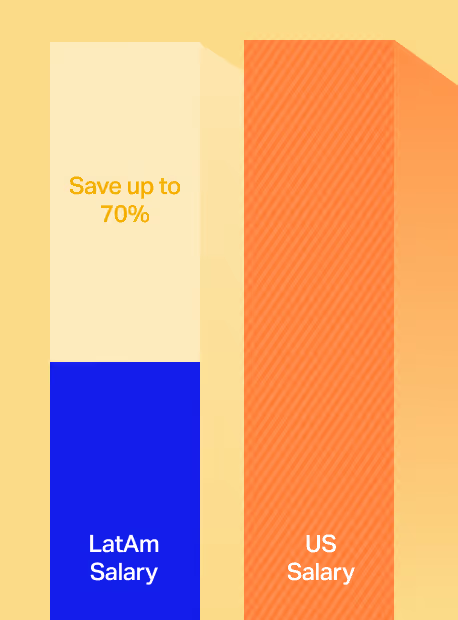
Eight of the ten companies covered in this article publish hourly bands on Clutch running from under $25 to $99. Hiring a mid-level full-stack developer in Latin America runs $48,000 to $72,000 a year, according to our salary data.
For context, the US Bureau of Labor Statistics puts median pay for US web developers at $95,380 a year, or $45.85 an hour, as of May 2024. An agency’s hourly rate covers overhead, project management, QA, and margin on top of the engineer’s time, while a salary covers one person’s week. Treating the two as equivalent is a common comparison error.
Here’s how the three models compare.
Fixed-price projects
A fixed price buys a defined scope, and it’s only as good as the spec behind it. What drives the quote is how tightly that scope is written: page and screen count, integrations, whether design is included, and who owns QA.
What drives the final invoice is everything the spec left out, because each change request is priced separately.
Get the out-of-scope definition in writing before you compare two quotes, since a cheaper number often just means a narrower scope.
Time and materials or a monthly retainer
Here you’re buying a share of a team’s time, billed hourly or monthly. Rates track seniority mix and where the engineers sit, which is why the bands on this list run from under $25 to $99 an hour.
The question that predicts your real cost is what percentage of each named person’s week is yours. A blended rate across four people at 25% allocation behaves nothing like one engineer working full time, even when the invoice matches.
Hiring dedicated developers directly
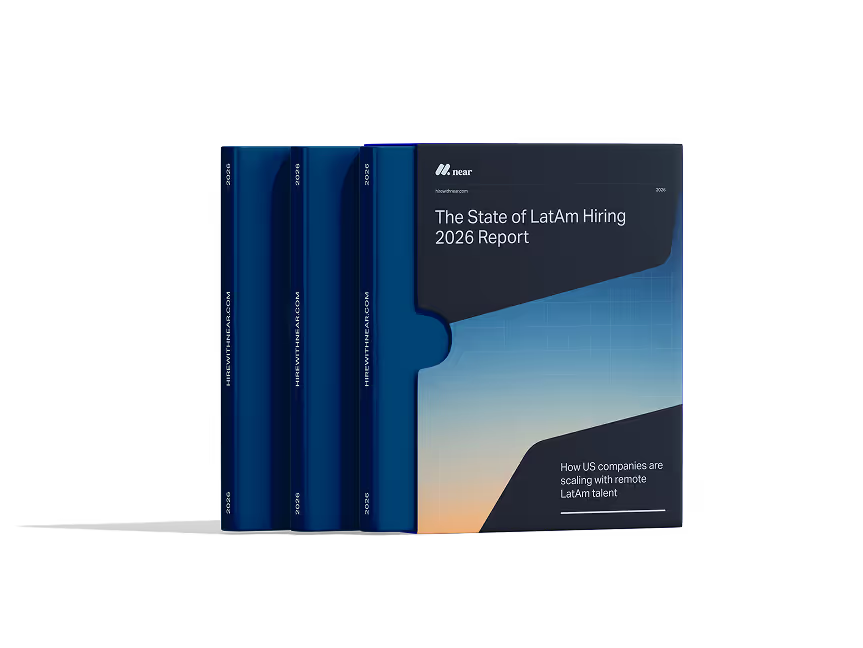
Hiring your own developers replaces a rate card with a salary. According to Hire With Near’s 2026 State of LatAm Hiring Report, companies hiring software engineers in Latin America save $23,000 to $85,000 per hire annually compared with a US equivalent.
Our IT salary benchmarks for Latin America share other salaries for other roles, and the full US vs. Latin America salary guide covers the other functions you might hire alongside them.
The costs that sit outside the quote
Four things routinely land outside the number you were quoted: scope changes, QA and bug fixing after launch, ongoing maintenance and hosting support, and the management hours a low-overlap time zone consumes.
The cheapest quote and the cheapest outcome are rarely the same thing. Ask every provider three questions before you compare prices. What is explicitly out of scope? Who pays for QA and bug fixes in the first 90 days after launch? And what does maintenance cost per month once the build ships?
{{latam-hiring-calculator}}
What Makes the Perfect Offshore Web Development Company?
The right offshore web development company for you is the one that will name the engineers on your build and show you how it filtered them. It should also share enough of your working hours to answer questions the same day, and price the work in a way you can audit, line by line.
Proven technical expertise on builds like yours
Look for experience with projects shaped like yours, then test it on a call rather than in the portfolio. Ask the company to bring a senior engineer or technical lead, not just sales, onto that call, and use the same question our recruiters rely on.
As Natasha Tarapow, Recruitment Consultant at Hire With Near, puts it:
We always ask candidates to tell us about a project they've worked on, not just that they use this language and that one, but what their role was and what they actually did. It's important that they can explain their work to someone who isn't a developer. If they can do that, that tells me a lot.
— Natasha Tarapow, Recruitment Consultant, Hire With Near
Then listen for how they explain it. If the answer is too vague for a non-developer to follow, that’s usually a sign of repeating a case study rather than understanding the work firsthand. For web builds specifically, ask how the team turns a design system or Figma file into a working interface, and how they agree on API contracts between front end and back end. Those two handoffs are where most web projects break.
One more thing worth asking directly: whether the same technical lead on this call will actually oversee your project, or whether they’re a pre-sales specialist you won’t talk to again once you sign.
A vetting process you can see into
Ask any company to show you its filter, not describe it. Request the CVs of the specific engineers who would be assigned to your project, not the agency’s best-case bench. Then, ask for a walkthrough of a comparable build from the person who wrote the code.
Three more questions make the filter visible. How do you test technical ability before someone joins a client project? Who covers QA, and is testing billed separately? Will these named people still be on my project in three months?
AI-written CVs are everywhere now, and a live walk-through is the fastest way past them.
Transparent pricing and communication
Get the pricing model, the scope boundary, and the change-request process in writing before you sign anything. Clear numbers upfront prevent most of the friction that shows up in month three.
Our breakdown of how much offshore developers cost covers what drives rates by model, so you can tell a genuinely lean quote from a narrow one.
Location and working-hour overlap
Ask where the delivery team sits, not where the company is registered. Diceus is registered in Delaware, and Cheesecake Labs sells from San Francisco, but their engineers sit in Poland, Lithuania, and Brazil. It’s the engineers’ hours that determine how your project runs.
Researchers at Harvard Business School, Georgetown University, and Rice University, publishing in Organization Science, analyzed 12,038 employees across 48 countries and found that the larger the time zone gap between two colleagues, the more of their work gets pushed outside normal business hours for one side of the pair.
The authors recommend organizing distributed teams on a north-south axis rather than east-west, naming New York and São Paulo as an example of two cities that are geographically far apart yet share nearly the whole business day.
For a US buyer, that’s the practical case for a delivery team in your own hemisphere when a build needs daily back-and-forth. It’s also why hiring Latin American developers and hiring a team on the other side of the world produce very different day-to-day experiences: our comparison of remote talent in Latin America vs. India walks through how much of your afternoon each option covers, wherever your team sits in the US.
One agency operator described what a low-overlap arrangement felt like in practice:
We hired an agency a couple of months back based out of India. I went the cheap route and paid for it. The time zone killed us, and obviously they have a bunch of other clients, so they just dragged out what could have been done in a week, and it took them quite some time.
Security and compliance
Confirm how your data will be handled before any code is written, especially if your site collects customer information. Make sure the company follows documented security protocols and complies with the data protection regulations you’re subject to, such as GDPR and CCPA. Certifications like ISO 27001 give your procurement team something concrete to review rather than a promise.
Scalable capacity and team flexibility
Ask what happens when the project gets bigger or smaller. Whether you’re starting with one microsite or planning a multi-year platform, the company should be able to add or release specialists without renegotiating the whole relationship.
Flexibility matters most on long engagements, where the shape of the work changes more than the scope document suggests.
Beyond Agencies: Exploring Alternatives to Offshore Web Development Companies
Contracting an agency is one of four ways to get a web build done. The other three are building a hybrid team around your in-house staff, hiring freelancers for short defined pieces of work, and bringing in people permanently through staff augmentation or a recruitment partner.
Every option does some mix of four jobs: finding the talent, employing them, managing the work, and carrying the risk when the code is wrong.
- An agency does all four, and prices accordingly.
- A freelance platform finds people and does nothing else. You employ, manage, and carry the risk.
- Staff augmentation finds and employs the person. You manage the work.
- A recruitment partner finds and vets the person. You employ and manage them, and they stay yours.
If you’re also weighing nearshore options, our roundup of LatAm outsourcing companies covers that side.
That structure decides how much of a person’s week you get. An agency allocates a percentage of several people, and that percentage can change between sprints. A freelancer splits attention across clients by design. Staff augmentation and direct hire give you one person’s full working week.
Ask for the allocation in writing, by name, before you sign.
Build a hybrid team
A hybrid model keeps your in-house staff in the lead and adds offshore developers around them. You hold architecture and product decisions internally while the extra capacity handles build work, which suits companies that have a technical lead but not a full team.
Our guide to hiring an offshore development team covers the models, and our free guide to hiring remotely in Latin America walks through the practicalities of running one.
Hire freelancers for short-term projects
Freelance platforms like Upwork and Toptal are the fastest route to a defined piece of work: a landing page, a plugin, a migration, anything with a clear finish line.
For ongoing product work, the structure works against you, because the person is running several clients at once and you carry the quality risk alone.
For full-time remote hires, specialist staffing produces fundamentally different results than a marketplace does.
Add capacity through staff augmentation
Staff augmentation places a pre-vetted engineer onto your team to work under your direction, while the firm stays the employer and handles payroll, benefits, and local compliance.
It sits between a freelance platform and a permanent hire: better vetted than a marketplace, more flexible than building the team yourself. It fits a defined project or a capacity gap you expect to close.
Hire your own developers through a recruitment partner
Specialist recruitment firms source and vet developers who work only for you. You interview and choose the people, manage them as part of your team, pay salaries rather than agency fees, and keep the institutional knowledge they build. The partner handles the complexity of hiring across borders, including payroll and compliance.
That’s the path Rankings.io took. The Inc. 5000 SEO agency for law firms needed to scale fast without tying up executive bandwidth on recruiting, having found other staffing agencies slow and cumbersome. Rather than contract the web work out, they hired 11 people through Hire With Near, including two web developers and a web director. The average time to hire was three weeks, and the savings came to $463,000 a year against US-based talent.
If you’re weighing this route, our guide to hiring offshore web developers covers the process. Our list of companies that help you hire developers in Latin America shows who else works this way.
Final Thoughts
Every company on this list can build you a website. What differs is where the engineers sit, whether they work only on your project, and whether the same people who built it stick around to maintain it. Those answers, not the portfolio, should decide your shortlist.
Get on calls with three or four of them. Ask who will write your code, how many other clients those people are on this quarter, and what handover you get when the build ships.
And don’t forget the fourth path worth weighing first. Instead of contracting a shop, you can hire your own developers directly, offshore, with the help of a recruitment partner, and have them work alongside your existing in-house staff rather than replacing them. You pay salaries rather than agency fees, and the knowledge the team builds stays with you.
To see what that looks like for your build, book a free consultation. We’ll talk through the roles you need, share salary benchmarks, and explain how the process works. No sales pitch, no commitment.
{{consultation}}
Frequently Asked Questions
Will offshore developers work my hours and join our stand-ups?
Offshore developers can join your stand-ups only when their working day overlaps yours, which is set by where the delivery team sits, not where the company is registered.
A team in Latin America works during your business hours whether your office runs on Pacific, Mountain, Central, or Eastern time, so live stand-ups and same-day answers are realistic. Teams in South and Southeast Asia have little overlap with any US workday, and Eastern European teams typically share your morning only.
More on that in the questions tech leaders ask about hiring developers in Latin America.
How do I check a developer’s technical English before I commit?
Run one test on your first call: ask the specific engineer who would work on your build to explain a past project in plain language. Conversational English and technical English are different skills, and the second one is what your project depends on.
Explaining why a release broke, writing documentation a teammate can follow, and holding your own in a live architecture review are screening points for every engineer you consider, wherever they sit.
If the explanation only works for another developer, that tells you how it will go with the non-technical people on both sides of the project.
What happens if it doesn’t work out?
Your protection is whatever the contract says, so agree on the exit terms before the work starts. An agency contract should specify termination notice, rework obligations, and what you receive if you stop mid-build. A freelance platform offers a dispute process, which is thin protection on a large build. A staffing partner typically offers a replacement guarantee covering the hire.
In all three, confirm two things in writing: who owns the repository and IP from day one, and what documentation and access you get at handover.
Which countries are best for offshore web development?
The companies on this list deliver from three regions, and the difference that matters most to a US buyer is workday overlap.
Eastern Europe (Poland, Ukraine, Lithuania) has deep enterprise and back-end engineering, with overlap limited to your morning. South and Southeast Asia (India, Vietnam, Bangladesh) has the lowest rates and the widest scale, with almost no live overlap.
Latin America shares your working day: GitHub’s Octoverse 2025 report puts Brazil at 6.89 million developers, now fourth in the world, with the region adding 3.2 million developers in a year.
Related reading: 22 Best Countries To Hire Remote Software Engineers in 2026
How long does it take to get an offshore developer started?
An agency can usually start within days, because the team already exists. Hiring your own developer takes longer at the front and pays it back afterward. At Hire With Near, Rankings.io averaged three weeks per hire across 11 roles.
Either way, separate speed to start from speed to useful output, since a new team needs time in your codebase before its velocity means anything.
How long does it take to build a website offshore?
Build time is set by scope and decision speed more than by the team’s location, so ask every provider for a milestone schedule rather than a single date.
A brochure site with a fixed page count is a matter of weeks. A custom web application with integrations and QA is a multi-month program.
The variable most buyers underestimate is the overlap penalty: when a blocker takes a day to resolve instead of an hour, every phase stretches. Ask what the schedule assumes about your own response times.
What web development roles can I hire in Latin America?
You can hire the full web stack in Latin America. For marketing sites and content-heavy builds, that usually means nearshore website developers, remote front-end developers, and web designers based in the region.
For web applications, the common set is back-end developers who work your hours, full-stack developers, and nearshore QA engineers to cover testing that agencies often bill separately.
All of them work during your business hours and earn 30–70% less than comparable US professionals.