Key Takeaways
- The top companies to outsource app development to are Geniusee, Andersen, Simform, Cleveroad, Innowise, Netguru, Fingent, Cheesecake Labs, and Appinventiv. Each takes a project from requirements to launch and holds at least 4.5 out of 5 across 50 or more verified client reviews.
- Outsourcing fits a defined, finite build. If your app will need steady development after launch, another option is to hire your own developers through Hire With Near, which recruits in Latin America, where developers work US hours and join your team full-time.
- Among the firms here that publish pricing, rates run $25 to $99 an hour, with minimum projects from $10,000 to $50,000. Before you sign, get code ownership, repository access, and post-launch maintenance terms in writing.
If you want to outsource app development, I selected nine firms to help you get started. They all take on the full build, and I only included the ones with strong, verified client reviews behind them.
Read enough Clutch profiles and every app development company starts to sound the same: full-cycle, on time, on budget. The trouble is that the wrong pick rarely shows at the start. It shows in month four, when a change request reopens the estimate or the developer who knew your code moves to another client, and your launch date moves with it.
So for each firm, I cover what it specializes in, what it charges, and where it falls short. Further down, I also get into the question worth answering before you sign: whether your app is a one-off build or a product you'll keep developing for years, in which case it can make more sense to hire your own software engineers.
What Are the Top Companies to Outsource App Development?
Geniusee, Andersen, Simform, Cleveroad, Innowise, Netguru, Fingent, Cheesecake Labs, and Appinventiv are nine application development outsourcing companies that take on the full build. You bring the requirements, and they design, build, test, and launch the product.
I only included companies rated 4.5 or above across at least 50 client reviews on at least one established review platform. The platform I mainly focused on was Clutch because all of the companies there had ratings. I also reviewed G2, Trustpilot, GoodFirms, and ClearlyRated but didn’t find all the companies. That’s why I stuck to Clutch.
From those qualifying companies, I compared services, project delivery focus, notable clients, and published pricing on each firm's website and review profiles.
The companies below are in no particular order because there’s no single best option for everyone: the right fit depends on your scope, budget, timeline, and how you like to work. Use this list to build a shortlist to call.
Every firm here can take an app from idea to launch, with a team covering design, engineering, QA, and deployment and a delivery lead who owns the timeline.
What separates them is what they specialize in, the project sizes they take on, where they're based, and how they structure the engagement.
The table below summarizes each firm's specialty, headquarters, and strongest verified rating.
Note: I recheck each company's rating on Clutch regularly and update this list when scores or review counts change.
If your app needs ongoing development rather than a one-off build, you might be better off with your own developers. Book a free consultation to see what hiring developers in Latin America, who work US hours, would look like for your team.
{{prevetted-banner}}
1. Geniusee
Website: geniusee.com
Headquarters: Offices in Austin (US), Warsaw (Poland), Stockholm (Sweden), and Kyiv (Ukraine)
Rating: 5.0/5 on Clutch (71 reviews)
Services: Custom software engineering, web and mobile app development, AI/ML development, product design, QA and testing, DevOps, and AWS cloud services
Focus Regions: Global
I put Geniusee on this list because it pairs a perfect 5.0 on Clutch with a client roster that includes Dell, Bloomberg, and Chegg. Founded in 2017, the firm has grown to 300+ developers and IT professionals serving 200+ active clients.
It takes products end to end, from design and engineering through testing and cloud deployment.
That makes it a fit for a new platform or a major rebuild you want one partner to own.
Key features:
- Published delivery timelines: The firm cites typical timelines of 4 to 9 months for web applications, which helps you plan a launch before the first call.
- Certified QA and cloud practice: ISTQB-certified QA engineers and AWS Certified Partner status keep testing and deployment in-house.
- Industry depth: Project experience in fintech, edtech, retail, real estate, manufacturing, healthcare, and logistics, plus a Plaid integration partnership for financial products.
Best for: Mid-size and enterprise companies that want a single partner to design, build, test, and deploy a web or software product.
What reviewers praise: Clutch reviewers most often mention clear, responsive communication through Slack and Jira, on-time and on-budget delivery, and developers who suggest improvements beyond the original spec.
Limitations: Rates and minimum project size aren't published, so you'll need an estimate or a scoping call to get a number.
Pricing: Not publicly listed. Geniusee offers an online AI Estimator for project cost ranges.
2. Andersen

Website: andersenlab.com
Headquarters: Warsaw, Poland
Rating: 4.9/5 on Clutch (129 reviews)
Services: Custom software and app development (web, mobile, and back end), project development services, QA, DevOps, and legacy modernization
Focus Regions: Global
What stood out about Andersen is its review volume: 129 Clutch reviews at a 4.9 average, the largest review base among the firms here.
The company has 3,500+ tech professionals in 20+ global locations, 19 years of experience, and more than 2,000 custom software projects delivered.
It works across 20+ industries, including financial services, healthcare, logistics, telecommunications, automotive, and aviation.
Key features:
- Fixed-timeline project delivery: Its Project Development Services offering gives you a defined timeline and progress transparency, suited to builds with a clear scope.
- Fast project start: Andersen's Clutch profile cites 10 to 15 days from agreement to project start.
- Notable clients: Case studies include TUI, Zurich Insurance, Jaguar Land Rover, William Hill, and Bank Millennium.
Best for: Enterprises and mid-size companies in complex or regulated industries that need a large engineering organization and a quick start.
What reviewers praise: Communication, timeliness, and high-quality work are the most-mentioned themes on Clutch, followed by a professional, proactive, and well-organized team.
Limitations: A firm this size runs many client programs at once, so ask who will lead your project day to day.
Pricing: Not publicly listed. Andersen offers a free IT consultation to scope projects.
3. Simform
Website: simform.com
Headquarters: Orlando, Florida
Rating: 4.8/5 on Clutch (88 reviews)
Services: Custom software development, product engineering, cloud migration and modernization, AI/ML and data engineering, and managed services
Focus Regions: Global
Simform is here because it combines agency-style responsiveness with enterprise-scale delivery, a mix its 88 Clutch reviews back up.
The firm calls its model co-engineering: its engineers build custom software, cloud, and AI products in close collaboration with your product and IT leaders.
Its client list includes Cisco, Twilio, VMware, Bank of America, and Red Bull, so it's used to enterprise security and scale requirements.
Key features:
- Cloud and modernization depth: Azure-focused migration and modernization work, backed by a Microsoft partnership (AI Business Solutions designation).
- Data and AI engineering: AI/ML and data engineering delivered alongside the app, with Databricks, Snowflake (Select Tier), and Datadog partnerships.
- Industry coverage: Financial services, healthcare and life sciences, retail and e-commerce, supply chain and logistics, and high-tech companies.
Best for: Companies whose app depends on cloud infrastructure, data pipelines, or AI features that need to be built together.
What reviewers praise: Responsiveness and timely delivery (each mentioned 36 times on Clutch), high-quality work, and strong project management.
Limitations: The $25,000 minimum project size rules out very small builds, and its enterprise and cloud focus may be more than a simple standalone app needs.
Pricing: $25 to $49 per hour; projects start at $25,000 (Clutch).
4. Cleveroad
Website: cleveroad.com
Headquarters: Offices in the US (Claymont, Delaware), Estonia (Tallinn), and Norway (Oslo)
Rating: 4.9/5 on Clutch (81 reviews)
Services: Custom software development, web development, mobile app development, AI/ML services, UI/UX design, QA testing, DevOps, and IT consulting
Focus Regions: Global
The reason Cleveroad made this list is its 15-year track record with third-party recognition to match. It placed 7th on the 2024 Clutch 1000 Global list and holds a 4.9 across 81 Clutch reviews.
The firm handles the full build, from UI/UX design and front- and back-end engineering to QA and DevOps. Much of its work sits in healthcare, logistics, fintech, and marketplaces, where compliance and complex integrations shape the product.
Key features:
- Certified security and quality processes: ISO 27001 and ISO 9001 certification, useful when your app handles sensitive or regulated data.
- AWS Select Tier Partner: Cloud architecture and deployment are handled by the same team that builds the app.
- AI features in scope: AI and machine learning services can be scoped into the same project.
Best for: Companies building software for healthcare, logistics, or fintech that need documented security and quality processes.
What reviewers praise: Clutch reviewers highlight high-quality deliverables, on-time completion, responsive communication, and strong project management.
Limitations: Much of its client work is under NDA, so case studies describe the industry and country rather than naming the brand.
Pricing: $25 to $49 per hour; projects start at $10,000 (Clutch).
5. Innowise

Website: innowise.com
Headquarters: Warsaw, Poland
Rating: 4.9/5 on Clutch (73 reviews)
Services: Full-cycle custom software development, web and mobile app development, MVP development, cloud solutions, QA and testing, legacy modernization, and IT consulting
Focus Regions: North America and Europe
Innowise is on this list for its scale and repeat business: 3,500+ IT professionals, 19+ years in software development, 1,600+ completed projects, and a 93% recurring client rate. About 75% of its engineers are mid-level or senior.
Key features:
- MVP to enterprise builds: Full-cycle project delivery covers MVP development for new products and legacy modernization for existing systems.
- Certified processes: ISO 9001, ISO 13485 (medical devices), and ISO 27001 certifications.
- Platform partnerships: Microsoft, AWS, Google Cloud, Salesforce, and SAP partnerships, plus IBM Silver Partner status.
Best for: Companies with a defined build, from a first MVP to a legacy rebuild, especially in healthcare, fintech, manufacturing, or logistics.
What reviewers praise: Timely delivery, responsive communication, high-quality work, and strong project management come up most in Clutch reviews.
Limitations: Innowise also offers other engagement types, so be clear in scoping that you want a project engagement with defined outcomes and a delivery owner on their side.
Pricing: $50 to $99 per hour; projects start at $10,000 (Clutch).
6. Netguru
Website: netguru.com
Headquarters: Poznań, Poland
Rating: 4.8/5 on Clutch (73 reviews)
Services: Product design and UX/UI, web and mobile app development, AI development, cloud architecture, and quality assurance
Focus Regions: Global
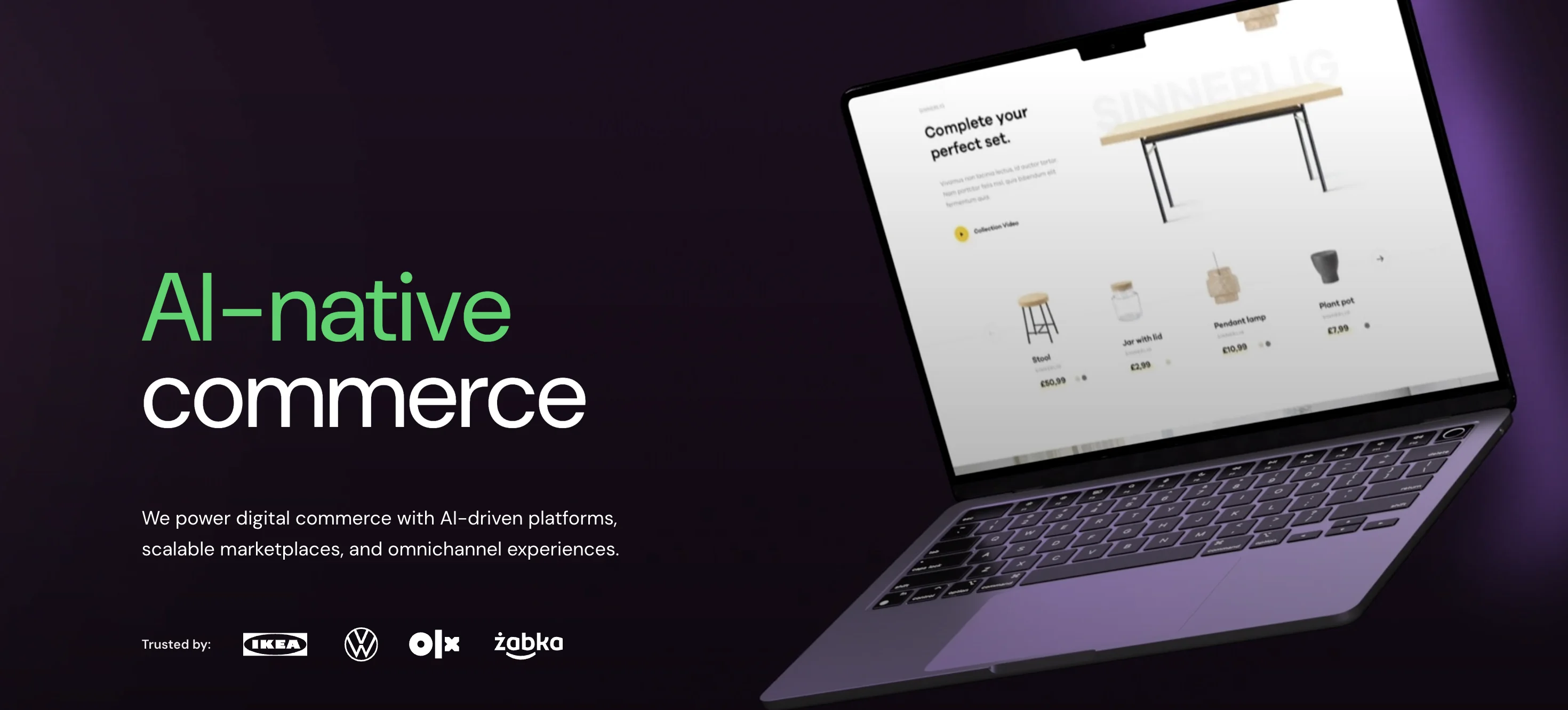
Netguru caught my eye for its product-design roots and long delivery record: 18+ years in the market, 400+ employees, and 2,500+ projects delivered. It works on the whole product, from discovery and UX/UI design through engineering, QA, and cloud architecture.
That makes it a strong fit when the user experience matters as much as the code behind it.
Key features:
- Notable clients: IKEA, Volkswagen, UBS, Merck, Delivery Hero, and Vinted.
- Commerce specialization: End-to-end engineering for digital commerce platforms, plus experience in finance, healthcare, education, and proptech.
- Certifications and recognition: B Corp and TÜV Nord certified, with Inc. 5000 and EY Entrepreneur of the Year recognition listed on its site.
Best for: Companies that want product design and engineering from one team, especially in commerce and fintech.
What reviewers praise: Clutch reviewers point to high-quality, professional work, responsive communication, on-time delivery, and flexible project management.
Limitations: The $50,000 minimum project size puts it out of reach for small builds. Netguru also sells team extensions, so confirm you're scoping a delivered project.
Pricing: $50 to $99 per hour; projects start at $50,000 (Clutch).
7. Fingent

Website: fingent.com
Headquarters: White Plains, New York
Rating: 4.9/5 on Clutch (66 reviews)
Services: Custom software development, web and mobile applications, cloud application development, AI integration, SAP implementation, RPA, and data analytics
Focus Regions: Global, with offices in the US, Australia, the UAE, and India
Fingent is here because of two decades of custom software work and a 4.9 on Clutch across 66 reviews. Founded in 2003, the firm builds enterprise and product software for financial services, real estate, logistics, healthcare, education, and nonprofits.
It fits companies whose app has to talk to the systems they already run, such as ERP, CRM, or internal data platforms.
Key features:
- AI in the delivery process: Fingent reports up to 40% lower delivery costs and up to 35% fewer production defects from building AI into its development lifecycle.
- Enterprise systems work: SAP implementation and migration, RPA, and data analytics sit alongside its application builds.
- ISO 27001 certified: Documented information security management for projects that handle sensitive data.
Best for: Mid-size companies that need a custom business application connected to existing enterprise systems.
What reviewers praise: Clutch reviewers highlight responsive communication, disciplined project management, quality work delivered within budget, and a partner that invests in the client's goals.
Limitations: Its enterprise-systems strength may be more than a simple consumer-facing app needs.
Pricing: $25 to $49 per hour; projects start at $25,000 (Clutch).
8. Cheesecake Labs
Website: cheesecakelabs.com
Headquarters: San Francisco, California, with a delivery hub in Florianópolis, Brazil
Rating: 4.9/5 on Clutch (64 reviews)
Services: Product engineering (design, web, mobile, IoT, back end, and cloud), application modernization, AI implementation, and data and analytics
Focus Regions: US mid-market clients, with delivery from Brazil
Cheesecake Labs is the only firm here with a Brazil-based engineering team behind a US headquarters, with 13+ years in operation and 300+ products shipped.
Depending on where your team sits, a Brazil-based team can share more of your working day than a far-offshore vendor, which helps during design reviews and launch weeks.
It has 64 Clutch reviews with an average of 4.9.
Key features:
- Web, mobile, and IoT in one team: Builds web platforms, IoT systems, and native and cross-platform development projects across device, cloud, and API layers.
- Modernization and AI implementation: Rebuilds legacy applications and takes AI features from prototype into production.
- Notable clients: MoneyGram, Tapcart, AES Corporation, and Bemis Manufacturing.
Best for: US mid-market companies that want a product built or modernized by a team working hours close to their own.
What reviewers praise: Clutch reviewers describe the team as communicative and proactive, with on-time delivery, strong project management, and high-quality technical work.
Limitations: The $50,000 minimum project size means it fits funded products and modernization programs more than small experiments.
Pricing: $50 to $99 per hour; projects start at $50,000, and most fall between $50,000 and $199,999 (Clutch).
9. Appinventiv
Website: appinventiv.com
Headquarters: New York, New York
Rating: 4.6/5 on Clutch (90 reviews)
Services: Custom software development, web and mobile app development, AI development, digital transformation and legacy modernization, cloud, cybersecurity, and data analytics
Focus Regions: Global
Appinventiv made this list for its breadth: 1,700+ technology specialists, 3,000+ solutions delivered, and work across 35+ industries, with a 4.6 across 90 Clutch reviews.
It handles large digital transformation programs end to end, from strategy and design through engineering and modernization.
Recognition includes back-to-back Deloitte Technology Fast 50 listings (2023 and 2024).
Key features:
- Notable clients: Adidas, KFC, IKEA, Domino's, American Express, and Honda.
- AI development: 150+ AI models deployed, including generative AI features, AI agents, and chatbots built into client products.
- Modernization and security: Legacy modernization, cloud migration, and cybersecurity services in the same engagement.
Best for: Enterprises and consumer brands running multi-product digital transformation programs.
What reviewers praise: Clutch reviewers most often mention on-time delivery, responsive communication, and professional project management.
Limitations: The $50,000 minimum project size and enterprise focus suit large programs more than a single small app.
Pricing: $25 to $49 per hour; projects start at $50,000 (Clutch).
What Is a Software Outsourcing Company?
A software outsourcing company takes on the full development of your project, a model also called application outsourcing. You tell them what you need, and they hand back a finished product.
The work usually covers discovery, design, development, testing, and launch, and many firms also offer maintenance after release.
You manage the relationship with the firm, and the firm manages its developers. Most offer a few engagement models, from fixed-scope projects to longer-running dedicated project teams.
Why Consider Building Your Own Team in Latin America Before You Outsource?
Building your own development team in Latin America gives you full-time developers who work only on your product, share most of your business hours, and stay with the codebase.
When you outsource to an agency, you're typically sharing developers across multiple client projects. The team on your project might be juggling other client apps at the same time, responding to whoever has the most urgent deadline.
When you hire dedicated developers in Latin America, you get their complete focus and long-term commitment to your product roadmap.
The advantages of building your own team:
- Full ownership and control: Your developers work directly for you, following your processes, using your tools, and working as part of your existing team. They attend your standups, understand your product vision deeply, and make decisions aligned with your company's long-term strategy.
- Better cultural fit and retention: When you hire directly, you can evaluate cultural fit and build team cohesion. According to Hire With Near's 2026 State of LatAm Hiring Report, which analyzed 2,000+ placements, Latin American hires stay 66% longer than US hires. Your developers build institutional knowledge and become more valuable over time.
- Real-time collaboration: Your Latin American developers share most of your business hours, wherever your team is based in the US. That makes live collaboration much easier than with a team whose workday barely overlaps yours. Your developers can join morning standups, respond to urgent issues during your workday, and keep up the real-time communication that makes remote work successful.
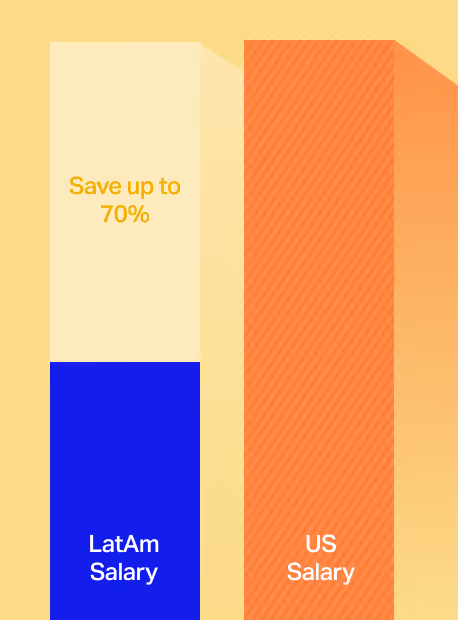
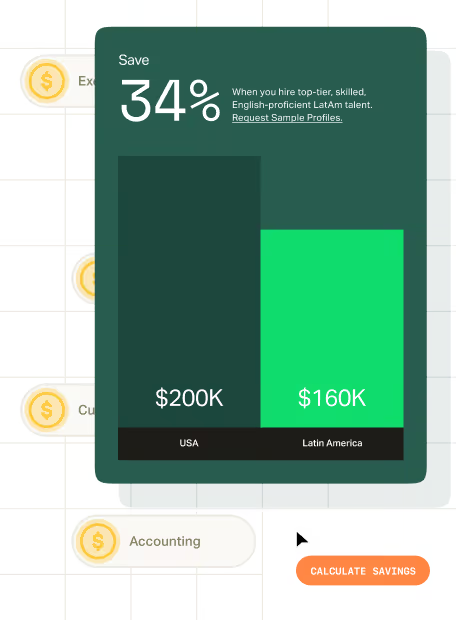
- Cost savings: Hiring dedicated developers in Latin America typically saves 30 to 70% compared to US salaries. According to our salary data, a senior full-stack developer in Latin America has salary expectations of $72K to $108K a year, compared with $104K to $184K in the US. That puts a full-time senior developer in the same range as a single mid-size outsourced project, with the benefit of keeping the developer working on your product after launch.
- Simplified hiring process: Staffing partners that hire in Latin America, like Hire With Near, handle the complexity of international recruitment. You get pre-vetted candidates, help with payroll and compliance, and ongoing support, without the overhead of managing an outsourcing relationship.
If your product needs consistent development after launch, dedicated developers who know your codebase give you more than a series of project contracts. Our guide to hiring remotely in Latin America walks through the process step by step.
What Are the Common Mistakes When Outsourcing App Development?
The most common mistakes when outsourcing app development are skipping vendor research, choosing on price alone, and starting without clear requirements. Each one shows up later as delays, rework, or a bigger bill. Before you start contacting companies, keep these pitfalls in mind:
- Skipping research on the app development company: Check verified reviews and similar past projects first. Otherwise, you won't know how a firm handles scope changes or missed deadlines until it happens on your build.
- Prioritizing cost over quality: The lowest bid often leaves out testing, documentation, or senior oversight. Fixing those gaps after launch costs more than doing them right the first time.
- Weak communication channels: When updates only arrive in a weekly report, small misunderstandings turn into weeks of work that has to be redone.
- Setting unclear project requirements and objectives: Vague requirements trigger constant scope changes and are the fastest way to blow past deadlines and inflate budgets.
- Not securing code ownership in the contract: Make sure the contract assigns the intellectual property to you and gives you access to the code repository. Without both, you can end up unable to switch vendors or maintain the app yourself.
- Overlooking post-launch maintenance: Apps need updates, security patches, and bug fixes after release, so agree on who handles them, and at what cost, before the project ends.
Most of these come down to preparation. Research the firm, write down what you need, and put ownership and maintenance terms in the contract before work starts.
Should You Outsource App Development or Hire Your Own Developers?
Outsource app development when the scope is defined and finite. Hire your own developers when the product needs continuous work from people who know the codebase and join your stand-ups.
Outsourcing is a good fit for an MVP, a one-off build, or a specialized capability you won't need after launch. You hand over the requirements, the firm's project manager runs the team, and you get a finished product. For a product you'll keep shipping for years, the tradeoffs change.
I talk to our engineering recruiters about this a lot, and they keep describing the same pattern: companies outgrow an outsourced build once the roadmap stops having an end date. Every new feature starts with a new estimate, and the people who know the code best work for someone else.
I also went through our sales call notes and came across a founder in exactly that spot. Their boutique development shop had built the first version of their app:
They're a one-stop shop, they do all types of the full tech stack, UI/UX, AI prompting, engineering. But they're a little expensive for the work that they're doing. They're not meeting deadlines. The app isn't working as specified. So that's why I'm looking to hire either a part-time transitional engineer... or a full-time senior engineer.
Here's how the two options compare on the questions buyers raise most often:
Focus is the first difference. An outsourcing firm staffs your project from its shared bench, so the developers on your build may also be supporting other clients. The developers you hire work on your product and nothing else.
Direct access is the second. With an outsourcing firm, requirements usually pass through a project manager, which works well for a fixed scope. When you own the team, you talk to the person writing the code.
Working-hours overlap is the third. The most useful research I found on this is a 2024 study published in Organization Science: when time zones pulled coworkers apart, they kept collaborating by shifting work outside normal hours, and that time came out of their personal lives.
Before you sign with any firm, check how much of your workday its team shares with yours.
If outsourcing fits your project, our roundup of Latin American outsourcing companies covers firms whose teams share more of the US workday. For a deeper look at the tradeoffs, see our guide on whether to hire an in-house developer or outsource.
How Does Hire With Near Help You Hire Your Own Developers in Latin America?
Hire With Near is a staffing and recruiting agency. We find, screen, and present senior developers in Latin America who join your team full-time and report to you. They share most of your business hours, and you work with them directly, with no project manager in between.
More companies are making that switch. In Hire With Near's analysis of 2,000+ hiring conversations with US companies, 12% were switching from outsourcing to hiring their own people directly.
ParkMobile, whose parking app is used in more than 4,200 cities, is one of them. Agency developers had handled its back-end and platform work for years, and its Head of Engineering for Mobile Payments and Billing, Mariana Lepassar, saw where that left the company:
From a business viability perspective, it creates a huge risk for us.
— Mariana Lepassar, Head of Engineering for Mobile Payments and Billing, ParkMobile
ParkMobile wanted senior engineers who could think along with its product strategy, and it wanted to hire them in Colombia, a market it had never recruited in.
We ran sourcing, English screening, and candidate management inside ParkMobile's own applicant tracking system, and the first shortlists landed within a week of kickoff.
Screening focused on what ParkMobile's hiring managers would test next: whether a candidate could reason through tradeoffs, communicate under pressure, and own product work independently.
ParkMobile replaced its agency developers with nine in-house engineers, including software engineers and back-end developers for its platform, with a 24-day average time-to-hire. Its leadership then expanded the program to team leads, and ParkMobile now saves $1,066,085 a year against US rates.
Here's what working with Hire With Near looks like:
- A shortlist of candidates in 3 to 5 days, drawn from a talent pool of 160,000+ pre-vetted candidates.
- Most of our clients make a hire in under three weeks, and we fill 97% of the roles we take on.
- Every placement is backed by a 180-day replacement guarantee.
- A 4.8 rating on G2 across 150+ reviews.
Your own technical interviews make the final call, and as the team grows, we also recruit the engineering leaders who run it. We work with IT and tech companies hiring in Latin America and SaaS companies building their own product teams.
You can hire software engineers in Latin America at up to 70% savings compared with hiring in the US.
For a step-by-step look at the process, see our guide on how to hire app developers. If you'd like to compare hiring partners first, here are the companies that help you hire developers in Latin America.
Final Thoughts
After doing the research for this article, I'd ignore the taglines. Every firm here says it delivers on time and on budget, so choose by matching each one's specialty and project size to your build.
Narrow your shortlist to two or three companies, then ask each how they'd scope the work, who would lead your project day to day, and what the handover looks like at launch. Our guide to running an outsourced app project step by step covers the rest.
The question I'd ask myself before signing is whether this app will still need developers a year after launch. If it will, a series of project contracts gets expensive, and the people who know your code keep changing.
That's when hiring your own team makes more sense, and it's where Hire With Near fits. The example I kept coming back to while writing this is ParkMobile, which replaced its agency developers with nine senior engineers of its own in Colombia. We help US companies just like ParkMobile hire developers in Latin America who work US hours, join your stand-ups, and stay with your product.
Book a free consultation, and we'll talk through the roles you need and what they'd cost.
{{consultation}}
Frequently Asked Questions
How much does it cost to outsource app development?
The most common price range for an outsourced software or app development project is $10,000 to $49,999, according to Clutch's software development pricing data, which is drawn from verified client reviews and was updated in September 2026.
The same data puts the average project at about $132,500, typical hourly rates at $25 to $49, and the average timeline at about 13 months.
Where your project lands depends on scope, the number of features and integrations, where the team is based, and the engagement model. Ask two or three firms to estimate the same written requirements, so you're comparing like with like.
How much does it cost to hire someone to build an app?
Hiring your own senior full-stack developer to build an app costs $72K to $108K a year in Latin America, compared with $104K to $184K in the US, according to our salary data. That's a yearly salary instead of a one-time project fee.
An outsourced build is a one-time cost, while a developer you hire keeps working on the app after launch. If your app needs ongoing development, compare a year of salary with the cost of several project phases.
Our US vs. Latin America salary guide has ranges for other roles.
How do you choose an app development outsourcing company?
Choose an app development outsourcing company by checking its verified client reviews, its portfolio of similar projects, and whether its delivery model fits your scope.
A rating of 4.5 or higher across a meaningful number of reviews on a platform like Clutch or G2 is a good first filter.
Then, ask who will lead your project day to day, how much of your workday their team shares, and what the contract says about code ownership.
If you're still weighing regions, see our guide to the best countries for an outsourced app build.
What's the difference between outsourcing app development and staff augmentation?
Outsourcing app development hands a firm the whole project and its outcome, while staff augmentation adds a vendor's developers to your existing team to work under your direction.
With outsourcing, the firm manages the developers, the timeline, and delivery. With staff augmentation, the developers come from the vendor's bench, and you direct their day-to-day work while they remain part of the vendor's team.
Our comparison of staff augmentation and outsourcing covers when each model fits.
Who owns the code when you outsource app development?
You own the code when you outsource app development only if the contract says so, so get an IP assignment clause written in before work starts.
Ask for the code to live in a repository your company controls, with access you can grant and revoke. Make sure the firm hands over documentation and credentials at the end of the project.
These terms matter no matter who builds the app, and your own legal counsel should review the contract before you sign.
Can developers in Latin America work in my time zone and join stand-ups?
In most cases, yes. Developers in Latin America work during US business hours, so they can join your stand-ups whether your team runs on Pacific, Mountain, Central, or Eastern time. How much of the day you share depends on the country you hire in, where your team is, and the time of year, since most of Latin America doesn't observe daylight saving time.
Most pairings overlap for nearly the entire workday. Even the widest one, a West Coast team with a developer in Argentina or Brazil, shares a solid block of the morning and midday.
For more, see these questions tech leaders ask about hiring developers in Latin America.