Key Takeaways
- To hire an executive assistant in Latin America, work with a specialist staffing partner like Hire With Near or hire on your own through an employer of record, budget about $14K to $42K a year (versus $62K to $115K in the US), and vet spoken English and judgment in live interviews.
- Your Latin American EA’s workday overlaps with yours, depending on the country and your time zone, and many already have years of experience supporting US executives.
- Before you make an offer in US dollars, test judgment, discretion, and tool skills with scenario questions and a short paid trial.
The simplest way to hire an executive assistant in Latin America is to pick your hiring route first, then vet hard for spoken English, judgment, and discretion before giving any chosen candidate access to your inbox. Get those two steps right, and you'll have an experienced EA working your hours, often for less than what a junior EA earns in the US.
You probably already know you need one: your calendar is double-booked, your inbox is three days behind, and you spend evenings on scheduling and follow-ups that someone else could own.
Meanwhile, the work only you can do, like closing deals, leading your team, and setting strategy, keeps sliding.
What does it cost to hire an EA in Latin America? Which country makes sense? How do you hire someone abroad and stay compliant? And how do you know their English will hold up on a call with your board? This guide answers each one of these doubts, from cost and countries to vetting, interview questions, and your EA's first 90 days.
What Does a Latin American Executive Assistant Do for a US Company?
A Latin American executive assistant runs your calendar, inbox, travel, meetings, and follow-ups remotely, during your business hours, so you can spend your time on the decisions only you can make.
Unlike administrative assistants who provide general office support, executive assistants usually support one executive or leadership team and often have decision-making authority within their scope of responsibilities.
EAs are one of the most senior roles among the administrative talent in Latin America that US companies hire. Here's what the role typically covers day to day, and the tools most experienced EAs already use:
If your calendar is heavy on events and offsites, some companies hire an event coordinator alongside the EA, so the executive's support doesn't get swallowed by logistics.
The best executive assistants anticipate needs, identify process improvements, and represent their executive’s interests with the judgment and professionalism of a senior team member.
Related reading: Admin Assistant or Executive Assistant: Which to Hire?
Why Hire an Executive Assistant from Latin America?
A remote executive assistant in Latin America works hours that overlap with yours, usually writes and speaks strong English, and often has experience supporting US executives, at a lower salary than a comparable US hire.
Those four reasons explain why Latin America is often the most attractive region for US companies hiring executive support.
Working hours that overlap yours
Your Latin American EA works hours that overlap with yours, whether your office runs on Pacific, Mountain, Central, or Eastern time. The overlap is largest for Eastern and Central teams and smaller on the West Coast, depending on the country.
That matters more for an EA than for almost any other role: a rescheduled flight, a meeting request, or an urgent client email gets handled the same day.
Meanwhile, with an offshore assistant in Asia, that same flight change sent at 3 p.m. lands after their shift has ended, and you see the answer the next morning.
Hire With Near's research on why US companies hire in Latin America, based on 2,000+ hiring conversations, found that 30% of companies are switching from distant countries to nearshore for that reason, so their team can work in real time. Virtual and executive assistants make up 13% of that group, the third-largest share after sales and finance.
Strong spoken and written English
Strong spoken and written English is the norm among the EAs we place. Many have spent years writing to US clients, joining US-led meetings, and representing executives on calls. You'll still want to test it yourself, and the vetting section below shows how.
Familiarity with US business culture
Many executive assistants in Latin America already know how US companies run, from meeting habits to holiday calendars, and the best ones bring the trait that matters most in this role: initiative.
Franco Pereyra, Hire With Near's COO, describes what clients notice:
You'll find people who are proactive and creative. People who come up with ideas and new solutions. If you're looking for folks who can bring something to the table, who will push back if they think your idea doesn't make sense, that's what you find in Latin America.
— Franco Pereyra, Co-Founder and COO, Hire With Near
For an EA, that proactivity is the job: the best ones fix the calendar conflict before you ever see it. Our recruiters say clients are often surprised by how much experience Latin American EAs already have supporting US executives.
Salaries that fit your budget
EA salaries in Latin America run well below US rates because of differences in cost of living. The cost section below breaks it down by level.
The table below compares Latin America with offshore and US hiring for an EA role. Our guide to Latin America vs. the Philippines covers the same comparison for remote teams more broadly:
Is a Latin American executive assistant right for your business?
A Latin American EA is a strong fit when your EA's work is digital and you want same-day back-and-forth, and a poor fit when you need someone physically in your office.
If budget is what has kept you from hiring an assistant at all, a Latin American EA’s salary may reach further than you expect.
It's a good fit if:
- Most of your EA's work happens in email, calendars, documents, and video calls.
- You want same-day answers and handoffs during your workday.
- You want a senior EA at a lower salary than a junior US hire.
- You're ready to share access to your inbox, calendar, and key tools.
It's not a fit if:
- You need someone in the office to greet visitors, host clients, or handle paper files.
- You can't give an assistant access to your accounts and tools.
- You only need a few hours of help a month rather than a full-time EA.
Executive assistants are among the roles US companies hire most in Latin America: in Hire With Near's 2026 State of LatAm Hiring Report, which analyzed 2,000+ placements from October 2024 to October 2025, the EA was the fourth most-placed role, and it ranked sixth in the first half of 2026 in Hire With Near’s midyear hiring report.
How Much Does an Executive Assistant in Latin America Cost?
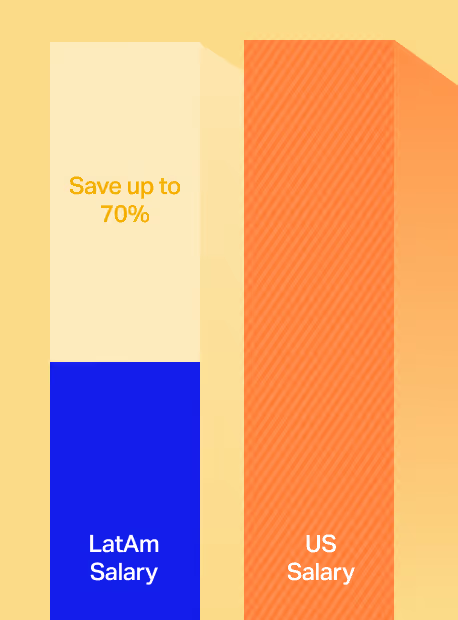
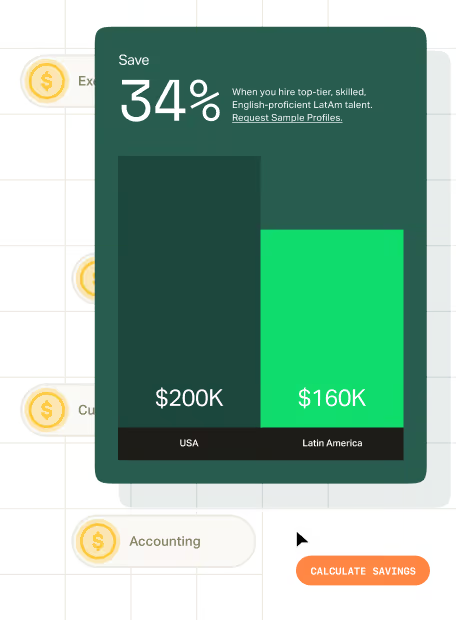
An executive assistant in Latin America typically earns $14K to $42K a year depending on seniority, according to our salary data, compared with $62K to $115K for a comparable US hire.
Here's how those salaries break down by level, according to Hire With Near's salary benchmarks:
For the most up-to-date figures, see Hire With Near's US vs Latin America Salary Guide.
According to Hire With Near’s 2026 State of LatAm Hiring Report, companies saved $20,000 to $75,000 a year per EA placement compared with US salaries.
Those differences come from the lower cost of living in Latin America, and the experience behind each level is comparable. In practice, a senior EA with years of C-suite experience in Latin America earns less than a junior EA in the US.
What you pay on top of salary depends on how you hire. Each route covers different costs:
For role-specific salary ranges and the kind of EA profiles we place, see what it looks like to hire a dedicated executive assistant with Hire With Near.
You can see how EA salaries compare with related roles in our guide to operations and administrative salaries in Latin America.
{{salary-guide-cta}}
Which Latin American Country Is Best for Hiring an Executive Assistant?
There's no single best country to hire an executive assistant in Latin America: Mexico, Colombia, Peru, Argentina, and Brazil all have experienced executive assistants, and the right one for you depends on the working hours you need, the languages your EA will use, and how carefully you vet English.
Working hours are the first filter. A 2024 study in Organization Science by researchers at Harvard Business School, Georgetown University, and Rice University found that employees in distant time zones end up shifting their own hours to stay in sync, and the researchers suggest teams spread north to south, the way US and Latin American teams are, avoid most of that strain.
The table below pairs each country's rough time-zone alignment with its national band in the EF English Proficiency Index 2025:
Read the English column with care. EF's index measures adults who choose to take its test, not working professionals, so a country's national band isn't a hiring bar.
Many experienced EAs in each of these countries support US executives in English every day. What matters is the individual candidate, so spoken and written English are the first two checks in the vetting section later in this article.
If you're leaning toward one country, our guides to hiring in Colombia, hiring in Argentina, hiring in Peru, hiring in Mexico, and hiring in Brazil cover talent, costs, and logistics in each. Our hiring data also shows where US companies are hiring in Latin America right now.
Direct Hire, Employer of Record, or Staffing Partner: How Do You Legally Hire an EA in Latin America?
You can legally hire an EA in Latin America in three ways:
- Hire directly and run employment, payroll, and compliance yourself.
- Use an employer of record (EOR) that employs your EA on your behalf.
- Work with a specialist staffing partner that finds your EA and can handle payroll, contracts, and compliance.
Freelance platforms are a fourth route, built for part-time and project work.
Here they are, from the most work for you to the least.
Hire directly
You source candidates yourself through a job board for hiring in Latin America, LinkedIn, or referrals, then screen and interview them. Once you’ve chosen someone, you employ them yourself, which means setting up a legal entity in the country and running contracts, payroll, tax withholding, benefits, and local compliance on your own. That only pays off once you have a larger team there, not for a single EA.
Use an employer of record
You source and interview candidates yourself, as with a direct hire. Once you’ve chosen someone, an employer of record employs them on your behalf and handles contracts, payroll, tax withholding, benefits, and local compliance, while you manage the work day to day.
Plenty of EOR companies offer this. The catch is that an EOR handles employment, not recruiting, so every hour of sourcing and vetting is still yours.
Use a freelance platform
Freelance platforms like Upwork give you fast access to assistants for part-time or project work.
They're built for short contract tasks rather than a full-time EA who learns your business: you screen every proposal, manage quality on your own, and often share your assistant's attention with other clients.
Work with a specialist staffing partner
This is the simplest route for most companies hiring a full-time EA. Specialist LatAm staffing firms like Hire With Near handle recruiting, payroll, contracts, and compliance in one relationship.
You describe the role, we present pre-vetted candidates, and once you hire, we handle payroll, contracts, and compliance through our nearshore staffing and recruiting services. Not sure which route fits? We assess your situation, the role, and the hiring location, and help you hire compliantly.
Pay in US dollars
Whichever route you choose, agree on the salary in US dollars and a reliable payment schedule at the offer stage. A clear USD figure makes the offer easy to compare and budget for. Paying on the same date every month is also one of the simplest ways to keep a great EA.
Put confidentiality in writing
Your EA will see your inbox, your calendar, and often your financial accounts, so put a confidentiality agreement (NDA) in place before day one.
Pair it with sensible access controls: set up delegated access to email and calendar instead of sharing your password, keep credentials in a password manager, and turn on two-factor authentication for every account.
Should you use a staffing partner or hire on your own?
Use a staffing agency if you want a vetted shortlist fast and payroll and compliance handled for you. Hire on your own if you have the time to source and screen and you're set up to handle payroll and compliance abroad, usually through an EOR.
If you go the agency route, compare a few executive assistant recruitment agencies on how they vet, how fast they shortlist, and what their guarantee covers.
Shared assistant services are a different decision. Outsourcing an executive assistant to an agency that splits one assistant across several clients can cover transactional tasks, but a dedicated hire is the one who learns your business and anticipates what you need.
Here's how a staffing partner compares with hiring on your own:
How Do You Vet a Latin American Executive Assistant? 7 Things to Check
Vet a Latin American executive assistant on seven criteria: spoken English, written English, judgment, discretion, tools, availability during your hours, and references. Test each one directly rather than trusting the resume.
Here's what good looks like for each check and how to test it yourself.
Spoken English
A strong EA speaks clearly, structures answers without rambling, and handles follow-up questions without losing the thread. Test it on a live video call, since a recorded introduction can be rehearsed.
The most telling part of a spoken-English check is how a candidate handles a question they didn't prepare for. Ask them to walk you through how they'd brief you on a chaotic week, then interrupt with a follow-up. You'll hear quickly whether they could represent you on a call with a client or your board.
Written English
Your EA will write on your behalf every day, so look for clear, concise, error-free writing with the right tone. Give a short written task, such as drafting a reply that declines a meeting with an important partner without damaging the relationship, and read it the way the partner would.
Judgment
Judgment is the check that separates an EA from a task-doer. One small business owner we spoke with described the problem with their current assistant:
The issue I'm having with my current assistant is that she is more of task-doer rather than someone with any type of autonomy. Even if I lay it out for her, somehow she finds a question. It's just not what I'm looking for at the moment. [...] I'm hiring for judgment, it sounds like, more than anything.
Test it with scenario questions. For example: “I'm on a flight, and a board member asks to move tomorrow's meeting to a slot that clashes with a client call. What do you do?” Strong candidates make a call, explain it, and tell you how they'd keep you informed.
I also ask candidates for concrete examples of processes they've improved or automated, because vague answers usually mean they've followed other people's systems more than they've built their own.
Startup experience is a green flag for me, as it is in the operations roles I recruit for: those candidates have usually built processes from scratch, without a playbook.
Discretion
Your EA will see confidential information from day one, so test how they handle it. Try a scenario like: “A colleague asks you whether rumors about a reorganization are true, and you've seen the plan in my inbox. What do you say?” Listen for a candidate who declines without confirming anything and tells you about the question.
Tools
Look for comfort with the tools you already use; certifications matter less. Give a short hands-on task in your own setup, such as scheduling a meeting for three people in different time zones or building a simple follow-up tracker in Notion or Asana. Watch how they work as much as the result.
US business hours
Confirm the candidate can work across your core hours, every day, and ask how they've done it before. Check their home-office setup too: a quiet workspace, reliable internet, and a backup plan for power or connection outages.
Ask directly about any other jobs, since a second commitment during your hours makes it hard to be present when you need them.
References
Ask for references from executives they've supported, in addition to HR. Good questions to ask: What did you hand off to them in the first month? What did you stop doing yourself once they were up to speed? Would you hire them again?
For more on running reference checks with Latin American candidates, including what to do when a reference doesn't speak English, here's a short walkthrough from our team:
Once a candidate clears all seven checks, run a short paid trial on real work before making an offer. A week of inbox triage and scheduling, or a defined project such as cleaning up your calendar system, shows you more than another interview.
Watch how their questions change over the week: a strong EA asks smart questions early and needs fewer of them by the end.
How Do You Hire an Executive Assistant in Latin America? 8 Steps
Hiring an executive assistant in LatAm takes eight steps, from mapping how your executive works to making an offer in US dollars and planning the first 90 days.
1. Map the executive's work style and priorities
Start by writing down the outcomes you want from the role. “Manage my calendar” tells a candidate very little. “Two protected blocks of focus time a day, and no double-booked client calls” tells them what good looks like.
Are you looking for someone who can manage complex project coordination, or do you need someone who excels at stakeholder communication and relationship management?
Then, write down how the executive works: when they're online, how they like updates (Slack, email, or a daily brief), which decisions the EA can make alone, and which accounts the EA will need access to.
2. Choose your hiring route
Decide early whether you’ll hire directly, use an EOR, or work with a staffing partner, because it changes who sources candidates and who handles payroll and compliance.
3. Set the budget in US dollars
Set a salary range in US dollars for the seniority you need. According to our salary data, EAs in Latin America earn $14K–$22K a year at junior level, $22K–$30K at mid-level, and $30K–$42K at senior level.
Aim for the competitive end of the range for the level you want: EAs who are paid fairly tend to stay longer.
4. Write the job description
Use your role definition to craft a comprehensive job description that includes specific examples of the types of problems your executive assistant will solve, the decision-making authority they’ll have, and the impact they can make on your productivity.
According to our recruiters, you should ask for “at least 2 years of experience in the same position, assisting a CEO or VP” as a baseline requirement.
Include required soft skills, experience, and any particular software proficiencies needed, but be clear about what are nice-to-haves versus must-haves. Put the salary range in US dollars and the hours you need covered in the post, so candidates can rule themselves in or out before they apply.
Skills-based hiring approaches expand candidate pools by 6.1x globally, so focus on relevant capabilities rather than rigid degree requirements.
5. Source and shortlist candidates
Through a staffing partner, you'll get a shortlist of pre-vetted candidates; with Hire With Near, that takes 3 to 5 days.
On your own, post on job boards and LinkedIn and ask your network for referrals. If you get a large pool of applicants, a short screening questionnaire or a two-minute recorded video can help you narrow it down before you schedule live calls.
Review applications to shortlist candidates who meet the job requirements and demonstrate potential cultural fit. The best executive assistants demonstrate organized approaches to complex challenges, so during initial conversations, ask candidates to walk through their current organizational systems and how they handle competing priorities.
6. Run structured interviews
Interview over live video, ask every candidate the same questions, and score their answers against the seven checks above. The interview questions below are a good starting set.
Look for specific examples where candidates identified inefficiencies and implemented improvements without being asked. This reveals the entrepreneurial mindset that separates excellent executive assistants from task-focused administrative support.
7. Test and check references
Give your finalists a practical task based on the real work, and call references from executives they've supported. If you didn't run a paid trial during vetting, this is the place for it.
Our recruiters note that some clients create a case study based on their needs, for example building an email classification system or researching how a tool would affect their team.
8. Make the offer in USD and plan the first 90 days
Top executive assistant candidates often have multiple opportunities. Once you’ve identified the right person, be prepared to make a compelling offer that includes not just salary but also professional development opportunities and clear growth trajectories.
Put the salary in US dollars, the payment schedule, and your PTO policy in writing.
Our recruiters note that “PTO and flexibility to have local holidays off make the difference for this role” when it comes to benefits that matter beyond base compensation.
Provide a thorough onboarding process to familiarize the executive assistant with your company’s operations, culture, and expectations.
In the first week, get your EA's access set up the way the confidentiality section above describes, and introduce them to the people they'll deal with most. Then, plan check-ins at 30, 60, and 90 days.
What Should You Ask a Latin American Executive Assistant in an Interview?
The most revealing interview questions focus on real-world scenarios and systematic thinking rather than hypothetical situations.
“How do you stay organized on a daily basis?”
As our recruiters explain, “As an EA, it’s essential to be organized and stay one step ahead of your executive’s needs.” This is their go-to question to reveal candidates’ underlying systems and whether they think strategically about organization rather than just reactively managing tasks.
What to listen for: Specific tools, methodologies, and thought processes. Strong candidates describe systematic approaches that include both digital tools and mental frameworks for prioritization.
“Can you share an example of a project you implemented to optimize your executive’s day-to-day operations?”
This gets directly at the proactive mindset that separates excellent executive assistants from reactive support staff. You want to hear about initiatives they took independently to solve problems.
What to listen for: Examples that show business thinking, measurement of results, and consideration of broader team impact—not just task completion.
“Tell me about a time you had to manage conflicting priorities from multiple stakeholders. How did you handle it?”
Executive assistants regularly navigate competing demands while maintaining relationships with different personality types and communication styles.
What to listen for: Evidence of diplomatic communication, systematic prioritization frameworks, and the ability to make judgment calls when you’re not available for guidance.
“Describe how you would handle a sensitive situation where someone important is demanding access to me, but I’ve indicated I’m not available.”
This reveals communication skills, judgment under pressure, and understanding of professional boundaries—all critical for someone who serves as your gatekeeper.
What to listen for: Responses that balance firmness with professionalism, show understanding of relationship dynamics, and demonstrate creative problem-solving.
“How do you anticipate needs before they become urgent requests?”
The strongest executive assistants develop intuitive understanding of patterns, seasonal business cycles, and your personal preferences to stay ahead of requirements.
What to listen for: Specific examples of pattern recognition, systematic approaches to learning preferences, and proactive communication about potential issues.
“How do you keep an executive informed when you can’t reach them in real time?”
When your EA is in a different city and you're in back-to-back meetings or on a flight, they need a system for keeping you up to date without a live conversation. The answer shows quickly whether the candidate has done this before or is guessing.
What to listen for: A specific routine, such as an end-of-day summary or a short morning brief, plus clear judgment about what can wait for the summary and what justifies interrupting you.
“Tell me about a time you supported someone in a different city or country. How did you set up your hours and communication?”
Many Latin American EAs have already supported executives remotely, and this question gets them to show you how. Candidates who have done it well can describe the exact overlap hours they agreed on and how they handled the parts of the day that didn't overlap.
What to listen for: Concrete agreements on working hours, response times, and channels, and examples of adjusting when the executive's schedule changed.
“What do you know about how US executives like to communicate, and how would you adapt to my style?”
Supporting a US executive means working with US business norms: direct, concise communication, punctual meetings, and a calendar shaped by US holidays and deadlines. You want an EA who has noticed these patterns and adjusts to the person in front of them.
What to listen for: Specific observations from past roles, such as keeping emails short and action-focused, plus questions back to you about how you prefer to work.
What Red Flags and Hiring Mistakes Should You Watch For?
The fastest way to avoid a bad EA hire is to watch for a handful of candidate red flags and to steer clear of four process mistakes that lead to the wrong hire. In interviews and on resumes, these red flags should give you pause:
- Frequent job changes on the resume with no clear reason
- Rambling or unstructured answers to simple questions
- No concrete example of making an executive's day run better
- Vague answers about the tools they say they use
- Signs of a second job or limited availability during your hours
- No quiet workspace or reliable internet, and no backup plan
Even experienced hiring managers make predictable errors that lead to poor fits or missed opportunities with exceptional candidates.
1. Obsessing over industry experience instead of core capabilities
Many companies create unnecessarily narrow requirements like “must have 5+ years in SaaS” or “experience in financial services required,” which eliminates candidates with stronger organizational skills and business judgment.
According to our recruiters, industry-specific experience rarely impacts performance. What matters is whether someone can learn your business quickly and think strategically about priorities.
The fix: Focus your requirements on transferable skills like systematic thinking, stakeholder management, and proactive problem-solving. A talented executive assistant who’s supported a CEO in retail can absolutely excel supporting a CEO in tech—they understand executive needs, not just industry jargon.
2. Dismissing startup experience in favor of “prestigious” corporate backgrounds
Large companies often overlook candidates with startup or small company experience, assuming corporate experience equals higher quality. But according to our recruiters, startup experience actually develops the proactive mindset and sense of urgency that makes executive assistants truly exceptional.
The fix: Value adaptability and initiative over brand names on resumes. Someone who’s been the sole administrative support for a 50-person startup likely has broader skills and more resourcefulness than someone who handled one specific function at a Fortune 500 company.
3. Trying to evaluate relationship potential in a single interview
The executive assistant relationship is deeply personal—you’re trusting someone with your schedule, communications, and often confidential information. Yet many companies make hiring decisions after just one conversation, missing critical chemistry and trust factors.
The fix: Build multiple touchpoints into your process. Consider a working interview where candidates handle real tasks, schedule separate conversations with different team members they’d interact with, and, when possible, speak with previous executives they’ve supported, not just HR references.
4. Ignoring communication red flags because other qualifications look good
Since executive assistants represent you in emails, calls, and meetings, communication quality directly affects your professional reputation. Yet hiring managers often overlook unclear explanations, rambling responses, or difficulty expressing ideas during interviews.
The fix: Pay close attention to how candidates structure their thoughts, ask clarifying questions, and adapt their communication style during your conversation. If they struggle to communicate clearly under the low pressure of an interview, they’ll likely struggle when representing you to important stakeholders.
How Does Hire With Near Help You Hire an Executive Assistant in Latin America?
Hire With Near finds and vets your executive assistant in Latin America, then handles payroll, contracts, and compliance once you hire, so you spend your time on final interviews instead of sourcing and screening. Here's how it works:
- Free consultation: You talk through what you need with our team, get salary benchmarks for the level you're hiring, and learn how the process works.
- Kickoff with a dedicated recruiter: Your recruiter goes through your must-haves, the executive's work style, and the profile that fits.
- A shortlist in 3 to 5 days: Your recruiter draws on a talent pool of 160,000+ pre-vetted candidates and sends you the strongest matches.
- You interview and choose: You run the final interviews and pick the EA who fits.
- We handle the rest: Payroll, contracts, and compliance are covered once you hire.
Most of our clients fill the role in under three weeks, and you only pay once you select a candidate. Direct hires through Hire With Near are backed by a 180-day replacement guarantee: if the placement doesn’t work out in that window, we find a replacement at no additional cost. Under our staffing model, replacements have no time limit.
Kordis, a New York fractional CFO firm, is a good example. Offshore hiring had left the team with a 12-hour time difference and a heavy recruiting load, and US salaries were out of budget. Hire With Near ran the posting, screening, and first interviews, including video interviews that checked English, so the Kordis team only ran final interviews.
Kordis hired an executive assistant and a staff accountant with Hire With Near, made its first hire in 14 days, and saves $109,000 a year across the two roles compared with US talent. Joshua Thompson, Partner and COO at Kordis, put it this way:
Hire With Near offers an easy hiring experience where they take the burden of all the posting, screening, and initial first screening interviews off your plate, and all you do is final interviews to ensure cultural alignment. I made a hire in only 14 days.
— Joshua Thompson, Partner and COO, Kordis
Our administrative recruiters in Latin America screen for the same signals covered in this guide. Beyond EAs, we help companies hire administrative and operations talent across the function, and we run executive search in Latin America for senior roles such as a chief of staff or head of operations.
If you're ready to hire a full-time executive assistant in Latin America, the best next step is to book a free consultation and talk through your requirements with our team. They'll share salary benchmarks for the level you need and walk you through how the hiring process works.
{{latam-hiring-cta-v2}}
A Latin American executive assistant typically earns about $1,200–$3,500 a month, or $14K–$42K a year, depending on seniority, according to our salary data. A comparable US-based EA earns $62K–$115K a year.
Junior EAs in Latin America earn around $1,200–$1,800 a month, mid-level EAs $1,800–$2,500, and senior EAs with years of C-suite experience $2,500–$3,500. If you hire through a staffing partner or an EOR, add their fee on top of salary.
Whether it costs less to hire through an EOR or a staffing partner depends on how much your recruiting time is worth, because an EOR’s monthly fee covers payroll and compliance only and leaves sourcing and vetting to you.
An EOR adds its fee on top of salary and local employer costs, and you still pay for job boards and spend hours screening candidates. A staffing partner's fee covers recruiting and vetting plus payroll and compliance.
Our comparison of EOR vs. staffing agency options walks through both in detail.
No. An EOR is one of several ways to hire an executive assistant in Latin America compliantly. An EOR employs your EA and runs payroll and compliance, but it doesn't recruit, so you'd still find and vet candidates yourself.
If you're weighing it, here's what an employer of record does and when it makes sense.
You don’t need to handle taxes or run statutory benefits yourself if you hire a Latin American executive assistant through an EOR or a staffing partner. An EOR runs payroll, local statutory benefits, and tax withholding in your EA's country.
With a staffing partner like Hire With Near, the partner handles payroll, contracts, and compliance. Some US companies also add their own benefits to attract and keep a strong EA, such as a health coverage stipend, flexible PTO with local holidays off, and home-office equipment.
Yes, you can hire an executive assistant in Mexico, and the country's working hours line up closely with US Central time. Hire through an EOR or a partner that handles contracts and compliance, and get advice specific to your situation. Our guide to hiring in Mexico covers the talent pool, costs, and logistics.
Experienced executive assistants in Latin America usually speak fluent, professional English. For executive-facing work, look for someone who can hold an unscripted conversation with your board or clients. At Hire With Near, we check English in live video interviews before you see a candidate.
Strong EAs handle unscripted questions, write clean and concise emails, and adjust their tone for a board member versus a vendor. Check it yourself with a live call and a short writing task, as covered in the vetting section above.
Yes. Latin American executive assistants work hours that overlap with the US workday, so your EA can be online when you are, though how many hours you share depends on the country and where your team is.
Mexico lines up closely with US Central, Colombia and Peru with US Eastern, and Argentina and Brazil sit slightly ahead of the East Coast, so even West Coast teams share a solid block of the day. It's one of the most common questions business owners ask about hiring VAs and EAs in Latin America.
Hiring an executive assistant in Latin America can take anywhere from days to months depending on how you hire, and through Hire With Near, most of our clients make a hire in under three weeks.
We send a shortlist of candidates in 3 to 5 days. Hiring on your own can take months once you add sourcing, screening, and setting up employment. A freelance platform can surface candidates in days, but vetting and keeping them are on you, which is why specialist staffing usually suits full-time remote hires better.
Hire a US-based executive assistant if the role needs someone in person, and a nearshore EA if the work is digital and you want senior experience at a lower salary than a US hire. In-person work means greeting clients, running an office, or handling physical files.
If your EA's day runs through email, calendars, and video calls, a nearshore EA in Latin America works during your hours. According to our salary data, a senior EA there typically earns less than a junior EA in the US.
The term “virtual assistant” usually refers to someone who provides basic administrative support remotely, handling tasks like data entry, inbox cleanup, research, or simple scheduling.
Many VAs work part-time or support multiple clients at once, and they’re often focused on task completion rather than strategic support. Having said that, many businesses hire full-time virtual assistants.
An executive assistant (EA) might also work remotely, but the role is very different. Executive assistants typically support one executive or leadership team full-time and take on a much higher level of responsibility.
They manage complex calendars, coordinate communications, anticipate needs, and often serve as a gatekeeper and strategic sounding board.
In short: all executive assistants can be virtual, but not all virtual assistants operate at the level of an EA. If you’re looking for a high-trust partner who can protect your time and help you operate more efficiently, you’re looking for an executive assistant—not a general VA.
Specialist staffing partners like Hire With Near handle both hiring and payroll for a Latin American executive assistant: we find and vet candidates, and once you hire, we handle payroll, contracts, and compliance.
Other firms cover some or all of this, with different vetting depth, speed, and guarantees. Our roundup of the best companies to hire executive assistants in Latin America compares the main options side by side.
Related Posts


Discover why hiring in LatAm is a cheat code. Download our free guide now.