Key Takeaways
- The best sites to hire offshore iOS developers are Hire With Near, Toptal, Lemon.io, CloudDevs, Revelo, Andela, Second Talent, Netguru, Hyperlink InfoSystem, and Cheesecake Labs.
- Screen for Swift and Objective-C, fluency in Xcode, and whether the developer has owned an App Store release end to end, not just worked on internal builds.
- A mid-level iOS developer runs $48K to $72K a year in Latin America versus $96K to $166K in the US, and works during your business day.
When you set out to hire offshore iOS developers, the ranking on a list like this one matters less than the model you pick, and the ten options here sort into four: freelance marketplaces, nearshore staffing partners, global talent platforms, and app development firms.
Marketplaces and development firms sell you part of a developer's week; a nearshore staffing partner in Latin America like Hire With Near places a full-time iOS developer who works your hours and stays on your codebase.
Neither is wrong; they answer different questions. Which one you choose decides more than price: it sets whether you end up with a full-time engineer on your team or a finished app handed back to you.
Below are ten of the best companies for hiring offshore iOS developers, what each one does, and who each fits. Full disclosure: Hire With Near is on this list, and I'll be straight about where we're the right call and where another option is the better one.
Why Do You Need Offshore iOS Developers?
Hiring offshore iOS developers gives you native Swift and Xcode capability at salary levels US hiring rarely matches, without handing your roadmap to someone else.
The step-by-step version lives in our guide on how to hire iOS developers. Here is what the offshore route changes:
Save costs
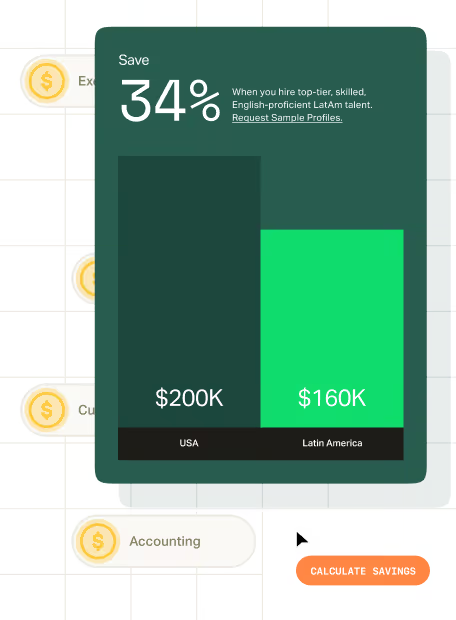
Salaries track local cost of living, so hiring the same seniority outside the US costs materially less. The table further down shows the ranges by seniority.
Access a deeper pool of senior iOS developers
Offshore hiring opens the whole global pool instead of the developers near your office. In regions like Latin America, you'll find engineers already shipping production iOS apps for US companies and keeping pace with each year's Swift and SDK changes.
Enhance productivity
A dedicated iOS specialist ships faster than a generalist splitting the week between your web app and your mobile backlog.
Scale faster
You can add or reduce mobile capacity as the roadmap moves, which matters most when an App Store release date drives the plan.
Shorten time to market
A developer who has taken native apps through App Store review before usually clears it faster, and with fewer rejections, than a team doing it for the first time.
Free your in-house engineers for higher-value work
Adding dedicated iOS capacity frees your existing engineers to stay on the work only they can do, instead of context-switching into Swift between sprints.
If you want a finished app rather than an engineer on your team, that's offshore iOS development, a different decision with a different set of providers.
What Skills Should You Look for in an Offshore iOS Developer?
You need to screen an offshore iOS developer on five things: Swift and Objective-C, the core iOS frameworks (UIKit, SwiftUI, Foundation, and Core Animation), fluency in Xcode, Core Data, and UI/UX judgment.
The gap between a developer who has shipped to the App Store and one who has only worked on internal builds shows up in your first release cycle.
Here is what each one looks like in a screening conversation.
Proficiency in relevant programming languages
A strong command of programming languages like Swift and Objective-C is non-negotiable for any iOS developer. Swift, Apple's preferred language, offers modern features that enhance code safety, performance, and design.
Objective-C still matters if your app carries legacy code someone has to maintain. Ask a candidate to walk you through code another engineer later picked up, and what that engineer said about it.
Knowledge of iOS frameworks
Look for working knowledge of UIKit, SwiftUI, Foundation, and Core Animation, and ask which of those the candidate has used in an app that shipped rather than in a tutorial.
A good offshore iOS developer also works fluently in Xcode, Apple's development environment: reading an Instruments trace, resolving a signing and provisioning problem, and getting a build through App Store submission. They should know Apple's Human Interface Guidelines well enough to keep the app user-friendly and compliant with platform standards.
UI/UX skills
You are not hiring a designer, but an app developer has to build what the designer handed over. Ask how a candidate handles dynamic type, dark mode, and layouts that have to hold up from an iPhone SE to an iPad.
Understanding of Core Data
Core Data matters if your app stores anything on the device. It handles local storage and retrieval, so the app keeps working when the connection drops.
Ask how a candidate has modeled data for an app that has to stay responsive with tens of thousands of records on device, and what they changed when it got slow.

How Much Does It Cost to Hire Offshore iOS Developers?
Hiring an offshore iOS developer in Latin America costs $30K to $108K a year depending on seniority, against $90K to $198K for the US equivalent. Here is the full comparison, according to Hire With Near's salary benchmarks:
For the most up-to-date figures, see Hire With Near's US vs Latin America Salary Guide.
Read the Latin America column as seniority, not as a discount bin. According to Hire With Near's 2026 State of LatAm Hiring Report, 98% of the engineering roles we filled last year went to mid-level or senior professionals.
A senior iOS developer in Latin America often costs less than a mid-level hire in the US, and that gap comes from where the person lives, not from hiring down a level.
The exact number you pay moves on four things.
Location
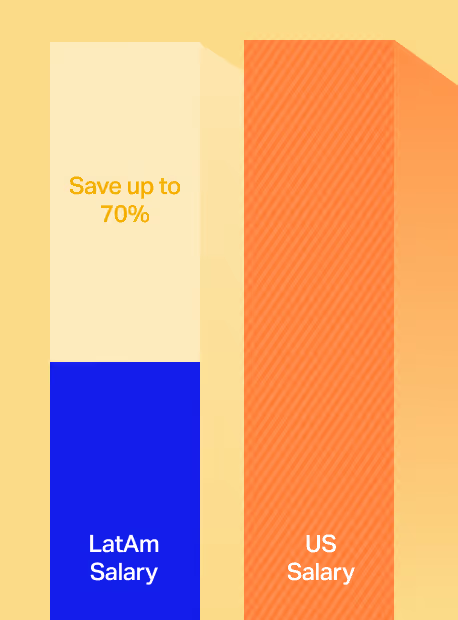
Different regions have different living costs, which directly influence salaries. Hiring mobile developers in LatAm costs 30 to 70% less than hiring the same seniority in the US, a gap that tracks cost of living rather than experience. Our IT salary guide sets those Latin American rates against US salaries role by role.
Experience level
Junior developers cost the least to hire but need more oversight. Mid-level developers balance cost and autonomy. Senior developers and specialists command higher rates for their architecture and leadership skills, and they're the ones worth paying for on a complex build.
Project complexity and scope
Advanced functionality, integrations, or custom design work push you toward more experienced developers, which raises the rate. A larger project may also need a small team rather than one engineer, which changes the shape of the budget entirely.
Hiring model
Fixed-price contracts simplify budgeting because the total is agreed up front, but they don't absorb scope creep. Hourly rates flex with changing requirements and make the final cost hard to predict.
Dedicated models, where you hire a full-time offshore developer through a one-time recruitment fee or a monthly staffing fee that includes payroll and compliance, give you a predictable monthly cost and a developer whose week is yours.
Whichever model you pick, ask every provider the same three questions: what the developer is paid, what the provider adds on top and how that fee is calculated, and who covers equipment, benefits, and local employment costs.
A published hourly rate and an all-in annual cost are rarely the same number. Our breakdown of how much offshore developers cost works through the components.
Why Choose iOS Developers from Latin American Countries?
Latin America gives you iOS developers who are online during your business day, which is the thing offshore hiring most often fails to deliver. That's why hiring developers in Latin America has become the default nearshore option for US mobile teams. If you nearshore your app development to this region, you get three things in particular.
Proximity and overlapping working hours
A Latin American iOS developer can join your stand-up at the hour you already run it. The region spans roughly the same band of hours as the continental US, so your hire is working while you are, whether your team sits on Pacific, Mountain, Central, or Eastern time.
Exact offsets move by an hour or two depending on where you are and the time of year, since most Latin American countries don't observe daylight saving.
What that overlap buys you is the rituals mobile work depends on: a live daily stand-up and a pull request reviewed the same afternoon it's opened. A crash on a TestFlight build gets diagnosed before the end of the day instead of overnight.
"Will they actually show up to my stand-up?" is the question I hear most about nearshore hiring when talking to the recruiters at Hire With Near. Here's their answer:
Cultural affinity and communication skills
The bar that matters for an iOS hire isn't conversational English. It's whether the developer can run an architecture review, write a pull request description someone else can act on, and explain a regression to a product manager.
Latin American engineers generally clear it. Argentina scores 575 on the 2025 EF English Proficiency Index, which puts it 26th of 123 countries and regions and in the High band. That is the strongest score in Latin America, and part of why hiring developers in Argentina is so common.
Communication is the part I pay the most attention to, so I asked Natasha Tarapow, Senior Recruiter for Development and Engineering at Hire With Near, what shows up in her screens with Latin American engineers:
In Latin America, people are very communicative. People really try to go above and beyond in their jobs.
— Natasha Tarapow, Senior Recruiter, Development and Engineering, Hire With Near
That tracks with what I hear from our team: proactive status updates and questions raised early, rather than a blocked ticket you find out about a week later.
Balance of cost savings and quality
Rates are lower than in the US, but the engineering standard isn't. The region's senior mobile engineers have spent years building for US companies and US App Store audiences.
That's the case for nearshore staffing: you control cost without trading down on who writes your code. If you're new to the region, our free guide to hiring remotely in Latin America covers the practical setup.
10 Most Trusted Sites to Hire an Offshore iOS Developer
The ten options below split into four models: vetted freelance marketplaces (Toptal, Lemon.io), nearshore staffing and talent platforms (Hire With Near, CloudDevs, Revelo), global talent networks (Andela, Second Talent), and app development firms (Netguru, Hyperlink InfoSystem, Cheesecake Labs).
This list includes specialized recruitment agencies and platforms with a proven track record of helping companies recruit top iOS talent, whether you want iOS developers for hire on a contract basis or a full-time engineer on payroll.
How I chose them: every company here holds a rating of at least 4.5 out of 5 with 50 or more client reviews on an established review platform (G2, Clutch, Trustpilot, GoodFirms, or ClearlyRated, client ratings only).
From the companies that cleared that bar, I compared iOS and mobile capability, where the developers sit, how each engagement is structured, and what each one publishes about pricing.
I’ve been writing comparisons for technical buyers for quite some time and the pricing model is the difference that surprises people most.
For a wider view, we also compare companies that hire developers in Latin America and LatAm staffing firms.
The companies below are in no particular order, and the list implies no ranking. The right fit depends on your roadmap, budget, timeline, and how you like to work. The goal here is to help you build a shortlist worth calling.
One distinction matters more than any other: whether you are buying a developer's full attention or a slice of it. A Head of Growth at an e-commerce brand described the version that goes wrong:
The main issue that we run into with Upwork people is they're oftentimes juggling a number of different clients. We actually just had a developer from Brazil that we had to let go. The main issue there was just the quality of the code he was deploying.
That is a problem with the split-attention model rather than with any region's engineers. Marketplaces and project firms are built for flexible capacity.
Staffing partners are built for a dedicated, full-time hire. Both are legitimate answers to different questions, so read the "Best for" line on each listing before you read anything else.
All ten can put a competent Swift developer in front of you. You get:
- developers who have shipped native iOS apps to the App Store
- engineers who can work in English with a US team
- a screening layer between you and an open job board
Every company on this list clears that bar.
What matters are the differences: where the developers sit, how much of their week is yours, who handles payroll and compliance, and what happens if a hire doesn't work out.
Here is how the ten compare at a glance.
Note: The ratings above are current as of September 2026. We re-check third-party review sites regularly and update the list whenever a score or review count changes.
1. Hire With Near
Website: hirewithnear.com
Headquarters: San Antonio, Texas
Rating: 4.9/5 on G2 (150+ reviews) as of September 2026
Services: Staffing and recruiting, direct hire, and staff augmentation
Focus Regions: Latin America only
Hire With Near is a staffing and recruiting agency that places full-time remote talent in Latin America across software engineering, AI, data, finance, sales, and operations, handling sourcing, vetting, payroll, and compliance. Most of the work here is nearshore IT and tech recruiting.
We're on this list as the option that places a full-time employee rather than a contractor on rotation, so every hire works your hours.
We have hired for 950+ companies, including Expensify and Deel, hold a 4.9 rating on G2 across 150+ reviews, and are ranked No. 118 on the 2026 Inc. 5000 list of the fastest-growing private companies in America.
One US healthtech startup hired seven senior engineers through us, including a senior mobile engineer, saving $323,000 a year against US salaries. Time to hire averaged 14 days, with its full eight-step interview process intact.
Key features:
- One partner, one process: First candidates in 3 to 5 days with video introductions, and most of our clients make a hire in under three weeks
- Quality-first approach: We fill 97% of the roles we take on and hold a 9.1 client satisfaction score, because our recruiters screen for real-world impact rather than keywords
- Long-term retention: 80% of our hires stay 2+ years, long enough to build real knowledge of your codebase
Best for: US companies that want a dedicated, full-time iOS developer working their hours as part of the team, with payroll and compliance handled.
Limitations: We recruit in Latin America only, so if you want engineers in Eastern Europe or Asia, another option here fits better. We're also not built for per-project or short-term freelance work, and we're not the lowest-priced option on this list.
Pricing: A one-time recruitment fee for direct hire, or a monthly staffing fee that includes payroll and compliance. Interviews are free and you pay nothing until you hire.
2. Toptal
Website: toptal.com
Headquarters: San Francisco, California
Rating: 4.7/5 on G2 (270+ reviews) as of September 2026
Services: Vetted freelance talent for iOS and mobile development, design, finance, and product
Focus Regions: Global
I included Toptal because its screening funnel is the most transparent one in this category. The company publishes a pass rate at every stage, from a language and personality screen through live technical screening and a paid test project, and reports that roughly 3% of applicants make it through.
For an iOS brief that means Swift and Objective-C engineers tested on real work rather than judged on a profile. Goldman Sachs, Volvo, and Henry Schein are named clients. If Toptal is on your shortlist, our roundup of Toptal alternatives covers who else fits.
Key features:
- No-risk trial of up to two weeks, with payment only if you decide to keep working together
- Hourly, part-time, full-time, and project-based engagements, so scope can change without renegotiating
Best for: Teams that need senior iOS capability for a defined stretch of work and want the vetting handled before the first call.
Limitations: Talent is engaged as freelancers rather than employees, so long-term retention sits with you. Rates sit at the premium end of the category, and developers are distributed worldwide, so time zone overlap depends on the match.
Pricing: Not publicly listed. Rates are quoted per engagement after a scoping call.
3. Lemon.io
Website: lemon.io
Headquarters: Not publicly listed
Rating: 4.8/5 on Trustpilot (295+ reviews) as of September 2026
Services: Pre-vetted developers for startups, including iOS and mobile engineers
Focus Regions: Europe and Latin America
Lemon.io earned a spot on this list for speed backed by a real filter. The platform runs a four-step vetting process covering technical skill and communication, and says about 1% of applicants are accepted into its community.
Matching happens within 24 to 48 hours because the engineers are screened before you ever describe the role. Developers work remotely from Europe and Latin America, which gives US teams at least partial overlap depending on the match.
Key features:
- Up to 20 prepaid risk-free hours to evaluate a developer, plus a replacement guarantee
- Published hourly rates starting around $55 per hour, which is unusual transparency for this category
Best for: Startup teams that need an iOS engineer contributing this month and are comfortable with an hourly, contract-style arrangement.
Client perspective: "Lemon cares a tremendous amount about finding high quality developers that are the right long term fit." (Trustpilot review)
Limitations: Engagements are hourly contracts rather than permanent hires, so this is capacity rather than headcount. The pool skews toward startup-stage work, and European matches overlap only part of a US workday.
Pricing: Hourly, published from roughly $55 per hour depending on seniority and location.
4. CloudDevs
Website: clouddevs.com
Headquarters: Wilmington, Delaware
Rating: 4.9/5 on G2 (160+ reviews) as of September 2026
Services: Vetted Latin American developers, including iOS and mobile, with payroll and benefits handled
Focus Regions: Latin America
What stood out about CloudDevs is how much of the administrative load it absorbs for an hourly model. The platform sources exclusively in Latin America, with developer hubs in Mexico, Brazil, Argentina, Colombia, and Peru, and handles payroll, compliance, and health benefits on top of the match.
Vetting runs in three stages: a communication and English assessment, a technical evaluation by senior engineers, and a live coding challenge monitored for plagiarism. The company advertises matching within 24 hours and savings of around 60% versus US developer costs.
Key features:
- Talent sourced only in Latin America, so working hours line up with US teams by default
- Weekly rolling contracts with no minimum commitment period, plus a seven-day risk-free guarantee
Best for: Teams that want a Latin American iOS developer on an hourly, cancel-anytime arrangement without setting up contracts themselves.
Limitations: The model is built around hourly engagement rather than permanent placement, so it suits variable workloads better than a core team hire. Rates vary widely by seniority and commitment length, so annual budgeting is less predictable.
Pricing: Hourly, published from roughly $45 per hour, with reduced rates on long-term engagements.
5. Revelo
Website: revelo.com
Headquarters: Not publicly listed
Rating: 4.7/5 on G2 (129+ reviews) as of September 2026
Services: Pre-vetted Latin American engineers, development squads, and project delivery
Focus Regions: Latin America (18 countries)
Revelo is here because of the breadth of its Latin American network and how quickly it converts that into a shortlist. The platform screens for identity, skills, and human fit, then returns a curated shortlist within 48 to 72 hours, with a stated 14-day average from brief to onboarded engineer.
Mobile is an explicit specialty, covering native iOS alongside React Native and Flutter. Revelo reports working with more than 2,500 companies, including Amazon, Meta, and Dollar Shave Club.
Key features:
- Engineers available across 18 Latin American countries, hired on month-to-month terms rather than long contracts
- Payroll, benefits, taxes, and local compliance handled by Revelo in each country
- 14-day risk-free trial, with no payment until you hire
Best for: Companies that want a senior Latin American iOS engineer quickly, with the employment and compliance mechanics handled for them.
Limitations: The model centers on month-to-month engagement rather than direct employment, so retention depends on you renewing. The enterprise client list suggests processes built for larger engineering organizations.
Pricing: Not publicly listed. The company cites savings of 30% to 50% versus comparable US hires.
6. Andela
Website: andela.com
Headquarters: Not publicly listed
Rating: 4.7/5 on G2 (110+ reviews) as of September 2026
Services: Global technical talent marketplace, engineering team augmentation, and fully managed delivery teams
Focus Regions: Global, including Latin America, Europe, Africa, and Asia
The reason Andela made this list is scale and enterprise credibility. Since 2014 the company has trained more than 200,000 technologists and now qualifies talent through a marketplace that draws on behavioral data from millions of developers on Codewars.
Engineers work from Europe, Brazil, Kenya, India, and North America, and published profiles include Swift and Objective-C experience. Andela names GitHub, Goldman Sachs, SoFi, Capital One, and Johnson & Johnson among its clients, and its 2026 positioning leans heavily toward AI engineering.
Key features:
- Two engagement paths: augment your existing team, or hand a fully managed team an outcome to deliver
- Talent spread across more than 135 countries, so time zone coverage can be specified as a requirement
Best for: Larger engineering organizations that want vetted technical talent at scale, or a managed team to own a workstream end to end.
Limitations: The emphasis is on AI engineering rather than mobile, so an iOS brief needs spelling out carefully. Vetting steps and matching timelines are not published, and the enterprise orientation is heavy for a small team hiring one developer.
Pricing: Not publicly listed. Individual talent profiles show monthly rate ranges.
7. Second Talent
Website: secondtalent.com
Headquarters: San Francisco, California, with regional offices across Asia
Rating: 4.9/5 on G2 (105 reviews) as of September 2026
Services: Tech talent placement across Asia, including iOS, Android, and mobile app developers, plus employer of record support
Focus Regions: Asia (10 markets)
I chose Second Talent for teams that mean Asia when they say offshore. The company recruits across ten markets, including India, Vietnam, the Philippines, Indonesia, and Singapore, and lists iOS Developer as a named role.
Candidates go through coding tests, peer interviews, and stack-specific role checks before they are matched, and the company advertises matching within 24 hours. It reports a 92% talent retention rate and payroll savings of 50% to 70%.
Key features:
- Coverage of ten Asian markets, with engineers scheduled to work US hours and four to six hours of overlap
- Direct hire and employer of record options, so you can place someone without setting up a local entity
Best for: Companies committed to hiring in Asia that still want US working-hour overlap written into the arrangement.
Limitations: Overlap is built through shifted schedules rather than geography, which suits some engineers and not others. The pool is engineering and tech only, so it won't help if you later hire outside technology.
Pricing: Not publicly listed. There is no cost until you hire.
8. Netguru
Website: netguru.com
Headquarters: Poznań, Poland
Rating: 4.8/5 on Clutch (73 reviews) as of September 2026
Services: Native iOS and Android app development, product design, QA, and maintenance
Focus Regions: Eastern Europe
Netguru caught my attention for depth on native iOS specifically rather than general software delivery. The firm builds in Swift and Objective-C, pairs engineering with UI/UX design and QA, and carries the work through maintenance after launch.
With 15-plus years on the market, more than 400 employees, and over 2,500 delivered projects, it has the bench to staff a full app team at once. Client work includes UBS, Merck, Delivery Hero, and Vinted.
Key features:
- Five-stage delivery process covering discovery, design, development, QA, and post-launch support
- Both project delivery and team extension models, so an existing in-house team can be supplemented rather than replaced
Best for: Companies that want an app designed, built, tested, and maintained by one accountable team rather than hiring individual developers.
Client perspective: "The consistent and very high quality of professionalism displayed by all levels of the Netguru team." (CTO, TransACT Communications, via Clutch)
Limitations: This is an agency engagement rather than a hire, so the institutional knowledge lives with the firm. Poland-based teams overlap with US mornings only, and pricing is quoted per project.
Pricing: Not publicly listed. Estimates are tailored after a scoping conversation.
9. Hyperlink InfoSystem
Website: hyperlinkinfosystem.com
Headquarters: Jersey City, New Jersey, with offices in Ahmedabad, London, Dubai, and Toronto
Rating: 4.8/5 on Clutch (174 reviews) as of September 2026
Services: iOS and Android app development, web, AR/VR, blockchain, and AI development
Focus Regions: India, with delivery for US, UK, and Middle East clients
What put Hyperlink InfoSystem on the list is volume and price point. Founded in 2011, the company reports more than 1,200 developers and over 4,500 mobile apps delivered. That is a different kind of evidence than a boutique studio offers: this team has shipped the same class of app many times.
Swift, Kotlin, Flutter, and React Native are all in scope, and its Clutch profile lists an hourly range of $25 to $49, the lowest published range on this list.
Key features:
- Three engagement models: fixed price, dedicated developers billed hourly, and on-site contract support
- Published client roster including Tata, Disney, BBC, and DHL
Best for: Budget-conscious teams that need an iOS app built to a defined scope, or extra development capacity at a low hourly rate.
Client perspective: "We're impressed with their skills and project management." (Co-founder, delivery company, via Clutch)
Limitations: India-based delivery means minimal live overlap with US business hours, so daily stand-ups and same-day code review are hard to sustain. Very large teams can also mean more turnover on your account.
Pricing: $25 to $49 per hour published on Clutch, with fixed-price quotes per project.
10. Cheesecake Labs
Website: cheesecakelabs.com
Headquarters: San Francisco, California, and Florianópolis, Brazil
Rating: 4.9/5 on Clutch (64 reviews) as of September 2026
Services: Product engineering across mobile, web, cloud, and IoT, plus embedded nearshore teams
Focus Regions: Brazil, serving US clients
Cheesecake Labs belongs on this list for its mobile pedigree in Brazil, where Clutch has ranked it the top mobile app developer in the country. The studio has been shipping software for 13-plus years, with more than 300 products delivered.
It places embedded engineering teams that work inside a client's process rather than at arm's length, and because the team sits in Brazil, the working day overlaps a US schedule closely. Client work includes MoneyGram, Tapcart, and Knapsack.
Key features:
- Embedded teams that work inside your workflow, or end-to-end ownership of delivery, depending on what the project needs
- Product engineering across mobile, web, cloud, IoT, and LLM integrations, useful when an iOS app is one piece of a larger system
Best for: Companies that want a nearshore product team to own the design and engineering of a mobile product.
Client perspective: "What sets Cheesecake Labs apart is their ability to operate as a true engineering partner, not just a vendor." (CEO, Knapsack, via Clutch)
Limitations: This is a studio engagement rather than a hire, so the team is shared across the studio's portfolio. Its 2026 positioning leans toward AI and data work, and no pricing is published.
Pricing: Not publicly listed.

Final Thoughts
Every company here cleared the same bar: 4.5 or higher on an established review platform, with at least 50 client reviews behind the score. What separates them is how the engagement is shaped, not how good the work is.
Use a marketplace like Toptal or Lemon.io when the work has an end date. Use a development firm like Netguru, Hyperlink InfoSystem, or Cheesecake Labs when you want an app delivered rather than a person hired.
Use a staffing or talent partner like Hire With Near, CloudDevs, or Revelo when the iOS work is ongoing and you want someone who sticks around long enough to know your codebase. If per-project work has burned you before, our guide tp alternatives to freelancing platforms is the next read.
That last group is us. At Hire With Near, we help US companies hire iOS developers across Latin America who work your business hours, as full-time members of the team, and I'll tell you when we're not the right fit for what you're building.
If you'd rather not sort the shortlist alone, the fastest path is a 20-minute call. Book a free consultation and we'll share salary benchmarks for the seniority you need and walk you through the process. No pitch, no commitment.
{{consultation}}
Frequently Asked Questions
How much does it cost to hire an offshore iOS developer?
A mid-level iOS developer in Latin America costs $48K to $72K a year, against $96K to $166K for a comparable US hire, according to our salary data. Junior developers run $30K to $46K and senior developers $72K to $108K.
What moves a candidate between those bands is years shipping production apps, whether they've owned an App Store release end to end, and whether they can own architecture rather than implement someone else's spec. Rates elsewhere offshore can go lower, so compare all-in annual cost rather than headline hourly rates.
What skills should an offshore iOS developer have?
An offshore iOS developer needs working command of Swift and Objective-C, fluency in Xcode, and real knowledge of UIKit, SwiftUI, Foundation, and Core Data.
Beyond the stack, look for someone who has taken an app through App Store review, can reason about performance and memory on older devices, and writes code another engineer can pick up.
Our engineering recruiters consistently flag one more signal: the ability to explain a technical decision to someone who isn't a developer.
Where can I hire nearshore iOS developers, and how is that different from offshore?
You can hire nearshore iOS developers across Latin America through staffing partners such as Hire With Near, CloudDevs, and Revelo, or through firms with regional delivery teams like Cheesecake Labs.
Nearshore and offshore describe distance, not quality: nearshore means the developer's working day overlaps yours, so stand-ups, code review, and urgent fixes happen live instead of overnight. For the day-to-day version of that difference, see the questions tech leaders ask about hiring developers in Latin America.
Where can I hire Swift app developers?
You can hire Swift app developers through any of the ten options on this list, but they hand them to you differently. Marketplaces such as Toptal and Lemon.io engage Swift engineers on hourly or project terms, so you get a share of a developer's week.
Staffing partners such as Hire With Near, CloudDevs, and Revelo place them as full-time members of your team, with payroll and compliance handled for you.
Say in the brief whether your codebase is modern Swift and SwiftUI or carries Objective-C legacy, because those two briefs attract different candidates.
Where can I hire Xcode developers?
You hire Xcode developers the same way you hire any iOS developer: through the marketplaces, talent platforms, staffing partners, and app development firms on this list. Xcode is Apple's development environment rather than a separate skill set, and every working iOS engineer is in it daily.
What's worth screening is depth: whether a candidate can read an Instruments trace, resolve a signing and provisioning problem, and set up a CI build that produces a signed archive without help.
How do these sites vet iOS developers before you interview them?
Marketplaces typically run a skills screen and a profile review; vetted platforms add a technical interview and a live coding exercise; staffing partners screen against the role you described and present a shortlist with video introductions. Vetting depth is the biggest real difference between the options on this list.
At Hire With Near, candidates take a technical screen plus a small real-world task, such as debugging or building a basic API with tests, reviewed live on a call. Natasha Tarapow says the strongest signal is whether a candidate can walk through "a project they've worked on" and explain their actual role in it. Ask any provider to show you their steps.
What other mobile and engineering roles can I hire from Latin America?
Beyond iOS developers, US companies routinely hire the rest of the mobile team from Latin America, including Android app developers, React Native developers, Flutter developers, and QA engineers. Most app teams hire at least two of these together, because a native iOS release usually ships alongside an Android build and needs test coverage to hold up through App Store review. All of them work during your business hours at the salary levels shown above.