%203.svg)
Key Takeaways
- When outsourcing developers, choose Latin America over Asia or Eastern Europe to keep time zone differences under three hours while saving 36–56% on salaries.
- Outsourcing developer best practices require clear project requirements, a real-world technical assessment, and defined communication protocols before the first line of code is written.
- Select outsourcing partners by verifying their technical screening process, not just their portfolio—strong sourcing filters determine whether you get top-tier talent or mediocre contractors.
You’ve got an open developer role and a backlog that keeps growing. The engineers you want are either too expensive, already employed, or disappear after the third interview. So outsourcing sounds like the obvious next move.
Except the last time you tried it, you got someone who looked great on paper but couldn’t keep up with your standups, had a 12-hour time zone gap that made debugging a fire feel like coordinating a military operation, and left after five months.
Now your team is skeptical, your roadmap is behind, and you’re back to square one.
This guide walks you through the best practices for outsourcing developers, from choosing the right location and model to screening candidates properly and setting up your team to succeed.
If you follow these practices, you’ll avoid the mistakes that make outsourcing a nightmare and get the engineering capacity you need.
How Does Outsourced Software Development Work?
Outsourced software development works by engaging external developers to handle specific tasks, giving your team the capacity to focus on core product priorities without the overhead of full-time US hires.
This process typically starts with identifying the project scope and requirements, followed by selecting a suitable outsourcing partner based on their track record and expertise in software development. Once a partner is chosen, a contract is established that outlines the project’s objectives, deliverables, and timelines.
There are various models of development outsourcing that suit different needs, including the dedicated team, fixed price, and time and materials models.
Businesses are increasingly embracing this approach thanks to the wide range of benefits it provides, and statistics show that it is the most commonly outsourced IT function.
Benefits of Outsourcing Work to Developers
Outsourcing developers—sometimes called staff augmentation—means bringing in external developers to work alongside your team without adding permanent headcount.
You manage their day-to-day work, they work inside your systems and processes, but the employment relationship sits with an agency or third party.
It's a different model from hiring, and it has a specific set of advantages worth knowing before you get into the best practices:
- You can move fast. There's no lengthy recruiting cycle. Staff augmentation providers already have developers on their bench. You tell them what you need, and you’ve got someone working on your code in days.
- You scale without committing. If your roadmap needs an extra back-end developer for one quarter, you don't have to build a business case for a permanent hire. You bring someone in for the engagement, and when it wraps up, you're done.
- You get skills you don't have in-house. If you need a specialist—someone with deep experience in a specific framework or technology—you can access that expertise without needing to hire (and then potentially let go of) a full-time specialist.
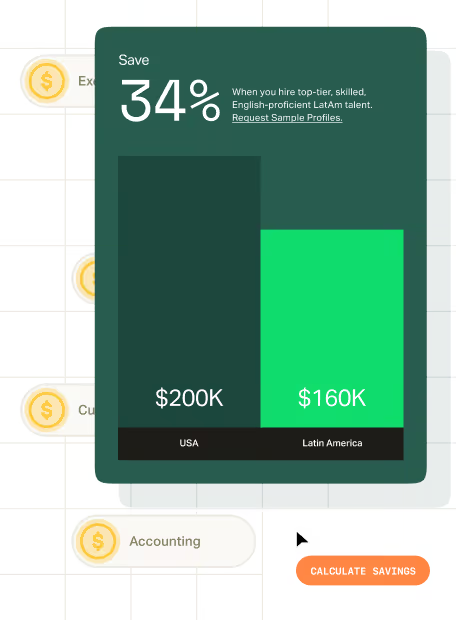
- The cost is lower than US hiring. Especially when you're working with nearshore development teams in Latin America, you're paying significantly less than equivalent US rates while getting developers who work in your time zone and join your standups in real time.
It's worth understanding where outsourcing ends and staff augmentation begins—they're often used interchangeably, but the distinction matters when you're deciding which model fits your situation.
{{state-latam-hiring}}
10 Best Practices for Outsourcing Developers
Successful developer outsourcing requires upfront clarity on requirements, careful location and model selection, rigorous vetting, and structured communication—skipping any of these steps is where most outsourcing relationships break down.
1. Understand your requirements in detail
Before engaging in outsourcing software development, it’s crucial to thoroughly understand your project requirements, including budget constraints, the specific software outsourcing services you need, and the programming languages involved.
This clarity will help make communication with potential outsourcing partners more effective, leading to accurate proposals and successful outcomes. By detailing these factors, you can select a partner whose domain expertise best aligns with your project scope.
2. Choose the right outsourcing location
Selecting the appropriate location for outsourcing can significantly impact the success of your software development projects. Consider factors such as time zone differences, cultural differences, language proficiency, and cost efficiency when deciding on an outsourcing destination.
Here are some of the top regions to consider when outsourcing developers:
The United States
Onshore outsourcing within the US comes with minimal time zone differences and cultural alignment, simplifying communication. However, the cost of hiring developers can be significantly higher than in other regions.
Eastern Europe
Eastern Europe offers a blend of affordability and technical expertise. Developers here are known for their strong engineering skills and, often, proficiency in English. That said, its time zones differ significantly from those in the US, so outsourcing there may require flexible scheduling.
Asia
Asia provides cost-effective solutions with a vast talent pool. Countries like India and the Philippines are popular for their skilled developers. Like Eastern Europe, however, the main drawback is the considerable time zone differences, which can impact real-time collaboration.
Latin America
Latin America is ideal for nearshoring software development, thanks to its proximity to and and cultural similarities with the US. Although costs are higher than in Eastern Europe or Asia, its large pool of skilled developers still offers more competitive pricing than those in the US.
For a closer look at why LatAm developers are a strong fit for US engineering teams, watch this Near video.
The cost difference is significant.
Here’s how LatAm developer salaries compare to US rates across common roles:
mpensation varies by experience, tech stack, and country. For complete benchmarks across dozens of roles, see the Near Salary Guide (US vs LatAm).
3. Select the ideal outsourcing model
Choosing the right outsourcing model is crucial for aligning your software development projects with your business goals, budget, and flexibility needs. Here are the primary outsourcing models available:
- Fixed price model: This model is ideal for projects with well-defined scopes and requirements. It offers cost predictability but may lack flexibility for changes during development.
- Time and materials model: Suitable for projects with evolving requirements, this model provides flexibility by charging based on actual time and resources used.
- Dedicated team model: Best for long-term, complex projects, this model involves hiring an external team of developers dedicated exclusively to your project, offering consistency and deep project knowledge.
By understanding each model’s strengths and aligning them with your project needs, you can ensure efficient resource utilization and successful project outcomes.
4. Partner with the right outsourced developers
Finding the right outsourcing partner involves several key steps and strategies to ensure a successful collaboration. Here’s how to connect with experienced developers and the process for hiring them:
Methods for connecting with talent
Here are some effective strategies to connect with skilled outsourced developers. These approaches will help you find the right talent to enhance your software development projects.
- Use your professional network: Leverage your existing contacts to find skilled developers who come highly recommended.
- Search on freelance platforms: Explore platforms like Upwork or Freelancer to find independent developers with diverse skill sets.
- Work with a software development agency: Collaborate with agencies that specialize in providing dedicated development teams for your projects.
- Partner with a recruitment company: Utilize recruitment firms that specialize in sourcing top-tier development talent for your specific needs.
One of our senior recruiters at Near notes a useful sourcing signal: candidates with experience at startup environments or recognized FAANG companies tend to be reliably strong performers. Their backgrounds indicate they’ve operated under real engineering standards.
Process for hiring developers
Hiring an outsourced developer requires a strategic approach to ensure you find the right talent for your software development projects. Follow these steps to streamline the process and hire outsourced developers who align with your project needs.
- Define the role requirements: Clearly outline the skills, experience, and expertise developers need to complete your project successfully.
- Screen potential candidates: Evaluate resumes and portfolios to shortlist candidates who meet your criteria.
- Conduct interviews: Assess technical skills and cultural fit through interviews and coding tests.
- Check references: Verify past work experiences and client feedback to ensure reliability.
- Negotiate terms: Discuss and agree on contract terms, including rates, timelines, and deliverables.
- Onboard the developer: Integrate the new hire into your team, providing necessary resources and access to tools.
5. Clarify project goals and requirements
Clearly defining your project’s goals and requirements is essential for successful outsourcing. This clarity helps avoid misunderstandings and ensures that both parties are aligned on the project’s objectives, deliverables, and timelines.
When drafting a contract, include detailed deliverables, a realistic timeline, a comprehensive budget, and specific contract parameters. This comprehensive approach ensures both parties understand their responsibilities and expectations, minimizing potential conflicts and facilitating smoother collaboration.
6. Consider using agile/DevOps strategies
Incorporating agile and DevOps methodologies can improve collaboration and flexibility in your outsourced software development projects. A survey by Atlassian found that DevOps had a positive impact on 99% of organizations that implemented it.
These strategies promote iterative development, continuous integration, and faster delivery cycles, leading to improved project outcomes.
Some outsourced developers already specialize in practices like DevOps, so consider partnering with them to take advantage of their extensive expertise and streamline your development process.
7. Establish performance metrics
Setting performance metrics is vital for monitoring the progress and quality of your outsourced development projects.
Examples of measurable metrics include code quality, delivery timelines, bug rates, and client satisfaction. These metrics help evaluate the performance of the outsourced software development team and ensure that the project stays on track and meets the desired standards.
8. Implement communication channels and protocols
Effective communication is essential in outsourcing, as it ensures alignment and timely updates between the in-house team and outsourced developers, reducing errors and missed deadlines.
Establish clear communication channels and protocols to facilitate regular updates, feedback, and collaboration between your in-house team and the outsourced developers. Frequent meetings and progress updates are crucial for addressing issues promptly and ensuring the project stays on track.
According to our recruiters, one of the clearest separators between excellent developers and average ones is how they communicate technical decisions.
The best candidates can explain complex choices to non-technical stakeholders—not just other engineers.
If a developer can’t translate their reasoning into plain language during an interview, that’s a signal they may struggle in cross-functional team environments.
9. Use project management tools
Project management tools have been strongly linked to high-performing projects, as they can streamline the development process and enhance transparency. These tools facilitate collaboration, task management, and progress tracking, ensuring that all stakeholders are aligned and informed.
Here are some popular tools widely used in the industry:
- Jira: A versatile tool favored for its robust issue- and project-tracking capabilities, ideal for agile development teams.
- Trello: Known for its user-friendly interface, Trello uses boards and cards to organize tasks and projects visually.
- Asana: A comprehensive tool that helps teams manage projects, tasks, and workflows efficiently with its intuitive design.
- Basecamp: Offers a simple and effective way to manage projects, with features for task management, file sharing, and team communication.
- Slack: While primarily a communication tool, Slack integrates with various project management platforms to facilitate seamless collaboration.
10. Determine a post-development plan
Having a post-development plan is crucial for the long-term success of your software projects.
Do you need continued support and maintenance services after the project is completed? Some providers offer ongoing support packages where they address any post-launch issues, implement updates, and ensure the software remains up to date with the latest technologies.
If you prefer to manage the software internally post-development, it’s essential to establish a comprehensive hand-off process that includes detailed documentation of the software architecture, codebase, and any specific configurations. Open and clear communication between the outsourced team and your internal team during the transition phase is vital.
By planning for these post-development considerations, you can maintain the quality and functionality of your software over the long term.

Final Thoughts
Outsourcing developers makes a lot of sense in the right situation. If you need to move fast, need skills you don't have in-house, or aren't ready to commit to permanent headcount, outsourcing or staff augmentation gives you the capacity to keep building without the overhead of a full hiring process.
Follow the practices in this guide, and you'll avoid most of the pitfalls that make outsourcing frustrating: unclear requirements, wrong location, weak vetting, poor communication setup.
That said, if you're starting to think less about filling a short-term gap and more about actually building a team—developers who know your codebase, contribute to your architecture decisions, and stick around long enough to become genuinely valuable—outsourcing isn't really the right model for that.
Increasingly, we see engineering leaders move away from rotating contractors and toward hiring their own developers directly, often in Latin America, where the talent is strong, and the cost is still a fraction of US hiring.
According to Near’s State of LatAm Hiring Report, which analyzed over 2,000 placements, demand for software engineers grew 250% year over year, making it one of the fastest-growing roles US companies are filling with nearshore talent.
If that's where your thinking is going, this is worth a read: Why Forward-Thinking CTOs Are Turning to LatAm to Build Better Engineering Teams.
Frequently Asked Questions
What are the potential challenges of outsourcing software developers?
Outsourcing software developers can pose several challenges:
- Overcoming communication barriers: Outsourced developers in different regions may follow different cultural practices in the workplace, which could result in communication issues. Prevent this by establishing clear communication protocols and using collaboration tools to facilitate collaboration.
- Managing time zone differences: Address significant time differences by implementing flexible working hours for your team and the outsourced developers to allow for overlapping work schedules. Alternatively, minimize time differences by opting for nearshore outsourcing.
- Ensuring quality and control: You can ensure the quality of outsourced development projects by selecting an outsourcing partner with a proven track record, using performance metrics, and conducting regular progress reviews.
By addressing these challenges with targeted solutions, you can ensure successful outsourcing, enhancing your software development capabilities while maintaining efficiency and quality.
What are the best developer roles to outsource?
Strategically outsourcing key roles can optimize software development while reducing costs. Some of the top roles to consider include:
- Front-end developers: Specialize in user interface and experience, bringing creative expertise in design trends.
- Back-end developers: Focus on server-side logic and databases, ensuring software functionality and efficiency.
- Full-stack developers: Handle both front-end and back-end tasks, ideal for comprehensive project needs.
- Mobile app developers: Utilize expertise in iOS, Android, and cross-platform development for high-quality mobile solutions.
- DevOps engineers: Enhance development and operations processes for efficient workflows and faster delivery.
- QA/testers: Ensure thorough testing and bug-free software releases.
How do you protect your intellectual property when outsourcing work to external developers?
To safeguard your intellectual property during outsourcing, establish clear contractual agreements that outline intellectual property (IP) rights and confidentiality clauses. Ensure your outsourcing partner complies with these terms and uses security measures to protect sensitive information.
Regular communication and audits can further reinforce IP protection, while nondisclosure agreements (NDAs) offer an additional layer of security. By taking these precautions, you can collaborate with external developers while maintaining control over your valuable assets.
Which companies specialize in helping US businesses hire developers from Latin America?
Several specialized staffing and recruiting firms focus exclusively on connecting US companies with top LatAm developers, like Hire With Near.
These companies handle everything from technical vetting and cultural fit assessment to payroll and compliance.
When choosing a company to help hire LatAm developers, look for firms with verified client reviews, transparent pricing structures, rigorous technical screening processes, and proven placement track records.
The best firms understand regional differences within Latin America and can guide you to the right countries based on your specific technical stack and budget requirements.
What development roles can I hire from Latin America?
Beyond the standard roles. Latin American talent pools offer specialists across the full technical spectrum.
You can hire AI developers for machine learning projects, React developers and Vue.js developers for modern frontend frameworks, and Node.js developers and Python developers for backend systems.
LatAm also produces strong data engineers, API developers, MERN stack developers, blockchain developers, and RPA developers for automation workflows.
Which industries most commonly outsource software development to Latin America?
While outsourcing development happens across almost every sector, the highest concentration tends to come from a few specific industries. IT and tech companies are the most active, whether it's scaling engineering teams for product builds or augmenting internal capacity during growth phases.
SaaS companies lean heavily on nearshore developers because the asynchronous-friendly nature of SaaS work translates well to distributed teams.
And FinTech businesses have become some of the most enthusiastic adopters. They need strong backend and security-focused engineering talent but can rarely compete with big bank compensation in US hiring markets.
Latin America's combination of technical depth, time zone alignment, and cost efficiency makes it a practical answer for all three.
Can I outsource game and immersive technology development to Latin America?
Yes, you can outsource game and immersive tech development to LatAm.
You can hire Unity developers from Latin America for game development, interactive training simulations, and XR applications. Brazil and Argentina, in particular, have active gaming and interactive media communities producing experienced talent.
For immersive experiences, virtual reality developers are available across the region with hands-on experience in platforms like Unreal Engine, Oculus SDK, and WebXR.
As with other specialized roles, the talent pool is smaller than for mainstream stacks, but the time zone alignment with the US makes collaboration on iterative, feedback-heavy projects like game development significantly smoother than working with offshore teams in Asia or Eastern Europe.







.webp)



%203.svg)

.avif)






%20(1).avif)

%20(1).png)