%203.svg)
Key Takeaways
- US companies can hire developers in Panama for roughly 49% to 63% less than an equivalent US software engineer, in a dollarized economy that runs on Eastern Standard Time year-round with no daylight saving.
- Panama’s developer talent pool is real but small, concentrated almost entirely in Panama City around the Ciudad del Saber innovation cluster and Universidad Tecnológica de Panamá.
- There are four ways to hire developers in Panama: freelance marketplaces, direct hiring, a nearshore staff augmentation company, or a staffing and recruiting firm. The choice comes down to whether you need short-term project help or a long-term full-time developer on your team.
When you hire developers in Panama, you get a natively dollarized economy, no exchange-rate risk, a close alignment with US Eastern Time year-round, and compensation rates significantly below what equivalent engineers earn in the US.
If you’re considering nearshoring to Panama, the practical questions are simple: how does the hiring process work, what does a competitive salary look like locally, and is Panama the right fit for your specific stack?
In this article, I cover everything US tech leaders need to know to hire a developer in Panama: what hiring a software engineer costs, how deep the local candidate pool really is, and the four primary hiring routes available, whether you build your team there or hire software engineers elsewhere in Latin America.
Why Should I Hire Developers in Panama?
Panama’s case rests on three things: it shares your working day every day of the year, it runs on the US dollar, and developer salaries sit well below US rates.
Panama shares your working day, year-round
Panama maintains one steady schedule year-round without daylight saving shifts, matching US Eastern time in the winter and sitting just an hour behind in the summer as US clocks move forward. Eastern and Central teams enjoy full-day overlap, while West Coast teams still get a solid window covering live stand-ups and same-day code reviews.
That overlap is a big part of why US companies look at the region. In Hire With Near’s research on why US companies hire in Latin America, 30% of the companies studied were moving away from an offshore region, and time zone overlap was the reason.
It’s the same reason teams hire Latin American developers rather than staff a night shift, a shift that AI and time zones are accelerating.
Panama runs on the US dollar
The balboa is the official currency, pegged one to one with the US dollar, and the dollar itself is legal tender and what actually circulates. The arrangement dates to a monetary agreement signed on 20 June 1904, the longest-standing dollarization in Latin America.
No exchange-rate risk sits under a salary you agreed to six months ago.
Developer salaries in Panama run well below US rates
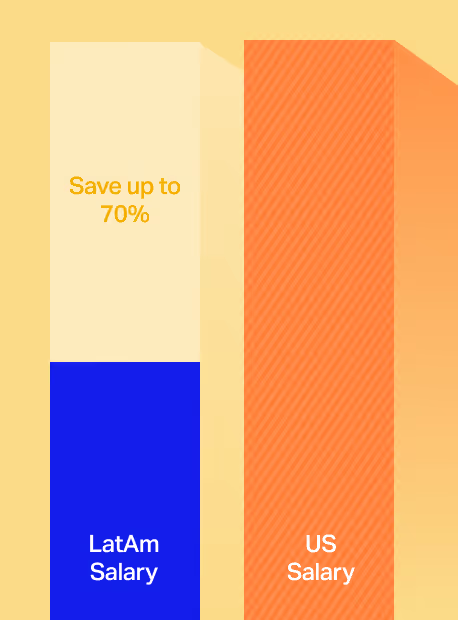
Salary is where the Panama math gets interesting fast. A senior software engineer in Latin America runs $72K to $108K a year, against $140K to $238K for the same seniority in the US, a savings range of 30–70% depending on level, and Panama sits inside that band.
Put another way: the budget that covers one experienced US engineer often covers a senior hire in Panama with room left over, room that usually goes toward the next hire, better tooling, or a longer runway rather than sitting unspent. That’s the real shift companies run into once they compare the numbers directly.
The full breakdown by role and seniority is in the cost section later in this guide.
How Deep Is Panama’s Developer Talent Pool?
Panama’s technology market is compact and specialized, shaped heavily by the country’s role as a global banking and logistics hub. It’s smaller in raw developer headcount than regional heavyweights like Colombia or Brazil, but the local engineering work tends to be complex, driven by the demands of international banking, trade, and corporate headquarters based there.
Because Panama’s economy runs on international finance and trade, local developers get early exposure to enterprise-grade software requirements. Key characteristics of the Panamanian developer talent pool:
- Fintech and enterprise specialization: Local engineering work skews toward high-security payment processing, banking integrations, compliance platforms, and transactional software architectures. Developers here regularly build systems that handle complex real-time data and international financial workflows.
- Dollarized operations: Panama uses the US Dollar as legal tender. This eliminates currency volatility and makes contract pricing, payroll administration, and financial forecasting straightforward for US employers.
- Agile fit for small and mid-sized pods: Panama is ideal for hiring targeted pods of one to five developers, particularly senior back-end engineers, full-stack developers, and cloud architects who can take immediate ownership of product features.
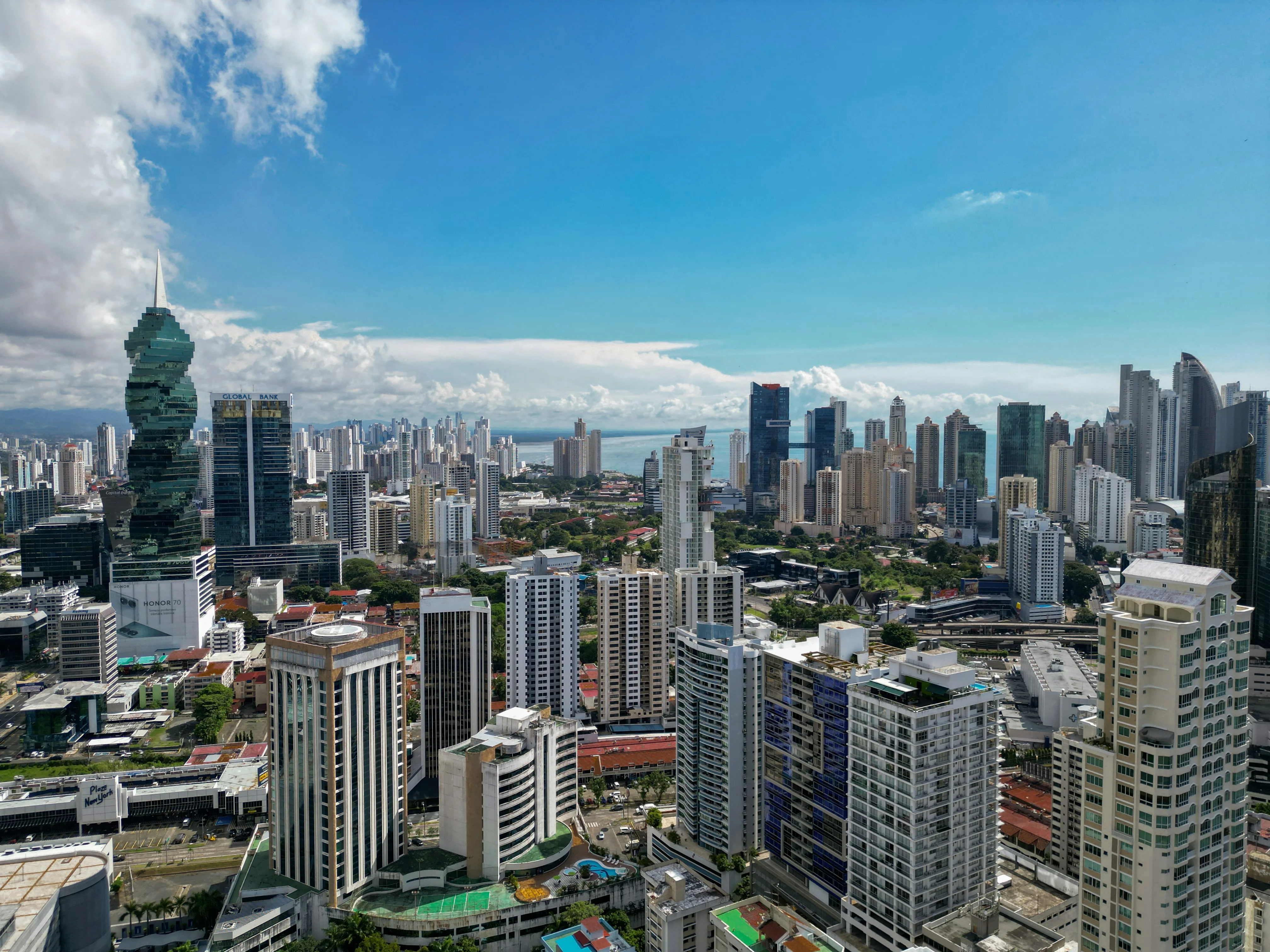
Primary tech hubs in Panama
Technology activity in Panama is concentrated heavily in the capital, creating a dense, highly connected ecosystem where industry leaders, incubators, and engineering talent operate side by side.
- Ciudad del Saber (City of Knowledge): Situated on 120 hectares near the Panama Canal, Ciudad del Saber is Panama’s premier international innovation, research, and technology park. It serves as a special economic zone hosting multinational technology companies, startups, and research institutions. The number worth knowing: 35% of the workforce at its member companies holds a postgraduate, master’s, or doctoral degree.
- Panama City financial & corporate corridor: Home to over 100 international banks and dozens of regional headquarters for global companies, downtown Panama City acts as a major hub for enterprise IT, cloud infrastructure, and software engineering. Local developers here build and maintain mission-critical infrastructure for international commerce.
Primary university developer pipeline
Panama’s technology pipeline is anchored by its top national technical institution, the Universidad Tecnológica de Panamá (UTP), providing rigorous academic preparation for software and systems engineers:
UTP is the state institution for engineering and technology, and the primary supplier of software talent in the country. Enrollment reached 28,331 students in 2024, substantial for a country this size, small next to Brazil or Mexico. Its dedicated Faculty of Computer Systems Engineering covers software architecture, cybersecurity, database administration, and systems engineering.
If Central America is the region you’re set on, our guides to hiring developers in Costa Rica, hiring developers in Honduras, hiring developers in Belize, and hiring developers in the Dominican Republic are worth reading alongside this one.
For one or two strong engineers who overlap your day and get paid in dollars, Panama works well. For a hiring plan closer to a 20- or 30-person team, the larger markets are the better starting point: Brazil, Mexico, Colombia, Argentina, and Chile.
What Technical Skills Do Panamanian Developers Have?
While national technology stack censuses don’t exist, candidate data across Latin America and local hiring patterns in Panama City show a developer workforce proficient in enterprise backends, web application architecture, and cloud services.
Given Panama’s position as a regional hub for banking, trade, and logistics, local developers skew toward building scalable, transaction-heavy software and secure APIs.
Core stack and regional technical strengths
According to Hire With Near’s 2026 State of LatAm Hiring Report, demand across Latin American technology placements focuses heavily on full-stack versatility:
- Programming languages: Python leads regional demand across data and backend engineering, followed by JavaScript, SQL, PHP, Java, Go, C++, Ruby, and Rust.
- Front-end: React is the most common framework for US-facing projects, with Vue.js as a common second choice.
- Back-end and infrastructure: Development leans toward Django, Node.js, Ruby on Rails, and .NET, paired with SQL and relational database work.
In Panama specifically, Universidad Tecnológica de Panamá trains graduates in low-level system design, network engineering, and cybersecurity alongside these core stacks.
Screening beyond the stack list
Matching a candidate to a list of frameworks misses what actually makes a remote engineer effective inside a US product team. Framework versions change; experienced developers pick up new ones fast. What doesn’t change is whether someone can own the work.
Hire With Near’s engineering recruiters screen for three things beyond the stack:
- Clean architecture: Writing modular, testable code that scales cleanly as product requirements evolve.
- Business context: The ability to explain why a technical choice was made in relation to business objectives, rather than simply executing tickets.
- Product ownership: Proactively proposing solutions to open-ended technical challenges without requiring line-by-line guidance.
Two red flags recruiters watch for: a candidate who can’t describe their own contribution on a past team project, and one who won’t talk about a mistake. Federico Bilello, Software Engineering Recruiter at Hire With Near, describes what he’s looking for:
The main thing I look for is ownership. I always look for developers who have worked in startups or smaller companies, because those are the people who probably have ownership. If you bring them a problem, they won’t ask how to solve it. They’ll try their own ideas, they’ll be creative.
— Federico Bilello, Software Engineering Recruiter, Hire With Near
What Does It Cost to Hire Developers in Panama?
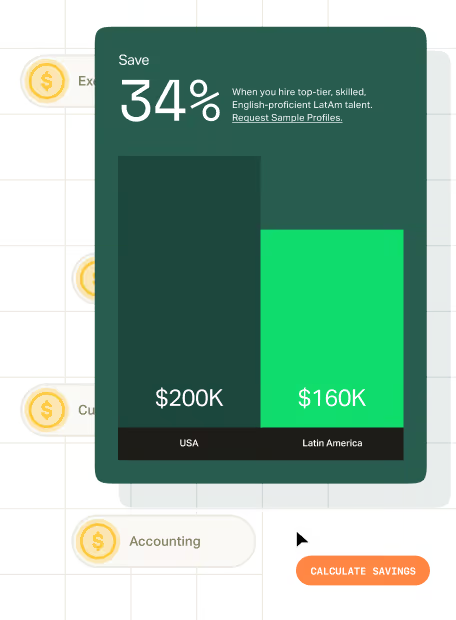
A mid-level software engineer in Latin America earns from $54K to $72K a year, compared to $115K to $195K for the US equivalent, roughly 53% to 63% less.
At senior level, the salary goes from $72K to $108K against $140K to $238K, roughly 49% to 55% less, according to our salary data.
Those are the numbers we place across the region. These come from Hire With Near’s own salary benchmarks:
For the most up-to-date figures, see Hire With Near’s US vs Latin America Salary Guide.
The wider savings in the table reflect junior roles at the bottom of each range, which is why the headline for a mid or senior software engineer sits lower at 49% to 63%. What that means for a budget: a senior engineer in Latin America often lands below what hiring a mid-level US engineer costs you.
The cost of living in Panama City runs meaningfully below major US metros, which is what makes salaries at these levels competitive locally rather than a discount on someone’s worth, as you can see in the comparison table below:
Source: Numbeo.com, retrieved August 2026
Our IT roles salary guide breaks out the whole engineering function, and the offshore developer rates article sets the regional numbers against further-field markets.
How Can a US Company Hire Developers in Panama?
US companies have four ways to hire developers in Panama: freelance marketplaces, direct hiring, a nearshore staff augmentation company, or a staffing and recruiting firm.
When weighing these options, tech leaders should ask themselves one question: “Do I need short-term help on a project, or a long-term, full-time developer on your team?” That changes everything.
Here they are, from most complex to simplest.
Route 1: Freelance platforms
Upwork and Toptal both list freelance developers in Panama, and they’re the fastest route to a contractor for a defined piece of work. They’re built for project-based engagements, so you manage quality and retention yourself, and the developer is splitting attention across clients.
For a full-time engineer who will hold context on your codebase for years, specialist staffing gives you fundamentally different results for full-time remote hires.
Route 2: Hiring directly
Hiring directly means you source and vet candidates yourself. For the employment side, you have two mechanisms to choose from:
- Set up a legal entity in Panama: This gives you full control and makes sense once you’re building a permanent in-country presence. It also takes months, carries real legal and accounting cost, and needs ongoing local HR support. For a handful of engineers, the overhead outweighs the hire.
- Use an employer of record: An EOR handles contracts, payroll, tax withholding, benefits, and local compliance where you have no entity. In Panama, that includes a detail most US employers don’t budget for: the Décimo Tercer Mes, the 13th-month bonus, arrives in three installments across the year rather than one December lump sum. EOR companies are good at that machinery, and the difference between an employer of record and a staffing agency comes down to who does the finding. What an EOR doesn’t do is recruit. It handles employment logistics, not sourcing and vetting, so you still write the spec, work a job board for hiring in Latin America, screen every résumé, and run every interview. In a market as small as Panama’s, that sourcing burden is the expensive half.
Route 3: Nearshore staff augmentation
A nearshore staff augmentation firm places pre-vetted remote engineers onto your team to work under your direction, while handling payroll, benefits, and compliance. It’s a fast way to hire remote developers in Panama for a defined project or a capacity spike, without adding permanent headcount.
IT staff augmentation and how nearshore staff augmentation works break the model down, and the choice between staff augmentation or outsourcing is the one most engineering leads are really weighing.
Route 4: A staffing and recruiting firm
This is the simplest route for most US companies, and it closes the gap the others leave open. You work with one of the specialist staffing firms for LatAm hiring, like Hire With Near, that handles talent acquisition and employment logistics in one relationship.
Through us, you describe the role, the company sources and vets candidates, and once you hire, we manage payroll, benefits, compliance, and local employment requirements through our nearshore staffing and recruiting services.
Hire With Near’s default is a permanent placement, not a rotating contractor: you describe the role, we source and vet, and once you hire, the developer joins your team for good.
Our roundup of the best companies to hire developers in Latin America sets us against the field.
{{prevetted-banner}}
What Do US Companies Need to Know Before Hiring Developers in Panama?
Three statutory obligations in Panama land on your payroll that wouldn’t in the US, and the 13th-month bonus is the one that catches employers out.
All three apply if you employ someone directly, through your own entity or an Employer of Record. They don’t apply if you hire through a staffing partner that engages the developer as a contractor.
Even then, it’s worth knowing that Panamanian candidates factor these into how they think about total compensation, so an offer that ignores them can look weaker than it should when someone’s comparing it against a direct-employment offer.
- The Décimo Tercer Mes, the 13th-month salary bonus, established in 1971, equals one month’s pay. The schedule is what makes it distinctive: it’s paid in three equal installments, on 15 April, 15 August, and 15 December, each calculated on all pay earned in the preceding four months, including overtime and commissions. Budget it as three events, not a December one.
- Annual vacation is generous by regional standards. Under Article 54 of Panama’s Labor Code, workers earn 30 days of paid vacation for every 11 continuous months of work, and Article 59 doesn’t let a worker trade that leave for cash while employed. Plan sprint capacity around people being away.
- Public holidays run to 12 mandatory days a year under Article 46 of the Labor Code. Older sources say 11, because December 20 was added by a 2022 law; Panama’s Ministry of Labour confirms it now sits in Article 46 with the rest. Work on those days carries a surcharge.
- English proficiency is a real gap to plan for. Panama scores 491 on the 2025 EF English Proficiency Index, 70th globally, in EF’s Low band. That’s a country average, not a read on any individual candidate, but it means English can’t be assumed the way it can in Jamaica or Belize. Screen for it directly: ask a candidate to walk you through a past technical decision in plain language before you make an offer.
None of this is difficult, just unfamiliar, and it’s not what your engineering leads should spend a week on. A partner who already handles it removes the category, the same way it works anywhere else you’re hiring remote foreign employees, and our free guide to hiring remotely in Latin America covers the regional version.
How Does Hire With Near Help US Companies Hire Developers in Panama?
Hire With Near is a staffing and recruiting company that runs the search end to end and gets you a shortlist of highly qualified developers in 3 to 5 days, with technical and English screening done before a resume reaches you.
The sequence is the same every time. We take a detailed intake on the role, the stack, and what an A-player looks like on your team. We source. We run a technical screen, then a separate English communication screen, because a country-level score tells you nothing about the person on your call.
You get a shortlist and run your own interview loop. Once you hire, payroll, benefits, compliance, and local employment requirements are part of the engagement, not an add-on.
The technical screen is deliberately short. First, a project walkthrough, where the candidate explains what they built, what broke, and how they fixed it. If you want a hands-on evaluation on top of that, we can build in a small real-world task, debugging something or building a basic API with tests, reviewed together on a call, at your request.
When ParkMobile, the parking and mobility platform, replaced years of third-party agency developers with an in-house team, it turned to a market it had never recruited in before. Nine senior engineers were hired across platform, backend, and iOS at a 24-day average time to hire, the fastest in 18 days, saving $1,066,085 a year against US rates.
Their TA Lead at ParkMobile, put it this way:
Collaboration with Hire With Near is solving the problem of entering a completely new market for us. They have been an invaluable partner in this expansion, helping to successfully close roles quickly. Their deep understanding of the local talent landscape is what allows them to source and vet top-tier candidates efficiently.
— Akshay Gokarnakar, TA Lead, ParkMobile
That search happened in Colombia specifically, but the pattern holds anywhere in Latin America a team hasn’t hired before, Panama included. Akshay Gokarnakar, ParkMobile’s TA Lead, describes what made it work in the video below:
Companies repeat that pattern: start with one engineer, expand once the first hire lands, which is how one digital product consultancy built out its engineering team. We recruit across the function for IT and tech recruiting in Latin America, and a VP of Engineering or CTO search runs through executive search in Latin America.
Final Thoughts
Panama is a small, dollarized, Eastern-time market, which suits a US company hiring one or a few developers more than one building a 50-person engineering hub. The currency and time zone advantages are real and unusually clean.
The talent pool is genuine but concentrated in one city, and English needs verifying candidate by candidate rather than trusting a country-level claim. If Panama is on your shortlist, compare it honestly against the larger markets nearby first.
If you’re ready to move forward, book a free consultation to talk through your requirements with our team. We’ll share salary benchmarks for the roles you’re hiring and explain how the search runs.
{{latam-hiring-cta-v2}}
Frequently Asked Questions
How much does it cost to hire a developer in Panama?
Salary is the main line item, and a mid- to senior-level developer in Latin America runs $54K to $108K a year according to our salary data. For formal employees, add the statutory costs a US employer wouldn’t expect: the 13th-month bonus in three installments, 30 days of paid vacation, and 12 public holidays.
Is Panama in a compatible time zone with the US?
Yes. Panama maintains one steady schedule year-round without daylight saving shifts, matching US Eastern time in the winter and sitting just an hour behind in the summer as US clocks move forward. A developer there stays online through your working day whether your team operates on Pacific, Mountain, Central, or Eastern time. Eastern and Central teams enjoy full-day overlap, while West Coast teams still get a solid window covering live stand-ups and same-day code reviews.
Does Panama use the US dollar?
Yes. The US dollar is legal tender in Panama and is what circulates, alongside the balboa, pegged one to one with it. The arrangement dates to a monetary agreement signed on 20 June 1904, the longest-standing dollarization in Latin America. Salaries are agreed and paid in dollars, with no exchange-rate exposure between offer and payslip.
What level of English can US companies expect from Panamanian developers?
Panama scores 491 on the 2025 EF English Proficiency Index and ranks 70th globally, EF’s Low band, so treat strong English as something to verify rather than assume. The score is a population average and says nothing about an individual engineer, and plenty of Panamanian developers work daily with US teams.
Screen it directly: ask a candidate to explain a past project to a non-developer.
Is 13th-month salary required in Panama?
Yes. The Décimo Tercer Mes is mandatory and equals one month’s pay, but it arrives in three equal installments in mid-April, mid-August, and mid-December rather than as a year-end payment.
Each is calculated on all earnings from the preceding four months, including overtime and commissions. Budgeting it as a December bonus gets the annual cost right and the timing wrong.
How long does it take to hire a developer in Panama through Hire With Near?
You get a shortlist of pre-vetted candidates in 3 to 5 days, and total time to hire depends mostly on how fast your own interview loop moves. As a benchmark, ParkMobile’s nine senior engineering hires in Colombia averaged 24 days each, the fastest in 18. Most of our clients hire in under three weeks.
We cover more questions about hiring remote talent separately.






.webp)


%203.svg)
.avif)





%20(1).avif)

%20(1).png)